
Metformin Kidney Function Checker
Kidney Function Safety Checker
Check if your kidney function is safe for metformin use. Based on guidelines from the American Association of Clinical Endocrinologists.
Results
Enter your kidney function information to see if you can safely take metformin.
Metformin is the most common pill prescribed for type 2 diabetes worldwide. Millions of people take it every day. It works. It’s cheap. And for most, it’s safe. But not everyone tolerates it well. And when things go wrong, they can go very wrong. The two biggest concerns? Stomach trouble and a rare but deadly condition called lactic acidosis.
Why Your Stomach Hurts After Starting Metformin
If you’ve just started metformin and suddenly feel like your gut is staging a rebellion, you’re not alone. About 1 in 3 people experience gastrointestinal side effects. Diarrhea is the most common - affecting over half of those who have issues. Nausea, vomiting, stomach cramps, and loss of appetite are also frequent. These symptoms don’t show up months later. They hit fast - often within the first week.
Here’s the thing: this isn’t an allergy. It’s not your body rejecting the drug. It’s a direct effect of how metformin interacts with your digestive system. The medication changes how your gut absorbs sugar and alters the balance of bacteria in your intestines. That’s why the symptoms are so common - and so predictable.
Good news? Most people get used to it. Around 85% of those who have stomach issues see them fade within 2 to 4 weeks. But waiting that long can feel unbearable. That’s where smart dosing comes in.
Starting low helps. Taking 500 mg once a day with dinner, instead of jumping to 1,000 mg twice a day, makes a huge difference. Many patients report cutting their diarrhea from five times a day to just occasional cramping after switching to a lower dose. And if that still doesn’t help, the extended-release version (metformin ER) is often the answer. It releases the drug slowly, so your gut isn’t hit with a full dose all at once. One user on Reddit shared that switching to 500 mg ER at dinner reduced their daily episodes from 4-5 to just mild discomfort within 10 days.
There’s also a new formulation - Metformin-ER-XR - approved by the FDA in May 2023. In clinical trials, it caused 42.7% fewer stomach problems than older versions. It’s not everywhere yet, but it’s coming.
What Is Lactic Acidosis? And Why Is It Scary?
Lactic acidosis is the reason metformin carries a black box warning - the strongest warning the FDA can give. It sounds technical, but here’s what it means in plain terms: your blood becomes too acidic because too much lactic acid builds up. Your cells can’t clear it fast enough. Your body starts to shut down.
It’s rare. Really rare. Only 1 to 9 cases happen per 100,000 people taking metformin each year. The FDA’s 2022 report found just 12 confirmed cases among 15.2 million users. That’s less than 1 in a million. But here’s the catch: when it does happen, it kills. Between 30% and 50% of people who develop metformin-associated lactic acidosis (MALA) die.
It doesn’t strike healthy people. It hits those who are already sick. Most cases happen in patients with kidney failure, liver disease, severe infections, or those who drink heavily. In fact, 93% of MALA cases are linked to other serious health problems - not the metformin alone.
Metformin doesn’t create lactic acid. It slows down how your body clears it. If your kidneys or liver are struggling, lactic acid piles up. Add alcohol, dehydration, or a heart attack, and the risk spikes.
Symptoms come on fast and feel like a bad flu: extreme tiredness, fast shallow breathing, nausea, vomiting, stomach pain, muscle aches, and even cold skin. If you feel this way while taking metformin - don’t wait. Go to the ER. A blood test will show if your pH is below 7.35 and your lactate level is above 5 mmol/L. That’s the diagnostic line.
Who Shouldn’t Take Metformin?
Metformin isn’t for everyone. There are clear red flags.
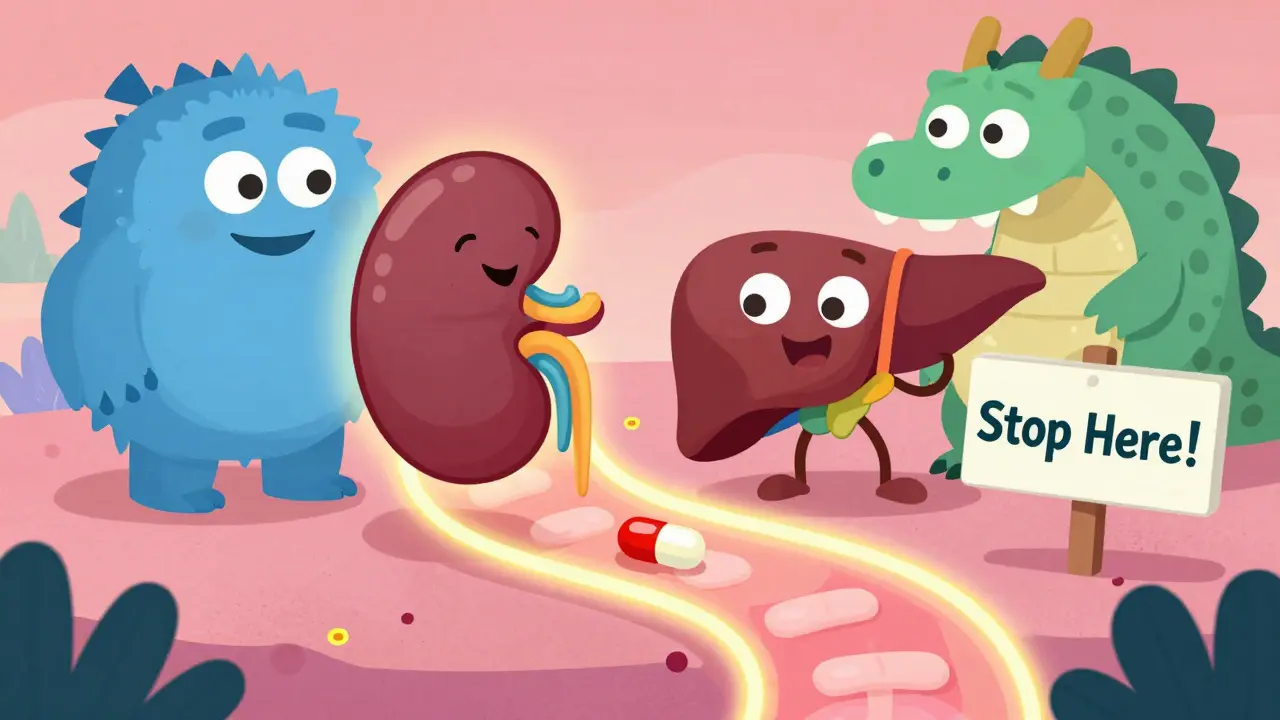
- Your eGFR (kidney function) is below 30 mL/min/1.73m². That’s an absolute stop.
- Your creatinine is above 1.4 mg/dL in men or 1.1 mg/dL in women. These are hard limits set by the European Medicines Agency.
- You have acute kidney injury. Your risk jumps 24 times.
- You have severe liver disease. Your risk more than doubles.
- You drink more than three alcoholic drinks a day. That’s nearly seven times higher risk.
- You’re over 80 and have other health problems. Age alone isn’t a barrier, but combined with other issues, it increases risk.
And if you’re getting a CT scan or any procedure with contrast dye? You must stop metformin 48 hours before and wait 48 hours after. Contrast dye can temporarily damage your kidneys. If you’re still on metformin when that happens, you’re playing Russian roulette with your acid levels.
Some doctors still check creatinine every month for patients with borderline kidney function. The American Association of Clinical Endocrinologists recommends testing every 3-6 months if your eGFR is between 45 and 59, and monthly if it’s below 45. It’s not overkill - it’s protection.

Myths About Metformin That Need to Die
There’s a lot of fear around metformin. A lot of it’s wrong.
Myth: Metformin damages your kidneys.
Truth: It doesn’t. Studies tracking people for 10 years show no link between metformin use and kidney decline. Your kidneys fail because of diabetes, high blood pressure, or age - not metformin. In fact, some research suggests it might help protect them.
Myth: It causes dementia.
Truth: A 2021 study in Neurology found no increased risk. Some studies even suggest metformin might lower dementia risk in diabetics.
Myth: It permanently steals your vitamin B12.
Truth: It can lower B12 levels over time - about 7% of long-term users. But it’s reversible. Take a B12 supplement once a year, get a blood test, and you’re fine. The AACE guidelines now require annual B12 checks for anyone on metformin for more than 4 years.
Myth: Metformin causes lactic acidosis in healthy people.
Truth: Almost never. The 50% death rate you hear about? That’s for people already in intensive care with multiple organ failure. If you’re stable, eating well, and your kidneys work - your risk is nearly zero.
What to Do If You’re Worried
Here’s your simple action plan:
- If you’re new to metformin and have stomach issues: start at 500 mg once daily with dinner. Wait two weeks. If it’s still bad, ask your doctor about switching to extended-release.
- Get your kidney function checked before starting and every 6 months after. More often if you’re over 65 or have other health problems.
- Stop metformin before any procedure with contrast dye. Don’t guess - ask your doctor.
- Don’t drink heavily. Even a few drinks a day can push you into danger.
- If you feel sudden weakness, trouble breathing, or severe stomach pain - go to the ER. Don’t wait. Don’t text your doctor. Go.
- Ask for a B12 test once a year if you’ve been on metformin for more than 4 years.
Metformin saved millions of lives. It’s not perfect. But it’s still the best first choice for type 2 diabetes. The risks are real - but they’re manageable. You don’t need to fear it. You need to respect it. And that means knowing the signs, listening to your body, and working with your doctor - not ignoring them.
What’s Next?
The big research question now isn’t whether metformin works for diabetes. It’s whether it works for aging. The NIH is spending $72 million on the TAME trial to find out if metformin can delay age-related diseases. But right now, it’s still a diabetes drug. Don’t take it for longevity. Not without your doctor’s approval.
For now, if you’re on metformin and feeling okay - keep going. If you’re having stomach problems - talk to your doctor. If you’re worried about lactic acidosis - get your kidney numbers checked. And if you ever feel like you’re dying - don’t hesitate. Get help.
Can metformin cause permanent kidney damage?
No. Metformin does not damage kidneys. Studies tracking patients for over a decade show no increased risk of kidney decline. In fact, people with diabetes who take metformin often have better kidney outcomes than those who don’t - because metformin helps control blood sugar, which protects the kidneys. Kidney problems happen because of uncontrolled diabetes, high blood pressure, or aging - not because of metformin.
How long do metformin stomach side effects last?
For most people, stomach issues like diarrhea, nausea, and cramps start within the first week and fade within 2 to 4 weeks. About 85% of users see improvement by then. If symptoms don’t improve, switching to extended-release metformin or lowering the dose often helps. Starting with 500 mg once a day and slowly increasing reduces the chance of severe symptoms.
Is lactic acidosis common with metformin?
No. It’s extremely rare - only 1 to 9 cases per 100,000 people per year. The FDA found just 12 confirmed cases among 15.2 million users in 2022. Lactic acidosis almost always happens in people who already have serious health problems - like kidney failure, liver disease, or severe infection. Healthy people on normal doses rarely, if ever, develop it.
Should I stop metformin if I get sick?
Yes - if you’re seriously ill. If you have a severe infection, heart failure, dehydration, or are vomiting and can’t keep fluids down, stop metformin until you recover. Your body can’t clear lactic acid properly when you’re sick. Talk to your doctor. Don’t wait. Even if you feel fine, if you’re hospitalized or getting contrast dye, you’ll need to pause metformin for 48 hours before and after.
Can I take metformin with alcohol?
Moderate alcohol - one or two drinks occasionally - is usually fine. But heavy drinking (three or more drinks a day) increases your risk of lactic acidosis by nearly seven times. Alcohol stresses your liver and can cause dehydration. Both make it harder for your body to clear lactic acid. If you drink regularly, talk to your doctor. They may recommend reducing alcohol or switching to another medication.
Do I need to take B12 supplements with metformin?
Not everyone, but you should get tested. About 7% of people on long-term metformin develop low B12 levels. It’s not permanent - it’s reversible with supplements. The American Association of Clinical Endocrinologists recommends checking B12 levels every year if you’ve been on metformin for more than 4 years. If your levels are low, a daily or weekly B12 supplement fixes it quickly.
What should I do if I think I’m having lactic acidosis?
Go to the emergency room immediately. Don’t wait. Don’t call your doctor first. Lactic acidosis is life-threatening. Symptoms include extreme fatigue, fast shallow breathing, nausea, vomiting, stomach pain, muscle aches, and cold skin. These are not normal side effects - they’re warning signs. Blood tests will confirm it. Early treatment saves lives.
What to Watch For
Metformin is a tool. A powerful one. Used right, it keeps people out of the hospital. Used wrong - or ignored - it can turn dangerous. The key isn’t fear. It’s awareness.
Know your kidney numbers. Know your symptoms. Know when to act. And never assume that because it’s common, it’s harmless. Your body tells you when something’s off. Listen to it.






9 Comments
Jacob Hill
Okay, I just started metformin last week, and holy hell-my gut feels like it’s been through a tornado. Diarrhea five times a day? Yeah. But I switched to 500mg ER at dinner like the post said, and within ten days? It’s down to one mild cramp. No joke. This is the best medical advice I’ve read in months.
Jackson Doughart
While I appreciate the thoroughness of this exposition, I must emphasize the importance of clinical context. The statistical rarity of lactic acidosis must not be conflated with clinical insignificance. In patients with underlying comorbidities, the pharmacokinetic burden of metformin-particularly in the setting of renal insufficiency-demands vigilant monitoring. The black box warning exists for a reason: not to instill fear, but to enforce prudence.
Aman Kumar
Let me be blunt: you people treat metformin like it’s a vitamin. It’s a drug. A potent one. And if your kidneys are even slightly off-like, say, you’re 65 and have borderline hypertension-you’re playing Russian roulette with your acid-base balance. I’ve seen patients come in with lactate levels over 15. Dead within 48 hours. You think ‘it’s rare’? That’s what they all say before they’re intubated.
Lydia H.
It’s wild how something so simple-like taking a pill with dinner-can change your whole life. I was ready to quit metformin because of the nausea, but I just slowed down. Gave my body time. Now I feel better than I have in years. Sometimes healing isn’t about fighting harder-it’s about letting go of the rush.
Christi Steinbeck
STOP WAITING. If you’re dizzy, vomiting, and your skin feels cold-GO TO THE ER. Not tomorrow. Not after your Zoom call. NOW. I almost died because I thought ‘it’s just the metformin.’ It wasn’t. It was lactic acidosis. I’m alive because I listened to my body. You owe it to yourself to know the signs.
Malikah Rajap
Okay, but what if you’re vegan and on metformin? I’ve been on it 6 years and my B12 is at 180. My doctor said ‘just take a supplement’-so I did. Now I’m not falling asleep at my desk anymore. Also, I swear by the ER version. My stomach doesn’t hate me anymore. Also, also, have you tried magnesium? It helps with cramps? Just saying.
sujit paul
Are we certain that the pharmaceutical industry has not engineered this narrative to maintain dominance in the diabetes market? Metformin, a derivative of French lilac, has been used for centuries in folk medicine. Modern medicine has reduced its efficacy through dosage manipulation and corporate patents. The true danger lies not in lactic acidosis-but in systemic suppression of natural healing modalities. I urge you to consider holistic alternatives: intermittent fasting, berberine, and sunlight exposure. The body knows how to heal itself-if we stop poisoning it with synthetic molecules.
Tracy Howard
Ugh. Americans. Always medicating everything. In Canada, we just eat less sugar and walk more. Metformin? Sounds like a Band-Aid on a bullet wound. And don’t get me started on your ‘extended-release’ nonsense. We have real medicine here-not corporate marketing gimmicks with fancy acronyms. If your body can’t handle a little discomfort, maybe you shouldn’t be eating donuts in the first place.
Astha Jain
I took metformin for 2 years and my stomach was fine but i forgot to check b12 and got super tired. now i take a pill every week and im good. dont be dumb like me.