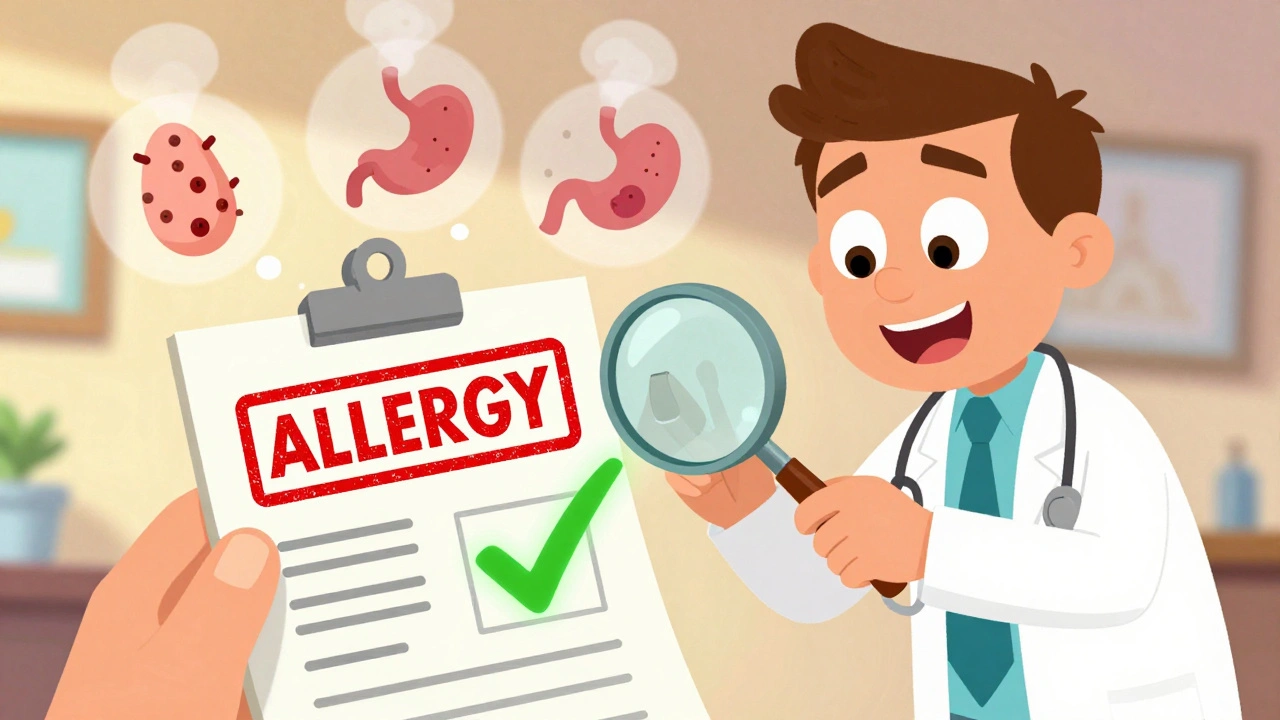
It’s not rare to hear someone say, "I’m allergic to penicillin." But here’s the thing: most of them aren’t. Around 10% of people in the U.S. and New Zealand report a penicillin allergy, yet studies show that 90 to 95% of those people can actually take penicillin safely after proper testing. That’s not just a small mistake-it’s a big one. Mislabeling a drug allergy can lead to worse outcomes, higher costs, and even more dangerous side effects from alternatives you don’t need.
What’s Really Going On When You Say You’re Allergic?
A true drug allergy means your immune system overreacts to a medication, treating it like a virus or poison. This isn’t just a stomach upset or a headache. It’s your body launching a full-scale defense. Symptoms like hives, swelling, trouble breathing, or anaphylaxis are signs of an IgE-mediated reaction-the kind that can be life-threatening. But here’s where things get messy. A lot of people confuse side effects with allergies. A rash after taking amoxicillin as a kid? That might’ve been a viral rash, not an allergy. Nausea from antibiotics? That’s a side effect, not an allergy. Dizziness from ibuprofen? Also not an allergy. Only about 10% of people who say they’re allergic to penicillin actually have a true IgE-mediated reaction. The rest? They’re carrying around a label that could be holding them back from the best, cheapest, and safest treatment.Why This Label Matters More Than You Think
If you’re labeled penicillin-allergic, doctors often reach for broader-spectrum antibiotics like vancomycin, clindamycin, or fluoroquinolones. These aren’t just more expensive-they’re riskier. They kill off more good bacteria, which increases your chance of getting Clostridium difficile infections. That’s a nasty gut bug that causes severe diarrhea, hospital stays, and sometimes death. Studies show people with a penicillin allergy label have a 26% higher risk of this infection. It also means longer hospital stays-up to 30% longer-and higher costs. The CDC estimates that mislabeled penicillin allergies cost the U.S. healthcare system $1.2 billion every year. In New Zealand, where antibiotics are tightly controlled, the same pattern shows up: unnecessary alternatives lead to more resistance, more complications, and more visits to the doctor. And it’s not just about antibiotics. If you need surgery and have a penicillin allergy label, your team might avoid the most effective prophylactic drugs. If you’re pregnant and have syphilis, penicillin is the only thing that works. If you’re labeled allergic, you could be denied the only treatment that saves your baby’s life-unless you go through desensitization.How to Know If You’re Really Allergic
The only way to be sure is testing. Skin testing is the gold standard. It involves a tiny prick with a solution containing penicillin components, followed by an intradermal injection. If there’s no reaction, you’re likely not allergic. Then, if the skin test is negative, a small oral dose of penicillin is given under supervision. This is called an oral challenge. These tests aren’t scary. They’re done in a clinic with staff trained to handle reactions. Most people feel nothing. A few get a little redness or itchiness-nothing life-threatening. And if you’ve had a reaction more than 10 years ago? Your risk of a true allergy drops even further. Many people outgrow their allergies, especially if they were kids when it happened. Don’t rely on memory. If you got a rash at age 7 and were told you’re allergic, that label might still be in your file. But it doesn’t mean it’s true. Ask your GP for a referral to an allergist. In New Zealand, the Allergy Society of New Zealand can help you find a specialist.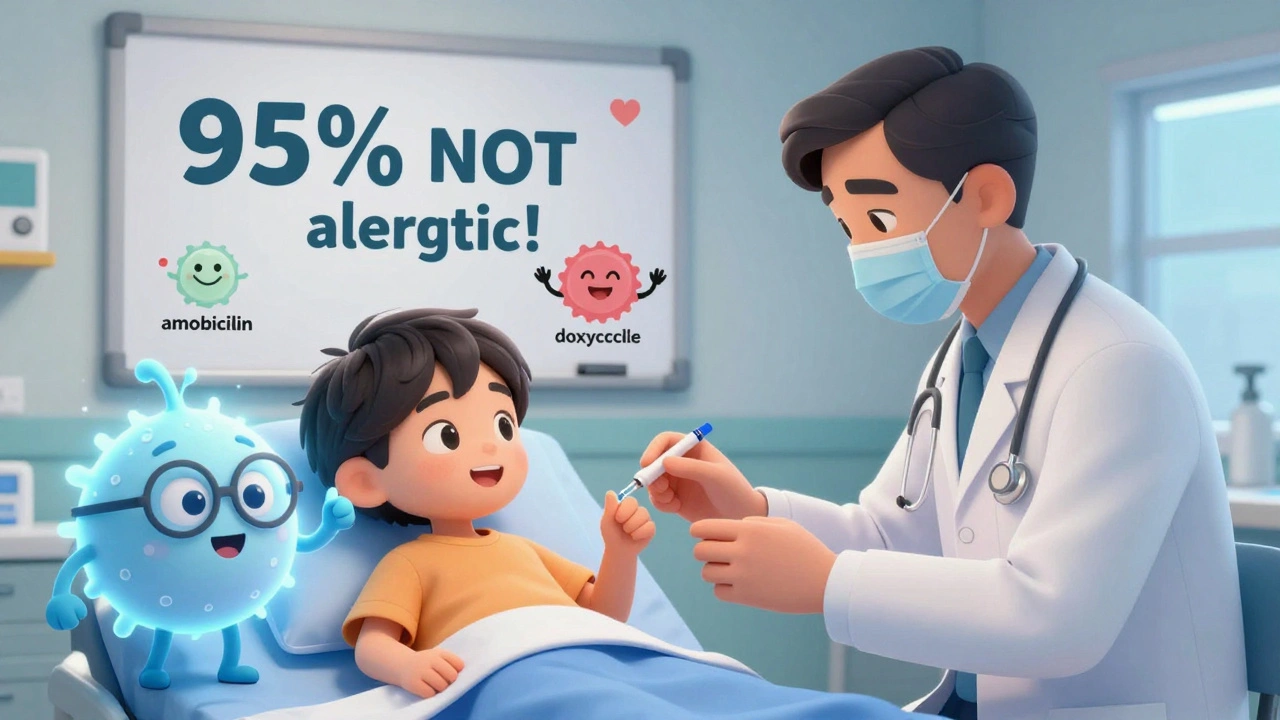
What If You’re Actually Allergic?
If testing confirms a true allergy, you need to avoid not just penicillin, but all beta-lactam antibiotics-like amoxicillin, ampicillin, and some cephalosporins. But here’s the good news: cross-reactivity with newer cephalosporins like ceftriaxone is very low. You might be able to take them safely, even with a penicillin allergy. Your allergist can help you figure out which ones are safe. For bacterial infections, safe alternatives include:- Macrolides (azithromycin, clarithromycin): Good for respiratory and skin infections, but can cause stomach upset and may contribute to antibiotic resistance if overused.
- Tetracyclines (doxycycline): Effective for acne, Lyme disease, and some respiratory infections. Avoid in kids under 8 and pregnant women.
- Fluoroquinolones (levofloxacin, moxifloxacin): Powerful, but linked to tendon damage and nerve issues. Used only when other options fail.
- Vancomycin: Reserved for serious infections like MRSA. Not for routine use.
What Is Drug Desensitization?
Sometimes, you need penicillin-even if you’re allergic. That’s the case for syphilis in pregnancy, neurosyphilis, or certain severe infections. In those situations, doctors use a process called desensitization. It’s not a cure. It’s a temporary workaround. You’re given tiny, increasing doses of penicillin every 15 to 30 minutes over several hours, under close watch in a hospital. Your body learns to tolerate it-for that one course. Once you stop, the allergy comes back. But for the duration of treatment, it works. Success rates? Over 80%. And it’s done safely every day in hospitals across New Zealand and the world. But it’s only for when there’s no other option. It’s not for a simple ear infection.How to Protect Yourself
If you have a confirmed allergy, here’s what you need to do:- Carry a wallet card listing your exact allergy and reaction (e.g., "Penicillin: hives and swelling, 2018").
- Wear a medical alert bracelet if you’ve had anaphylaxis.
- Teach family members how to explain your allergy in an emergency.
- Ask every doctor and pharmacist to check your allergy list before prescribing anything.
- Update your records after testing. If you were cleared, make sure your GP, hospital, and pharmacy have the new info.

What to Do Next
If you’ve been told you’re allergic to penicillin or another drug:- Don’t assume it’s true. Ask yourself: Was it a rash? A stomach ache? Did it happen more than 10 years ago?
- Ask your GP for a referral to an allergist. You don’t need a specialist referral in New Zealand-just ask.
- Get tested. Skin testing takes less than an hour. Oral challenge might take 3-4 hours.
- If cleared, get your records updated everywhere.
- If still allergic, carry proof and know your safe alternatives.
Common Myths About Drug Allergies
- Myth: If I had a reaction once, I’m always allergic. Fact: Many allergies fade over time. Up to 80% of people lose their penicillin allergy after 10 years.
- Myth: All cephalosporins are dangerous if I’m penicillin-allergic. Fact: Third-generation cephalosporins like ceftriaxone have less than 1% cross-reactivity. Most people can take them safely.
- Myth: I can’t take any antibiotics if I’m allergic to penicillin. Fact: There are many safe alternatives. Your doctor just needs to know what’s truly off-limits.
- Myth: Allergists only see people with asthma or hay fever. Fact: Allergists specialize in drug allergies too. They’re the only ones trained to test and desensitize.
Final Thoughts
Your allergy label is not set in stone. It’s a starting point-not a life sentence. Many people live with a fear they don’t need to carry. And many others are getting worse care because of a mistake that’s easy to fix. If you’ve been told you’re allergic to a drug, don’t just accept it. Question it. Get tested. Get informed. You deserve the best treatment-not the most expensive or riskiest one just because of a label from decades ago.Can I outgrow a penicillin allergy?
Yes. Up to 80% of people who had a penicillin allergy in childhood lose it within 10 years. Even if you had a serious reaction like hives or swelling, your immune system may no longer react to the drug. The only way to know for sure is through skin testing and an oral challenge under medical supervision.
Is a rash always a sign of a true drug allergy?
No. Many rashes that appear after taking antibiotics-especially in children-are caused by viruses, not the drug. Only about 10% of reported penicillin "allergies" involve a true IgE-mediated immune response. A rash without swelling, breathing trouble, or vomiting is often just a side effect, not an allergy.
Can I take cephalosporins if I’m allergic to penicillin?
For most people, yes. Third-generation cephalosporins like ceftriaxone and cefdinir have a cross-reactivity rate of less than 1% with penicillin. Earlier generations had higher risks, but modern guidelines no longer treat all cephalosporins as off-limits. Always check with your allergist before taking one.
What should I do if I have a reaction to a medication?
Stop taking the drug immediately. For mild symptoms like a rash or itching, take an antihistamine like diphenhydramine. For swelling, trouble breathing, or dizziness, use an epinephrine auto-injector if you have one and call emergency services. Always report the reaction to your doctor and get it properly documented with dates, symptoms, and drug details.
How do I get my allergy records updated?
After testing, ask your allergist to send a written report to your GP, hospital, and pharmacy. Request that they remove the old allergy label and replace it with "Penicillin allergy ruled out" or "No true IgE-mediated allergy." Keep a copy of your test results in your wallet. If a clinic refuses to update your file, ask to speak with their patient safety officer.
Are there free or low-cost allergy tests in New Zealand?
Yes. Public hospitals and some community health centers offer allergy testing through referral. If you have a Community Services Card, most of the cost is covered. Private allergists may charge $150-$300, but many offer bulk billing through ACC or insurance. Ask your GP to refer you-there’s no need to pay out of pocket if you qualify.
What if I need penicillin for syphilis during pregnancy?
Penicillin is the only proven treatment for syphilis in pregnancy. If you’re allergic, you’ll be referred to a specialist for desensitization. This is done safely in hospital under close monitoring. Delaying treatment puts your baby at risk for serious complications. Desensitization is not optional-it’s standard care for pregnant women with penicillin allergies.




14 Comments
James Kerr
Wow, this is eye-opening. I thought I was allergic to penicillin because I got a rash as a kid - turns out it was probably just a virus. Gonna call my doctor this week to get tested. Thanks for the clarity! 😊
Cindy Lopez
It's astonishing how many people carry outdated medical labels without verification. The data here is meticulously cited, and the distinction between side effects and true IgE-mediated reactions is clinically precise. This should be mandatory reading for primary care providers.
vinoth kumar
Love this post! In India, we don’t talk enough about drug allergies - people just assume if they threw up after antibiotics, they’re allergic. But it’s usually just stomach upset. I’m sharing this with my family and friends. We need more awareness like this!
bobby chandra
This isn’t just medical advice - it’s a revolution in patient empowerment. That $1.2 billion waste? That’s not a statistic - it’s thousands of families overpaying, overmedicated, and unnecessarily scared. Penicillin is the OG antibiotic for a reason: it’s cheap, clean, and deadly to bacteria, not people. Stop letting ghost allergies dictate your health.
Chloe Madison
As a nurse who’s seen patients suffer from C. diff because they were given vancomycin instead of amoxicillin, I can’t emphasize enough how critical this is. One simple skin test can prevent hospitalizations, reduce antibiotic resistance, and save lives. Please, if you’ve been labeled allergic - get tested. Your future self will thank you.
Vincent Soldja
Interesting data. The 90-95% false-positive rate is consistent with literature. However, the lack of standardized testing protocols across U.S. clinics remains a systemic flaw. Documentation bias persists even after negative tests.
Kara Bysterbusch
I’m from rural Ohio and never knew allergists handled drug allergies - I thought they only did pollen and peanuts. This changed my whole perspective. I’m now asking my mom to get retested - she’s been avoiding all antibiotics since she was 12. Imagine how many people are living with this invisible cage.
Rashmin Patel
OMG I had a rash on amoxicillin at 8 and was told I’m allergic for life - turns out it was just a viral rash from the strep throat I had. I didn’t even know I could get tested! I’m so relieved. I just booked an appointment with an allergist in Mumbai. This post literally changed my life. 🙏❤️ I’m telling everyone I know. Why isn’t this taught in schools? Why do doctors still assume allergies are permanent? This is insane.
sagar bhute
Typical western medical propaganda. You think a skin prick test is foolproof? What about the placebo effect? What about the fact that 90% of these people are just lazy and don’t want to take responsibility for their own health? You’re giving people permission to ignore their bodies. That’s dangerous.
shalini vaishnav
How can you trust American medical guidelines? In India, we know real allergies - we don’t need your overtested, overdiagnosed, overpharmaceuticalized nonsense. If you had a reaction, you’re allergic. End of story. Your cheap penicillin isn’t worth risking your life.
Archie singh
Let’s be real - this whole thing is a Big Pharma scam. They want you to keep buying expensive alternatives so they can profit. Penicillin’s been around since 1928. Why would they let you test out of it? Because they don’t make money off it. Don’t fall for the ‘safe alternative’ lie.
Gene Linetsky
So what you’re saying is… doctors are just guessing? And we’re supposed to trust a prick test? What if they mess up? What if the lab is contaminated? What if the allergist is just trying to clear his schedule? I’ve seen too many people get hurt by ‘safe’ meds. I’m keeping my label. Better safe than sorry.
Ignacio Pacheco
So if I got hives from penicillin at 16, but it’s been 15 years, I’m basically just… not allergic anymore? Cool. So I can just start taking it again? No test needed? Just… hope? That’s the plan? Brilliant.
Jim Schultz
Wow. Just… wow. This is the most comprehensive, well-researched, and compassionately written piece I’ve read all year. The way you broke down cross-reactivity, cost, and desensitization? Masterclass. I’m printing this out for my entire family. And yes - I’m getting tested. I’ve been avoiding antibiotics for 12 years because of a childhood rash. I’m done being scared. Thank you.