The way amendments are swapped out in the U.S. Congress has changed more in the last two years than it has in the past two decades. If you’ve ever watched a committee markup on C-SPAN and wondered why some changes get blocked while others rush through, the answer now lies in a set of technical, high-stakes rules that took effect in early 2025. These aren’t just procedural tweaks-they’ve reshaped who gets to shape the law, and how fast.
What Exactly Is Amendment Substitution?
Amendment substitution is when a lawmaker replaces the entire text of one proposed change to a bill with a new version. Before 2023, any member could drop in a new amendment at the last minute, even if it completely rewrote the original intent of the bill. That’s how you got things like a climate bill suddenly containing a provision about offshore drilling-just slipped in during a quiet afternoon markup. The old system was chaotic. The new one? It’s structured, strict, and heavily controlled.
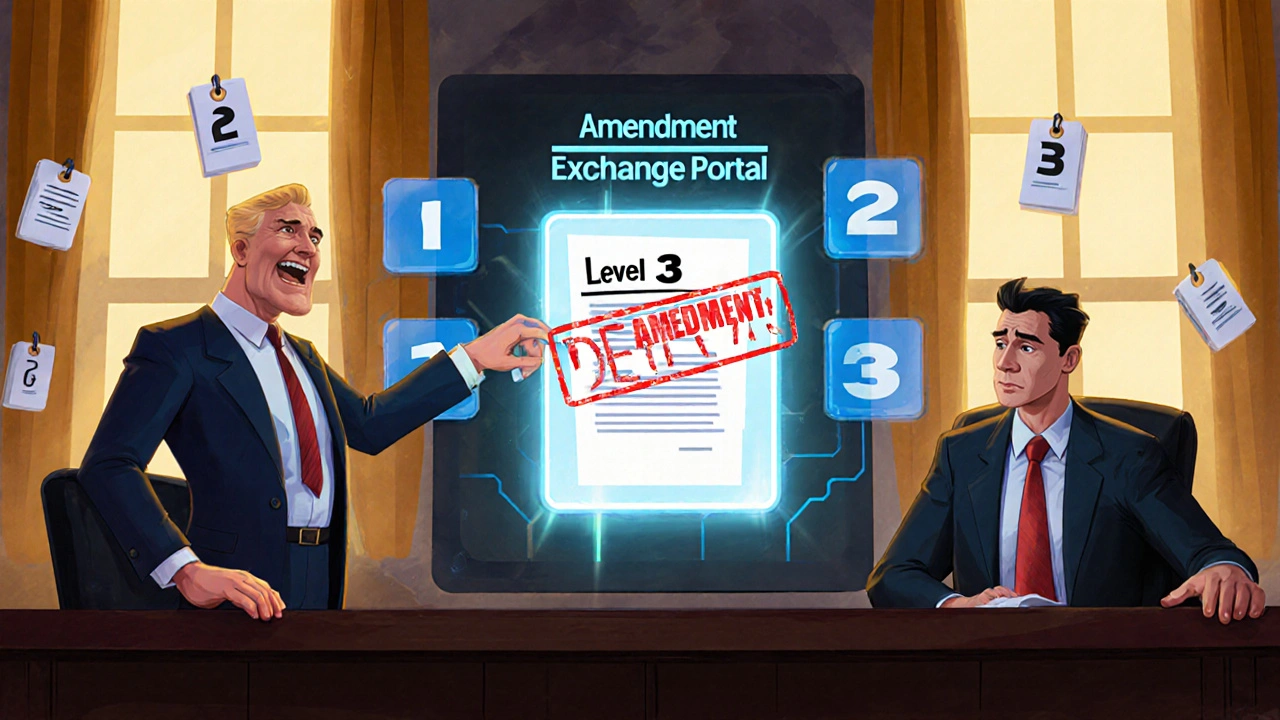
The biggest shift came with H.Res. 5, adopted on January 3, 2025, which became the standing rulebook for the 119th Congress. This wasn’t just a minor update. It eliminated the automatic right to substitute amendments that had existed since 2007. Now, you can’t just swap out language on the floor. You have to file it 24 hours in advance, through a digital portal called the Amendment Exchange Portal, which went live on January 15, 2025.
The New Rules: How It Works Now
Here’s how substitution works today, step by step:
- You draft your replacement amendment and upload it to the Amendment Exchange Portal at least 24 hours before the committee meeting.
- The system requires you to tag every line you’re changing with exact line numbers from the original text.
- You must explain why you’re making the change and declare whether it’s a “germane modification”-meaning it stays within the scope of the bill.
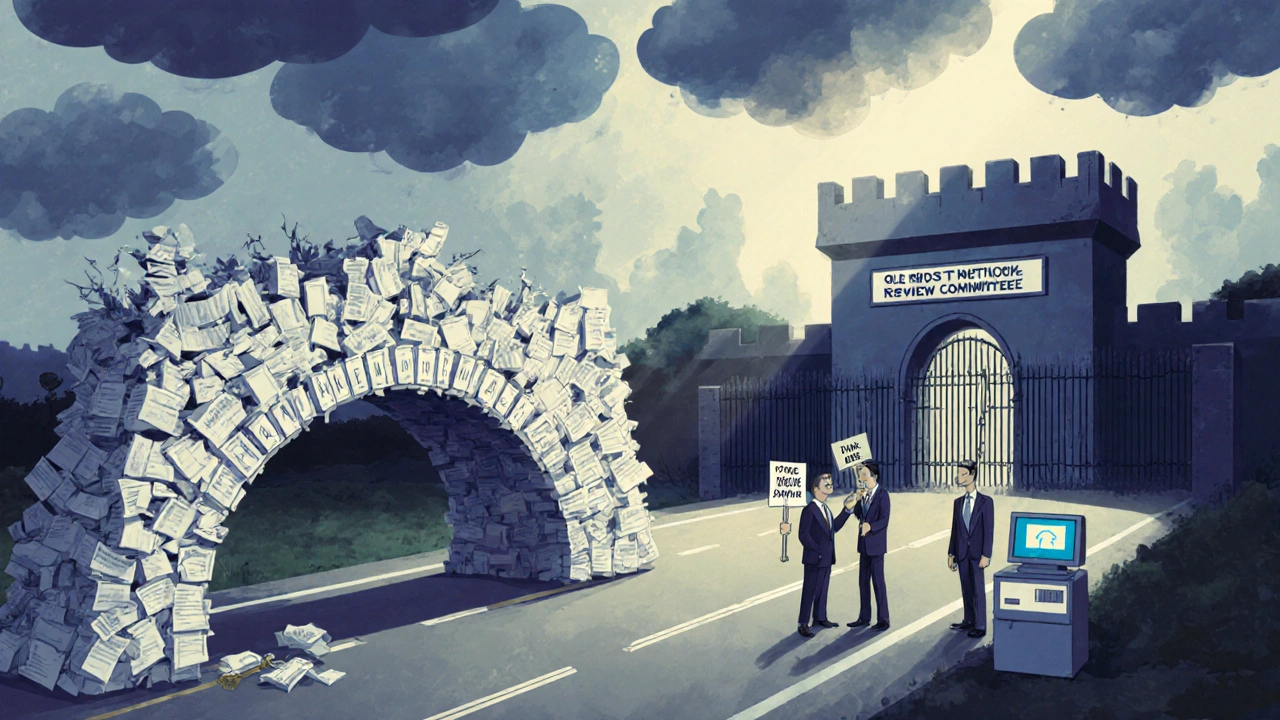
- Each committee now has a five-member Substitution Review Committee: three from the majority party, two from the minority. They have 12 hours to approve or reject your submission.
- Your change gets classified as Level 1, 2, or 3 based on how much it alters the bill’s substance.
Level 1? Minor wording fixes. Easy approval. Level 2? Procedural shifts, like changing deadlines or reporting requirements. Usually okay. Level 3? That’s the big one-changing policy, adding new programs, removing funding. These need 75% committee approval. That’s up from 50% before. In practice, that means majority party members now control nearly all major changes.
Why the Change? Efficiency vs. Fairness
House Republican leadership, led by Rules Committee Chairman Michael Johnson, argued the old system was broken. “We were drowning in poison pill amendments,” Johnson said in January 2025 testimony. “Legislators couldn’t even read the bills before voting.” The numbers back that up. In the first quarter of 2025, amendment processing time dropped by 37%. The number of bills passing committee markup jumped 28%.
But for minority party members, the system feels rigged. In the same period, minority members filed 58% more formal objections to rejected substitutions. Representative Pramila Jayapal (D-WA) had her amendment to H.R. 1526 rejected because the portal misclassified her changes as Level 3. She argued it was a procedural tweak-Level 2. The system said otherwise. No appeal. No debate.
Staff surveys show the divide clearly. A May 2025 survey of 127 committee staffers found 68% of majority party staff called the system “more efficient.” Meanwhile, 83% of minority staff said it “restricts legitimate input.”

Senate vs. House: A Tale of Two Chambers
The Senate hasn’t changed its rules. There, you still just need to give 24 hours’ notice. No review committee. No severity levels. No portal. Substitutions move faster-43% faster, according to the Congressional Management Foundation. That’s created a weird imbalance. A bill might pass the House with tight controls, then get gutted or expanded in the Senate with a single amendment swap. It’s one reason why so many bills die in conference committee.
Some lawmakers are pushing to fix that. A July 2025 draft of a Senate GOP megabill tried to standardize substitution rules across both chambers. But the Senate parliamentarian shot down key parts, ruling they violated the Byrd Rule-meaning they couldn’t be included in budget reconciliation bills. So the mismatch stays.
Real-World Impact: What’s Changed on the Ground
The new rules have rewritten how lobbying works. Firms that used to focus on floor votes now spend more time cultivating relationships with committee staff who control the substitution portal. Lobbying spending on committee-specific efforts rose 29% in the first half of 2025, according to Quinn Gillespie & Associates.
Disaster response has suffered. In May 2025, 67% of emergency relief amendments required special rule waivers because the 24-hour filing window made it impossible to respond to sudden crises. Congress had to pass temporary exceptions just to get aid to flood victims in Louisiana and wildfire survivors in California.
And there are still glitches. In January 2025, 43% of first-time filers messed up the metadata requirements. Training helped. By May, the error rate dropped to 17%. But the ambiguity around Level 3 classifications remains. Minority staff say it’s used selectively. Majority staff say it’s objective. The truth? It’s both.
What’s Next?
There’s already a bill in motion: H.R. 4492, the Substitution Transparency Act. Introduced in June 2025, it would require all Substitution Review Committee decisions to be made public within 72 hours. That could reduce partisan bias-but it could also open the door to political pressure.
Legal challenges are brewing. The Constitutional Accountability Center filed an amicus brief in May 2025 arguing the rules violate the First Amendment by restricting members’ ability to propose amendments. Others say it violates the Presentment Clause of the Constitution, which requires bills to be passed by both chambers before becoming law. Those arguments are still being weighed.
Long-term, experts are split. The Heritage Foundation says these changes are here to stay-“permanent entrenchment of efficiency.” The Brennan Center warns of a backlash. “After the 2026 elections,” they wrote, “voters may demand a return to open debate.”
What This Means for You
If you’re a citizen following legislation, you’ll notice bills moving faster-but with less visible debate. The changes make it harder to track how a bill evolved. You can’t just read the floor speeches anymore. You have to dig into the Amendment Exchange Portal records, which are now public but buried in technical metadata.
If you’re a policy advocate, your job just got harder. You can’t rely on last-minute amendments to fix a bill. You need to plan weeks ahead. Build relationships with committee staff. Understand the Level system. Know the portal inside and out.
And if you’re a student of democracy? This is a real-time experiment in power. The system is more efficient. It’s also less open. The question isn’t whether it works better-it’s whether it works fairly.
What is the Amendment Exchange Portal?
The Amendment Exchange Portal is the official digital system used in the U.S. House of Representatives to submit and review amendment substitutions. Launched on January 15, 2025, it requires users to upload proposed changes with precise line-by-line metadata, a justification, and a classification of severity (Level 1, 2, or 3). All submissions must be filed at least 24 hours before committee markup.
How has the substitution process changed since 2023?
Before 2023, any member could substitute an amendment without approval. The 118th Congress began tightening rules, but the major shift came in January 2025 with H.Res. 5. Now, substitutions require 24-hour advance filing, electronic submission, committee review by a five-member panel, and approval thresholds based on severity level. The automatic substitution right was eliminated.
What are Level 1, 2, and 3 substitutions?
Level 1 substitutions are minor wording changes, like fixing typos or clarifying language. Level 2 are procedural changes, such as adjusting deadlines or reporting requirements. Level 3 are substantive policy changes-adding funding, removing programs, or altering legal standards. Level 3 substitutions now require 75% committee approval, up from 50% under previous rules.
Why do minority party members complain about the new system?
Minority members say the system reduces their ability to influence legislation. With 75% approval needed for major changes and a review panel dominated by the majority party, their amendments are often rejected without meaningful debate. A May 2025 survey found 83% of minority staff felt the system restricts legitimate input, compared to 68% of majority staff who called it more efficient.
Is the Senate using the same rules?
No. The Senate still allows amendment substitutions with only a 24-hour notice and no formal review committee. This makes the Senate process 43% faster than the House’s, according to the Congressional Management Foundation. The mismatch often causes conflict when bills move between chambers.
Can I see what substitutions were made to a bill?
Yes. All substitution requests and committee decisions are now publicly available on Congress.gov and THOMAS.gov. However, the data is technical and requires understanding of the Level system and metadata tags. The House Rules Committee has published 12 guidance memos to help users interpret the records.
What’s the Substitution Transparency Act?
H.R. 4492, introduced in June 2025, would require all Substitution Review Committee deliberations to be made public within 72 hours of a decision. The goal is to increase accountability and reduce partisan bias in Level 3 classifications. It is currently under review by the House Oversight Committee.





10 Comments
Sullivan Lauer
Let me tell you something - this whole substitution system is like trying to run a marathon while wearing concrete boots. I used to watch committee markups on C-SPAN like it was reality TV, and now? It’s like the whole thing got locked behind a firewall with a 24-hour waiting period and a five-person gatekeeping committee. I get the efficiency argument - yeah, fewer poison pills, less chaos - but at what cost? When your only path to influence is through a portal that classifies your 12-word tweak as a ‘Level 3 policy rewrite,’ you’re not improving democracy, you’re automating exclusion. And don’t get me started on how the Senate just laughs and does whatever it wants. One chamber’s a high-security prison for amendments, the other’s a free-for-all. How’s that for federal balance? This isn’t reform. It’s institutional favoritism dressed up as procedure.
Sohini Majumder
OMG this is sooo overkill 😩 like who even reads these bills anymore?? I mean, 24 hours?? in 2025?? and now you gotta tag every. single. line?? 😭 i just want to know if my favorite senator is gonna fix the climate thing or not… not read 47 pages of metadata. also why is the portal called ‘Exchange’?? like it’s a crypto exchange?? 😂 #substitutiongate
tushar makwana
i think this is a little too much control. i understand they want things to be clean, but when people from different places try to help, and their ideas get blocked because of some level system… it just feels unfair. i come from a place where even small voices matter. maybe they need to train the committee better, not just lock the door.
Richard Thomas
While the procedural refinements introduced under H.Res. 5 represent a necessary corrective to the anarcho-proceduralism that characterized the 117th and 118th Congresses, one must acknowledge the structural asymmetry now embedded within the legislative architecture. The substitution review mechanism, while technically sound, operates under a quasi-judicial framework that lacks due process safeguards - particularly in the absence of a formal appeals mechanism for Level 3 classifications. The 75% threshold, while ostensibly designed to ensure consensus, effectively institutionalizes majority hegemony under the veneer of procedural rigor. Furthermore, the divergence between House and Senate protocols introduces a constitutional friction that undermines the bicameral ideal. Until such time as the Byrd Rule is amended to permit harmonization, this schism will continue to produce legislative incoherence.
Matthew Higgins
bro this whole thing is wild. i used to think congress was slow, but now it’s like they turned it into a video game with unlockable features. you gotta wait 24 hours, tag lines like you’re editing a google doc, and then pray the committee doesn’t label your change as ‘Level 3’ and ghost it. and the senate? they’re out here just sliding in wild amendments like it’s 2012. i feel like we’re stuck in a bipartisan glitch. also, who’s coding this portal? because my cousin tried to file an amendment and it crashed her laptop.
Peter Axelberg
It’s funny how efficiency always gets sold as progress. We used to have messy debates, loud voices, last-minute surprises - and yeah, sometimes bad stuff slipped through. But now? It’s all clean, quiet, and controlled. And who gets to decide what’s ‘germane’ or ‘Level 3’? The same people who wrote the rules. That’s not transparency - that’s consolidation. And don’t tell me it’s ‘objective.’ If it were, why did Jayapal’s amendment get flagged as policy change when it was just a deadline tweak? The system isn’t broken - it’s working exactly as designed. And what it’s designed for isn’t democracy. It’s control.
Peter Lubem Ause
This system has its flaws, but let’s not throw the baby out with the bathwater. Efficiency matters - especially when people are suffering and waiting for aid. The 67% of emergency amendments that needed waivers? That’s a real problem. But the solution isn’t going back to chaos. It’s fixing the portal’s lag time for crisis situations and training staff better. We can have order and fairness - if we’re willing to tweak the rules, not scrap them. Democracy isn’t about noise. It’s about results that reach people.
gerardo beaudoin
just wanted to say i’ve been watching this for a while and honestly? the portal is way easier than the old system. i used to spend hours trying to find what changed in a bill. now i can just click the ‘substitutions’ tab and see every edit, who made it, and why. yeah, it’s strict - but if you plan ahead, you’re fine. no more guessing.
Sara Shumaker
I keep thinking about this as a metaphor for modern governance: we’ve traded openness for predictability, and in doing so, we’ve silenced the very voices that democracy needs to hear. Who gets to define ‘germane’? Who gets to decide what counts as ‘substantive’? These aren’t technical questions - they’re philosophical ones. If we no longer believe in the power of the unscripted, the spontaneous, the unfiltered amendment - then what are we legislating for? Not the people. Not the dissenters. Not the future. Just the status quo. And that’s not progress. That’s preservation with a digital coat of paint.
Scott Collard
Level 3 is just a euphemism for ‘we don’t like your idea.’