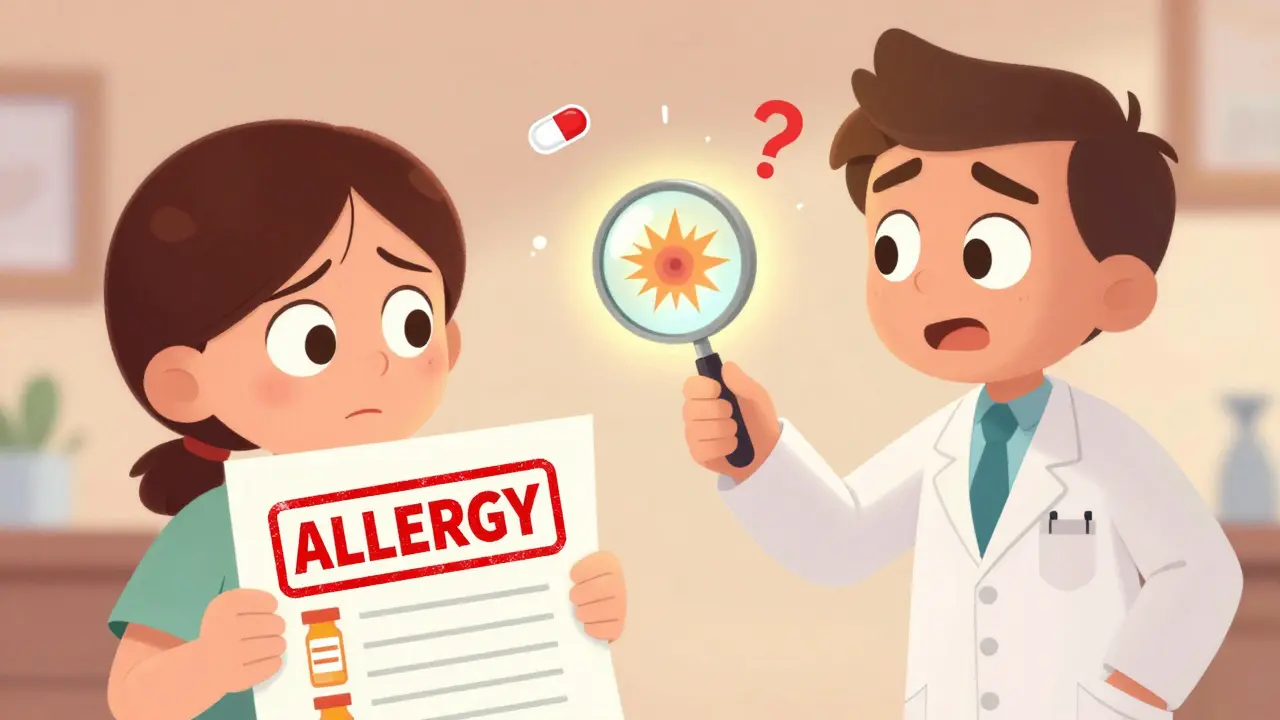
When a medication causes a severe reaction, it’s natural to want to avoid the whole family of drugs. But not every bad reaction means you need to say no to everything in that class. The difference between a harmless rash and a life-threatening event can change your treatment options for life. And too often, people are told to avoid entire drug families based on incomplete information - leaving them with fewer choices when they really need help.
What Counts as a Severe Drug Reaction?
A severe drug reaction isn’t just a stomachache or a mild itch. The FDA defines it as something that’s life-threatening, requires hospitalization, causes lasting disability, or leads to birth defects. In real terms, that means reactions like anaphylaxis - where your throat swells and you can’t breathe - or skin conditions like Stevens-Johnson syndrome, where large parts of your skin start peeling off. These aren’t rare. In the U.S., they send over 1.3 million people to the emergency room every year.
There are two main types of bad reactions. Type A reactions are predictable. They happen because of how the drug works in your body - like stomach bleeding from NSAIDs or low blood sugar from insulin. Type B reactions are unpredictable and often immune-driven. These are the ones that trigger allergies. Hives, swelling, wheezing, anaphylaxis - these are classic signs your immune system has mistaken the drug for an invader.
If you’ve had a reaction like this, your doctor should take it seriously. But here’s the catch: not all reactions are allergic. About 80 to 90% of people who say they’re allergic to penicillin aren’t actually allergic at all. They had a rash as a kid, got labeled “allergic,” and that label stuck - even though they’ve never been tested.
Which Drug Families Carry the Highest Risk of Cross-Reactivity?
Some drug families are more likely to cause trouble across the board. If you react to one, you might need to avoid others in the same group. The big ones are:
- Beta-lactam antibiotics - penicillins, amoxicillin, cephalosporins. Cross-reactivity between penicillin and cephalosporins is only 0.5% to 6.5%, depending on the specific drug. But many doctors still avoid all of them, even when it’s not needed.
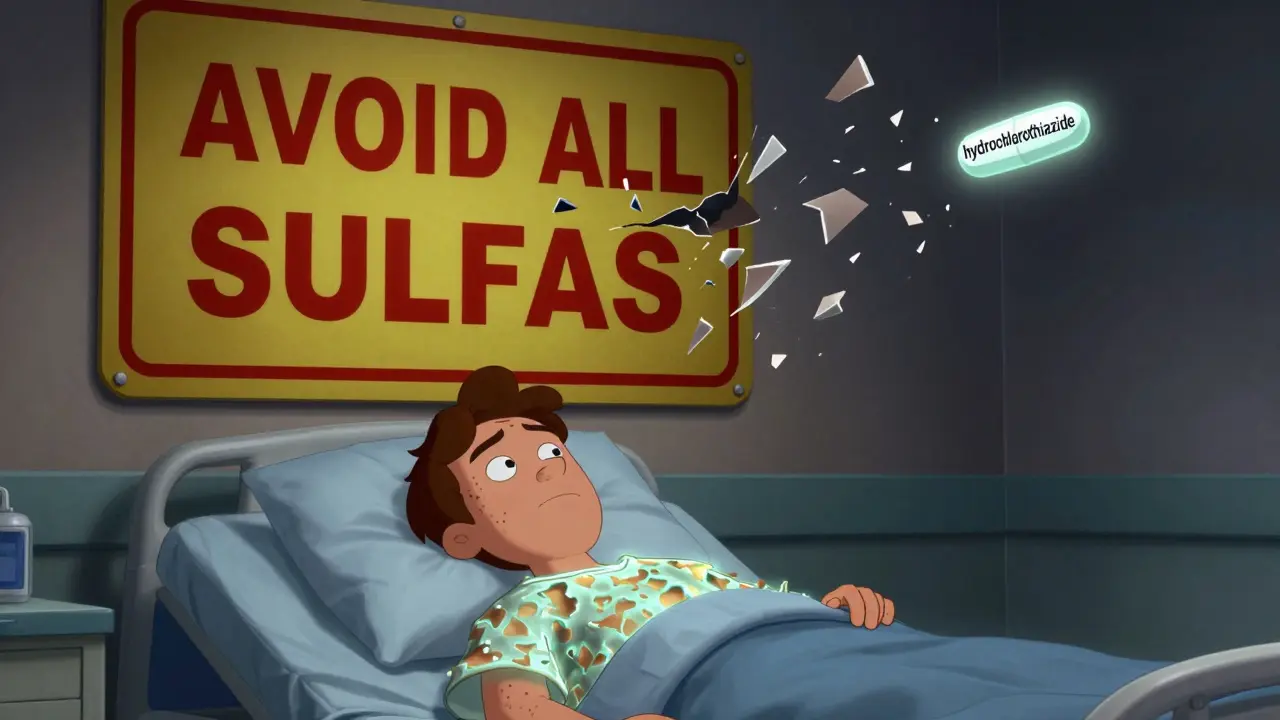
- Sulfa antibiotics - like Bactrim or Septra. These are linked to serious skin reactions like DRESS and TEN. If you’ve had one of those, you’ll likely need to avoid all sulfa drugs. But note: sulfa antibiotics are different from sulfa-based diuretics or diabetes drugs. A reaction to Bactrim doesn’t mean you can’t take hydrochlorothiazide.
- NSAIDs - aspirin, ibuprofen, naproxen. If you have aspirin-exacerbated respiratory disease, you’ll likely react to most NSAIDs. About 70% of people with this condition can’t tolerate them. But if your reaction was just an upset stomach, switching to a different NSAID or using a COX-2 inhibitor might be fine.
- Anticonvulsants - carbamazepine, phenytoin, lamotrigine. These are among the top causes of Stevens-Johnson syndrome. Avoiding the entire class is usually necessary after a severe skin reaction.
- Allopurinol - used for gout. It’s responsible for about 17% of TEN cases. Once you’ve had a severe reaction, you’re typically advised to avoid it forever.
The European Medicines Agency found that just six drug classes cause 95% of all toxic epidermal necrolysis cases. That’s why knowing exactly which drug caused the reaction matters more than just saying “I’m allergic to antibiotics.”
When Is Complete Avoidance Necessary?
If you had a severe cutaneous adverse reaction - like Stevens-Johnson syndrome, toxic epidermal necrolysis, or DRESS - you almost always need to avoid the entire drug class. These reactions kill. TEN has a 30% to 50% death rate. Even if you survive, you can be left with permanent scarring, vision loss, or organ damage.
Same goes for anaphylaxis. If your reaction involved low blood pressure, trouble breathing, or swelling of the tongue or throat, you’re at risk of it happening again. Avoiding the drug class is the safest move - unless you’ve been evaluated by an allergist.
But here’s the key: not every rash is a reason to avoid everything. A mild, flat, non-itchy rash that shows up days after starting amoxicillin is common - especially in kids with mononucleosis. It’s not an allergy. It’s a side effect. You can often take penicillin again safely. But without testing, most doctors will just say no.
Why So Many People Are Unnecessarily Avoiding Medications
Over 40% of serious drug reactions reported to the FDA involve antibiotics. And about half of those are beta-lactams. Yet, studies show that 95% of people labeled with penicillin allergy can actually tolerate it after proper testing. That’s not a typo. Nine out of ten people who think they’re allergic aren’t.
Why does this happen? Because the system isn’t built to question labels. Electronic health records have a checkbox: “Penicillin Allergy.” Once it’s checked, every doctor sees it. No one asks how it happened. No one checks if it was a true allergy or just a rash. The result? Patients get stuck with broader-spectrum antibiotics like vancomycin or clindamycin - which cost more, have worse side effects, and increase the risk of antibiotic-resistant infections.
Patients report delays in treatment because doctors won’t prescribe what they need. One person on a patient forum said they went 10 days without antibiotics for a UTI because every sulfa drug was off-limits - even though they only had a rash once, 15 years ago. Another said they were denied amoxicillin for a sinus infection because of a childhood rash. They finally got tested, found out they weren’t allergic, and took the drug without issue. After 20 years of avoidance.
A survey by the Asthma and Allergy Foundation of America found that 42% of people with drug allergy labels experienced treatment delays - averaging 3.2 days. That’s time lost, pain prolonged, and sometimes worse outcomes.
How to Know If You Really Need to Avoid a Drug Family
If you’ve had a severe reaction, here’s what to do next:
- Document the details. What drug? When did the reaction start? What symptoms did you have? Did you need epinephrine? Were you hospitalized? Write it down. Vague notes like “allergic to penicillin” aren’t enough.
- Ask for a referral to an allergist. Skin tests and blood tests can now tell you if you have a true IgE-mediated allergy. The ImmunoCap Specific IgE test, approved by the FDA in 2022, is 89% accurate - far better than old methods.
- Consider a drug challenge. Under medical supervision, a small dose of the drug can be given to see if you react. Success rates are 70% to 85% for beta-lactams in low-risk patients.
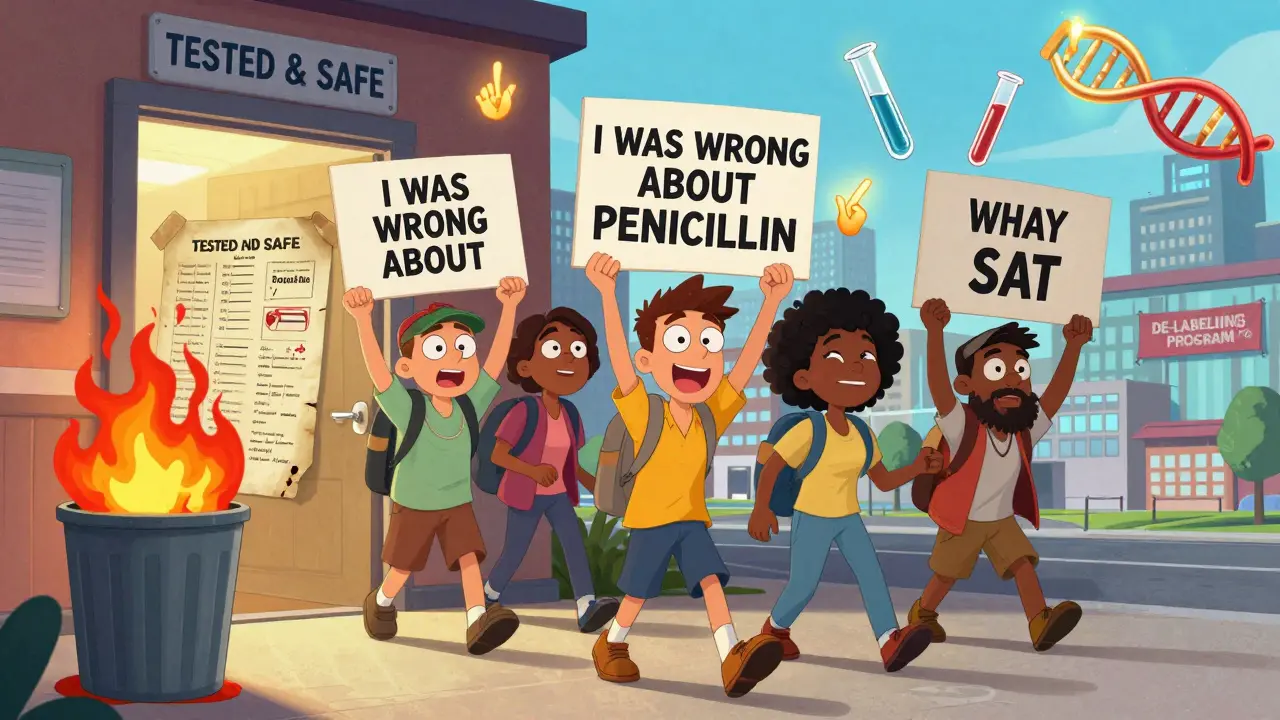
- Get your records updated. If testing shows you’re not allergic, ask your doctor to remove the label. Many hospitals now have formal de-labeling programs. In 2023, 87% of academic medical centers in the U.S. had them.
For reactions like DRESS or TEN, avoid the class - no testing needed. But for rashes, hives, or mild GI upset? Get tested. You might be able to use safer, cheaper, more effective drugs again.
What You Can Do Right Now
Don’t wait for your next appointment. Start by reviewing your own medical records. Look at your allergy list. What’s written there? Is it specific? Or does it just say “penicillin allergy” with no details?
If you’ve had a severe reaction, ask your doctor: “Was this a true allergy? Can I be tested?” If they say no, ask for a referral to an allergist or immunologist. These specialists are trained to sort out real allergies from side effects.
If you’ve never been tested but were labeled allergic years ago - especially to penicillin or sulfa drugs - you might be able to safely use those drugs again. That’s not just a hope. It’s backed by data from Harvard, the FDA, and the NIH.
And if you’re a caregiver for an older adult, check the Beers Criteria. It lists 30 drug classes that are risky for seniors. For 14 of them, safer alternatives exist. If your loved one had a bad reaction, ask: “Is there another option that doesn’t carry the same risk?”
The Bigger Picture: Why This Matters
This isn’t just about one person avoiding one drug. It’s about the entire system. When we avoid entire drug classes unnecessarily, we push people toward broader antibiotics, which fuel superbugs. We increase hospital stays. We raise costs. We delay care.
The global drug allergy diagnostics market is growing fast - from $2.3 billion in 2022 to an expected $4.1 billion by 2030. Why? Because we’re finally realizing that precision matters. Genetic testing now identifies people at risk for abacavir reactions with 99% accuracy. AI tools are cutting down wrong avoidance recommendations by 41%.
But none of that helps if you don’t know your own history. If you’ve had a severe reaction, don’t assume the whole class is off-limits. Get the facts. Get tested. Ask questions. Your next prescription could depend on it.
If I had a rash after taking penicillin, do I need to avoid all antibiotics?
Not necessarily. A mild, non-itchy rash that appears days after starting penicillin is often a non-allergic side effect, especially in children with viral infections. Only about 10% of people labeled with penicillin allergy actually have a true IgE-mediated allergy. Skin testing or a supervised drug challenge can confirm whether you’re truly allergic. Many people can safely take other beta-lactam antibiotics like amoxicillin or cephalexin after testing.
Can I take a sulfa diuretic if I’m allergic to a sulfa antibiotic?
Yes, you likely can. Sulfa antibiotics (like Bactrim) and sulfa-based diuretics (like hydrochlorothiazide) or diabetes drugs (like glipizide) have different chemical structures. A true allergic reaction to one doesn’t mean you’ll react to the other. Cross-reactivity between them is extremely low - under 1%. Still, if you had a severe reaction like Stevens-Johnson syndrome to a sulfa antibiotic, avoid all sulfa-containing drugs until you’ve been evaluated by an allergist.
Is it safe to take NSAIDs after a bad reaction to ibuprofen?
It depends on the reaction. If you had stomach bleeding or kidney issues, switching to a different NSAID won’t help - those are dose-dependent side effects. But if you had asthma, nasal polyps, or wheezing after ibuprofen, you likely have aspirin-exacerbated respiratory disease. In that case, most NSAIDs will trigger the same reaction. COX-2 inhibitors like celecoxib may be safer, but only under medical supervision. Always get evaluated before trying another NSAID.
What should I do if my doctor won’t test me for a drug allergy?
Ask for a referral to an allergist or immunologist. Many primary care doctors aren’t trained in allergy testing. Academic medical centers and large hospitals often have drug allergy clinics. If your doctor refuses, contact your local hospital’s pharmacy or allergy department directly. You can also ask for your medical records and bring them to a specialist. Testing is safe, covered by most insurance, and can change your treatment options permanently.
Can I outgrow a drug allergy?
Yes, especially with penicillin. Studies show that 80% of people who had a true penicillin allergy in childhood lose their sensitivity after 10 years. But you can’t assume you’ve outgrown it - you need to be tested. Without testing, you’re still at risk of a reaction. And if you’ve had a severe reaction like anaphylaxis or a skin syndrome, you’re unlikely to outgrow it without medical confirmation.





13 Comments
Henry Ip
Finally someone says this out loud. I was labeled penicillin allergic at 5 because of a rash after mono. 20 years later got tested and turned out I’m fine. Now I take amoxicillin like it’s candy. Why do doctors just check a box and move on?
Kasey Summerer
So let me get this straight 🤔 we’re telling people to avoid entire drug classes because some doc checked ‘allergic’ in 1998 and never looked back? 😅 Meanwhile my cousin’s on vancomycin for a UTI because of a rash she got while teething. The system is broken and we’re all just clicking ‘next’.
kanchan tiwari
THIS IS A COVER-UP. Big Pharma doesn’t want you to know you can be tested. They profit off you taking expensive, toxic alternatives. They’ve been hiding the truth for decades. Your doctor is paid to keep you afraid. I’ve seen the documents. They’re coming for your antibiotics next.
Bobbi-Marie Nova
OMG YES. I had the same thing with sulfa. Got a rash at 12, labeled allergic, avoided everything. Then I got a UTI in college and my doc said ‘try this’ and I took HCTZ and nothing happened. Turned out I wasn’t allergic to the diuretic at all. So dumb. Why didn’t anyone test me before I suffered for 15 years? 😩
Allen Davidson
People need to stop accepting labels like they’re tattoos. If you had a mild rash or stomach upset, get tested. It’s not hard. It’s not dangerous. It’s covered by insurance. Stop letting fear make your healthcare decisions for you. You deserve better options.
Rob Deneke
My mom got stuck on clindamycin for years because of a penicillin label. She got C diff twice. Last year she got tested and turned out she was fine. Now she’s on amoxicillin again and feels like a new person. Why don’t more doctors do this?
evelyn wellding
YESSSSS 😭 I’ve been telling my family this for years. My brother got labeled allergic after a rash from amoxicillin as a kid. He’s 32 now and still avoids all antibiotics. I made him go get tested last year. He cried when he found out he wasn’t allergic. He’s been so scared for so long.
Chelsea Harton
the system is a joke. we’re all just data points. doctors don’t care. they’re overworked. so they check the box. and then we pay the price. literally. with our health. with our money. with our time.
Corey Chrisinger
It’s funny how we fear drugs more than we fear ignorance. We’d rather suffer with a worse antibiotic than risk the unknown. But the real danger isn’t the penicillin-it’s the myth we’ve built around it. We’re scared of the wrong thing.
Bianca Leonhardt
People who don’t get tested after a rash are just being lazy. If you’re too scared to find out the truth, don’t complain when you get treated like a medical liability. You’re not brave-you’re just irresponsible.
Travis Craw
i just wanted to say thank you for writing this. my sister had a bad reaction to allopurinol and we were terrified. but reading this made me realize maybe we should get her tested for the others too. not sure if she’s ready but… i’m glad someone’s talking about this.
Christina Bilotti
Oh please. You think this is revolutionary? Every allergist in the country has known this for 20 years. It’s the primary care docs who are still stuck in the 1980s. If you didn’t know this, you’re not a patient-you’re a statistic waiting to be corrected.
brooke wright
I had a rash after penicillin when I was 8. I’m 45 now. I still won’t take it. I don’t care what the studies say. I’ve seen too many people get worse. I’m not risking it. I’ve had enough of being a guinea pig.