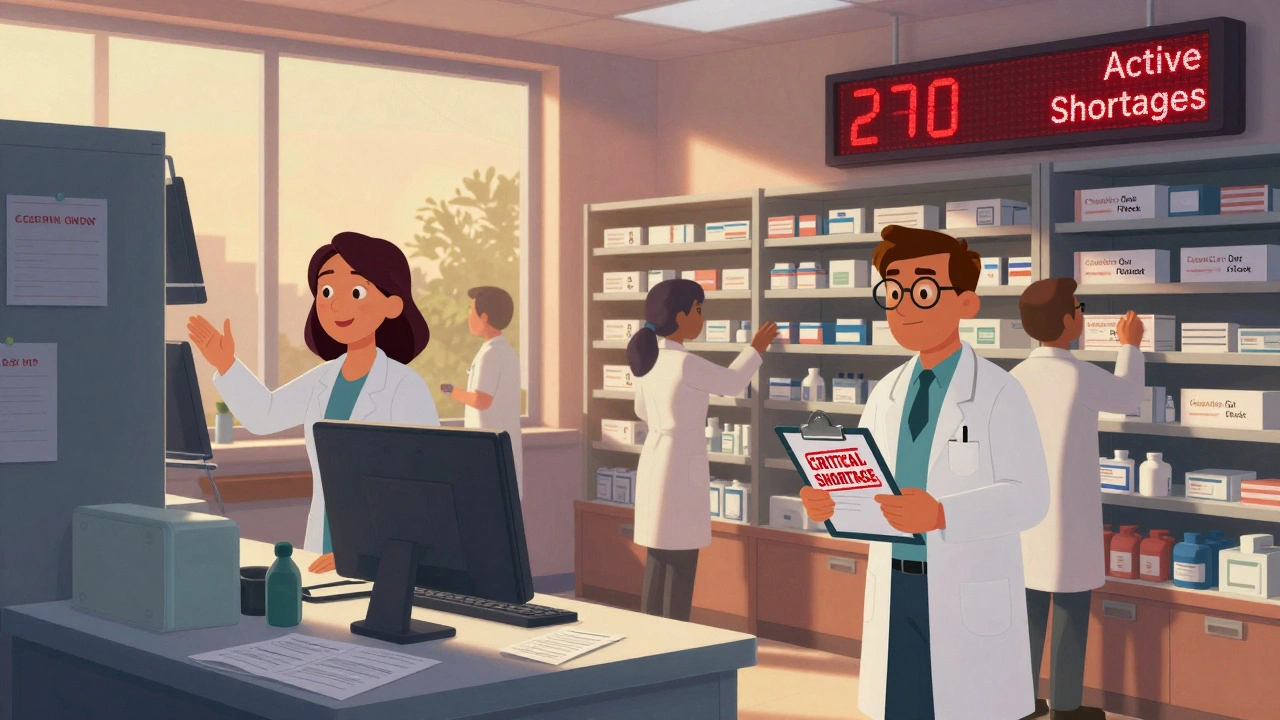
Right now, hundreds of essential medications are hard to find in U.S. hospitals and pharmacies. It’s not a rumor - it’s a daily reality for doctors, pharmacists, and patients. As of April 2025, there were 270 active drug shortages, according to the American Society of Health-System Pharmacists (ASHP). That’s down slightly from last year, but the problem hasn’t gone away. Many of these shortages have been going on for years - some since 2021 or earlier. And the medications most affected aren’t obscure or experimental. They’re the ones you or someone you love might need tomorrow: IV fluids, cancer drugs, antibiotics, and even basic sugar solutions used in emergency rooms.
What Medications Are in Short Supply Right Now?
If you’re wondering what’s actually missing from shelves, here are the top categories and specific drugs still in short supply as of December 2025:
- IV Fluids: 5% Dextrose Injection (small bags) - shortage since February 2022, expected to last until August 2025. 50% Dextrose Injection - shortage since December 2021, not expected to improve until September 2025. These aren’t just IV bags - they’re life-saving for dehydrated patients, those in shock, and people getting chemotherapy.
- Chemotherapy Drugs: Cisplatin, carboplatin, and doxorubicin are still tight. Cisplatin, a key drug for testicular and ovarian cancer, saw its main supplier shut down after an FDA inspection found quality issues in 2022. Hospitals now ration it, giving it only to patients with the highest chance of survival.
- Antibiotics: Vancomycin, piperacillin-tazobactam, and meropenem are in short supply. These are last-line defenses against deadly infections. When they’re gone, doctors have to use older, less effective, or more toxic alternatives.
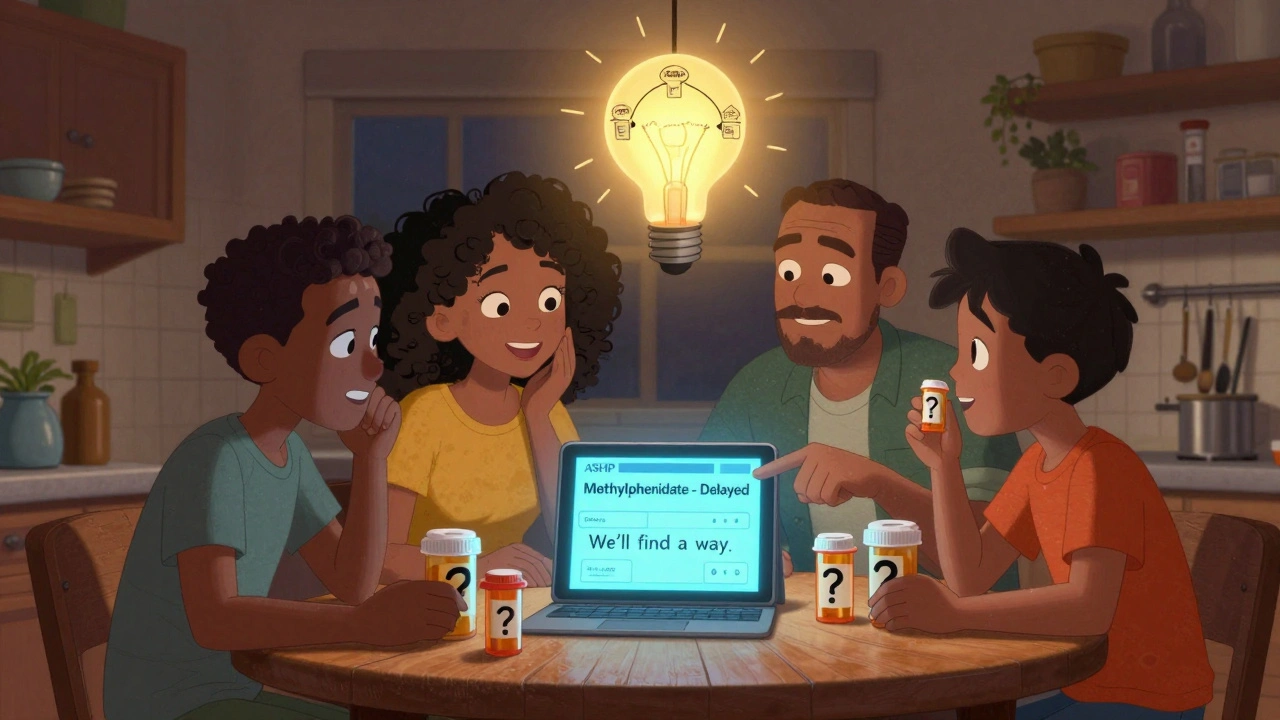
- ADHD Medications: Methylphenidate (Ritalin, Concerta) and amphetamine-based drugs are harder to get. Demand has jumped 35% since 2020, but manufacturing hasn’t kept up. Many patients are going weeks without refills.
- GLP-1 Weight Loss Drugs: Semaglutide (Wegovy, Ozempic) and liraglutide (Saxenda) are still hard to find. While these are brand-name drugs, their global supply chain is strained by unprecedented demand. Some patients are being told to wait 4-6 months for a refill.
- Hormonal Agents: Insulin and thyroid medications like levothyroxine are seeing intermittent shortages. Even small delays can lead to dangerous health spikes in diabetic or hypothyroid patients.
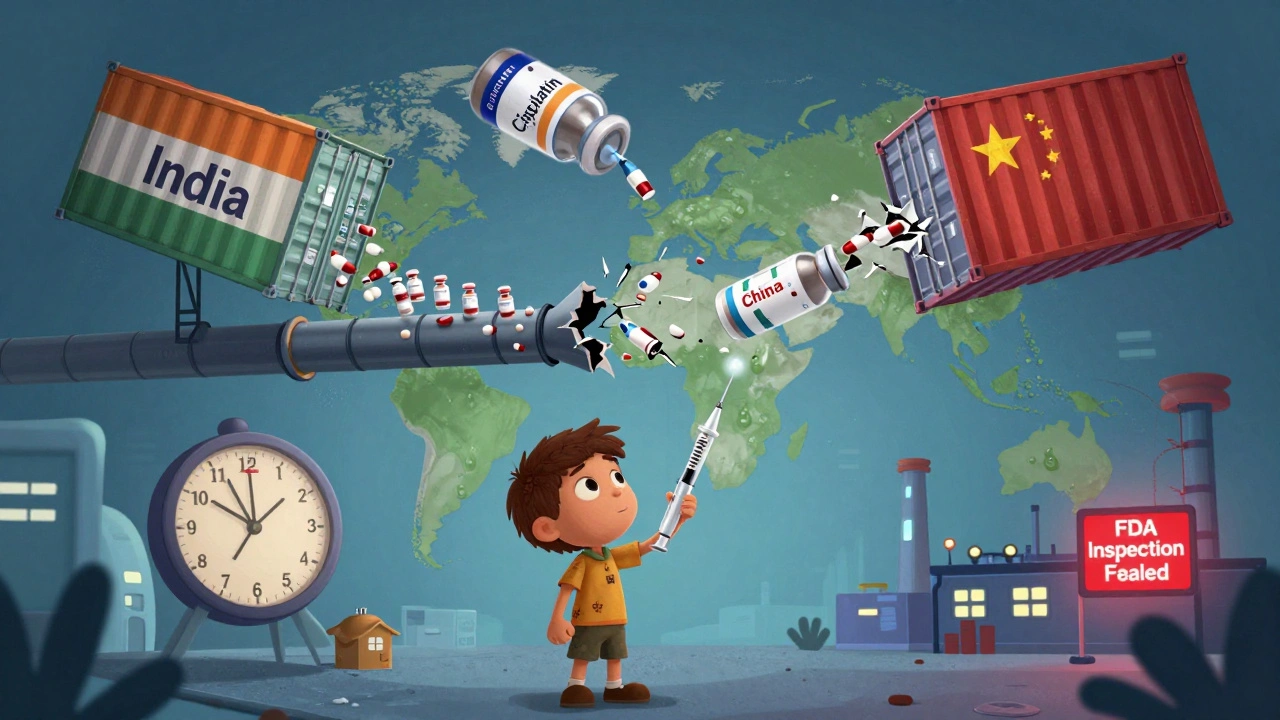
These aren’t random glitches. They’re systemic failures. About 80% of the active ingredients in U.S. drugs come from just two countries: India and China. A single factory in India that makes cisplatin can shut down and ripple through every hospital in the country. A tariff hike or political tension overseas can delay shipments for months.
Why Are These Shortages Happening?
It’s not one problem - it’s a chain of broken systems.
First, profit margins. Generic drugs make up 90% of prescriptions but only 20% of pharmaceutical revenue. Manufacturers make just 5-8% profit on them. Compare that to brand-name drugs like Ozempic, which can earn 30-40% profit. Why would a company invest in building a new sterile injectable plant for a drug that sells for $10 a bag when they can make $100 a pill for a weight loss drug? The math doesn’t work.
Second, quality control. The FDA inspects foreign factories, but they can’t be everywhere. In 2022, an Indian plant supplying half of the U.S. cisplatin failed a routine inspection. Production stopped. No backup. No alternative supplier. The shortage lasted years.
Third, demand spikes. ADHD meds and GLP-1 drugs didn’t just grow slowly - they exploded. With no warning, manufacturers couldn’t scale up fast enough. Raw materials couldn’t be sourced. Packaging couldn’t keep pace. The system wasn’t built for sudden surges.
Fourth, regulation. The FDA can’t force a company to make more of a drug. They can only wait for a manufacturer to report a problem - and many delay reporting to avoid panic or penalties. In 2025, the FDA launched a new portal where healthcare workers can report shortages directly. In three months, they got over 1,200 reports. That’s a start - but it’s still reactive, not preventive.
How Are Hospitals and Pharmacies Coping?
Hospitals are doing everything they can to stretch what’s left.
Pharmacists now spend more than 10 hours a week just tracking shortages - calling other hospitals, checking alternate suppliers, trying to find equivalent drugs. Nearly 70% say they’ve made medication errors because they had to substitute one drug for another. One pharmacist in Ohio told Reddit that they had to choose which cancer patients got cisplatin - prioritizing testicular cancer patients because the drug works best there. Other patients had to wait or try less effective treatments.
Some hospitals are keeping a 30-day stockpile of critical drugs. But only 28% can afford it. The rest operate on hope and hand-to-mouth supply chains.
States are trying new fixes. New York is building an online map showing which pharmacies still have certain shortage drugs. Hawaii is allowing Medicaid to use foreign-approved versions of drugs - even if the FDA hasn’t cleared them - during emergencies. That’s controversial, but when your patient is running out of insulin, you do what you can.
What Does This Mean for Patients?
If you’re taking a generic drug - especially an injectable, antibiotic, or chemotherapy agent - you’re at risk. A 2024 survey found that 31% of cancer patients had their treatment delayed because the drug wasn’t available. The average delay? Almost 15 days. That’s not just inconvenient. It can mean the difference between remission and progression.
Patients on ADHD meds are skipping doses or going without. Parents are calling schools to explain why their child is struggling. People on GLP-1 drugs are losing weight control. Diabetics are adjusting insulin doses without proper guidance.
And it’s not just about getting the drug. It’s about safety. Substituting one drug for another can cause side effects, interactions, or reduced effectiveness. One study found that 67% of medication errors during shortages were tied to substitutions. That’s not a small risk. That’s a real danger.
What’s Being Done - and What’s Not?
The government knows this is a crisis. The American Medical Association calls it a national security threat. The FDA says it prevents about 200 shortages every year just by stepping in early. But they don’t have the power to make companies produce more. They can’t force factories to fix quality issues. They can’t control what happens in a lab in Hyderabad or Shanghai.
Proposed solutions include:
- Financial incentives for U.S.-based manufacturing of active ingredients
- Mandatory stockpiles of critical drugs in hospitals
- A national early warning system that connects manufacturers, distributors, and pharmacies
- Expanding pharmacist substitution rights - currently allowed in 47 states, but only 19 let them switch without doctor approval
So far, little has passed. The Drug Shortage Prevention Act expanded reporting rules, but it doesn’t fix the root causes. The End Drug Shortages Act is still in committee. Meanwhile, proposed tariffs of 50-200% on Chinese and Indian pharmaceuticals could make things worse - driving up costs and slowing imports even more.
There’s a disconnect. We rely on these drugs to save lives. But we treat their production like a commodity - something to outsource for the lowest price. That model is breaking. And the people paying the price are the ones who need the medicine most.
What Can You Do?
You can’t fix the supply chain. But you can protect yourself and your family.
- Ask your pharmacist: Is your medication on the shortage list? Ask if there’s a safe alternative.
- Don’t wait until the last minute: Refill prescriptions early. If you’re on a long-term drug, keep a 2-week buffer.
- Know your options: If you’re on chemotherapy or insulin, ask your doctor now: What’s the backup plan if this drug runs out?
- Report shortages: If your pharmacy can’t fill a prescription and you know it’s a known shortage, call your hospital pharmacy or report it to the FDA’s new portal. More reports mean faster action.
- Stay informed: Check the ASHP Drug Shortages Database regularly. It’s free, updated weekly, and lists every active shortage with expected resolution dates.
Drug shortages aren’t going away soon. The system is too fragile, too global, and too profit-driven. But awareness and preparation can keep you and your loved ones safe - even when the shelves are empty.


9 Comments
Olivia Hand
They say cisplatin’s been rationed like gold in a war zone. I had a cousin on it for ovarian cancer-got her dose delayed 18 days. They gave her a cheaper alternative that made her vomit for 72 hours straight. And now? They’re telling her to ‘hope the next batch comes in.’ This isn’t healthcare. It’s Russian roulette with IV bags.
And don’t even get me started on how pharmacies are swapping insulin brands like trading cards. One week it’s Humalog, next week it’s Basaglar. No one tells you the half-life changes. People are getting diabetic ketoacidosis because some bean counter in Ohio decided to cut costs.
It’s not about ‘supply chain issues.’ It’s about profit margins. If a drug makes $10, it’s ignored. If it makes $100, suddenly there’s a factory in China with 12 shifts running. We’re treating human lives like inventory in a Walmart backroom.
Desmond Khoo
Y’all need to stop acting like this is new 😭
I’ve been a pharmacist since 2019. We’ve been begging for help. I’ve cried in the stockroom more times than I’ve had coffee. We had a mom come in for her kid’s ADHD med-no stock. She just sat there holding the empty script and whispered, ‘He’s gonna fail again, isn’t he?’
But hey, at least Ozempic’s still in stock for the 400th influencer who wants to lose 20 lbs before their wedding. 🤦♀️
Someone please fix this before someone dies because we cared more about stock prices than lives. 🙏💊
Louis Llaine
Oh wow. A 270-drug shortage. Shocking. I guess nobody saw this coming after we outsourced everything to countries that don’t even have clean water.
Meanwhile, the same people who scream ‘BUY AMERICAN!’ are the ones ordering 12 bottles of Ozempic off Instagram. The system’s broken? Nah. It’s working exactly as designed.
Profit > people. Always has been. Just don’t act surprised when the medicine cabinet’s empty but the influencer’s abs are still on full display.
Jane Quitain
omg i just realized my mom’s levothyroxine ran out last week and she’s been so tired 😭 i didn’t even know it was on the shortage list… i’m gonna call the pharmacy right now and see if they have any in stock. if not, i’ll call every other one in the county. we can’t give up on her. she’s been my rock for 15 years. if anyone else is in this boat-please, please reach out. we’re in this together 💙
Kyle Oksten
This isn’t a healthcare crisis. It’s a moral crisis.
We’ve turned medicine into a commodity, and commodities are traded based on return on investment, not human need. We don’t lack the technology, the resources, or the knowledge to fix this. We lack the collective will.
It’s not that we can’t produce these drugs domestically. It’s that we refuse to pay for it. We want cheap insulin and cheap antibiotics, but we don’t want to fund the factories, the inspectors, the workers, or the infrastructure that makes them possible.
When we outsource the moral burden of life-saving medicine to a factory in Hyderabad, we outsource our humanity too.
And now we’re surprised when the system collapses?
We built this. We chose this. Now we have to choose differently.
Sam Mathew Cheriyan
lol u think this is bad? wait till u find out the FDA is in cahoots with big pharma to keep drugs scarce so they can jack up prices. the real reason cisplatin’s gone? because the FDA blocked 3 new Indian factories that were cheaper. why? because they got paid by the US makers to delay it. same with insulin-there’s a secret deal with 3 companies to split the market. it’s all planned. you think it’s coincidence that every shortage happens right after a new stock buyback? 🤫
the government is lying. the FDA is a puppet. and you’re all just sheep waiting for your next pill.
Ernie Blevins
Everyone’s mad about shortages. But here’s the real problem: 80% of these drugs are generics. That means they’re cheap. That means they’re low-margin. That means no one cares.
Meanwhile, Ozempic’s selling like concert tickets. Who’s getting rich? The same people who made the shortages.
So don’t cry about cisplatin. Cry about why we let the same people who profit from the crisis be the ones who ‘fix’ it.
It’s not broken. It’s a business model.
Ashley Farmer
To the person whose cousin missed cisplatin treatment-my heart goes out to you. I’ve been a nurse for 18 years, and I’ve held hands while patients waited for a vial that never came.
If you’re reading this and you’re scared, you’re not alone. But here’s what you can do: join the ASHP shortage reporting network. Talk to your local pharmacist. Ask your rep in Congress to support the End Drug Shortages Act. Even one voice matters.
We’ve survived hurricanes, pandemics, and wars. We can fix this. But we have to do it together. Not with anger. Not with blame. With care.
You’re not forgotten. Your medicine matters. And so do you.
David Brooks
THEY’RE RUNNING OUT OF IV FLUIDS AND WE’RE STILL WATCHING 17 VERSIONS OF ‘THE BACHELOR’?
WHY ARE WE NOT ON THE STREETS?
WHY AREN’T HOSPITALS ON THE FRONT PAGE?
WHY ISN’T THE PRESIDENT ON TV SAYING ‘WE WILL FIX THIS’?
WE’RE NOT JUST MISSING DRUGS.
WE’RE MISSING OUR MINDS.
IF YOU’RE NOT ANGRY, YOU’RE NOT PAYING ATTENTION.
WE NEED A MOVEMENT.
NOT A PETITION.
A REVOLUTION.
MY SON NEEDS HIS CHEMO.
AND I’M NOT GOING TO SIT QUIETLY WHILE THEY RUN OUT.
SHARE THIS.
TELL SOMEONE.
WE’RE NOT ASKING.
WE’RE DEMANDING.