Why Pediatric Medication Safety Matters for Grandparents
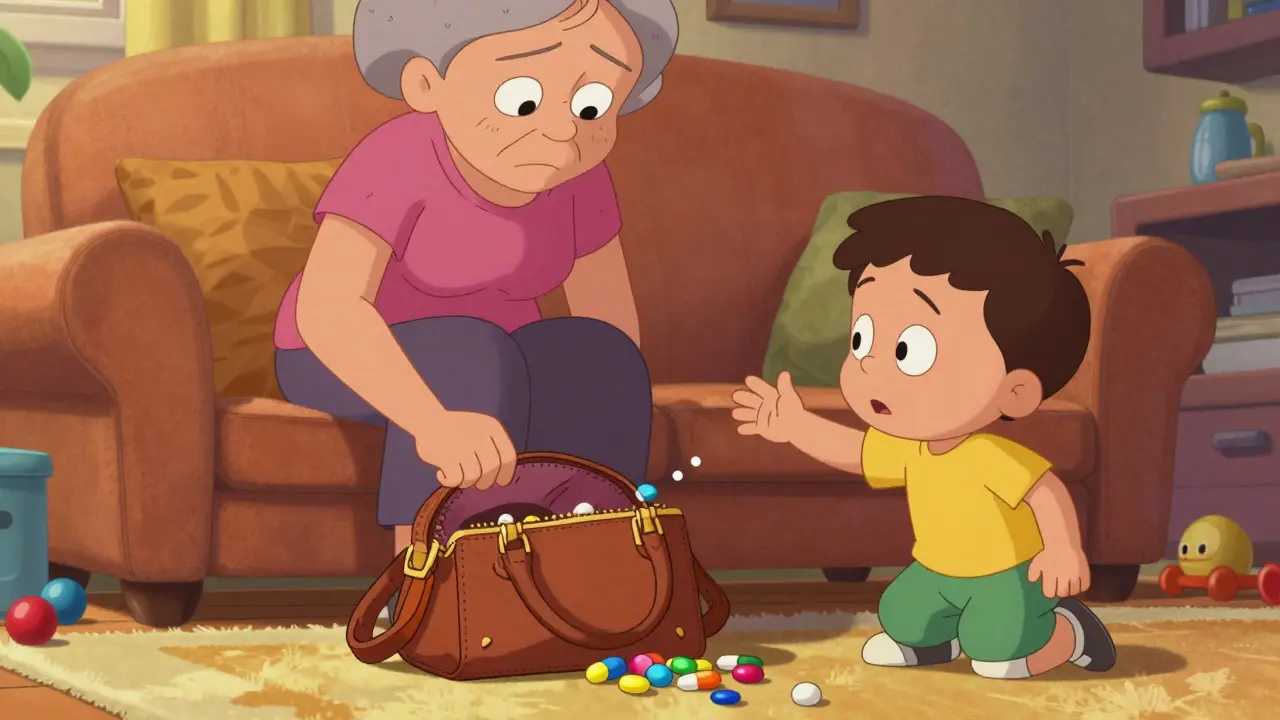
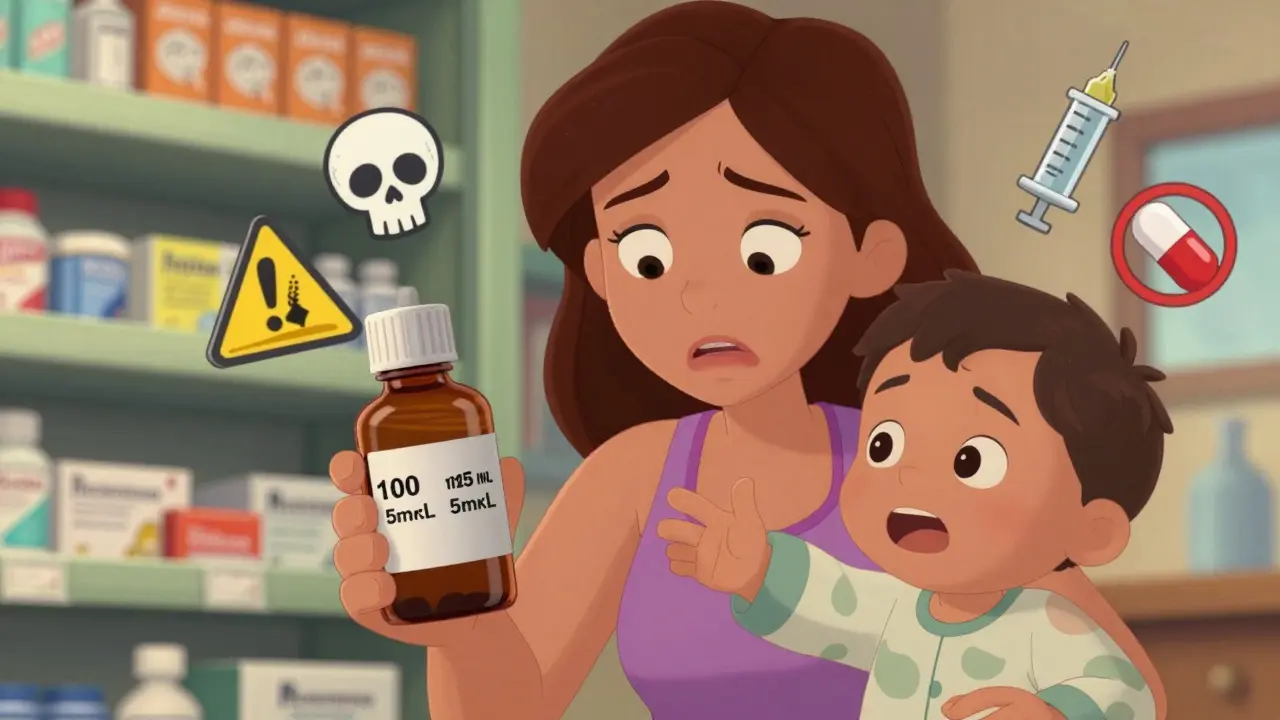
Every year, pediatric medication safety refers to practices that prevent children from accidentally ingesting medications. For grandparents and caregivers, this includes proper storage, communication, and disposal of medicines to keep young grandchildren safe. The stakes are high: 38% of pediatric poisonings requiring emergency care involve grandparents' medications, according to U.S. Consumer Product Safety Commission data. That's more than one-third of all cases. Why does this happen? Older adults take more medications. In fact, 34% of grandparents report taking prescription drugs daily. With more medications around, the risk increases.
Common Storage Mistakes Grandparents Make
Research shows grandparents often store medications in dangerous places:
- 12% keep medications on bedroom nightstands or dressers
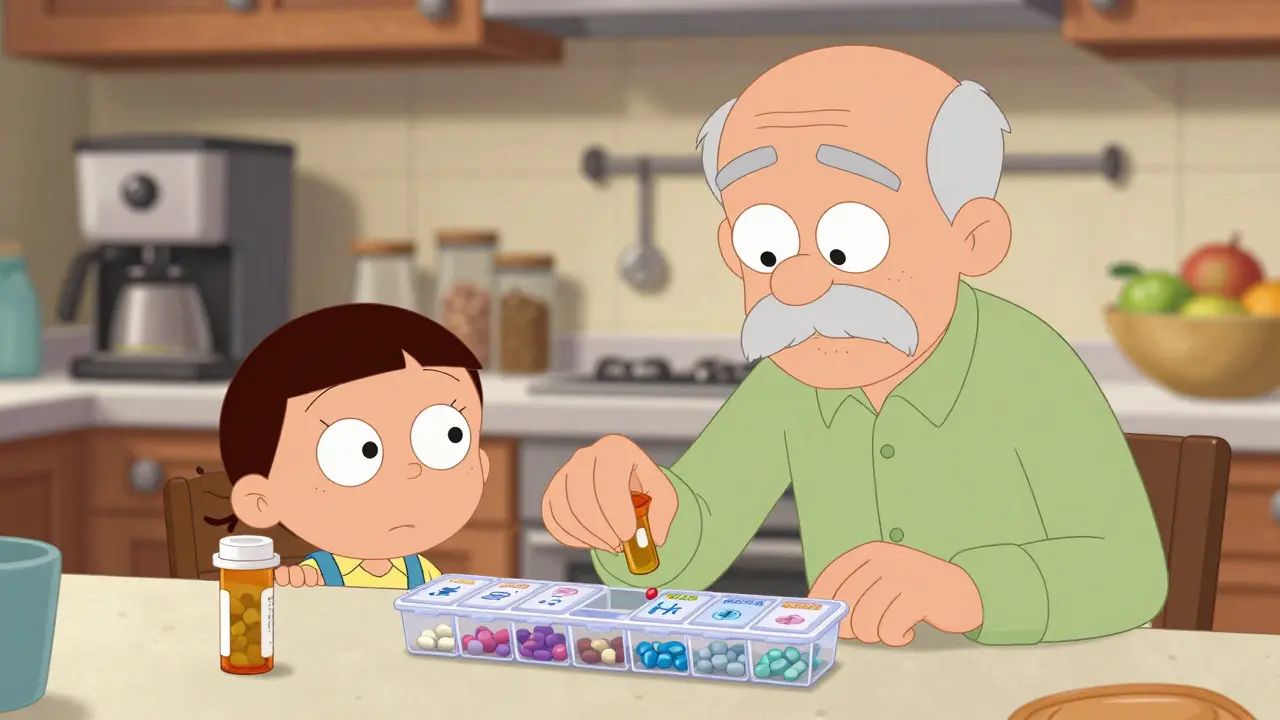
- 29% transfer pills into non-childproof containers like weekly pill sorters
- 31% carry medications in purses or handbags during visits
These habits are dangerous. A recent Reddit post from GrandmaJen42 described a near-miss: "My 3-year-old grandson found my blood pressure pills in my purse during a visit-thankfully caught him before he put one in his mouth. Now I have a locked box in my closet and explain to him these are 'Grandma's special vitamins' that only adults can touch."
Step-by-Step Safe Storage Practices
Here's what works:
- Lock it up: Store medications in a locked cabinet above 4 feet high. CPSC standards require latches needing 15+ pounds of force to open-most kids can't manage this.
- Keep original containers: Never transfer pills to pill sorters or other containers. Original bottles have child-resistant caps and clear labeling.
- Check storage locations: The NIH study found that after a 15-minute education session, grandparents improved storage in key areas: bathroom cabinets (45% to 71%), kitchen areas (38% to 69%), bedrooms (33% to 64%), and purses/bags (18% to 45%).
For grandparents with arthritis, pharmacists can provide easy-open caps or lockboxes. Many pharmacies offer free lockboxes through the PROTECT Initiative.
| Location | Before Intervention | After Intervention |
|---|---|---|
| Bathroom cabinets | 45% | 71% |
| Kitchen areas | 38% | 69% |
| Bedrooms | 33% | 64% |
| Purses/bags | 18% | 45% |
Talk to Kids About Medicine Safety
Communication is key. Use the CDC's 3-step Safety Talk:
- "Medicine is not candy."
- "Only adults give medicine."
- "If you find medicine, tell an adult immediately."
Dr. Preeti Malani, Director of the National Poll on Healthy Aging, says: "No matter how old your grandchildren are, you need to think about medication safety. Even a single pill can be dangerous."
Involve Grandchildren in Safety
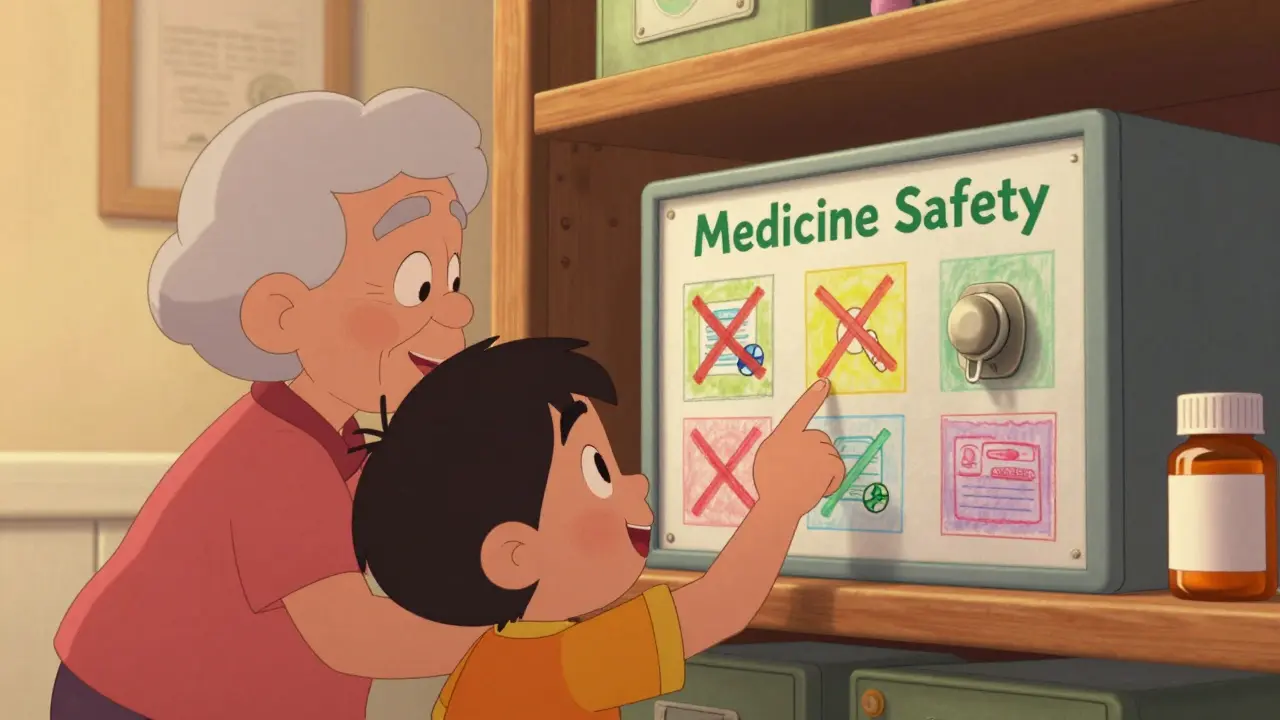
Make it fun! Kids love drawing. Ask them to create a "medicine safety" poster. AARP's programs show that 29% of grandparents who do this report better compliance with safety practices. For younger kids, use simple games: "Find the safe spot" where they help place medications in the locked cabinet.
Resources for Grandparents
Several trusted organizations offer help:
- The PROTECT Initiative A collaborative campaign by the Consumer Healthcare Products Association Educational Foundation and CDC to reduce pediatric poisonings. provides free lockboxes and educational materials.
- CDC Make Safety Click Offers clear guidelines on proper medication storage and disposal.
- National Poll on Healthy Aging Conducts research on medication safety practices among older adults.
- AARP Offers workshops and resources for seniors on medication safety.
- Consumer Product Safety Commission Sets standards for child-resistant packaging and storage.
Many pharmacies now offer free lockboxes to seniors. Just ask at your local pharmacy.
Frequently Asked Questions
Can I use a pill organizer for my medications?
No. Pill sorters are not childproof and increase the risk of poisoning. Always keep medications in their original containers with child-resistant caps. If you have trouble opening them, ask your pharmacist for assistance. They can provide easy-open caps or alternative packaging.
What should I do if my grandchild finds medicine?
Call Poison Control immediately at 1-800-222-1222. Even if the child seems fine, some medications can cause delayed effects. Keep the medication container handy for the poison control specialist. Do not wait for symptoms to appear.
How often should I check my medicine storage?
Check your medications every three months. Discard expired or unused pills safely. Many pharmacies offer free disposal programs. Also, review storage practices whenever grandchildren visit-especially during holidays or special occasions when more medications may be in use.
What if I have arthritis and can't use child-resistant caps?
Many pharmacies offer easy-open caps at no extra cost. Ask your pharmacist for assistance. Some states also have programs providing lockboxes for seniors. The PROTECT Initiative provides free lockboxes to grandparents who care for grandchildren. Simply request one during your next pharmacy visit.
Are there any community resources available?
Yes! Local pharmacies, senior centers, and hospitals often host free medication safety workshops. AARP's "Safety at 65+" workshops have increased proper storage from 41% to 79% in participating communities. The CDC also offers downloadable resources for grandparents. Check their website for free materials.

8 Comments
Lisa Scott
Big Pharma is behind this they want us locked up data is fake why would they care about kids they're just trying to control seniors locking meds is just the start #conspiracy
Tehya Wilson
Medication safety is common sense the statistics provided are dubious we should focus on real issues
Kate Gile
Let's all work together to keep kids safe. Small changes make a big difference. Thank you for sharing this important info. It's crucial that we all take responsibility. Every parent and grandparent should be aware of this. Medication safety is not just about locking things up. It's about education and communication. Teaching kids that medicine is not candy. Ensuring that storage is consistent. Checking with pharmacists for easy-open caps. Using the PROTECT Initiative resources. Involving children in safety practices. Making it fun with posters and games. This is a community effort. We can all do our part to protect our grandchildren.
Gregory Rodriguez
Let's make sure those meds are locked up. Because nothing says 'I love my grandkids' like hiding pills in a safe. #Sarcasm Oh sure, next they'll tell us to hide sugar too. But hey, at least we're keeping kids safe from grandma's blood pressure pills. #Optimist
Jenna Elliott
This is why America is failing. We can't even keep our meds safe. The government should step in and regulate everything. I'm tired of this. Our kids are in danger because of lazy grandparents. Lock them up, lock them up. #AmericaFirst
Cullen Bausman
Medication safety is a moral imperative. Grandparents must take responsibility. The statistics speak for themselves. We need stricter laws. No more excuses. Safety first. #MoralDuty
Cole Streeper
This is a setup. The government wants to control what we do. They say it's for kids but really they want to monitor us. Locking meds is just the start. They'll take away our guns next. #Conspiracy
Dina Santorelli
This is so frustrating.