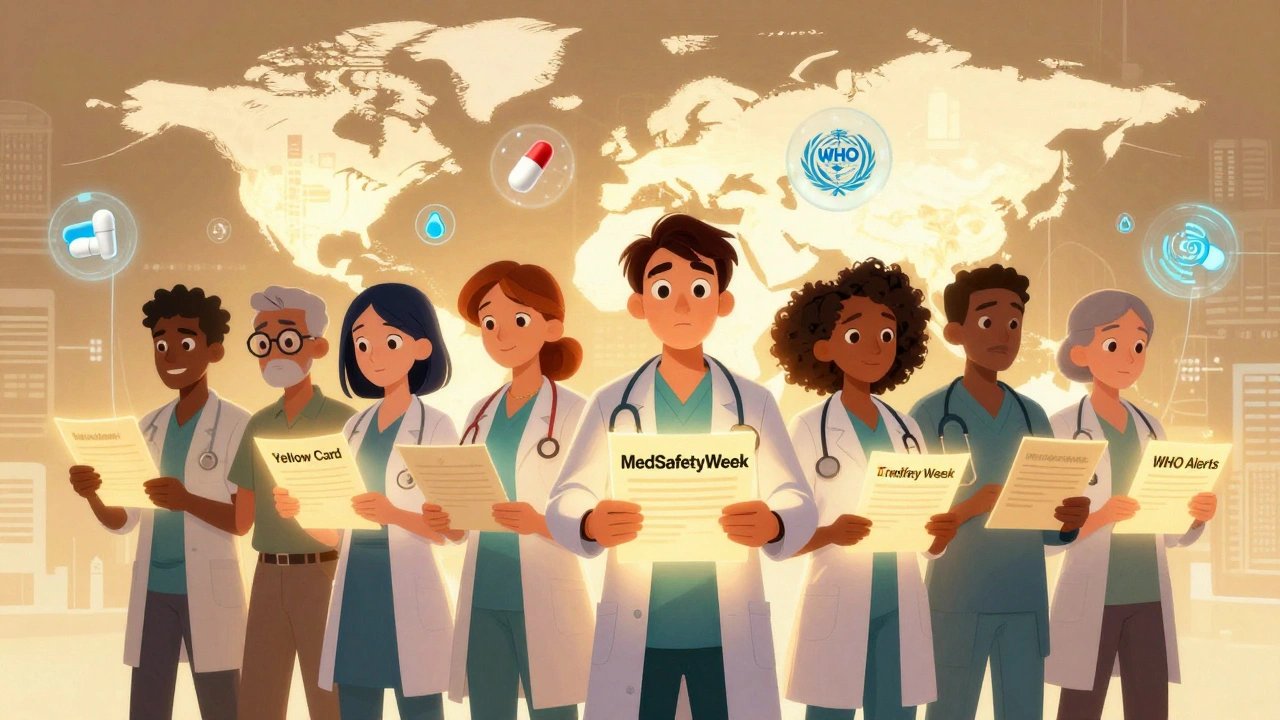
Every year, millions of people around the world take medications that help them feel better-or even save their lives. But not every side effect gets reported. In fact, less than 10% of adverse reactions are ever documented. That means most safety issues fly under the radar, putting others at risk. If you’re a healthcare worker, pharmacist, or even a patient who takes meds regularly, staying informed isn’t optional-it’s essential. The good news? There’s a global system built just for this. You just need to know where to look.
Start with the World Health Organization
The WHO is the backbone of global medication safety. Every year, they release updates on drug risks, policy changes, and new guidelines. In May 2025, they published a major update on controlled medicines-things like opioids, benzodiazepines, and ketamine-balancing access with safety. This wasn’t just a technical document. It was a call to action: “The suffering caused by lack of safe, affordable access to controlled medicines is both preventable and unacceptable.” That’s the kind of language that tells you this matters.Sign up for their Medicines Safety email alerts. These aren’t marketing emails. They’re direct updates from the WHO’s Drug Safety team, sent out when a new risk is confirmed, a recall is issued, or a guideline changes. You’ll get this before it hits mainstream news. And don’t skip their annual World Patient Safety Day on September 17. The 2025 theme focused on newborn care, but every year they highlight a different vulnerable group-children, elderly, pregnant women-and what’s being done to protect them.
Follow #MedSafetyWeek and the Uppsala Monitoring Centre
Every November, 117 countries and 131 organizations join forces for #MedSafetyWeek. The 2025 campaign ran from November 3-9, marking its 10th anniversary. The theme? “We can all help make medicines safer.” That’s not marketing fluff. It’s a fact. You don’t need to be a doctor to make a difference. Reporting a strange reaction after taking a new pill? That’s part of the solution.The Uppsala Monitoring Centre (UMC) runs this campaign and coordinates the WHO’s global drug safety network, which connects 150 countries. Their website is the first place to go for official campaign materials-posters, social media templates, educational videos. If you work in a clinic, hospital, or pharmacy, download these. Hang them up. Share them. The Australian Commission on Safety and Quality in Health Care found that hospitals using #MedSafetyWeek materials saw a 25% increase in staff reporting side effects. That’s real impact.
Use the Yellow Card System (and similar tools)
In the UK, the MHRA runs the Yellow Card scheme. It lets anyone-patients, pharmacists, nurses-report side effects from medicines, vaccines, herbal products, or even e-cigarettes. And it’s free. You can do it online, by phone, or through the Yellow Card app. The app is especially handy. You can snap a photo of the medicine label, fill out a quick form, and submit it while you’re on the go.Other countries have their own versions. Canada has the Canada Vigilance Program. Australia has the TGA’s database. The U.S. uses the FDA’s MedWatch. All of these feed into the global system. You don’t need to report to every one-but if you’re in a country with a national system, use it. Even if you’re not sure whether something is related to a drug, report it anyway. The system is built to filter out noise. What it can’t do is find problems that never get reported.
Learn from ISMP’s Best Practices
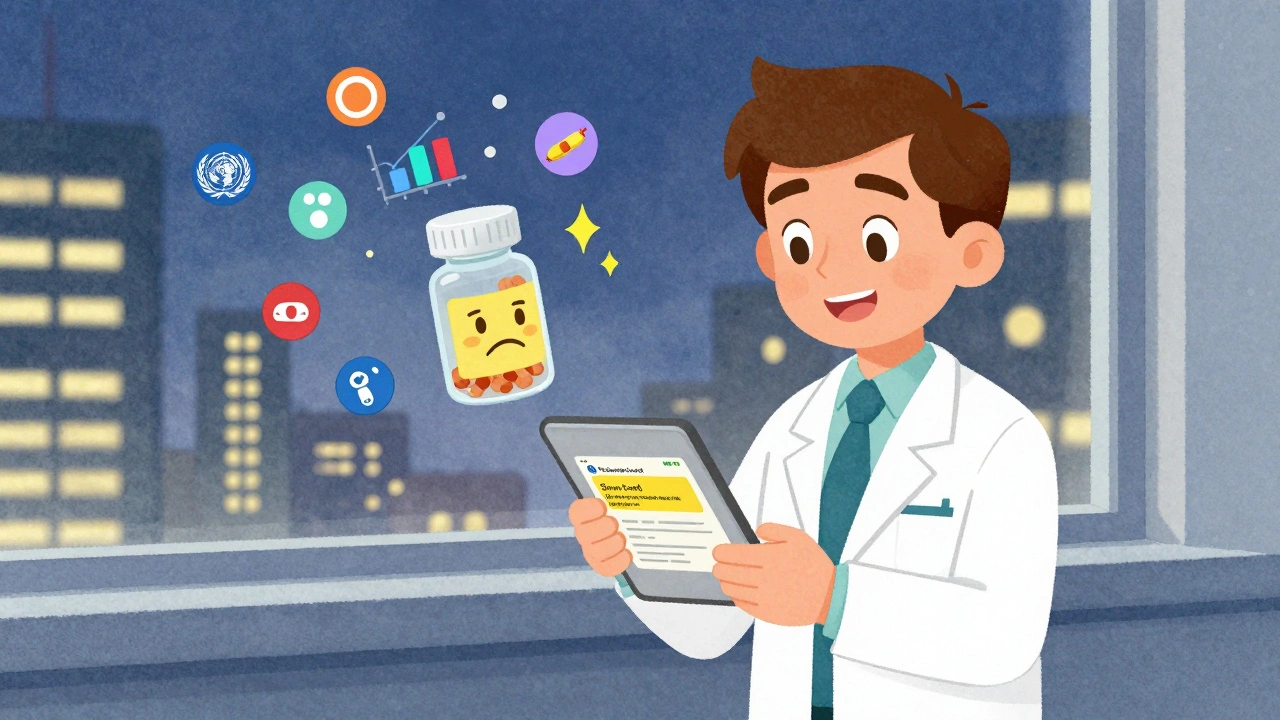
The Institute for Safe Medication Practices (ISMP) doesn’t just warn about risks-they give you a roadmap to fix them. Every two years, they release Targeted Medication Safety Best Practices for Community Pharmacy. The 2025-2026 edition is packed with actionable steps: how to verify weight-based dosing for kids, how to handle returned medications safely, how to avoid mix-ups during vaccine administration.One pharmacist in Ontario told Reddit they used the weight-dosing checklist to catch a fatal error before it happened. The patient was supposed to get 0.5 mL of a concentrated solution. The label was misread. The checklist forced a double-check. That’s the power of structured tools. Download the worksheets. Run them through your team. Don’t just read them-implement them. ISMP says early adopters cut medication errors by 15-22% in targeted areas. That’s not theory. That’s results.
Watch for the Top 10 Patient Safety Issues
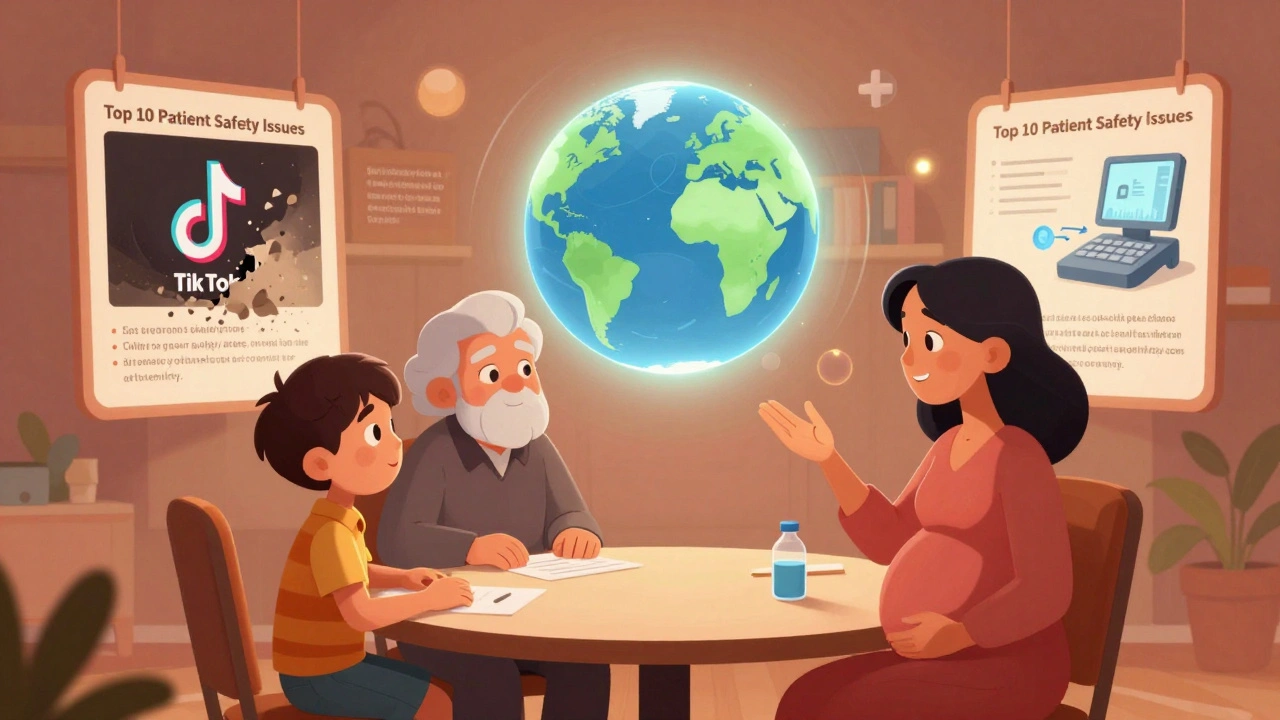
Every March, ECRI and ISMP release their Top 10 Patient Safety Issues. The 2025 report didn’t just list old problems like missed diagnoses or infections. It flagged new threats: AI tools making wrong recommendations, hackers stealing health data, and social media spreading medical misinformation. In places with high social media use, vaccine misinformation alone caused an 18% spike in false adverse event reports. That doesn’t mean vaccines are unsafe-it means people are being misled, and that confusion puts real patients at risk.These reports aren’t just for hospital admins. If you’re in a role where you interact with patients, you need to know what misinformation is circulating. If a patient asks you about a TikTok video claiming a drug causes hallucinations, you need to know the truth-and how to explain it simply. Keep a copy of the Top 10 list handy. Refer to it when you hear something alarming.
Understand the gaps-and why they matter
Here’s the uncomfortable truth: medication safety isn’t equal. High-income countries report 350-400 adverse events per million people each year. Low-income countries? As low as 5-10. That doesn’t mean people there have fewer side effects. It means they don’t have the systems to report them. WHO’s Global Patient Safety Report 2024 showed that in many regions, there’s no trained staff, no digital reporting tool, no public awareness. And without data, you can’t fix the problem.That’s why your reporting matters. Even if you’re in a country with strong systems, your input helps fill the global picture. The WHO is working to expand monitoring to 50 more low- and middle-income countries by 2030. But they need data from everywhere to make those efforts effective.
What to do next: A simple 5-step plan
You don’t need to read every report. You don’t need to memorize every guideline. Just do these five things:- Subscribe to WHO’s Medicines Safety email alerts.
- Download your country’s adverse reaction reporting app (like Yellow Card) and use it once a month-even if you haven’t seen a reaction, check the system.
- Mark November 3-9 on your calendar. Look for #MedSafetyWeek materials from UMC and share them.
- Get ISMP’s 2025-2026 Best Practices worksheet. Run it with your team. Find one gap. Fix it.
- Bookmark the ECRI/ISMP Top 10 list. Review it every March. Talk to colleagues about the top threats.
It’s not about doing everything. It’s about doing something-consistently.
What’s changing in 2025 and beyond
New tools are coming. The UMC tested AI-powered symptom checkers in 15 countries during 2024. These tools help patients decide whether a symptom might be linked to a drug-and if so, guide them to report it. Medi-Span’s clinical decision support system, used in Saudi Arabia and now expanding globally, reduced medication errors by 40%. By 2027, it’s expected to cut errors another 15-20% by predicting risks before they happen.But technology alone won’t fix this. The biggest barrier isn’t lack of data-it’s lack of action. A nurse in the UK summed it up: “We have Yellow Card, hospital reports, national systems-but no integration. Duplication. Missed chances.” That’s the real problem. Systems exist. They just don’t talk to each other. Your reporting bridges that gap.



9 Comments
Shubham Mathur
WHO alerts are great but most docs in India don't even know they exist
We got 1000 patients a day and no time to sign up for emails
My pharmacy got a recall notice last month via WhatsApp from a rep not WHO
Real talk if you're not in a fancy hospital with a safety officer you're just guessing
Why no app for Indian pharmacists like Yellow Card
They make us fill paper forms that go into a drawer
Uppsala sends materials in English only
What about Hindi Tamil Bengali
My grandma took blood pressure med and got swollen face
No one told her to report it
And no one asked
So she just stopped taking it
Now she's in hospital again
Systems exist but they don't reach the people who need them most
Brianna Black
As someone who works in global health policy I can tell you this article is one of the most accurate summaries I've seen in years
The WHO's 2025 update on controlled substances was a watershed moment
But let's be real
the real bottleneck isn't awareness it's infrastructure
When I was in Malawi last year
we had clinics using handwritten logs from 1998
and no internet
So yes
reporting matters
but so does funding
and training
and translating materials into local languages
And don't get me started on how pharmaceutical companies suppress adverse event data in low-income markets
This isn't just about individual action
it's about systemic justice
And if you're reading this and you're in a position to advocate for funding
do it
now
Lola Bchoudi
ISMP's 2025-2026 Best Practices are non-negotiable for any community pharmacy implementing a medication safety program
The weight-based dosing verification protocol alone has been shown to reduce pediatric medication errors by up to 37% in peer-reviewed studies
And the returned medication protocol
which mandates quarantine and documentation
is critical for preventing cross-contamination and misdispensing
But here's the kicker
most pharmacies still treat this as optional compliance
not as a core safety culture initiative
Until you institutionalize these workflows
through staff training audits and feedback loops
you're just going through the motions
And that's not safety
that's liability waiting to happen
Download the worksheets
Run the checklist
Document everything
And hold your team accountable
Morgan Tait
AI symptom checkers
really
so now the machines are deciding what's dangerous
and who gets to report
and who gets ignored
What's next
AI deciding which patients get meds
and which ones get labeled as hypochondriacs
My cousin reported a reaction to metformin
and got flagged as "low probability" by the system
then her doctor ignored it
she ended up in the ER with lactic acidosis
They don't care
they just want data
not people
and now we're outsourcing judgment to code written by people who've never held a patient's hand
Great
just great
Ryan Brady
Why are we even talking about WHO
USA has the best system
MedWatch is all you need
stop being so globalist
we don't need your third-world reporting
and why are we promoting apps
next thing you know
the government will force us to report every sneeze
and then they'll take away our meds
and our guns
and our freedom
and your "#MedSafetyWeek" is just a socialist plot
to control the population
😭
Katherine Rodgers
so the article is basically "report everything"
but the real problem is that half the reports are people who think their coffee made them hallucinate
and the other half are doctors who report because they're scared of lawsuits
so we get 1000 reports of "I felt weird after taking ibuprofen"
and one real case of liver failure
and then the system says "interesting trend"
when it's just noise
and meanwhile
the actual dangerous drugs
the ones that kill quietly
are still flying under the radar
because nobody reports them
or they're too scared
or the pharma company bought the regulator
so yeah
keep reporting
but don't expect magic
the system is broken
Ronald Ezamaru
Let me just say
as someone who's worked in hospital pharmacy for 22 years
this article nails it
but the part that gets overlooked is the human cost
not the stats
not the apps
not the guidelines
it's the 82-year-old woman who took her blood thinner
and bled internally
and no one knew why
because she didn't have family
and no one asked if she'd had any new symptoms
and the chart didn't flag anything
because she didn't report
because she thought it was just aging
and then she died alone
that's the gap
not the technology
not the policy
it's the silence
and we're all complicit
if we don't speak up
for ourselves
for our neighbors
for the quiet ones
Gilbert Lacasandile
I've been using the Yellow Card app for two years now
every time I see a new side effect
even if I'm not sure
I report it
it takes 90 seconds
and I've reported about 17 things
only one led to a warning
but that one warning
saved my sister's life
she was on the same med
and they pulled the batch
so yeah
it feels pointless sometimes
but I keep doing it
because maybe
just maybe
it matters
Stacy Tolbert
My mom took that new diabetes drug
and got this weird tingling
and I reported it
and then the company called me
and said "thank you for your feedback"
and then they sent me a coupon for 20% off
and I cried
because they didn't fix anything
they just paid me to shut up
and now I'm scared to report anything else
because what's the point
when they just want to silence us
and make us feel like we're helping
when really
we're just their data points