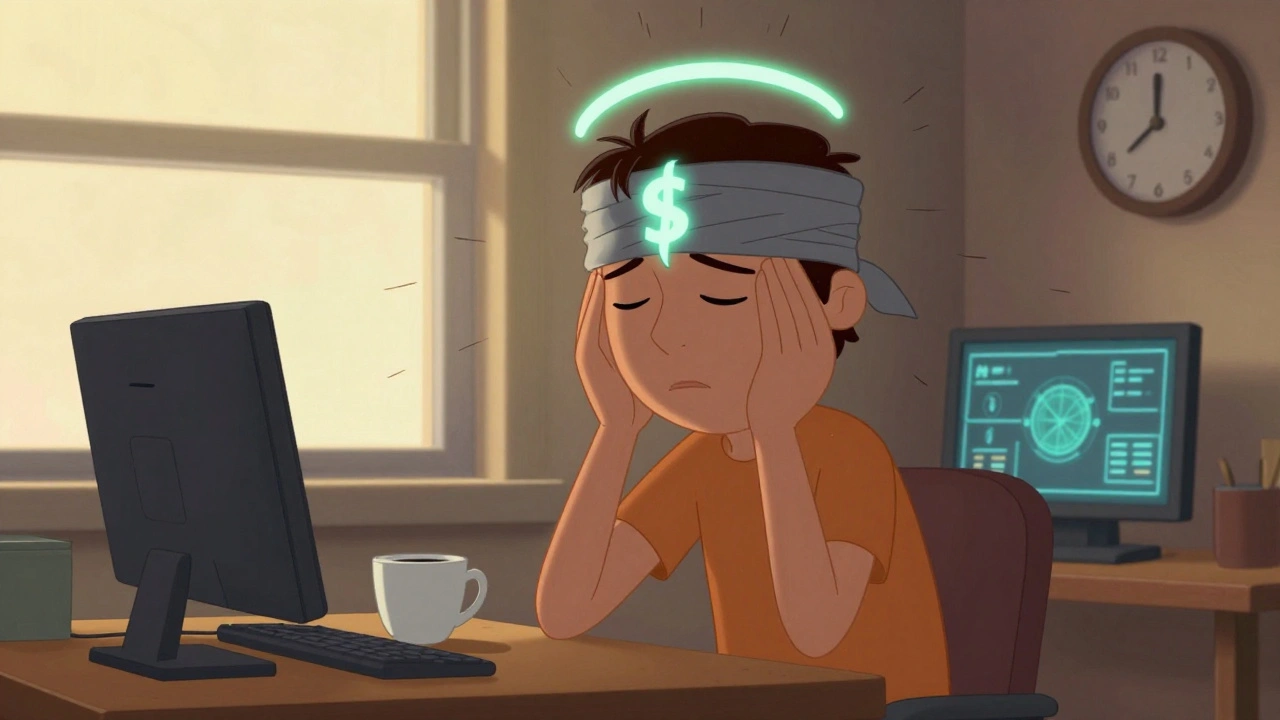
Not all headaches are the same. If you’ve ever been told, "It’s just a tension headache," only to feel like you’re being hammered from the inside, you know that label doesn’t tell the whole story. Headaches aren’t just "bad head pain." They’re distinct neurological events with different causes, symptoms, and treatments. Getting the right diagnosis isn’t just about relief-it’s about stopping years of unnecessary suffering.
Tension-Type Headaches: The Quiet Aggressor
Tension-type headaches are the most common. Around 42% of people worldwide deal with them at some point. They don’t make headlines. No one posts about them on social media. But they’re the silent drain on your energy-showing up after a long day at work, during stress, or after staring at a screen too long.
The pain feels like a tight band around your head. Not sharp. Not throbbing. Just a constant, dull pressure. It’s usually on both sides-forehead, temples, back of the head. Some people say it feels like a vice. The pain is mild to moderate. You can still function. You might be grumpy, tired, or distracted, but you can still make coffee, drive, or talk to your kids.
These headaches last anywhere from 30 minutes to seven days. If they hit 15 or more days a month for three months straight, that’s chronic tension-type headache. Women are 1.4 times more likely to get them than men. And here’s the key: tension-type headaches don’t come with nausea, vomiting, or sensitivity to light and sound. If you have those, it’s probably not this one.
Over-the-counter painkillers like ibuprofen or acetaminophen work for about 70% of people. Stretching your neck, taking a walk, or just closing your eyes for 15 minutes often helps. No fancy meds needed. But if it’s happening every single day? That’s a sign to dig deeper. Stress, poor posture, or jaw clenching might be the real culprits.
Migraines: More Than a Bad Headache
Migraines are not just "stronger tension headaches." They’re a full-blown neurological event. About 20% of women and 10% of men experience them. They peak between ages 35 and 39, but they can start anytime.
The pain is usually one-sided and throbbing-like a pulse beating inside your skull. But here’s the twist: 40% of migraine sufferers feel it on both sides. The real giveaway? The other symptoms. Nausea hits 90% of people. Light and sound become unbearable. You need to lie down in a dark, silent room. Some people can’t even stand to be touched.
Attacks last 4 to 72 hours if untreated. And for 25-30% of people, there’s an aura. That’s the warning sign. Flashing lights, blind spots, zigzag lines, tingling in your fingers. It happens 5 to 60 minutes before the headache starts. It’s like your brain is sending a distress signal before the storm hits.
It’s not just pain. It’s disability. People with migraines often miss work, school, or family events. The economic cost in the U.S. alone is $36 billion a year-lost productivity, ER visits, missed days. Treatment? Over-the-counter meds often fail. Triptans (like sumatriptan) work for about half of people. Newer drugs called CGRP inhibitors (like atogepant) can cut attacks in half over time. But you need a doctor to prescribe them.
And here’s a myth that needs killing: "Cluster migraine" isn’t a real thing. You can’t have both. Migraines can cluster in frequency-say, three in a week-but that’s still a migraine. Cluster headache is a completely different beast.
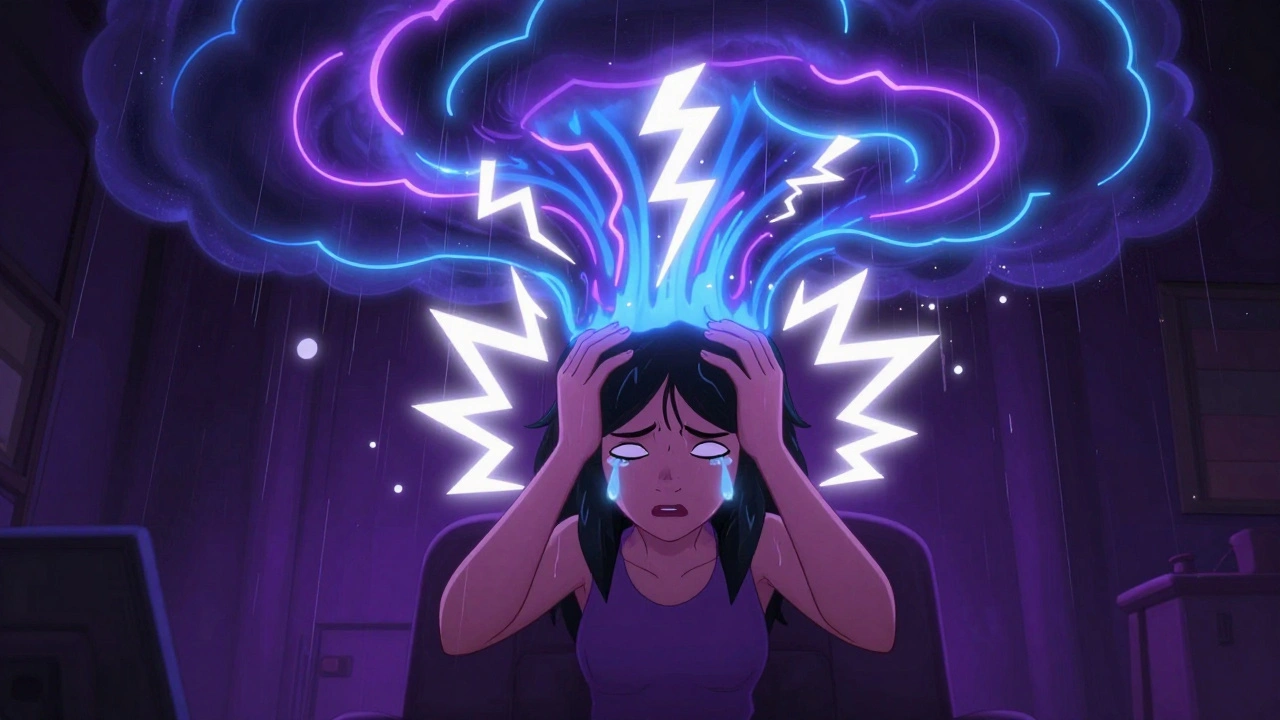
Cluster Headaches: The Worst Pain Known to Humans
If tension headaches are a dull ache and migraines are a storm, cluster headaches are a lightning strike to the eye. They’re rare-only 1 in 1,000 adults get them-but they’re terrifying.
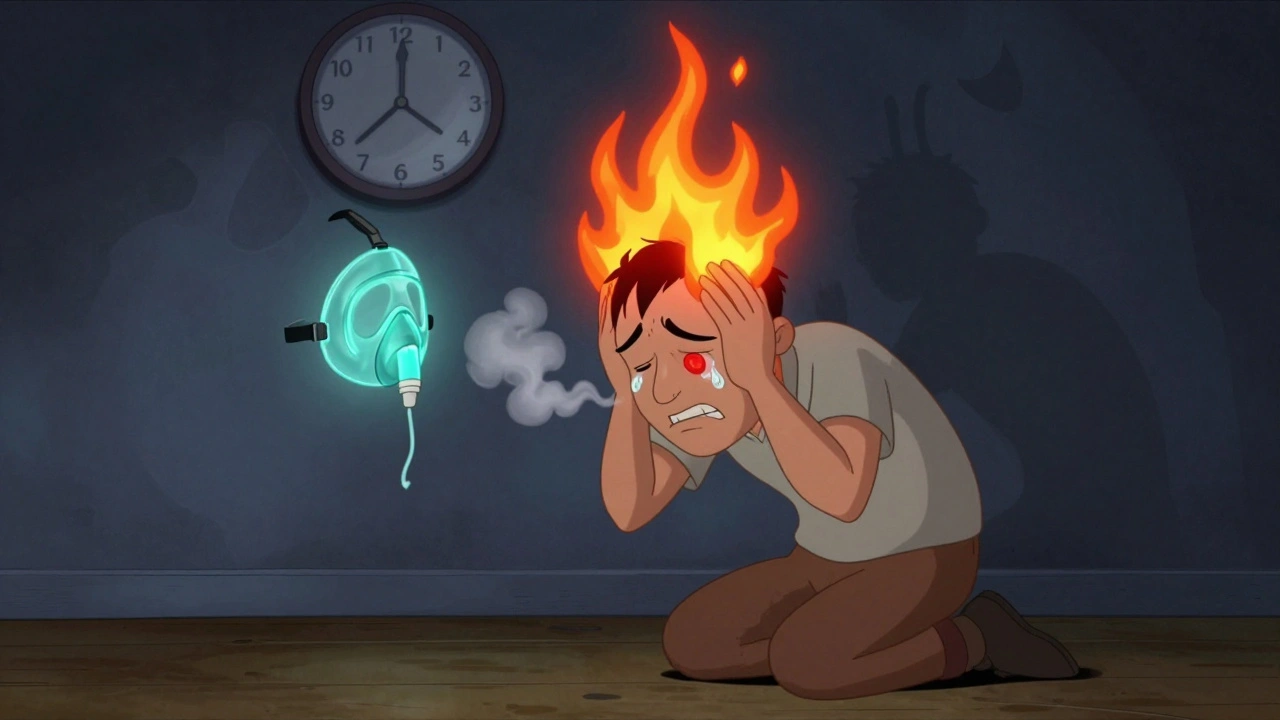
The pain is excruciating. Patients rate it 8 to 10 out of 10. It’s focused around one eye or temple-always on the same side during an attack. The pain hits fast. It peaks within minutes. And it doesn’t let go for 15 to 180 minutes. Most last about 45 to 90 minutes.
And it’s not just pain. Your body reacts like it’s under attack. On the same side as the pain, you get: a watering eye, redness in the white of the eye, a stuffy or runny nose, drooping eyelid, and even swelling around the eye. You can’t sit still. People with cluster headaches pace, rock, scream, or even bang their heads. One Reddit user compared it to "1,000 times worse than childbirth."
These attacks happen in "clusters." For 6 to 12 weeks, you might get 1 to 8 attacks a day-often at the same time, like 2 a.m. or 7 p.m. Then, for months or even years, you’re free. About 40% of people notice seasonal patterns-same time every year.
Treatment? This isn’t an OTC situation. High-flow oxygen through a mask (10-15 liters per minute) works for 70-80% of people within 15 minutes. Subcutaneous sumatriptan (an injection) works in 75% of cases. Preventive meds like verapamil or lithium are used during cluster periods. In 2023, the FDA approved atogepant for cluster headache prevention-the first oral drug of its kind. For those who don’t respond, deep brain stimulation is being tested with 68% success rates in early trials.
How to Tell Them Apart: The Quick Guide
Here’s the simplest way to spot the difference:
- Tension: Both sides, pressure-like, no nausea or light sensitivity, lasts minutes to days, responds to ibuprofen.
- Migraine: Throbbing, often one side, nausea + light/sound sensitivity, lasts 4-72 hours, aura possible, needs triptans or CGRP drugs.
- Cluster: One side, burning pain around the eye, lasts 15-90 minutes, happens multiple times a day in bursts, autonomic symptoms (tearing, red eye, stuffy nose), needs oxygen or injection.
Doctors misdiagnose up to 50% of headache cases. A 2021 Mayo Clinic study found that migraine patients with eye symptoms are often wrongly called cluster headache cases. And vice versa. Why? Because many doctors get only 4 hours of headache training in medical school.
That’s why keeping a headache diary matters. Write down:
- When it started and how long it lasted
- Where the pain was (left? right? both?)
- What it felt like (pressure? pounding? stabbing?)
- Any other symptoms (nausea? tears? nasal stuffiness?)
- What made it better or worse
- What you ate, drank, or did before it started
Four weeks of this gives your doctor a clear pattern. No more guessing.
Why Getting It Right Matters
Take the wrong pill for a cluster headache? You’ll suffer through an hour of hell with no relief. Take triptans for a tension headache? You’ll waste money and risk side effects. Misdiagnosis leads to unnecessary ER visits, anxiety, and years of frustration.
Cluster headache patients have the highest disability scores-75% are classified as severe (MIDAS Grade IV). Migraine sufferers aren’t far behind at 45%. Tension headache patients? Only 15% are severely disabled. That’s not just a number. It’s your life.
And the treatments are wildly different. Oxygen therapy won’t touch a tension headache. Ibuprofen won’t stop a cluster attack. Migraine prevention meds won’t help if you’re having cluster episodes.
There’s also hope on the horizon. Non-invasive vagus nerve stimulators are in late-stage trials for migraines. New drugs are being developed to target the hypothalamus-the brain region that triggers cluster headaches. The future is personalized, not one-size-fits-all.
If you’ve been told "it’s all in your head," don’t believe it. Your head isn’t the problem-it’s your brain. And it’s sending you clear signals. Listen. Track. Talk to a specialist. You deserve to live without pain.
Can a tension headache turn into a migraine?
No, tension headaches don’t evolve into migraines. They’re two different conditions with separate causes. But someone can have both. If you usually get pressure headaches but suddenly start feeling nausea, light sensitivity, or throbbing pain, you may be experiencing a new migraine attack-not a worsened tension headache.
Why do cluster headaches happen at the same time every day?
Cluster headaches are tied to the hypothalamus, the part of your brain that controls your biological clock. That’s why attacks often strike at the same time-like 2 a.m. or right after dinner. This pattern is so consistent that doctors can predict when the next attack will come, sometimes down to the minute.
Is it possible to have migraine with cluster-like symptoms?
Yes. About 20% of migraine patients have autonomic symptoms like tearing, red eyes, or nasal congestion during an attack. This is called migraine with autonomic features. It’s not cluster headache, but it’s often mistaken for it. A true cluster headache will have shorter attacks, higher frequency, and more severe pain. A specialist can tell the difference.
Can stress cause cluster headaches?
Stress doesn’t cause cluster headaches. They’re triggered by brain activity in the hypothalamus, not emotions. But stress can make them worse or trigger attacks in people already in a cluster period. Alcohol is a much stronger trigger-many people can’t drink at all during a cluster cycle.
What should I do if my headache won’t go away with OTC meds?
If over-the-counter painkillers don’t help after a few tries, it’s time to see a doctor. Especially if you have nausea, light sensitivity, eye symptoms, or attacks that come in clusters. Don’t wait for it to get worse. Headache specialists exist for this reason-they know how to spot the difference between common and rare types. Early diagnosis means faster relief and better prevention.



14 Comments
kevin moranga
Man, I wish I’d read this five years ago. I used to pop ibuprofen like candy and blame stress for my daily headaches-turns out I was having migraines with aura and didn’t even know it. The first time I used a triptan, I cried. Not from pain-from relief. If you’re reading this and you’ve been told it’s ‘just tension,’ please don’t believe it. Your brain isn’t lying. It’s screaming. And you deserve to be heard.
Lara Tobin
This is so validating 😭 I’ve been dismissed so many times by doctors who said ‘it’s all in your head.’ Turns out my head just has a very loud brain. I started tracking my headaches after this post and realized I get them every time I skip sleep or drink wine. No more guilt. Just facts.
Jamie Clark
Let’s be real-the medical system is broken. Four hours of headache training? That’s not education, that’s negligence. You’re telling me a doctor can graduate and treat neurological pain with less time than it takes to learn how to make a decent espresso? The fact that people suffer for years because their symptoms don’t fit some lazy diagnostic box is criminal. This isn’t just about headaches-it’s about how we value human suffering in a profit-driven system.
Scott Butler
Look, I’m all for science, but this is just another liberal overcomplication. Back in my day, we took aspirin, drank water, and got on with life. Now everyone needs a diary, a specialist, and a $1,200 monthly injection. Maybe the real problem isn’t your brain-it’s your attitude.
Emma Sbarge
Wow. So now we’re giving people permission to be dramatic about pain? I’ve had tension headaches since I was 16. I’ve never needed a doctor. I’ve never needed oxygen. I’ve never needed to ‘track my vibes.’ Maybe you’re not sick-you’re just lazy.
Richard Ayres
Thank you for the clarity. I’ve been living with chronic tension headaches for over a decade and assumed they were ‘normal.’ This post has given me the language to advocate for myself with my primary care provider. I’ve started my headache diary tonight-first entry: ‘Trigger: 11-hour Zoom call. Relief: 20-minute walk + cold compress.’ Small steps, but they matter.
Shelby Ume
As someone who’s had both migraines and cluster episodes (yes, both-rare, but possible), I can confirm: the difference is like comparing a rainy Tuesday to being set on fire by a dragon. One you can nap through. The other? You’ll beg for a time machine. Please, if you’re reading this and your doctor doesn’t know what CGRP inhibitors are-find a new one. Your life is worth it.
Lauren Scrima
So… you’re telling me I’ve been taking ibuprofen for my cluster headaches for 7 years? 😏 And I thought I was being responsible. Guess I’m just a walking medical meme now. Thanks for the laugh. And the trauma.
Casey Mellish
As an Australian who’s seen too many mates dismiss migraines as ‘girl problems,’ this is a masterclass in neurology. The fact that cluster headaches are underfunded and misunderstood while tension headaches get all the attention is a national disgrace. We need better public health messaging-and fast. This post should be mandatory reading in every high school health class.
Tyrone Marshall
There’s something deeply human about this. We’re told to ‘push through pain,’ but the body doesn’t work like that. It’s not weakness to need help-it’s wisdom. I used to think migraines were just bad luck. Now I see them as signals. My body isn’t broken-it’s trying to tell me something. And I’m finally listening.
Emily Haworth
Wait… so if my headaches happen at 2 a.m., does that mean the government is using satellites to trigger my brain? I’ve been getting them since I moved to the suburbs. Coincidence? I think not. Also, I think my neighbor is using 5G to control my tear ducts. Someone check the logs.
Tom Zerkoff
This is one of the most comprehensive, evidence-based explanations of headache pathology I’ve ever read. The distinction between autonomic migraine features and true cluster headaches is critical-and often overlooked. I’m a neurology resident, and even I learned something new. Thank you for writing this with such precision and compassion. This is the kind of content that saves lives.
Yatendra S
Is it possible… that the real headache is capitalism? We’re all just neurons firing in a system designed to make us suffer quietly. The body’s pain is a metaphor for the soul’s exhaustion. We treat symptoms because the structure won’t let us heal the root. Maybe the headache isn’t in your brain… it’s in the system.
Himmat Singh
While the article is factually accurate, it is an emotionally manipulative piece designed to exploit patient vulnerability and promote expensive pharmaceutical interventions. The notion that a headache diary is necessary implies a lack of self-discipline. In India, where healthcare resources are limited, such overmedicalization is not only impractical-it is ethically questionable.