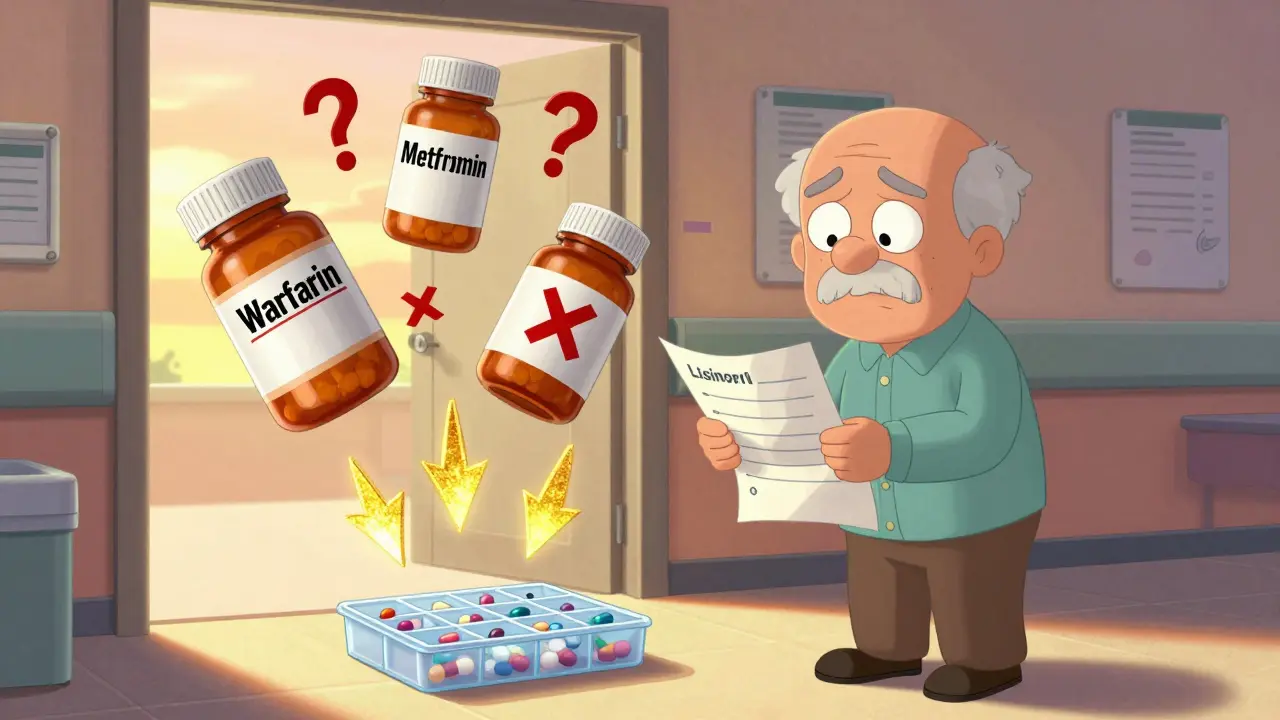
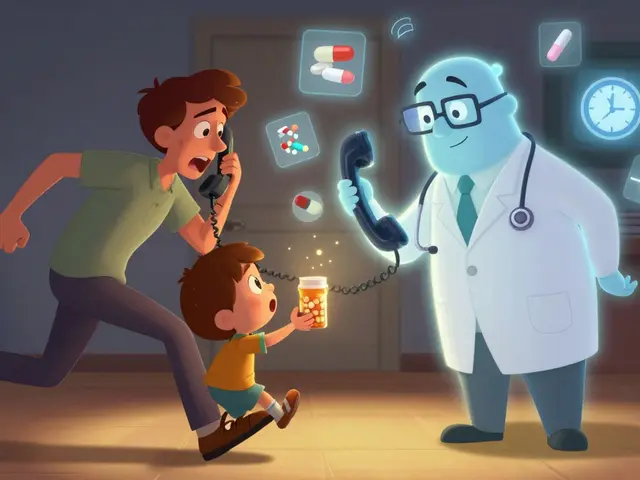
When you leave the hospital, your body is still healing. But the real danger often isn’t the illness-it’s the medication plan you walk out with. Studies show that 30% to 70% of patients leave the hospital with a medication list that doesn’t match what they were taking before. That’s not a typo. It’s a mistake waiting to happen. One wrong dose, one missed pill, one forgotten blood thinner-and you could be back in the ER within days.
Medication reconciliation isn’t just paperwork. It’s the bridge between hospital care and home care. And if that bridge breaks, patients pay the price with readmissions, side effects, and even death. The good news? This isn’t random. There’s a proven way to fix it.
What Exactly Is Medication Reconciliation?
Medication reconciliation is the process of comparing your hospital discharge meds with your home meds to catch mismatches. It’s not just checking if you got your pills. It’s asking: Did they stop your blood pressure med? Did they add a new painkiller that clashes with your heart drug? Did they forget your insulin? Did you stop taking your cholesterol pill because the nurse said to, but no one told your GP?
This isn’t optional. It’s a nationally recognized safety standard-NQF 0097-required by Medicare and Medicaid. Hospitals and clinics are measured on it. If they don’t do it right, they lose money. But more importantly, if they skip it, you’re at risk.
The goal? Make sure every pill you’re supposed to take-prescription, over-the-counter, vitamins, creams, even herbal supplements-is listed correctly, in the right dose, at the right time. And that everyone who cares for you knows it.
Why Do Medication Errors Happen After Discharge?
It’s not because doctors are careless. It’s because the system is broken.
While you’re in the hospital, your meds get changed. Maybe your blood sugar meds were paused because you weren’t eating. Maybe your anticoagulant was stopped because you had surgery. Maybe you got a new antibiotic for an infection. All of that makes sense in the hospital-but when you go home, who remembers what was changed?
Here’s the real problem: Your primary care doctor doesn’t always get the updated list. Your pharmacist might not have the latest discharge notes. Your family member who helps you take meds? They’re working off a memory from last month.
And here’s what makes it worse: Many patients don’t even know what meds they’re supposed to be on. A 2021 study found that 43% of patients couldn’t name all their medications after discharge. That’s not confusion-it’s a safety crisis.
Common mistakes:
- Stopping a chronic med like warfarin or metformin and never restarting it
- Double-dosing because two doctors prescribed the same drug without knowing
- Adding a new OTC painkiller that causes dangerous interactions
- Missing a new prescription because it wasn’t filled or wasn’t handed to you
The result? 18% to 50% of all post-discharge medication errors happen because of poor reconciliation. And 6.5% of all hospital readmissions are directly tied to these mistakes. That’s over 200,000 people a year in the U.S. alone-many of them elderly, many of them living alone.
Who Should Be Doing This? (And Why Pharmacists Are Key)
Traditionally, nurses or doctors were expected to reconcile meds at discharge. But research shows that’s not enough.
A 2023 study in the Journal of the American College of Clinical Pharmacy found that when pharmacists led the reconciliation process, medication errors dropped by 32.7%. Readmissions fell by 28.3%. That’s not a small win. That’s life-changing.
Why pharmacists? Because they’re trained to spot drug interactions, know how medications behave in the body, and spend time talking to patients about how they actually take their pills-not just what’s on paper.
Here’s how it works in top-performing hospitals:
- A pharmacist reviews your full medication history-home meds, hospital meds, pharmacy fills, even supplements.
- They talk to you: “Are you still taking your glipizide? Did you pick up your new lisinopril?”
- They compare it to your discharge summary and flag any changes.
- They update your primary care provider’s chart and send a clear summary to your pharmacy.
- They schedule a follow-up call within 48 hours to make sure you got your scripts filled and are taking them right.
That’s not just good care. That’s proactive safety.

What You Need to Do Before You Leave the Hospital
You can’t wait for someone else to fix this. You need to be part of the solution.
Here’s what to do before you walk out the door:
- Bring a list-not from memory. Write down every medication you take at home: name, dose, time, reason. Include vitamins, CBD, fish oil, eye drops, creams, and herbal teas. If you don’t have a list, take photos of your pill bottles.
- Ask for a printed discharge summary-not just a verbal rundown. Make sure it includes: all meds you’re going home with, changes made, and why.
- Ask: “What’s different from before I came in?” Don’t assume they’ll tell you. Ask directly. Write it down.
- Confirm who’s responsible-Is your GP getting this? Will your pharmacist be notified? Who calls you after you get home?
- Get the phone number of your discharge coordinator or pharmacist. Save it in your phone.
Don’t rely on the hospital to send the info. In one study, 68% of hospitals had fragmented electronic records. Your GP might never see the update.
What Happens After You Get Home?
Getting home is not the end. It’s the beginning of the most dangerous 30 days.
Here’s your action plan:
- Within 24 hours: Go to your pharmacy. Hand them your discharge summary. Ask: “Is this what I’m supposed to be taking?” They can spot errors your doctor missed.
- Within 48 hours: Call your primary care provider. Say: “I was just discharged. Can you confirm my meds?” If they don’t have your discharge summary, offer to email or fax it.
- Within 7 days: Schedule a follow-up visit. Even if you feel fine. This is when most errors are caught.
- Use a pill organizer-but don’t just fill it. Write down what’s in each slot. Take a photo of it.
- Check your refill dates. If you’re supposed to be on a new med but can’t refill it, call your doctor. Don’t wait.
And if you live alone? Ask a neighbor, friend, or family member to check in. Have them call you on day 3 and day 7. Ask: “Are you taking all your meds?”

How Providers Can Get It Right
If you’re a doctor, nurse, or clinic staff member, here’s what you need to do:
- Don’t assume your EHR has the right home med list. Pull it from the patient, not the system.
- Use a checklist. The AHRQ MATCH Toolkit has a free, proven template. Use it.
- Embed a pharmacist in your discharge team. It’s the single biggest factor in reducing errors.
- Send the discharge summary to the PCP and pharmacy simultaneously. Don’t wait for the patient to do it.
- Bill correctly. Use CPT code 1111F for reconciliation without a visit, or 99495/99496 if you do a face-to-face transition visit. But remember-only one provider can bill per discharge.
- Train your staff. Nurses need to know how to document reconciliation clearly. “Medications reviewed” isn’t enough. Write: “Discharge meds reconciled with home meds on [date]. Anticoagulant restarted. Beta-blocker discontinued.”
Top-performing clinics now use automated EHR alerts. If a patient’s warfarin was stopped in the hospital, the system flags it for the PCP within hours. That’s the future-and it’s working.
What If Nothing Changes?
Too many patients get discharged with no clear plan. No one calls. No one checks. They’re left to figure it out alone.
If that’s you, here’s your emergency plan:
- Call your pharmacy. They have your history. Ask them to compare your discharge list with your old prescriptions.
- Go to your GP’s office-even if it’s not your scheduled visit. Say: “I just got out of the hospital. I need my meds checked.”
- Use a free app like MyTherapy or Medisafe to track your meds. Take a screenshot and show it to your doctor.
- If you feel dizzy, nauseous, confused, or weak-go to urgent care. Don’t wait. It could be a medication error.
Medication reconciliation isn’t a luxury. It’s a lifeline. And it only works when patients, pharmacists, and providers all show up.
What’s Next?
The system is improving. More hospitals are using pharmacist-led teams. More insurers are paying for post-discharge medication management. AI tools are now flagging discrepancies before they happen.
But until every patient leaves the hospital with a clear, verified, and communicated medication plan, the risk stays high.
Your job? Don’t wait for perfection. Do what you can today. Bring the list. Ask the questions. Follow up. Make sure someone-anyone-knows what you’re supposed to be taking.
Because when it comes to your meds, silence isn’t safety. Clarity is.



13 Comments
Nicole Beasley
This is so important!! 🙌 I had my grandma get discharged last month and they forgot her blood thinner-she ended up back in the ER. Never again. Bring your own list. Photos of pill bottles. Everything. Don't trust anyone to remember. 🏥💔
Debra Cagwin
Medication reconciliation is one of the most overlooked yet critical components of patient safety. The data is unequivocal: pharmacist-led reconciliation reduces adverse drug events by nearly one-third. Yet, many hospitals still treat it as an administrative afterthought rather than a clinical imperative. We must advocate for systemic change-because lives depend on it.
Hakim Bachiri
Ugh. Another one of these ‘let’s make hospitals into daycare centers’ articles. You know what fixes this? Stop letting old people live alone. Stop giving them 12 different pills. Stop letting them take ‘herbal teas’ like they’re some kind of wellness guru. If you can’t manage your meds, maybe you shouldn’t be living independently. America’s too soft. We coddle people until they forget how to take a pill. #GetReal
Celia McTighe
I love how this breaks it down so clearly 😊 I’m a nurse and I’ve seen so many patients get discharged with zero clarity. The best part? When pharmacists are involved. One time, a patient was supposed to be on warfarin but got discharged on aspirin-pharmacist caught it within 10 minutes of the patient walking in. That’s the kind of hero work that doesn’t get enough credit. 🙏❤️
Gran Badshah
bro i just got outta hospital last week and they gave me a paper with like 8 meds but didnt say when to take em. i asked the nurse and she said 'youll figure it out'. i had to call my cousin in usa to help me read it. why is this so hard? i live in india and here its worse. no one cares.
Ellen-Cathryn Nash
It’s not just about pills-it’s about moral responsibility. People are dying because we’ve turned healthcare into a checklist culture. We’ve forgotten that medicine is a covenant, not a transaction. If your hospital doesn’t have a pharmacist on discharge, you’re not being cared for-you’re being processed. And that’s not just negligent-it’s sinful.
Samantha Hobbs
OMG YES. My mom got discharged and they forgot her thyroid med for 3 days. She was so dizzy she fell. I had to scream at the discharge nurse until they sent a copy to her doctor. Why is this even a thing? Like… why do we let this happen?
Payton Daily
This is the real reason America’s healthcare system is broken. It’s not the cost-it’s the lack of soul. We treat people like data points. You’re not a chart. You’re not a code. You’re a human who’s scared and confused and just wants to live. And yet we hand you a stack of papers and say ‘good luck.’ That’s not medicine. That’s abandonment dressed in scrubs.
Kelsey Youmans
The precision and rigor with which this guide is articulated reflects a profound commitment to patient-centered care. The integration of pharmacist-led reconciliation represents not merely an operational improvement, but a paradigm shift in clinical accountability. Such protocols, when standardized across institutions, constitute a moral imperative in the delivery of safe, equitable healthcare.
Sydney Lee
Let me be blunt: If your hospital doesn’t have a pharmacist embedded in discharge, you’re part of the problem. This isn’t ‘best practice’-it’s minimum viable humanity. The fact that we’re even having this conversation in 2025 is an indictment of the entire system. I’ve seen patients die because someone thought ‘we’ll send the list later.’ Later is a death sentence.
oluwarotimi w alaka
this is all fake. hospitals dont care. its all controlled by big pharma. they want you to keep taking pills. why do you think they dont fix the system? they make money off your confusion. they dont want you to know what you're really on. the government knows. they just dont tell you. #deepstate #pharmasucks
Julius Hader
I’ve been doing this for 15 years as a family doc. The #1 thing? Ask the patient to show you their pill bottle. Not the list. The bottle. You’d be shocked how often the list is wrong. And yes, I still use paper. Sometimes the tech fails. The human doesn’t. 🤝
Vu L
Nah. This whole thing is overblown. People just need to take responsibility. If you can’t remember your meds, maybe you shouldn’t be on them. I’ve been on 7 different prescriptions since I was 22 and I’ve never had an issue. Stop coddling people.