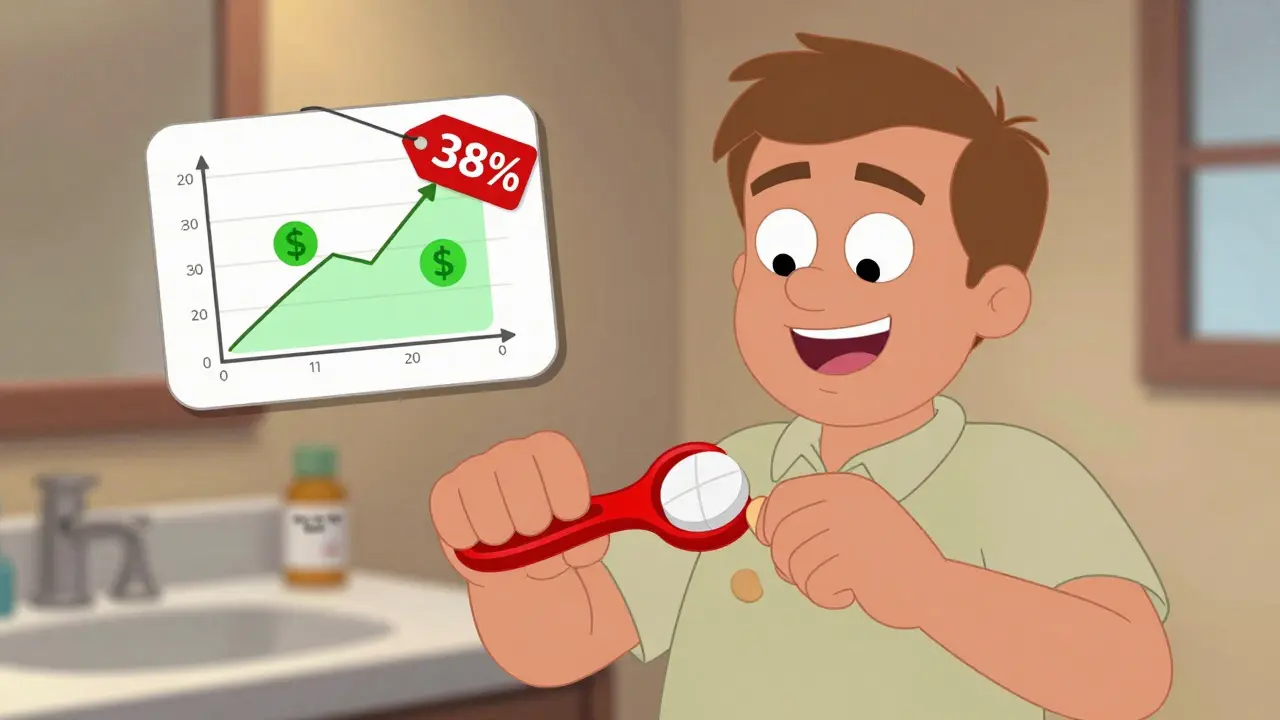
Many people in New Zealand and around the world are cutting pills in half to save money on prescriptions. It sounds simple - break a 40mg tablet in two and get two doses for the price of one. But pill splitting isn’t as safe or straightforward as it seems. Done wrong, it can lead to dangerous overdoses or underdoses. Done right, with the right tools and guidance, it can save hundreds a year. The key isn’t just saving money - it’s saving money without risking your health.
Why Pill Splitting Saves Money
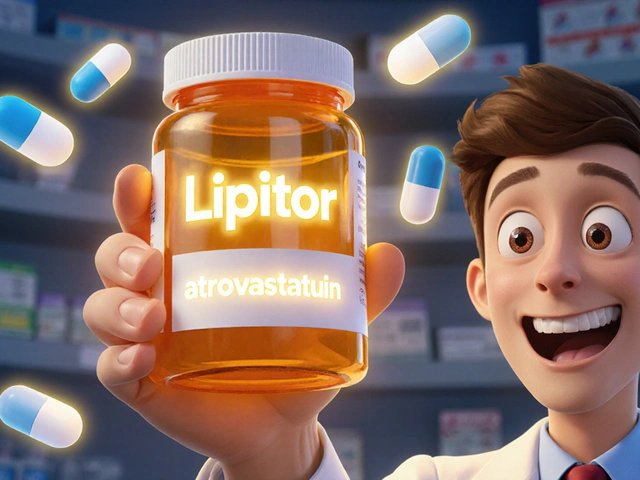
Pharmaceutical companies often price higher-dose pills cheaper per milligram than lower-dose ones. For example, a single 40mg atorvastatin tablet might cost $4.27, while two 20mg tablets cost $3.48 each - totaling $6.96. Split the 40mg tablet and you’re paying less than half the price for the same total dose. That’s a 38% saving on just one medication. For people taking multiple pills, those savings add up fast. One person in Dunedin told me they saved $1,200 a year splitting their blood pressure pills. That’s not unusual. According to a 2022 Kaiser Family Foundation study, nearly 15% of Medicare beneficiaries in the U.S. split pills to cut costs. The same pattern holds true here, especially among seniors and those on fixed incomes.Not All Pills Can Be Split - Here’s How to Tell
The biggest mistake people make is assuming any scored tablet is safe to split. A score line - that little groove down the middle - doesn’t mean the pill is meant to be split. Only medications approved by the FDA (or equivalent agencies) for splitting should be used this way. Check the package insert. If it says nothing about splitting, assume it’s not safe. Never split:- Extended-release tablets (like metformin ER or amlodipine ER)
- Time-release capsules (like Adderall XR or Concerta)
- Enteric-coated pills (like omeprazole or aspirin EC)
- Drugs with narrow therapeutic windows - even tiny dose changes can be dangerous. These include warfarin, digoxin, levothyroxine (Synthroid), and tacrolimus.
The Right Way to Split Pills
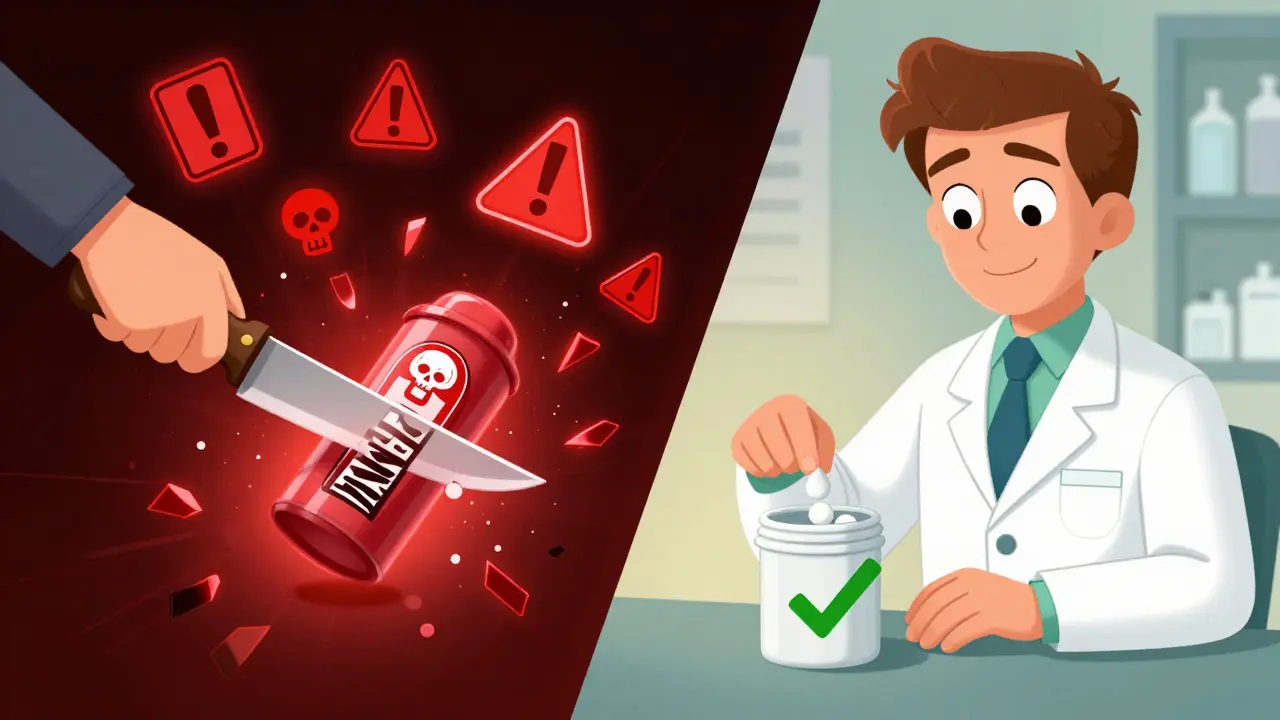
If your doctor or pharmacist says it’s safe, you still need to do it right. Using a knife, scissors, or your teeth is a bad idea. You’ll end up with uneven pieces, crumbs, or worse - a piece stuck in your gum. Use a dedicated pill splitter. These cost between $3 and $10 at most pharmacies. They have a V-shaped holder to keep the pill steady and a retractable blade that cuts cleanly down the score line. A 2007 study in the Journal of the American Pharmacists Association found that pill splitters kept dose variation under 15%. Knife splitting? That jumped to 72% variation. Follow these five steps:- Get approval from your doctor or pharmacist first. Don’t assume it’s okay.
- Check the package insert for explicit approval. If it’s not mentioned, don’t split.
- Use a clean pill splitter. Wash it after each use.
- Split the pill right before you take it. Don’t pre-split and store halves - moisture and heat can break down the medication.
- Throw away any crumbled or uneven pieces. If it doesn’t look clean, don’t take it.
What Happens When You Do It Wrong
A 2010 study from the National Institutes of Health tracked 94 volunteers splitting 25mg hydrochlorothiazide tablets. Over 40% of the halves varied by more than 10% in weight. Twelve percent were off by more than 20%. That’s not a small error - that’s the difference between a safe dose and a toxic one. For drugs like warfarin, even a 5% change can cause bleeding or clots. For thyroid meds like levothyroxine, a 10% dose shift can throw off your metabolism, cause fatigue, weight gain, or heart rhythm issues. One patient I spoke to split her Synthroid for months before realizing her TSH levels were off the charts. She didn’t know until she got sick. And it’s not just about accuracy. Splitting tablets exposes them to air and moisture. Studies from Banner Health show that split pills lose potency within 24 to 48 hours. If you’re storing halves in a pill box, you’re not just risking uneven doses - you’re risking ineffective medication.When Splitting Doesn’t Save You Money
It’s tempting to think splitting always saves money. But that’s not true. Sometimes, the lower-dose version is cheaper. For example, sertraline 100mg tablets cost $0.12 each, while 50mg tablets cost $0.08. Splitting the 100mg gives you two 50mg doses - but you’re still paying more than if you just bought the 50mg tablets. Same dose. Higher cost. Lisinopril is another story. A 20mg tablet costs $4.00. Two 10mg tablets cost $4.50. Here, splitting saves you 11%. But if your pharmacy offers a discount card or you qualify for a patient assistance program, you might save even more - without the risk. In fact, patient assistance programs average 53% savings. Pharmacy discount cards average 38%. Both are safer than splitting.
Alternatives to Pill Splitting
Before you grab that pill splitter, consider other options:- Ask your doctor if a lower-dose version is available - even if it costs more upfront, it might be covered better by your insurance.
- Check if your pharmacy offers a discount card. Many pharmacies have their own programs.
- Ask about patient assistance programs. Many drug makers offer free or low-cost meds to those who qualify based on income.
- Switch to a generic version. Generic drugs are often 80% cheaper than brand names.
- Ask about mail-order pharmacies. They often offer 90-day supplies at lower prices.
Who Should Avoid Pill Splitting
Some people shouldn’t split pills at all - even if it seems safe:- People with shaky hands or poor eyesight - it’s hard to split evenly.
- Those with memory issues or dementia - they may forget whether they already split the pill.
- Anyone taking multiple medications - the risk of mixing up pills goes up.
- Patients on blood thinners, heart meds, or thyroid drugs - the margin for error is too small.
Final Advice: Talk to Someone First
The FDA says it clearly: "Always talk to your healthcare professional before splitting a tablet." That’s not a suggestion. It’s a warning. Your doctor or pharmacist can tell you if your medication is safe to split, whether your dose can be adjusted another way, or if there’s a cheaper alternative. Pill splitting isn’t a hack. It’s a risk-reward trade-off. For some, it’s a necessary tool. For others, it’s a dangerous gamble. The difference is knowledge. Don’t guess. Don’t assume. Ask.Can I split any pill with a score line?
No. A score line only means the pill was designed to be split - it doesn’t guarantee it’s safe. Always check the package insert. Medications like extended-release, enteric-coated, or narrow-therapeutic-index drugs (e.g., warfarin, levothyroxine) should never be split, even if they have a score.
Is it safe to split pills ahead of time?
No. Splitting pills in advance exposes them to air, moisture, and temperature changes, which can break down the medication. Studies show split tablets lose potency within 24 to 48 hours. Always split right before taking the dose.
What’s the best tool to split pills?
Use a dedicated pill splitter - not a knife, scissors, or your teeth. These cost $3-$10 at pharmacies and have a blade and holder designed to split pills evenly. Studies show they keep dose variation under 15%, while knife-splitting can cause up to 72% variation.
Can I save money by splitting my blood pressure or cholesterol pills?
Yes - for some. Medications like atorvastatin, lisinopril, and hydrochlorothiazide often cost significantly less per milligram in higher doses. Splitting a 40mg atorvastatin tablet can save up to 38% compared to buying two 20mg tablets. But always confirm with your pharmacist first.
Are there safer ways to reduce medication costs?
Yes. Ask your pharmacist about generic versions, pharmacy discount cards, or patient assistance programs. These can save 38-53% without the risks of splitting. Mail-order pharmacies offering 90-day supplies are another option. Always explore these before splitting pills.
If you’re struggling with medication costs, you’re not alone. But your health shouldn’t be the price you pay. Talk to your pharmacist. Ask questions. Explore alternatives. Sometimes, the safest choice isn’t the cheapest - it’s the smartest.




11 Comments
Martin Halpin
Look, I get that the article is trying to scare people into being cautious, but let’s be real - half the people I know who split pills are doing it because they can’t afford to eat, let alone pay for meds. I’ve seen my uncle split his lisinopril for five years with no issues. He uses a pill splitter, checks the dose, and never pre-splits. Yeah, there are risks, but there are also risks in not taking your meds at all. The system is broken, and now we’re being told to risk our health because the pharma companies won’t lower prices? That’s not safety - that’s corporate greed dressed up as public health advice.
And don’t get me started on the ‘ask your pharmacist’ line. Most pharmacists are overworked, underpaid, and barely have time to hand you your script, let alone give you a 20-minute consultation. This feels like a rich person’s solution to a poor person’s problem.
Also, the study that says 40% of split pills vary by more than 10%? That’s with people using knives. With a proper splitter? The variation is negligible. The real danger isn’t the splitting - it’s the stigma around it. People are too afraid to ask because they’re made to feel like they’re doing something shady. They’re not. They’re just trying to survive.
Emily Wolff
Stop. Just stop. If you’re splitting pills, you’re already playing Russian roulette with your health. The data doesn’t lie. Even 5% variation in warfarin can kill you. This isn’t a ‘hack.’ It’s a medical emergency waiting to happen.
And no, ‘I’ve done it for years’ doesn’t make it safe. Luck isn’t a strategy.
Eimear Gilroy
Interesting post, but I’m curious - has anyone done a cost-benefit analysis comparing pill splitting vs. patient assistance programs? I know the article mentions them, but I’d love to see real numbers. Like, if I split my atorvastatin and save $1200/year, but then have to go to the ER because I got an uneven dose, how much does that cost? And is the emotional stress worth it? I feel like this whole thing is framed as a financial solution, but it’s really a mental health and safety issue too.
Also, what about people with arthritis? Their hands shake. How do they even hold a pill splitter steady? There’s a lot of assumptions here about dexterity and access to tools that aren’t always realistic.
Anil bhardwaj
bro, i just take my 40mg pill every other day instead of splitting it. same dose, no risk. why complicate things? i mean, if it’s safe to split, why don’t they just make 20mg pills cheaper? something’s off.
lela izzani
As a pharmacist, I see this every day. People come in with half a pill in their hand and say, ‘I’ve been doing this for years.’ I don’t judge - I help. The real issue isn’t splitting - it’s lack of access to affordable meds. If we had better insurance coverage, fewer people would feel forced into this.
But if you’re going to split, here’s what I tell them: use a clean splitter, split right before taking, and NEVER split extended-release, enteric-coated, or narrow-therapeutic-index drugs. And if you’re unsure - ask. No shame in asking. We’re here for that.
Also, generic drugs are often cheaper than splitting. Always check the cash price at your pharmacy. Sometimes it’s less than the cost of a pill splitter.
Joanna Reyes
I’ve been splitting my levothyroxine for three years now, and I can tell you - it’s not about the money. It’s about dignity. I’m on a fixed income, and I refuse to choose between my meds and my groceries. My endocrinologist approved it. I use a pill splitter. I split it right before I take it. I throw away any uneven pieces. I track my TSH levels every 6 weeks. And yes, it’s worked.
But here’s what nobody talks about: the shame. The way people look at you when you say you split pills. Like you’re some kind of drug cheat. It’s not about being ‘smart’ or ‘gaming the system.’ It’s about surviving. And if you’ve never had to choose between your health and your rent, maybe you shouldn’t be the one telling people what they ‘should’ do.
I wish we lived in a world where this wasn’t necessary. But we don’t. And until we do, I’ll keep splitting - carefully, safely, and with my head held high.
Stephen Archbold
yo i just split my pills with my nail clippers lol jk but honestly i got a $5 splitter from walgreens and it’s been fine. i read the article and thought ‘oh cool’ but then i remembered my aunt took a split synthyroid and ended up in the hospital. so now i only split my blood pressure pill and i check with my doc every time. also, i got a discount card from my pharmacy and it saved me like $40 a month. maybe that’s better than splitting? idk. just saying maybe there’s a middle ground.
also i think the part about ‘never split if you have shaky hands’ is so important. my grandpa tried and almost choked on a piece. that’s not a joke. that’s a nightmare.
Haley Gumm
Oh, so now we’re glorifying pill splitting as some kind of ‘financial rebellion’? How cute. Let me guess - next you’ll be saying it’s okay to cut your insulin in half because ‘the system is broken.’
Here’s the truth: if you’re splitting pills, you’re not being clever. You’re being reckless. And if you’re proud of it? That’s not bravery - that’s ignorance wrapped in a martyr complex.
There are 17 different ways to reduce medication costs without risking your life. But no, let’s just cut pills and call it ‘resourcefulness.’
Spenser Bickett
So let me get this straight. You’re telling people it’s okay to play dice with their thyroid levels because Big Pharma is ‘greedy’? That’s not activism. That’s stupidity with a side of self-righteousness.
And you know what’s even funnier? The same people who split pills to ‘save money’ are the ones who’ll spend $80 on a ‘detox tea’ because ‘it’s natural.’
Wake up. You’re not a rebel. You’re a statistic waiting to happen.
Christopher Wiedenhaupt
The data presented in this article is well-sourced and compelling. Pill splitting, while potentially cost-effective, introduces significant variability in dosing, especially when not performed with appropriate tools. The FDA’s warnings are not hyperbolic - they are based on documented adverse events.
That said, socioeconomic factors must be acknowledged. The fact that individuals are forced into this practice speaks to systemic failures in pharmaceutical pricing and healthcare accessibility. While the article rightly emphasizes safety, it could have devoted more space to policy-level solutions - such as price caps on essential medications or expanded patient assistance programs.
For now, if splitting is necessary, adherence to the five-step protocol outlined here is non-negotiable.
Timothy Haroutunian
Let’s be honest - this whole article reads like a pharmaceutical industry pamphlet disguised as public health advice.
They don’t want you splitting pills because then you’d realize how absurdly overpriced these drugs are. They want you to buy two 20mg pills instead of one 40mg. Why? Because they can. And now they’re scaring you with ‘narrow therapeutic windows’ and ‘adverse events’ to keep you paying full price.
Meanwhile, in Canada, they sell the same pills for 70% less. In India, generics cost pennies. So why are we being told this is dangerous? Because if you knew how easy it is to save money, you’d stop buying their overpriced nonsense.
Splitting pills isn’t risky - the system is. And if you’re too scared to split a pill because some study says ‘variation,’ then you’re not being cautious - you’re being manipulated.