Most people don’t think about their medicine cabinet until they find a bottle with a faded label and a date they can’t read. By then, it’s too late. Expired medications aren’t just useless-they can be dangerous. In New Zealand, the Ministry of Health warns that taking expired antibiotics can lead to treatment failure, and some painkillers lose potency so much they no longer work. But here’s the thing: you don’t need a fancy hospital system to keep track of what’s in your cabinet. You just need a simple, consistent system that actually works in real life.
Start with a full cabinet audit
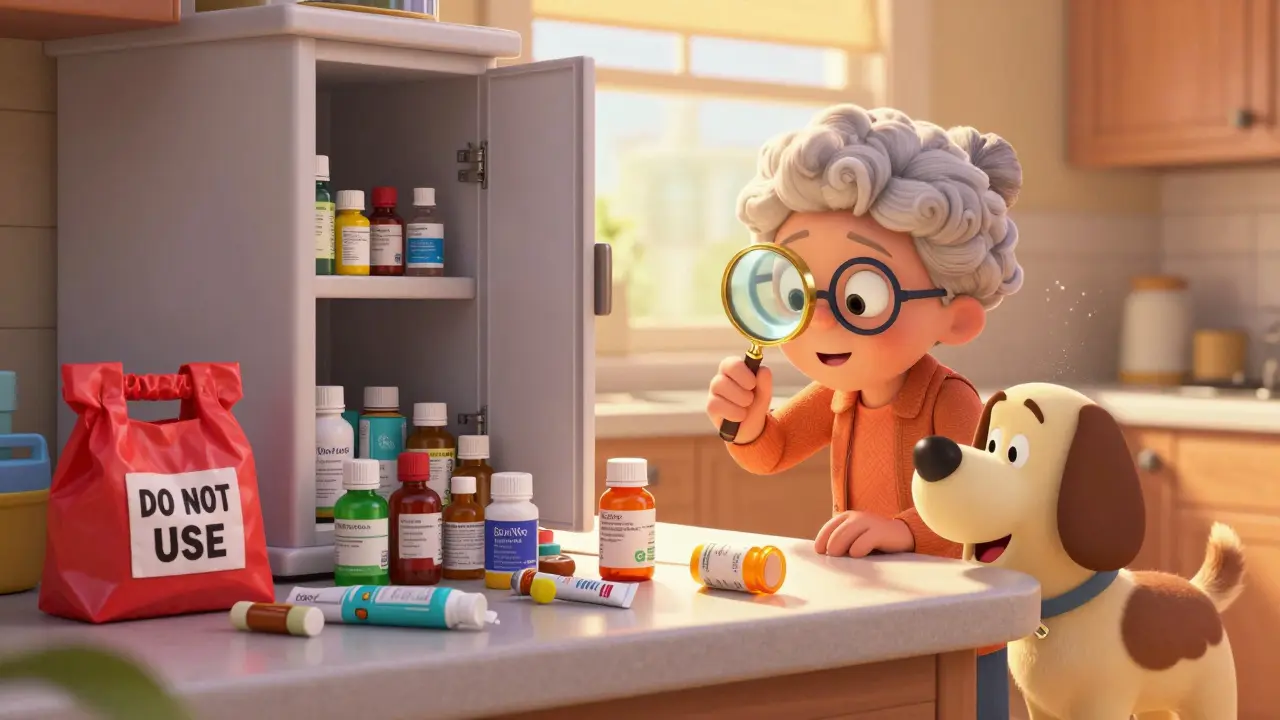
Before you do anything else, empty everything out. Not just the obvious bottles-check the back corners, the bottom drawers, the old first-aid kit tucked under the sink. Take everything: prescription pills, over-the-counter pain relievers, vitamins, creams, eye drops. Lay them all out on a clean table. This isn’t just about cleaning up. It’s about seeing what you actually have.
Now, look at each item. Check the expiration date. If it’s printed in tiny letters, use a magnifying glass. If there’s no date at all, throw it out. The FDA says most solid medications are safe for up to a year past their printed date, but that’s not a rule-it’s a guess. For things like insulin, liquid antibiotics, or eye drops, the clock starts ticking as soon as you open them. A bottle of amoxicillin you opened six months ago? Toss it. Eye drops? After 28 days, even if they look fine, they’re risky.
Separate what’s still good from what’s not. Put expired or questionable meds in a sealed plastic bag. Don’t flush them. Don’t toss them in the trash where kids or pets might get to them. Take them to a pharmacy that accepts returns. In Dunedin, pharmacies like South Dunedin Pharmacy and The Pharmacy at Green Island offer free disposal. They’ll handle it safely.
Use a simple labeling system
Now, for the items you’re keeping, label them. Not with sticky notes that peel off. Not with a Sharpie that fades. Use waterproof, permanent labels. You can buy small adhesive labels at any stationery store. Write the expiration date clearly. If the original label is too small, copy the date onto the label and stick it on the front where you can see it.
Do this for everything: prescriptions, supplements, even that bottle of children’s paracetamol you keep for emergencies. If you’re worried about looking unprofessional, remember: this isn’t for show. It’s for safety. A 72-year-old woman in Dunedin told her pharmacist last year she took a 2021 bottle of beta-blockers because she didn’t realize it had expired. Her blood pressure spiked. A simple label could’ve prevented that.
Set up a monthly check
Put a reminder in your phone. Every first Sunday of the month, spend five minutes checking your cabinet. That’s all it takes. Look for anything you haven’t used in six months. Ask yourself: “When was the last time I needed this?” If you haven’t used it since last winter, it’s probably not essential anymore.
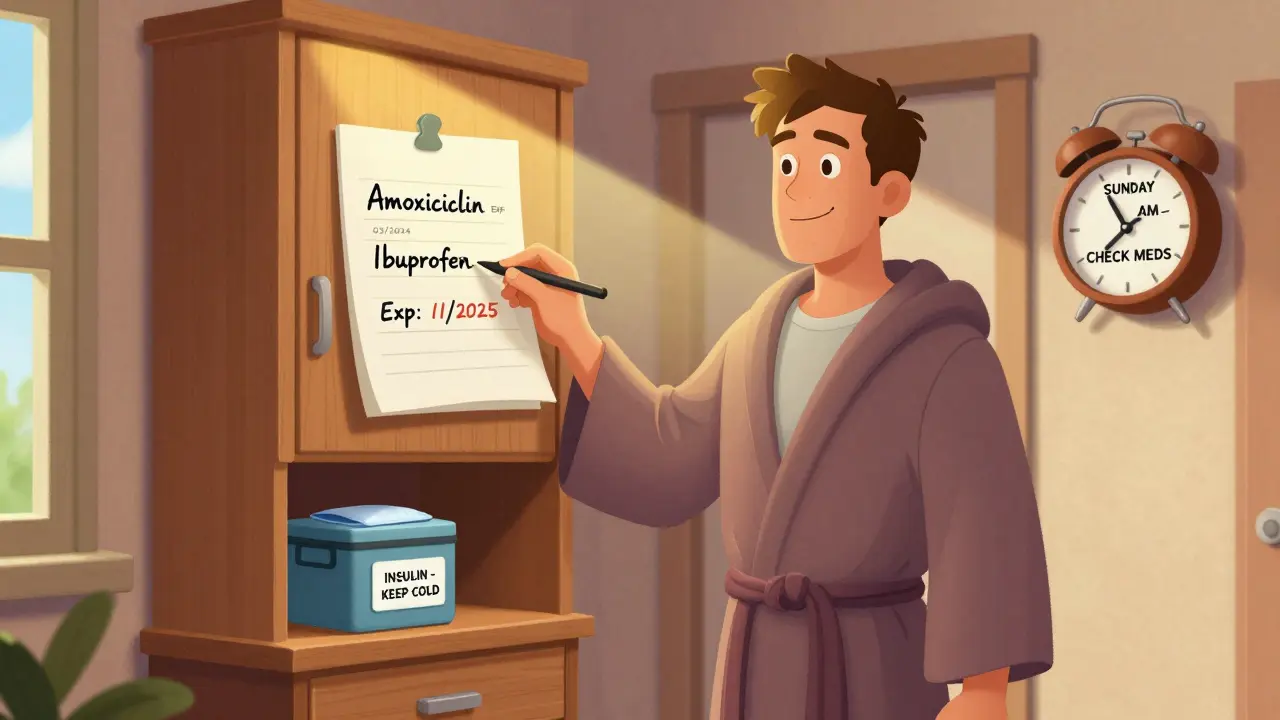
Some people use a calendar. Others use a notebook. One man in Oamaru keeps a small notepad taped inside his cabinet door. He writes down each item, the date he opened it, and the expiration date. It’s low-tech, but it works. You don’t need an app. You don’t need RFID tags. You just need consistency.
Store meds properly
Expiration dates assume proper storage. Heat, moisture, and light can break down medicine faster than the clock. Keep your cabinet away from the bathroom sink. Steam from showers? That’s bad for pills. Keep them in a cool, dry place-like a bedroom drawer or a shelf in the hallway. Don’t leave them in the car, even for a few hours. A 30°C day in Dunedin in summer can turn your asthma inhaler into a dud.
Some meds need refrigeration. Check the label. Insulin, certain eye drops, and some liquid antibiotics must stay cold. If you don’t have space in the fridge, get a small insulated box with a cold pack. Just make sure it’s labeled so no one mistakes it for food.
Know what to throw out
Not all expired meds are created equal. Here’s what you should never keep:
- Antibiotics (they lose effectiveness and can cause resistant infections)
- Insulin (it becomes ineffective and can cause dangerous blood sugar spikes)
- Eye drops (bacterial growth risk after 28 days)
- Nitroglycerin (used for heart attacks-expires fast and must be replaced)
- Epinephrine auto-injectors (like EpiPens-heat ruins the chemical)
- Any liquid medicine (suspensions degrade quickly)
For pills like ibuprofen or antihistamines, they’re usually fine past the date-but only if they’re stored right and still look normal. If they’re cracked, discolored, or smell weird, toss them. Trust your senses.
Keep a running list
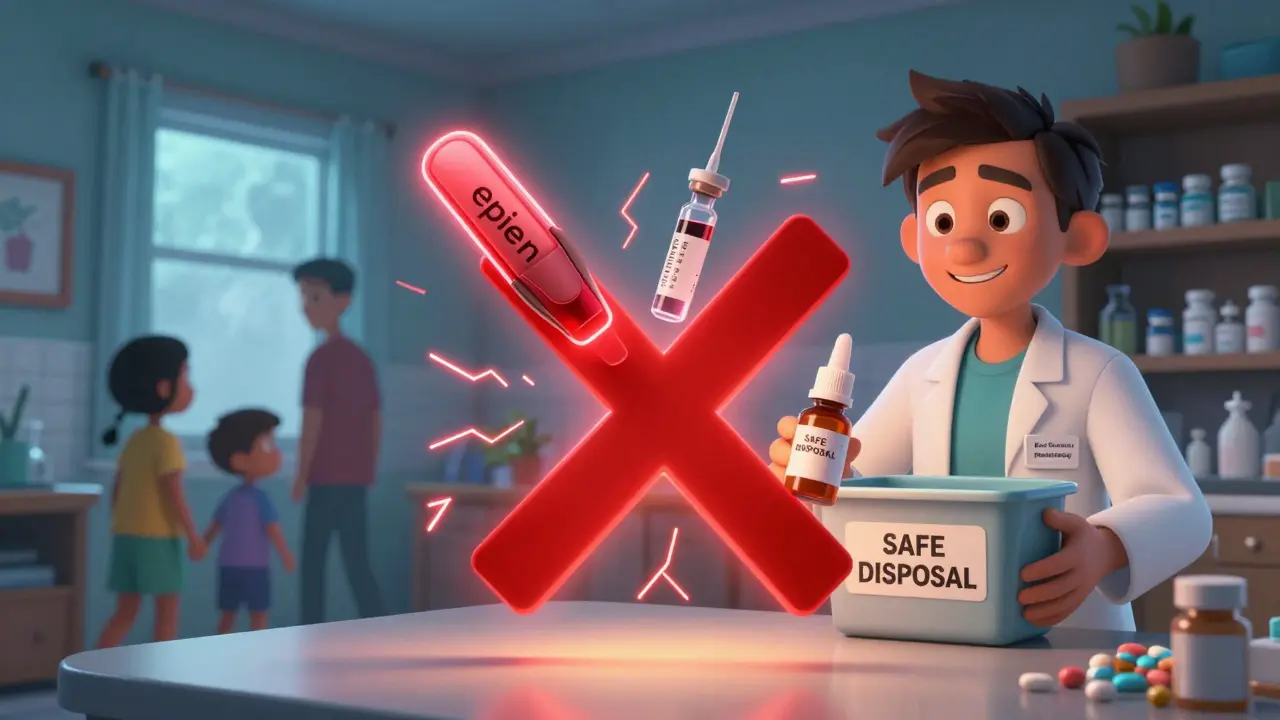
Make a list. Not on your phone. On paper. Tape it to the inside of the cabinet door. List each medication, its expiration date, and whether it’s prescription or OTC. Update it every time you refill or throw something out. This isn’t about being organized-it’s about being ready.
Imagine you’re rushed to the hospital. The ER staff will ask what you’re taking. If you can’t answer because you don’t know what’s expired, you’re putting yourself at risk. A simple list can save time, avoid dangerous interactions, and even save your life.
What about those fancy smart cabinets?
You’ve probably seen ads for high-tech medicine cabinets with barcode scanners and cloud alerts. They cost thousands. They’re used in hospitals and pharmacies. They’re not for home use. The systems described in the 2023 studies-BD Pyxis, Omnicell, Capsa-are designed for clinics with hundreds of medications and dozens of staff. They’re overkill for your kitchen cabinet.
Here’s the truth: you don’t need AI to track your meds. You need habits. You need routine. You need to look at your bottles once a month and say, “Is this still good?” That’s it. The most effective system in the world is the one you actually use.
What if you forget?
If you’re the type who forgets monthly checks, try this: When you pick up a new prescription, write the expiration date on your calendar right then. Set a phone alert for two weeks before it expires. That way, you’re not caught off guard. And if you’re still unsure, call your pharmacist. They’ll tell you if it’s safe. Always.
Medication safety isn’t about gadgets. It’s about awareness. It’s about not letting a bottle sit in the dark for three years because you didn’t want to deal with it. Your body doesn’t care if you’re busy. It only knows if the medicine works-or if it’s gone bad.
Can I still take medicine after the expiration date?
For most solid pills like ibuprofen or antihistamines, yes-usually up to a year past the date if stored properly. But never take antibiotics, insulin, eye drops, or any liquid medicine past its expiration. They can become ineffective or even harmful. When in doubt, throw it out.
Where can I safely dispose of expired meds in Dunedin?
Pharmacies like South Dunedin Pharmacy, The Pharmacy at Green Island, and many others offer free disposal bins for expired or unwanted medications. Never flush them or throw them in the trash. Pharmacies return them to licensed disposal facilities that destroy them safely.
Do vitamins expire?
Yes. Vitamins lose potency over time, especially if exposed to heat or humidity. They’re unlikely to harm you, but they won’t give you the benefit you expect. If they’re discolored, crumbly, or smell off, toss them.
How often should I clean out my medicine cabinet?
At least once every six months. A quick monthly check helps catch things early, but a full audit twice a year ensures you’re not holding onto old, unnecessary, or unsafe meds. Do it in spring and fall-it’s easy to remember.
Should I keep old prescriptions just in case?
No. Medications are prescribed for specific conditions and individuals. Taking someone else’s prescription-even if it’s the same drug-is dangerous. If you think you might need it again, ask your doctor for a new prescription. Don’t rely on leftovers.


8 Comments
Greg Scott
Just did my cabinet audit this weekend-threw out three expired ibuprofen bottles, a 2020 bottle of fish oil that smelled like rancid butter, and some random eye drops I forgot I had. Feels good to not have ghost meds haunting my bathroom drawer anymore. Simple? Yeah. Necessary? Absolutely.
Davis teo
Y’all are making this way too serious. I just keep everything in a shoebox under my sink and throw it all out every time I move. Last time I moved, I found a 2014 Xanax bottle. I laughed, I cried, I flushed it. No regrets. If you’re that scared of expired meds, maybe you need a therapist, not a labeling system.
Danielle Gerrish
Oh my god, I just realized I’ve been keeping my grandfather’s nitroglycerin since he passed in 2019. I thought it was some kind of sentimental keepsake. I didn’t even know it was still in the cabinet until I read this. I’m shaking right now. What if I’d taken it during my last panic attack? What if I’d given it to my cat? I’m not just cleaning my cabinet-I’m doing emotional archaeology. I’m going to cry in the pharmacy parking lot while they take it. This isn’t about medicine. It’s about grief. And I didn’t even know I was holding onto it.
Liam Crean
I’ve been doing monthly checks since last year. It’s not perfect, but I write the date I opened each bottle on a sticky note and stick it on the cap. I don’t even need to open the cabinet-I can glance at the shelf and know what’s fresh. The only thing I forgot was my allergy meds last month. Took me two days to realize I’d run out. Lesson learned: sticky notes aren’t enough. I’m switching to a dry-erase board on the inside of the door. Low tech, zero apps, zero stress.
madison winter
So we’re supposed to believe that a handwritten note on a pill bottle is more reliable than a digital reminder synced across five devices? That’s like saying a paper map is better than GPS because you can’t hack a piece of paper. This whole system is a nostalgia trip for people who still use landlines. The real problem isn’t expired meds-it’s that we’ve been trained to distrust our own memory and outsource safety to arbitrary rituals. What’s next? Writing expiration dates on your socks?
Ellen Spiers
While the intent of this piece is laudable, the empirical underpinnings are severely lacking. The FDA’s ‘one-year beyond expiration’ guideline is not a validated safety threshold-it is an extrapolation from stability studies conducted under controlled conditions, not real-world ambient environments. Furthermore, the assertion that ‘liquid antibiotics degrade rapidly post-opening’ is context-dependent: amoxicillin suspension, for instance, retains potency for up to 14 days under refrigeration, not 28. The omission of pharmacokinetic variables-such as pH, excipient stability, and container permeability-renders the advice dangerously reductive. This is not risk mitigation. It is pharmacological folklore masquerading as public health guidance.
Marie Crick
If you’re still taking expired meds, you’re not just irresponsible-you’re endangering others. Your laziness could kill someone. Just throw it out. Stop making excuses.
John Cena
Ellen’s got a point, honestly. But I also get why people just want a simple system. I work in a clinic, and I’ve seen patients bring in pill bottles from 2017 because they didn’t want to ‘waste’ them. No one’s perfect. We don’t need perfect systems-we need systems that work when you’re tired, distracted, or grieving. The shoebox method? The sticky note? The handwritten list? They’re all better than nothing. The goal isn’t to be a pharmacist. It’s to not accidentally poison yourself or your kid. Sometimes, the dumbest habit is the one that saves your life.