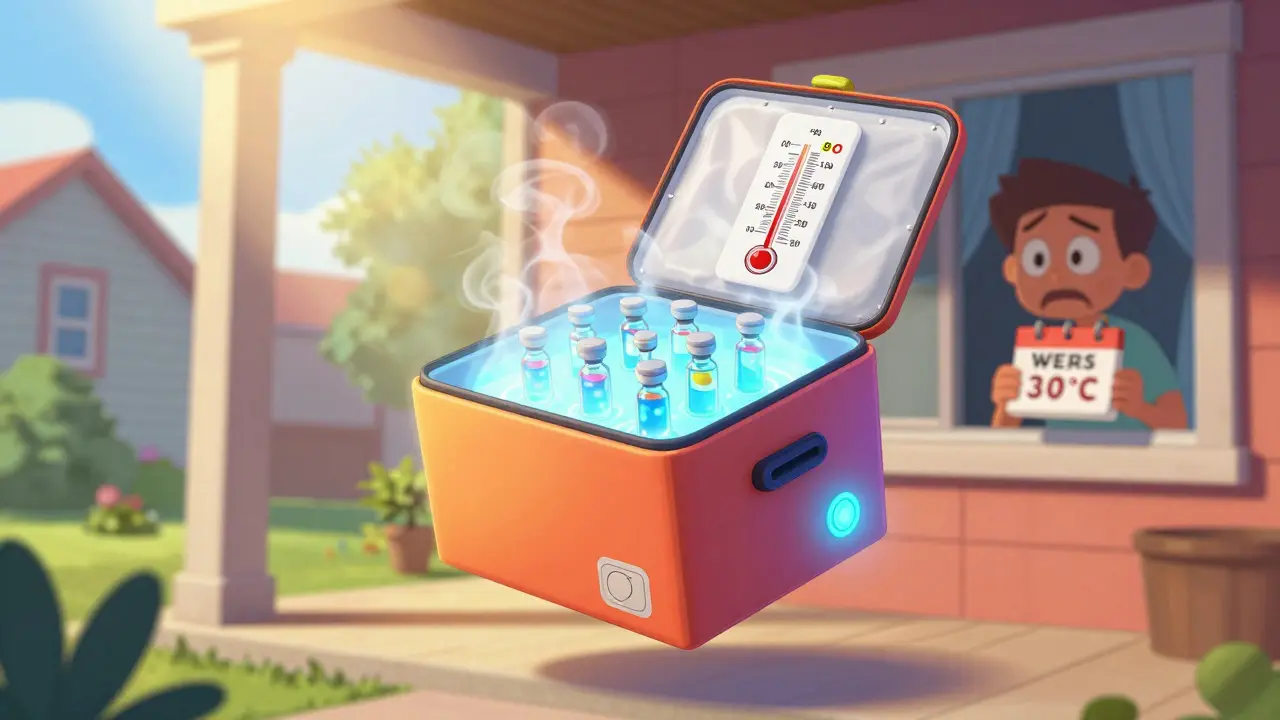
Temperature Safety Checker
Check Your Medication Temperature
Medications like insulin, biologics, and certain antibiotics require strict temperature control (2°C-8°C / 36°F-46°F) to remain effective. Enter the temperature you detected upon receipt to verify safety.
When you rely on daily medications for a chronic condition, missing a dose isn’t just inconvenient-it can be dangerous. That’s why millions of people turn to mail-order pharmacy services. But shipping medicine through the postal system? It sounds simple. In reality, it’s a high-stakes operation where a few degrees of temperature change, a one-day delay, or a lost tracking number can mean the difference between healing and harm.
Why Temperature Matters More Than You Think
Not all pills are created equal. Some, like insulin, biologics, and certain antibiotics, need to stay between 2°C and 8°C (36°F to 46°F) from the moment they leave the pharmacy until they land in your hands. That’s fridge temperature. If your package sits in a hot delivery truck for hours, or gets left on a porch in 30°C weather, those drugs can break down. You won’t see it. You won’t smell it. But your body will feel the effect-less control over blood sugar, weaker immune response, or even treatment failure. In 2023, industry data showed that 3.2% of temperature-sensitive shipments experienced excursions outside safe ranges. That might sound low, but with millions of packages moving each month, that’s thousands of compromised medications. One Reddit user in June 2024 described finding her insulin vials warm after a summer delivery. She didn’t use them. She called her pharmacy. They sent a replacement-fast. That’s luck. It shouldn’t be. Reputable mail-order pharmacies now use insulated shipping containers with gel packs that last 48-72 hours. Some even embed real-time temperature sensors that send alerts if the package goes outside range. The FDA’s May 2024 draft guidance is pushing for mandatory real-time tracking for all biologics. That’s not a luxury-it’s becoming the baseline.Timing Isn’t Just About Convenience-It’s About Survival
You think, “I’ll order my refill next week.” But what if next week turns into two? Or your pharmacy needs three days just to process the refill? Mail-order pharmacies don’t work like your local drugstore. They operate on schedules, not on-demand. GoodRx recommends ordering refills at least two weeks before you run out. That’s not a suggestion-it’s a safety rule. Medicare Part D plans require pharmacies to confirm with you or your caregiver before shipping a refill. Why? Because if you’re on a medication like warfarin or lithium, even a few days without it can trigger serious health events. A 2024 GoodRx report found that 22% of mail-order users had at least one delayed delivery in the past year. For someone with multiple sclerosis on Tysabri, or a cancer patient on a biologic, that delay isn’t a nuisance-it’s a crisis. One patient on Reddit credited her pharmacy’s real-time tracking system for catching a 36-hour temperature spike during transit. The drug was flagged, held, and replaced before she ever got a compromised vial. The key? Set reminders. Link your refill date to your calendar. Don’t wait for the pharmacy to email you. If your medication is critical, set a second alarm two weeks before you run out. And if you’re switching pharmacies, ask: “Do you have a proactive refill system?”Tracking: The Invisible Shield
A package with no tracking is a black box. You don’t know where it is. You don’t know if it’s safe. You don’t know if it’s even coming. Modern mail-order pharmacies use tracking systems that go beyond a simple delivery confirmation. They log every step: when the package was packed, when it left the warehouse, which carrier picked it up, and when it was scanned into your mailbox. Some even integrate with carrier systems like FedEx, UPS, and USPS to predict delays before they happen. Pitney Bowes launched its PitneyShip software in Q2 2024, cutting labeling errors by 33% and boosting address verification accuracy to 99.2%. That means fewer wrong deliveries. Fewer packages sitting at the wrong house. Fewer chances for theft or exposure. And then there’s tamper-evident packaging. By law, all prescription shipments must have seals that show if someone opened the box. Controlled substances-like opioids or stimulants-require even stricter measures: signature confirmation, secure drop boxes, or delivery only to a locked mailbox. The DEA requires this under 21 CFR Part 1304. It’s not optional. It’s enforced. If your package arrives without tracking info, or the seal is broken, don’t take the medication. Call your pharmacy immediately. They’re required to replace it at no cost.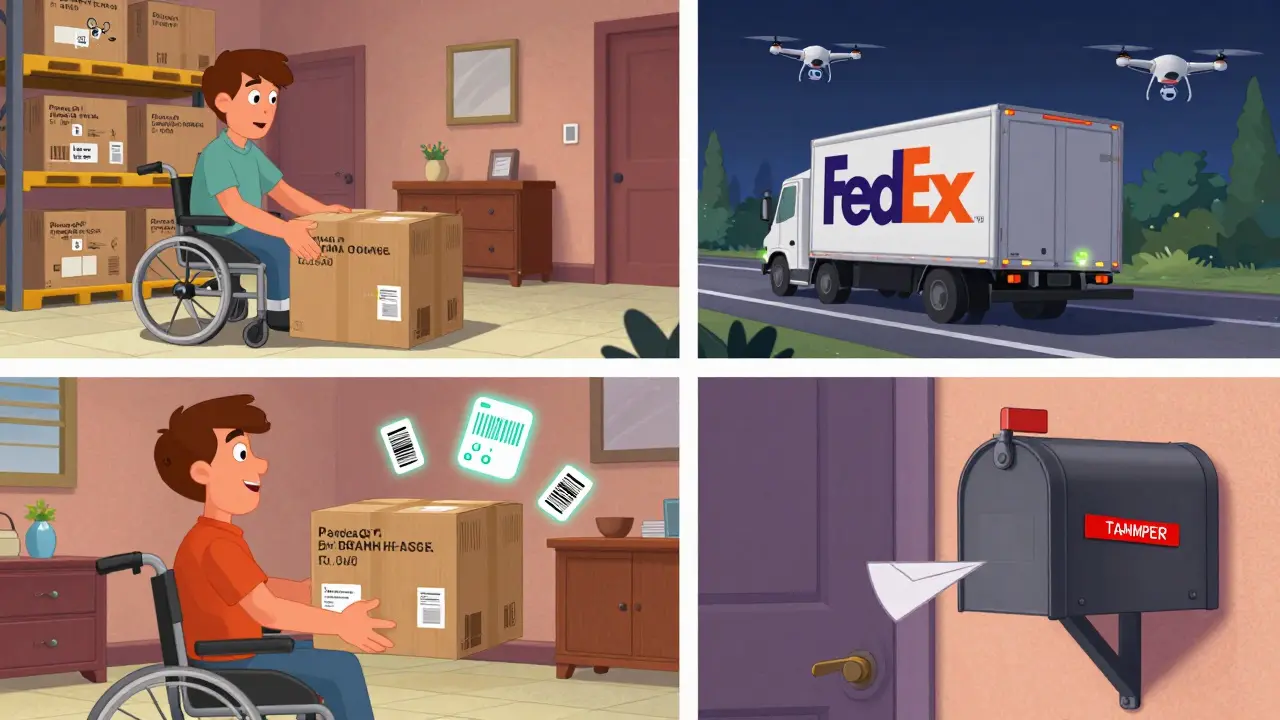
Who’s Running These Pharmacies? And How Do You Know They’re Safe?
Three companies-Express Scripts, OptumRx, and CVS Caremark-control 78% of the U.S. mail-order pharmacy market. That’s not a coincidence. They’ve invested millions in temperature-controlled logistics, automated refill systems, and real-time tracking. But not every online pharmacy is this advanced. The FDA says a legitimate mail-order pharmacy must:- Require a valid prescription from a licensed provider
- Have a physical U.S. address and phone number you can call
- Employ licensed pharmacists who review every order
- Be licensed in every state where they ship
What You Can Do to Stay Safe
You can’t control the whole system. But you can control your part in it.- Know your meds. If it’s insulin, a biologic, or a refrigerated antibiotic, treat it like a live vaccine. Temperature matters.
- Order early. Two weeks before you run out. Not three days before.
- Track every shipment. Use the tracking number. Check the delivery status daily.
- Inspect everything on arrival. Is the seal intact? Is the package cold to the touch? If it feels warm, don’t use it.
- Report problems. If your medication arrives damaged, delayed, or at the wrong temperature, call your pharmacy. They’re required to fix it.
- Use a delivery alert. Set up notifications so you’re home to receive packages. Or ask a neighbor to accept them.
The Bigger Picture: Why This System Exists
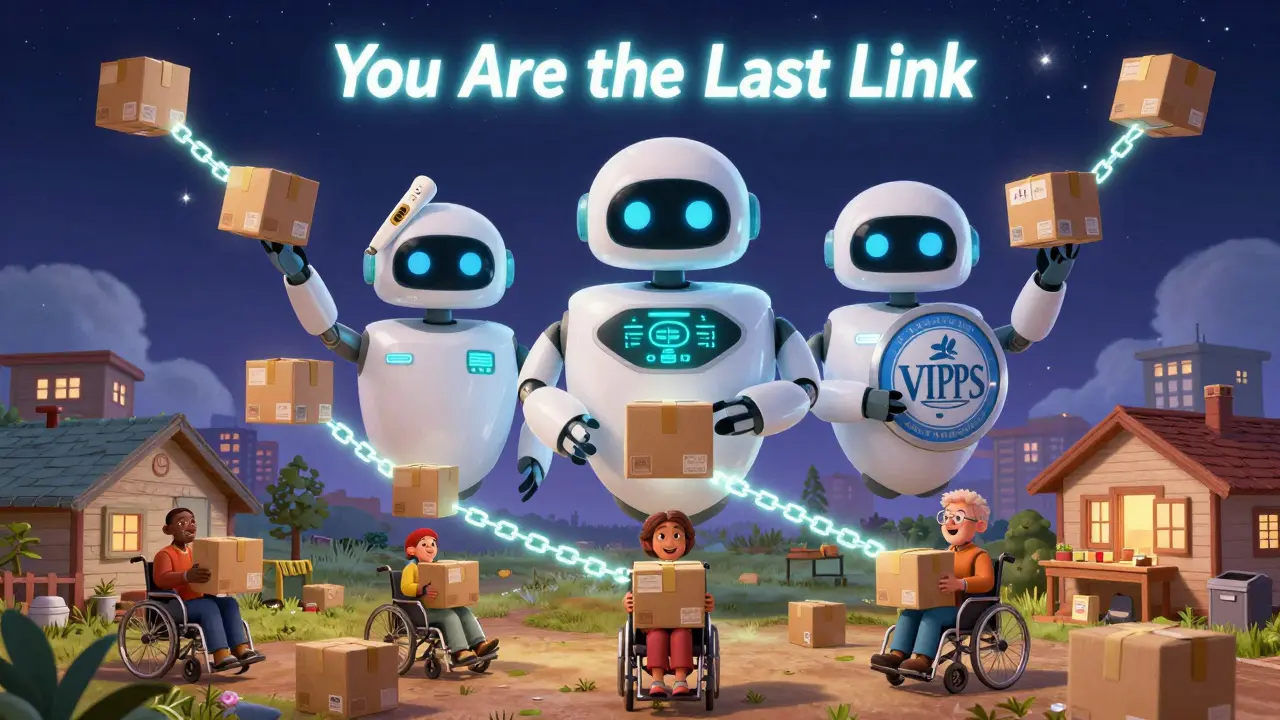
Mail-order pharmacies aren’t just about saving money-though they cut costs by an average of 32% compared to retail pharmacies. They’re about access. For people in rural areas, for those with mobility issues, for anyone who can’t easily get to a pharmacy-this is lifeline care. In 2024, 45% of Medicare Part D users rely on mail-order for maintenance meds. That number jumps to 68% for patients on three or more daily medications. And in rural areas, 38% of patients depend on it-compared to just 22% in cities. The system works best when you’re part of it. When you communicate. When you track. When you speak up. Future tech is coming. IoT-enabled packaging. AI that predicts delays. Blockchain for drug tracking. The DEA requires blockchain-based chain of custody for controlled substances by January 1, 2026. That’s not sci-fi-it’s the next step. But until then, safety rests on you. Not the algorithm. Not the courier. Not even the pharmacy. You. The person who takes the pill.Frequently Asked Questions
What should I do if my mail-order medication arrives warm?
Do not use the medication. Contact your pharmacy immediately. Reputable mail-order pharmacies are required to replace temperature-compromised drugs at no cost. Keep the package and any temperature logs they provide. If you’re on insulin, a biologic, or another critical medication, have a backup supply ready-ask your doctor for a short-term prescription if needed.
Can I get my prescriptions delivered faster than standard mail?
Yes, but it depends on your pharmacy and insurance plan. Many offer expedited shipping for an extra fee, especially for life-saving medications. Some Medicare Part D plans cover priority shipping for patients with urgent needs. Ask your pharmacy if they offer 2-day or overnight delivery options. Never assume standard shipping is fast enough-plan ahead.
How do I know if my mail-order pharmacy is legitimate?
Look for the VIPPS seal from the National Association of Boards of Pharmacy. The pharmacy must have a physical U.S. address, a licensed pharmacist on staff, and require a valid prescription. Avoid websites that sell medication without a prescription, offer “too-good-to-be-true” discounts, or don’t list a phone number. Check the FDA’s list of unsafe online pharmacies if you’re unsure.
Are mail-order pharmacies safer than local pharmacies?
Studies show mail-order pharmacies have lower dispensing error rates-about 15% fewer mistakes than retail pharmacies. They also improve adherence by 8-10%. But they introduce new risks: temperature excursions, delivery delays, and package theft. The key is choosing a reputable provider with strong tracking, temperature control, and customer service. For maintenance medications, mail-order is often safer. For acute or time-sensitive drugs, retail may be better.
What happens if my package is stolen after delivery?
Report it to your pharmacy right away. Most reputable mail-order pharmacies will replace stolen medications, especially if they’re controlled substances or require refrigeration. They may ask for a police report. Some also offer secure delivery options like locked mailboxes or delivery to a pharmacy pickup location. Always use delivery alerts so you’re home to receive sensitive packages.



12 Comments
kirti juneja
Just got my insulin shipment today - cold as a mountain stream, seal intact, tracking showed it was in a climate-controlled van the whole time. I almost cried. This system works when you pick the right pharmacy. No fluff, no drama - just science and care.
William James
you know what i love? how people act like this is new. my grandpa got his insulin by mail in 1987. same temp rules. same seals. same ‘call if it’s warm’ thing. we’ve been doing this right for decades. the tech just made it easier. don’t let the hype fool you - it’s still about the person on the other end of the phone.
Haley Gumm
3.2% excursion rate? that’s actually terrifying. multiply that by 5 million monthly shipments = 160,000 compromised meds a year. and that’s just the ones they caught. imagine the ones that didn’t get flagged. we’re gambling with people’s lives and calling it ‘convenience’.
Kenzie Goode
I just want to say thank you to whoever wrote this. I’m on a biologic for RA, and I used to panic every time my package was late. Now I set reminders, check the tracking daily, and even have a backup fridge in my garage. It’s not glamorous, but it’s saved me from three hospital trips. You’re not just giving info - you’re giving peace of mind.
David McKie
Oh please. ‘Mail-order saves money’? That’s corporate speak. They’re cutting corners so insurers don’t have to pay full retail. I’ve had three shipments arrive at 32°C. One time, the pharmacy said ‘it’s still within tolerance.’ Tolerance? My liver doesn’t care about your tolerance. This system is a scam dressed in lab coats.
Southern Indiana Paleontology Institute
if you cant handle your meds being shipped then dont use mail order. america is too soft. back in my day we wrapped pills in tin foil and mailed em with a stamp. no gel packs. no sensors. no crying. you take your medicine or you dont. simple.
Anil bhardwaj
Interesting read. I’m from India and we don’t have this system here. But I’ve seen friends in the US struggle with delays. Maybe one day, tech like this can help us too. Not everyone has a pharmacy 50 miles away.
Nick Hamby
There’s a quiet dignity in how this system functions - not as a convenience, but as a covenant. The pharmacy doesn’t just ship pills; they carry a promise. A promise that your life, your rhythm, your stability, matters enough to be guarded with temperature sensors, tamper-proof seals, and human oversight. We don’t talk about it enough. But when it works? It’s one of the most compassionate things our healthcare system does.
lela izzani
One thing no one mentions: if you’re on a controlled substance, always check the delivery method. My pharmacy now uses a locked mailbox system - no signature needed, but only I can open it. I didn’t even know that was an option until I asked. Ask your pharmacy. They’ll have options you didn’t know existed.
Joanna Reyes
I’ve been on six different medications over the past five years, all mail-order. I’ve had two bad shipments - one where the gel pack melted, one where the tracking said ‘delivered’ but the box was missing. Both times, I called immediately. Both times, they sent a replacement within 24 hours, no questions asked. I didn’t yell. I didn’t threaten. I just said, ‘This is critical. I need it.’ And they acted. That’s the difference between a company that sees you as a number and one that sees you as a person. Choose wisely. And always, always call. It’s your right.
Nerina Devi
My sister in rural Nebraska depends on this. No pharmacy within 70 miles. She’s 72, lives alone, and walks with a cane. Mail-order isn’t optional for her - it’s oxygen. If we start dismantling this system in the name of ‘efficiency,’ we’re not saving money. We’re abandoning people. This isn’t about logistics. It’s about dignity.
Dinesh Dawn
Just wanted to say - I read this whole thing last night. Then I checked my next shipment. It’s due tomorrow. I set a reminder for 8am to be home. And I’ll check the temp. Because I’ve learned. It’s not paranoia. It’s practice.