Medication Safety Checker
Is Your Medication Combination Safe?
Based on current medical evidence, there's no real risk of serotonin syndrome when combining triptans with SSRIs or SNRIs. This tool helps you verify safety and share evidence with your healthcare provider.
For over a decade, patients with migraine who also take antidepressants have been told they can’t use triptans - the most effective acute migraine treatments - because of a supposed risk of serotonin syndrome. It’s a warning that’s been repeated in pharmacies, printed in patient handouts, and even programmed into electronic prescribing systems. But here’s the thing: there’s no real evidence that combining triptans with SSRIs or SNRIs causes serotonin syndrome.
Where Did This Warning Come From?
In 2006, the U.S. Food and Drug Administration (FDA) issued a safety alert warning doctors and patients about the possible danger of mixing triptans with SSRIs or SNRIs. The alert was based on theory - not data. At the time, no large studies had looked at actual patient outcomes. Instead, regulators looked at how these drugs work on a molecular level and assumed the worst. Triptans like sumatriptan, rizatriptan, and eletriptan are designed to target specific serotonin receptors - 5-HT1B and 5-HT1D - to shrink swollen blood vessels around the brain and stop migraine pain. SSRIs like sertraline, fluoxetine, and escitalopram increase serotonin levels in the brain by blocking its reabsorption. The fear was that too much serotonin = serotonin syndrome. But serotonin syndrome isn’t just about having more serotonin floating around. It’s about overstimulating the wrong receptors - mainly 5-HT2A. Triptans barely touch 5-HT2A. They’re like a key that only fits one lock, while the receptors that trigger serotonin syndrome need a different key entirely.The Real Risk? Almost None
A 2019 study published in JAMA Neurology looked at over 61,000 patients treated at the University of Washington Medical Center between 1990 and 2018. These were people who took both triptans and SSRIs or SNRIs - sometimes for years. The result? Zero cases of serotonin syndrome that met the strict diagnostic criteria. That’s not a fluke. Other studies, including a 2022 survey of 1,200 migraine patients by the American Migraine Foundation, found that 42% had been denied triptans because of their antidepressant use. Not one of them had ever experienced serotonin syndrome from the combination. Even the FDA’s own adverse event database, from 2006 to 2022, recorded only 18 possible cases. None were confirmed as true serotonin syndrome after expert review. Compare that to the millions of prescriptions filled each year - the risk is so low it’s practically invisible.Why Do Pharmacists Still Warn Patients?
Because software hasn’t caught up. Many pharmacy systems still trigger red alerts when a triptan is prescribed alongside an SSRI. These alerts aren’t based on current science - they’re relics of the 2006 FDA warning. Pharmacists, trained to err on the side of caution, often refuse to fill the prescription or call the doctor to question it. In New Zealand, a July 2024 article in New Zealand Doctor ran a quiz asking: “Is serotonin toxicity likely when an SSRI is co-prescribed with a triptan?” The correct answer: False. That’s how deep the myth runs. Patients report being turned away at the pharmacy, told they’re “at risk,” or even advised to stop their antidepressant so they can take a triptan. That’s dangerous. Stopping an antidepressant suddenly can trigger withdrawal, worsen depression, and make migraines even harder to control.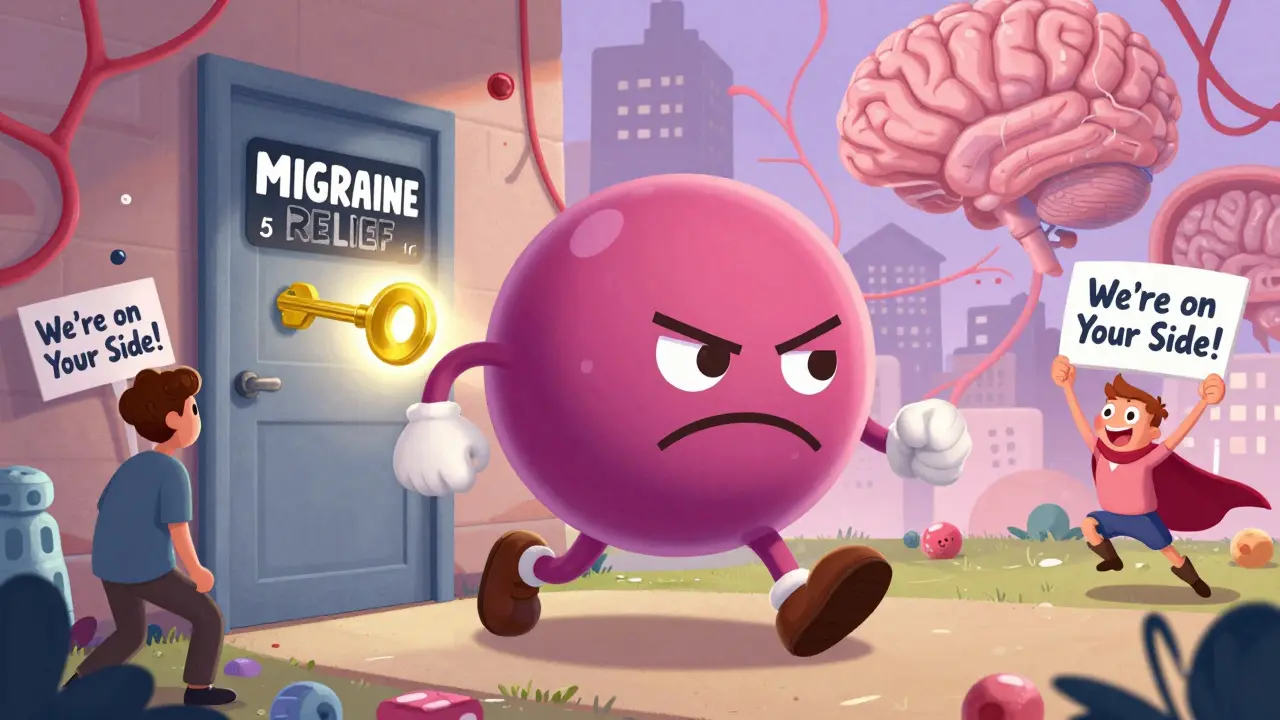
What Do Experts Actually Say?
Dr. P. Ken Gillman, a leading researcher in migraine pharmacology, wrote in 2010: “There is neither significant clinical evidence, nor theoretical reason, to entertain speculation about serious serotonin syndrome from triptans and SSRIs.” Dr. John Rothrock, a neurologist and headache specialist, called the incidence “exceedingly rare.” Dr. David Perloff, writing in Journal Watch, said the idea that triptans contribute to serotonin syndrome “has been doubted” for years. The Migraine Foundation of New Zealand (2024) states clearly: “Triptans act on different serotonin receptors than the one implicated in serotonin syndrome.” And it’s not just New Zealand. In 2022, the American Headache Society issued a formal consensus statement: “Clinicians should not avoid prescribing triptans to patients taking SSRIs or SNRIs due to theoretical concerns.” A 2021 survey of 250 headache specialists found 89% routinely prescribe triptans with SSRIs/SNRIs without any special monitoring.Why the Confusion Persists
The problem isn’t science - it’s communication. UpToDate, a widely used clinical reference tool, updated its entry in July 2023 to say the risk is “negligible.” But many older textbooks, hospital guidelines, and even some medical school lectures still teach the old warning. Pharmaceutical companies are caught in the middle. The prescribing information for sumatriptan (Imitrex) still includes the FDA warning - but it now adds: “Epidemiological studies have not shown an increased risk.” That’s a subtle but important shift. Meanwhile, the European Medicines Agency never issued a similar warning. Why? Because they looked at the data - and saw nothing.What This Means for Patients
If you take an SSRI or SNRI for depression, anxiety, or OCD - and you have migraines - you don’t need to choose between mental health and pain relief. You can have both. Triptans are the gold standard for stopping migraine attacks. SSRIs and SNRIs help manage mood and can even reduce migraine frequency over time. Avoiding one because of fear of the other isn’t just unnecessary - it’s harmful. The real risk? Not taking a triptan when you need it. That means more ER visits, more missed work, more disability. It means living with pain because of a myth.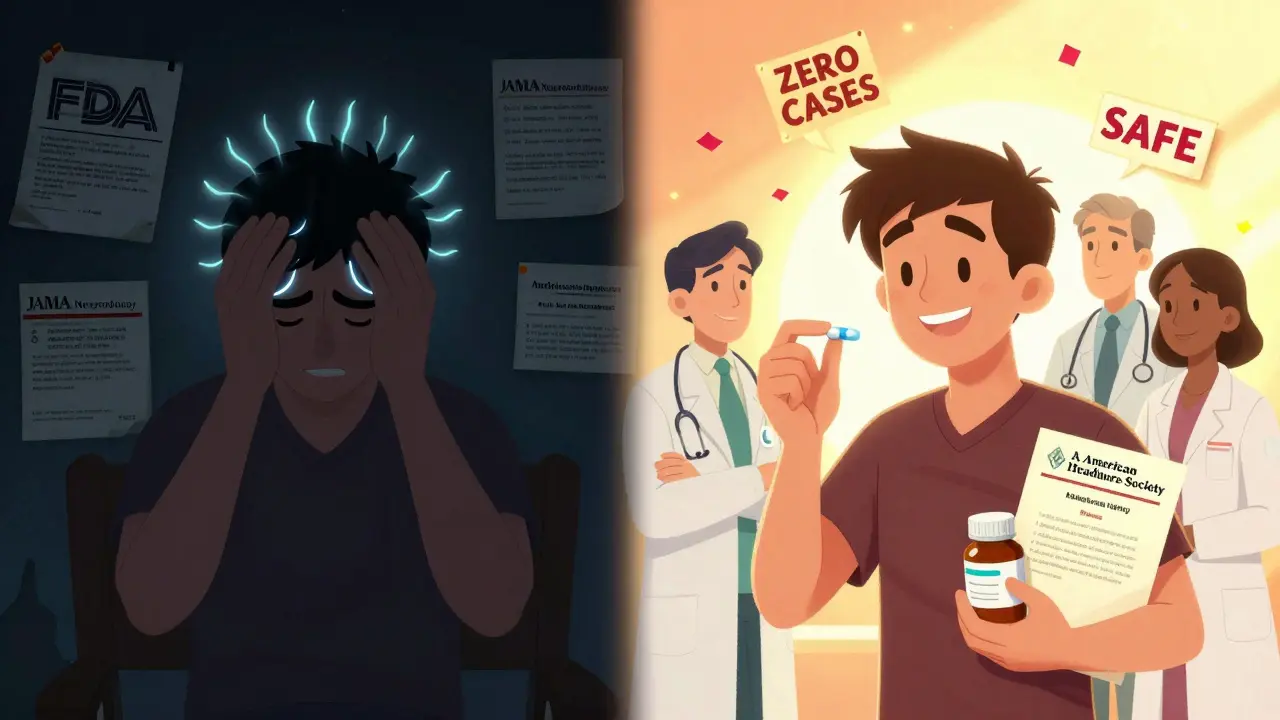
What You Should Do
If your doctor or pharmacist says you can’t take a triptan because you’re on an antidepressant, ask them this:- “Is this based on actual patient data, or an old FDA warning?”
- “Have you seen any confirmed cases of serotonin syndrome from this combination?”
- “What do the latest guidelines from the American Headache Society or Migraine Foundation say?”



15 Comments
Diana Alime
so i got prescribed sumatriptan last month and my pharmacist literally stared at me like i asked for cyanide. said 'are you sure you're on an SSRI?' like i was about to turn into a human serotonin bomb. i showed him the jama study and he just shrugged and said 'well the computer says no.' so i went to another pharmacy. they filled it without blinking. why do we still let software dictate medical care?
Adarsh Dubey
this is such a common issue. i've been on sertraline for 8 years and take rizatriptan for migraines. never had a problem. the fear is purely theoretical. doctors and pharmacists are scared of liability, not science. it's frustrating when the people meant to help you are stuck in 2006.
Lindsey Kidd
thank you for this. i've been telling my neurologist for years that i can't take triptans because of my antidepressants. she finally pulled up the 2019 jama study and said 'you're right, we've been wrong.' i cried in her office. this isn't just about meds-it's about being heard.
Dan Gaytan
👏👏👏 finally someone says it. i've been on fluoxetine and eletriptan for 12 years. zero issues. the myth is worse than the migraine. 🙌
Rosemary O'Shea
Oh, darling, this is the exact kind of medical negligence that keeps the pharmaceutical-industrial complex thriving. The FDA’s 2006 warning? A lazy, fear-based overreaction that has cost patients billions and countless hours of avoidable suffering. It’s not just ignorance-it’s institutional arrogance. And now, we’re left with pharmacists who treat patients like lab rats, not humans. You don’t need a PhD to understand that if 61,000 people took both drugs and not one developed serotonin syndrome, the warning is not just outdated-it’s dangerous. Why aren’t we rioting in the streets?
Meanwhile, in New Zealand, doctors are having quizzes on this. In the U.S., we’re still getting red pop-ups like we’re about to detonate a nuclear bomb. It’s not science. It’s superstition dressed in white coats.
And don’t get me started on UpToDate. That’s supposed to be the gold standard? If it’s still echoing 2006, then it’s a relic, not a resource. We need a full audit of every clinical guideline that’s been based on theory instead of data. And someone needs to apologize to the millions of people who were denied effective treatment because of a myth.
It’s not just about triptans. It’s about trust. When the system that’s supposed to protect you becomes the source of your suffering, what’s left? We need reform. Not just in prescribing, but in accountability. Who signed off on this? Who profited? And why are we still paying the price?
Bret Freeman
the fact that this is even a debate is absurd. i’ve been on escitalopram and sumatriptan since 2017. i’ve had migraines since i was 14. i’ve been to the er three times for migraine complications-none of them because of my meds. every single time i was turned away from the pharmacy, i had to call my doctor, argue, get a note, and then go to a different location. this isn’t healthcare. it’s bureaucratic harassment. and the worst part? the people who refuse to update their systems are the same ones who complain about 'medical costs.' well here’s your cost: $450 million a year because nobody wants to admit they were wrong.
Gray Dedoiko
my mom was told she couldn't take triptans because of her zoloft. she ended up on opioids for years because they said 'it's safer.' she got addicted. she lost her job. she almost lost her life. this isn't just theory. it's real damage. thank you for writing this.
Ajay Sangani
what if the real serotonin syndrome isn't from the drugs-but from the fear? we've built a medical culture where uncertainty is punished with caution, and caution becomes dogma. we're not treating patients-we're treating algorithms. and the worst part? we believe them. we've outsourced our judgment to software that doesn't know the difference between a theory and a tragedy.
siddharth tiwari
ok but what if this is all a big pharma ploy? i mean think about it. if triptans and ssris are safe together then why did the fda warn us? maybe they want us to keep buying new drugs? maybe the study was funded by big migraine pharma? i mean who even wrote that jama thing? who paid them? and why does everyone just believe it? i think they want us to stay sick so we keep buying stuff. also i saw a video on youtube that said serotonin syndrome is real and people die from it.
Harsh Khandelwal
big pharma’s got the whole system on a leash. they write the warnings, they pay for the software alerts, they fund the outdated textbooks. meanwhile, real doctors are too busy to fight back. so we get stuck between a rock and a hard place: either suffer through migraines or risk being labeled a 'noncompliant patient.' i’ve been on both meds for 10 years. i’m fine. but if i told my doctor, he’d still make me sign a waiver like i’m about to perform a suicide ritual.
EMMANUEL EMEKAOGBOR
Thank you for this comprehensive and deeply necessary breakdown. As a clinician in Nigeria, I have seen patients denied triptans due to this myth, and the consequences are devastating-uncontrolled pain, depression worsening, increased disability. The fact that this persists in the U.S. is disheartening, but the global implications are even more alarming. Evidence-based medicine must transcend borders. I will share this with my colleagues immediately.
Jillian Angus
my pharmacist still gives me side-eye when i pick up sumatriptan. i just nod and smile. i dont have the energy to explain again. i just want my headache to go away.
Austin LeBlanc
you think this is bad? wait until you find out how many patients are being told to stop their antidepressants just to get a triptan. that’s not just dangerous-it’s criminal. people are being forced to choose between their mental health and their physical health. this isn’t medicine. this is torture disguised as caution. and the people doing it? they sleep fine at night. they get paid. they don’t have to live with the consequences.
niharika hardikar
While the epidemiological data may suggest a negligible risk, the pharmacodynamic interactions remain theoretically plausible. The 5-HT1B/1D receptor specificity of triptans does not entirely preclude secondary modulation of 5-HT2A under conditions of pharmacokinetic synergy, particularly in patients with CYP2D6 polymorphisms or concomitant use of CYP inhibitors. Therefore, while clinical incidence is low, the absence of evidence is not evidence of absence. A risk-benefit analysis must still be conducted on a case-by-case basis, with vigilant monitoring for early signs of serotonin toxicity.
Bartholomew Henry Allen
the FDA did its job. if you want to risk your life then go ahead. dont blame the system when you die from serotonin syndrome. people are stupid and think they know better than science. triptans and ssris dont mix. period. if you cant follow the rules then dont take the meds. its that simple. stop whining.