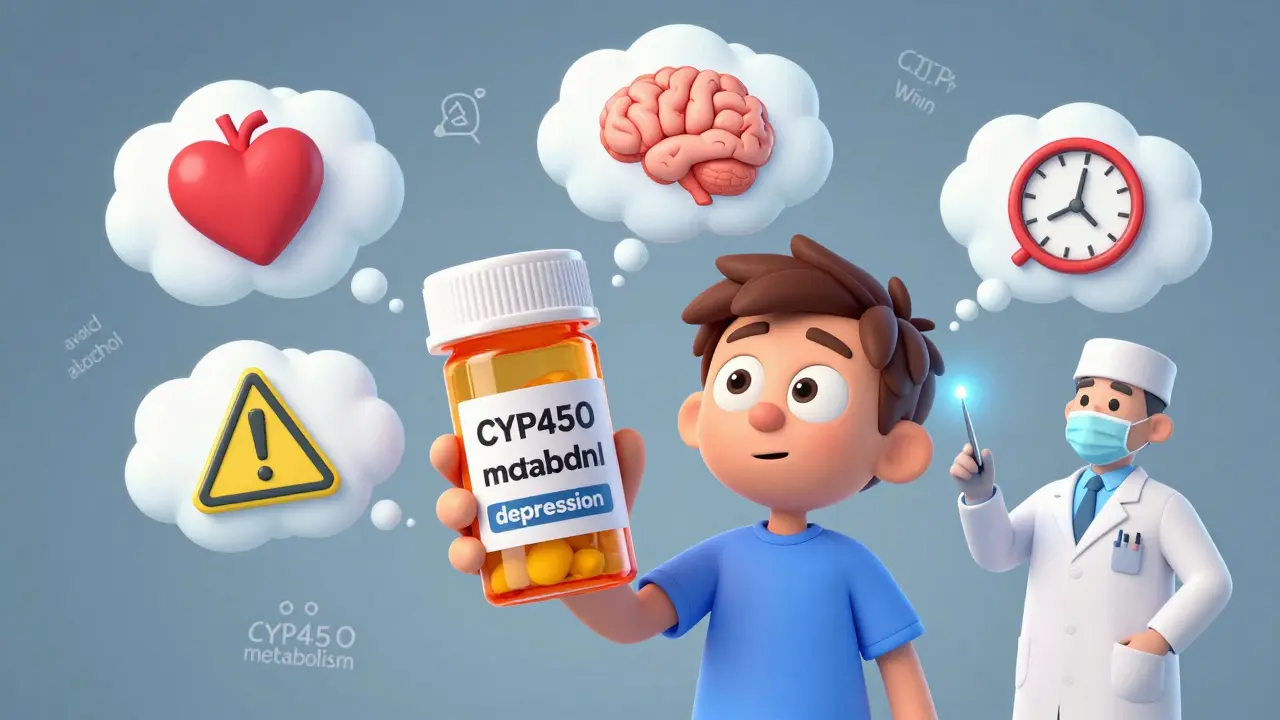
Every time you pick up a pill bottle or open a box of medicine, there’s a story written on the label. It’s not just a name and a number-it’s your safety instructions, your warning signs, and your roadmap for taking the medicine right. Yet, for many people, reading a drug label feels like trying to decode a secret code. You might see words like hydroxyzine and hydralazine and wonder if they’re the same. Or you might miss that "q.d." means "once daily" and end up taking twice as much as you should. Medication errors like these are more common than you think, and they’re often caused by labels that are hard to read or poorly explained.
Let’s cut through the confusion. Whether you’re taking a prescription pill, an over-the-counter pain reliever, or a new medication your doctor just handed you, knowing what each part of the label means can prevent dangerous mistakes. In the U.S., the Food and Drug Administration (FDA) sets strict rules for how drugs are labeled, but those rules are different depending on whether the drug is sold by prescription or bought off the shelf. And while healthcare providers get detailed, technical labels, patients are often left to figure it out on their own.
What’s on a Prescription Drug Label?
Prescription medications come with what’s called the United States Prescribing Information (USPI). This isn’t one single piece of paper-it’s a full document split into three main parts: Highlights, Table of Contents, and Full Prescribing Information (FPI). The Highlights section gives doctors a quick snapshot: the most important warnings, dosing info, and who shouldn’t take the drug. But here’s the catch: the Highlights are not meant for patients. They’re written for clinicians who already know medical terms like "hepatic impairment" or "CYP450 metabolism."
The Full Prescribing Information is where the real details live. It’s divided into 17 standardized sections. Section 1 tells you what the drug is approved to treat-like "high blood pressure" or "depression." Section 2 explains exactly how much to take, how often, and how to adjust the dose for different patients. Section 3 lists all the available forms and strengths-like 10 mg tablets, 20 mg capsules, or 50 mg injections. Section 4 tells you when NOT to take it: if you’re allergic, if you have kidney disease, or if you’re on another drug that could cause a deadly interaction.
Section 5 is critical: Warnings and Precautions. This is where you’ll find life-threatening risks-like "may cause severe liver damage" or "avoid alcohol while taking." Section 6 lists the most common side effects, but don’t assume "common" means "normal." If you get a rash, trouble breathing, or swelling, those aren’t "side effects"-they’re emergencies. Section 14 gives you the clinical trial data, and Section 16 tells you how to store it: "Keep at room temperature," "Refrigerate," or "Protect from light."
And then there’s Section 17: Patient Counseling Information. This is the part doctors are supposed to use to explain the drug to you. But in real life, many patients never hear this. A 2022 survey found that 68% of patients struggled to understand their prescription labels. That’s not because they’re not smart-it’s because the labels weren’t made for them.
What’s on an Over-the-Counter (OTC) Drug Label?
Unlike prescription drugs, OTC medicines-like Tylenol, Advil, or allergy pills-use a simple, standardized format called the "Drug Facts" label. This was designed with patients in mind. You can find it right on the box or bottle. Here’s what each part means:
- Active Ingredient: This is the medicine itself. Not the brand name-like "ibuprofen," not "Advil." This matters because two different brands can have the same active ingredient. If you take both, you could overdose.
- Purpose: What does this ingredient do? "Pain reliever," "antihistamine," or "decongestant"-this tells you how the drug works.
- Uses: What symptoms will it treat? "Relieves headaches," "reduces fever," "relieves runny nose." If your symptom isn’t listed, don’t take it.
- Warnings: This is your safety net. It tells you when NOT to take the drug: "Do not use if you have liver disease," "Ask a doctor before use if you are pregnant," or "May cause drowsiness." It also warns about interactions with other drugs or alcohol.
- Directions: How much to take, how often, and for how long. "Take 1 tablet every 4 to 6 hours. Do not exceed 6 tablets in 24 hours." If it says "as needed," that means only when you feel the symptom-not just because it’s time.
- Inactive Ingredients: These are fillers, dyes, or preservatives. They don’t treat anything, but if you’re allergic to something like "sulfites" or "dye #40," this is where you’ll find it.
- Other Information: Storage tips, like "keep out of reach of children" or "store below 77°F."
OTC labels are clearer, but they’re not perfect. A 2017 study by Nationwide Children’s Hospital found that even with this format, 40% of parents misread dosing instructions for their kids. The font is too small. The numbers are confusing. "Take 5 mL" looks like "take 50 mL" if you’re squinting.
What You’ll Find on the Bottle Itself
When you get a prescription filled at the pharmacy, the label on the bottle has a few key pieces of info:
- Your full name-double-check this. Giving someone else’s medicine is dangerous.
- Drug name-both the generic (e.g., "metformin") and brand (e.g., "Glucophage").
- Strength and amount-"500 mg tablets, 60 tablets total."
- Directions-"Take one tablet by mouth twice daily with food."
- Prescriber’s name-who wrote the prescription.
- Pharmacy name and phone-so you can call if you have questions.
- Date filled-so you know how old the prescription is.
- Expiration date-don’t take medicine past this date. It might not work-or it could be harmful.
- NDC number-a unique code that identifies the exact drug, strength, and manufacturer. Useful if you need to report a problem.
Some labels use abbreviations that are confusing. "q.d." means once daily. "b.i.d." means twice daily. "t.i.d." is three times. "q.i.d." is four. "p.r.n." means "as needed." If you don’t know these, ask your pharmacist. The Institute for Safe Medication Practices says confusing abbreviations cause about 15% of labeling-related errors. Many pharmacies now write out "daily," "twice daily," or "as needed" instead-but not all do.
Why Labels Are So Hard to Read
It’s not just about bad handwriting or tiny print. The system is built for doctors, not patients. The FDA’s labeling rules are designed to give healthcare professionals detailed, legally defensible information-not to help you understand why you’re taking the drug. That’s why you’ll see labels that say "for the treatment of Type 2 diabetes mellitus" instead of "to lower your blood sugar."
A 2020 study from the University of Florida found that adding the reason for taking the medicine to the label reduced medication errors by 42%. Imagine if your label said: "Take this to lower your blood sugar" instead of "for diabetes mellitus." You’d be more likely to take it right, and less likely to skip doses because you didn’t understand why it mattered.
Older adults are especially at risk. A 2022 report from the Medicare Rights Center found that 54% of Medicare patients over 65 had trouble reading their labels because of small print. That’s why so many end up taking too much-or too little. The same report showed this group had a 22% higher chance of making a medication error.
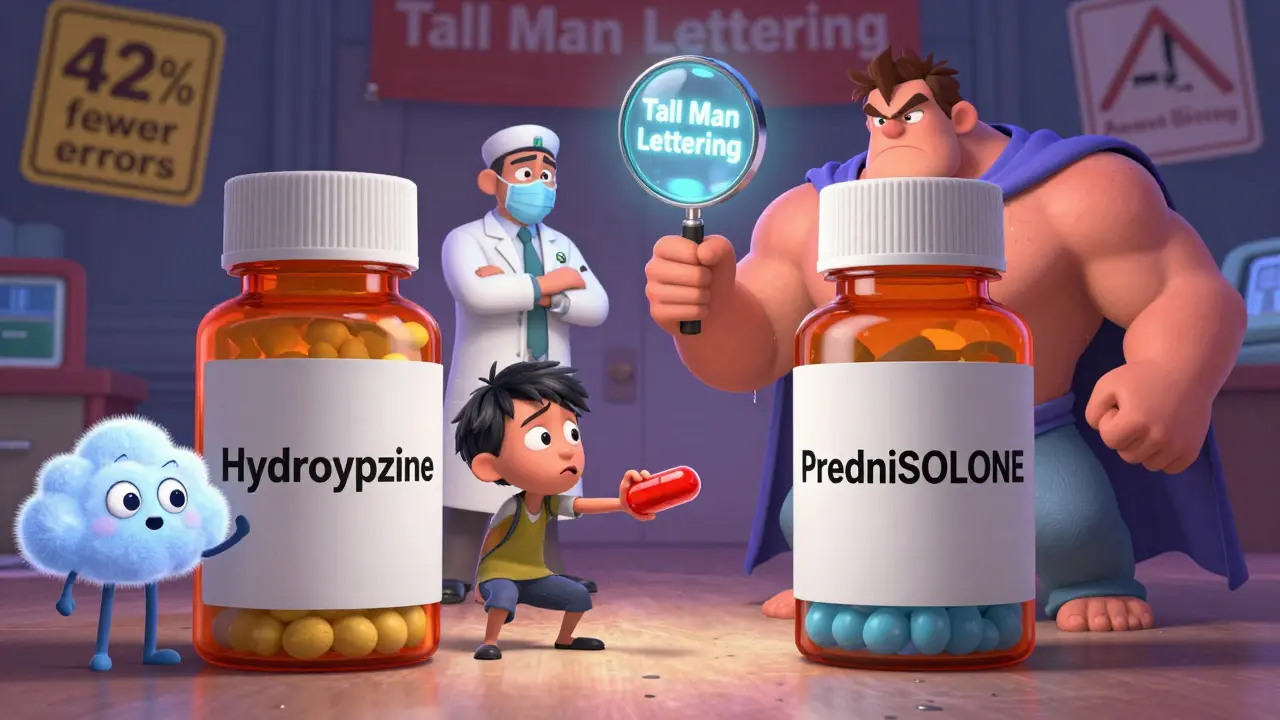
And then there’s name confusion. Drugs like hydroxyzine (for allergies) and hydralazine (for high blood pressure) sound almost identical. One mistake, and you could end up with a dangerous reaction. The FDA recommends "tall man lettering"-like predniSONE vs. predniSOLONE-to help distinguish look-alike names. But not all pharmacies use it.
How to Protect Yourself
Here’s what you can do right now:
- Check your name on every label. If it’s wrong, don’t take it.
- Match the drug name to what your doctor told you. If it’s different, ask why.
- Understand the dosage. If it says "take 1 tablet twice daily," don’t guess what "twice daily" means. Ask.
- Read the warnings. If it says "avoid alcohol," don’t have a glass of wine.
- Ask your pharmacist. They’re trained to explain labels. Say: "Can you help me understand what this is for and how to take it?"
Pharmacists are your best defense. A 2021 study in the Journal of the American Pharmacists Association found that when pharmacists took 5 extra minutes to explain a label to patients with low health literacy, medication errors dropped by 29%. That’s not magic-it’s clear communication.
What’s Changing in Drug Labeling
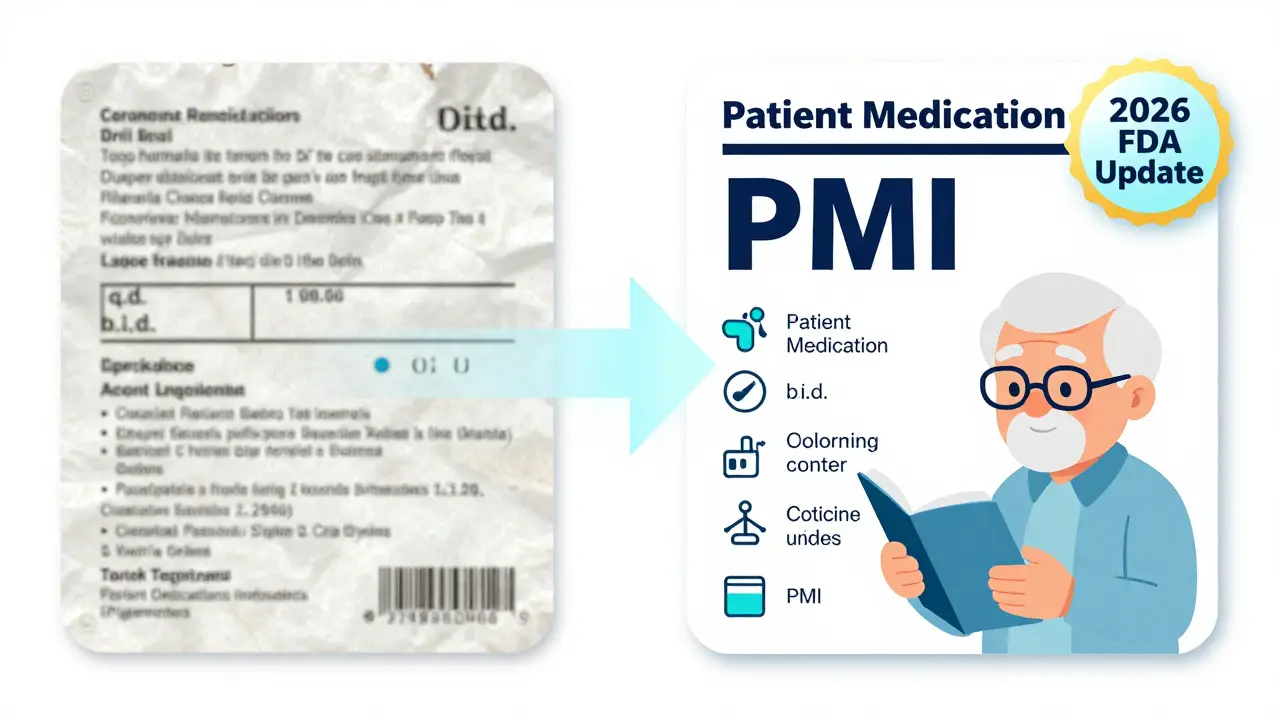
The FDA is finally starting to listen. In its 2023-2027 strategic plan, the agency says it wants to make prescription labels easier for patients to understand. By 2026, they plan to roll out a new format called the Patient Medication Information (PMI)-a one-page, standardized document with plain language, clear headings, and visual cues. Think of it like a nutrition label for medicine.
They’re also expanding Instructions for Use (IFUs)-detailed guides with pictures and step-by-step directions for complex drugs like insulin pens or injectables. And for biosimilars-newer, cheaper versions of biologic drugs-labels will now include direct comparisons to the original drug, so patients know exactly what they’re getting.
Some pharmacies are already ahead of the curve. A 2022 survey found that 63% of independent pharmacies use patient-centered labels, while only 41% of big chains do. Hospitals with over 200 beds are even more advanced-87% use electronic systems that automatically print labels in plain language.
The future of drug labeling isn’t about more text. It’s about better communication. Clearer words. Bigger fonts. Simpler instructions. And most of all-giving patients the information they actually need to stay safe.
Final Thoughts
You don’t need a medical degree to read a drug label. But you do need to know what to look for-and where to ask for help. Labels are supposed to protect you, not confuse you. If you’re unsure, don’t guess. Don’t assume. Don’t take it just because it looks familiar. Ask. Always ask. Your pharmacist, your doctor, even a trusted friend-they can help you make sense of it. Because when it comes to your health, understanding the label isn’t optional. It’s essential.



13 Comments
Aisling Maguire
I love how you broke this down! I used to just glance at my prescription labels and hope for the best. Now I read every line-even the tiny print. My pharmacist even started smiling at me because I ask questions. It’s wild how much safer you feel when you actually understand what you’re taking.
Martin Halpin
You say the FDA wants to make labels easier but let’s be real-they’re still owned by pharma lobbyists. The whole system is designed to keep you confused so you keep coming back for more prescriptions. I’ve seen labels where the active ingredient is buried under five brand names and a tiny font. And don’t even get me started on how they hide the side effects in Section 12.2. It’s not incompetence-it’s intentional. They want you scared enough to keep taking it but not smart enough to question it.
Eimear Gilroy
I never realized how much I was missing until I started comparing OTC labels. I took two different cold meds once because I didn’t know both had acetaminophen. Ended up in the ER. Now I always check the active ingredient first. Also-why is ‘q.d.’ still used? No one says that outside of medical school. Just write ‘once daily.’
Ajay Krishna
This is such an important post. I’ve been teaching my elderly neighbors how to read their labels. One of them thought ‘b.i.d.’ meant ‘before dinner.’ We sat down with a notebook and wrote out what each abbreviation meant. Now she keeps a little card in her pillbox. Simple things make such a difference. You don’t need a degree-you just need someone to take the time.
Charity Hanson
YESSSSS! I’m so glad someone finally said this. I work in a clinic and I see people misreading labels every single day. One lady took her blood pressure med at 4 a.m. because she thought ‘twice daily’ meant ‘when you wake up and when you go to bed.’ I had to explain that ‘daily’ means 24 hours. We need a public campaign on this. Like ‘Know Your Label’ week.
Noah Cline
The real issue isn’t the label-it’s the patient’s lack of baseline pharmacokinetic literacy. If you can’t differentiate between CYP3A4 inhibition and P-glycoprotein modulation, you’re not equipped to interpret a USPI. This isn’t a formatting problem. It’s a societal failure in science education. Stop infantilizing adults with ‘plain language.’ They need to learn the terminology, not have it watered down.
Lisa Fremder
America’s got the best drug labels in the world. If you can’t read them you’re just lazy. My grandma takes five meds and she never messes up. She uses reading glasses. You want clarity? Use your eyes. Stop blaming the system. The problem is you.
Justin Ransburg
I really appreciate how thorough this breakdown is. As someone who works in healthcare administration, I can tell you that the push for Patient Medication Information (PMI) is gaining real momentum. Hospitals are already piloting it. The key is consistency. If every pharmacy uses the same layout, same font size, same headings-it becomes muscle memory. We’re not just talking about safety anymore. We’re talking about dignity. Everyone deserves to understand what they’re putting into their body.
Sumit Mohan Saxena
The structural analysis of the United States Prescribing Information (USPI) is commendable. However, it must be noted that the 17-section format is codified under 21 CFR Part 201.57. The omission of Section 13 (Nonclinical Toxicology) in the summary may lead to misinterpretation. Additionally, the term ‘tall man lettering’ is formally designated by the FDA as a risk mitigation strategy under the MedWatch program. It is not merely a typographical suggestion but a regulatory expectation for manufacturers.
Brandon Vasquez
I’ve been a pharmacist for 18 years. I’ve seen people take insulin because they thought it was a vitamin. I’ve seen people skip doses because the label said ‘take with food’ and they were fasting. The system is broken, but it’s not hopeless. The people who win are the ones who ask. Just say: ‘Can you explain this to me like I’m 12?’ No shame. No judgment. Just clarity.
Vikas Meshram
You claim that 68% of patients struggle with labels. That statistic is from a 2022 survey conducted by the National Academy of Medicine, but it was based on self-reported data from a non-representative sample. The actual FDA study from 2021 showed 31% error rate among adults with college degrees. You’re exaggerating for emotional effect. Also, ‘q.d.’ is Latin. It’s not going away. Learn it. Or don’t take meds. Simple.
Jimmy Quilty
I’ve been following this. The FDA’s ‘PMI’? That’s just a distraction. They’re not fixing the real problem-pharmaceutical monopolies. The reason labels are confusing is because companies want you to take 3 different pills instead of 1. They profit from complexity. I’ve seen the same active ingredient sold under 7 different names with 3 different dosages. It’s not a labeling issue. It’s a corporate conspiracy. The FDA is in bed with Big Pharma. You think they want you to understand? They want you to pay more.
Miranda Anderson
I used to think I was bad at reading labels. Turns out, I just had terrible eyesight and no one ever taught me how to read them. I’m 56 and I just got my first pair of reading glasses last year. Now I sit with my pillbox every Sunday, write out what each one does, and put sticky notes on the bottle. It’s not glamorous. But I haven’t missed a dose since. If you’re struggling? You’re not alone. And it’s never too late to learn.