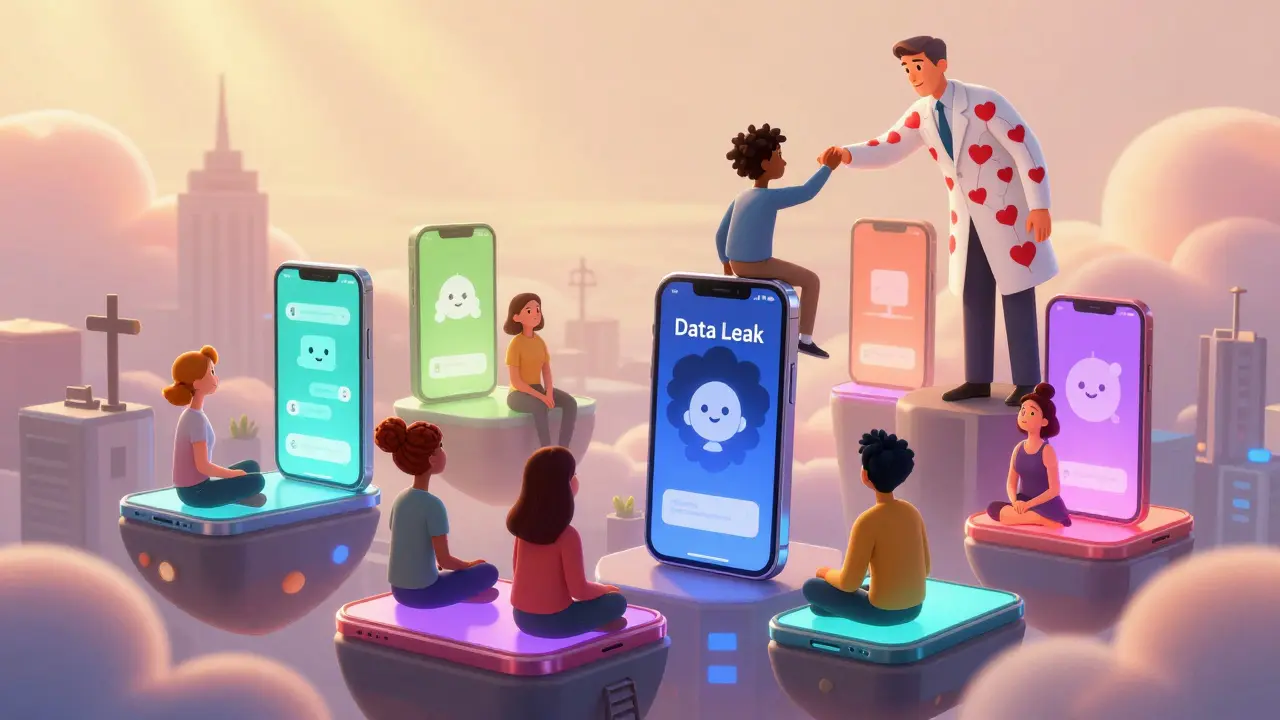
More people than ever are turning to their phones for mental health support. It’s not just about meditation timers or mood trackers anymore-today’s digital mental health tools can connect you with licensed therapists, detect signs of worsening anxiety through daily journal entries, and even adjust their advice based on how you’ve been sleeping or moving. But with all this innovation comes a big question: are these tools actually helping, or are they just making things more complicated-and risky?
What’s Really in These Mental Health Apps?
You’ve probably seen ads for Calm or Headspace. They promise calm, sleep, and peace with just a few taps. And sure, they work for some people. Calm has over 100 million downloads. Headspace has 65 million users. But here’s the catch: most of these apps are designed for general wellness, not clinical treatment. They’re great if you’re stressed after work or can’t fall asleep. But if you’re dealing with persistent depression, panic attacks, or trauma, they’re not enough.
Then there are the apps that claim to do more. Wysa and Youper use AI chatbots trained in cognitive behavioral therapy (CBT) techniques. Wysa has been tested in 14 clinical studies. Youper has published 7 peer-reviewed papers. That sounds impressive. But studies show only about 29% of young people stick with these apps past the first month. Why? Because the advice gets repetitive. The prompts feel robotic. And when you’re already feeling low, a chatbot saying “I’m here for you” doesn’t replace a human who actually listens.
Enterprise apps are different. Companies like Lyra and Ginger offer their employees access to licensed therapists via video, plus AI-driven check-ins and group support circles. One company saw a 50% drop in mental health-related sick days after rolling out a full program. These tools work because they’re not just apps-they’re part of a system. They integrate with HR, track anonymized trends, and connect users to real professionals when needed.
Teletherapy: Real Therapists, Online
Teletherapy isn’t new, but it’s now the default for millions. Platforms like BetterHelp and Talkspace let you message a therapist anytime, schedule video calls, and even switch providers if the fit isn’t right. Over 78% of positive reviews on Trustpilot mention good therapist matching. That’s a big deal. Finding the right therapist in person can take months. Online, it can take hours.
But here’s what no one talks about enough: cost. Most of these services charge $60 to $90 per week. That’s more than most people spend on groceries in a week. And the free version? Usually just a trial. You get a few messages, then it’s paywall city. Reddit user u/MindfulTechJourney put it bluntly: “Downloaded five apps during lockdown. Stuck with Calm for three months. Then stopped because the free version became useless.”
And what happens when you need urgent help? Some platforms offer crisis hotlines, but not all. If you’re in crisis and your therapist isn’t available, you’re left scrolling through self-help videos. That’s not therapy. That’s distraction.
Privacy: The Hidden Danger
Let’s talk about data. When you use a mental health app, you’re handing over your most private thoughts. Your journal entries. Your mood logs. Your sleep patterns. Your location. Your heartbeat, if the app connects to your smartwatch. And who owns that data?
A 2025 review of 578 mental health apps found that 87% had serious privacy vulnerabilities. Some sold data to advertisers. Others shared it with third-party analytics firms. A few didn’t even encrypt messages between users and therapists. That’s not a glitch. That’s standard practice in too many apps.
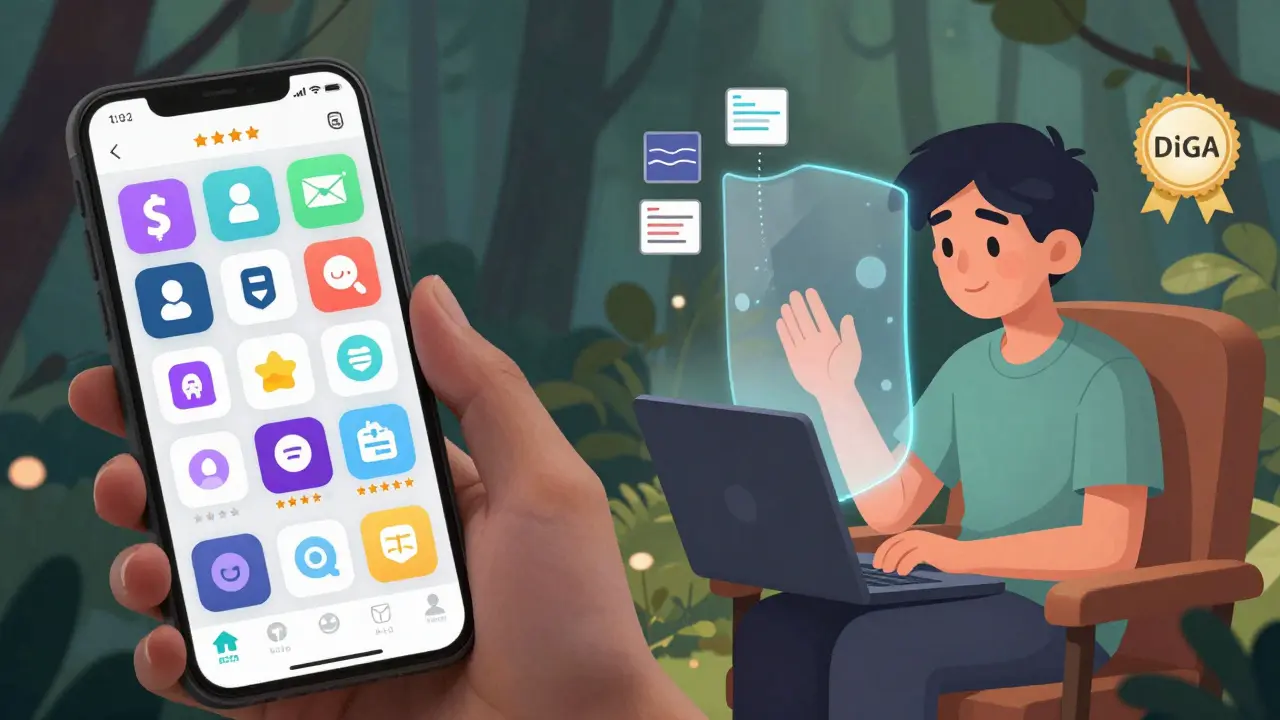
Germany is doing something different. Their DiGA system (Digitale Gesundheitsanwendungen) requires apps to prove clinical effectiveness before they can be prescribed by doctors-and reimbursed by public health insurance. Of the 42% of DiGA approvals for mental health, nearly a quarter are specifically for depression. That’s a model other countries should copy. Because if an app is going to treat your mind, it needs to meet the same standards as a pill or a therapy session.
Who Are These Apps For?
Not everyone benefits equally. People with mild anxiety or stress often find relief. Those with moderate to severe conditions? Not so much. A study from Brown University found that many users delay or even avoid professional care because they think an app is “enough.” That’s dangerous. Apps can be a bridge-but not a replacement.
And what about accessibility? If you’re low-income, don’t have a smartphone, or live in a rural area with poor internet, most of these tools are out of reach. The global market is growing fast-projected to hit $17.5 billion by 2030-but that growth isn’t evenly spread. North America controls 36% of the market. The GCC region is growing fast, thanks to national digital health systems like Abu Dhabi’s Malaffi. But in places without infrastructure or funding, these apps are just another luxury.
What Works? What Doesn’t?
Here’s what the data shows:
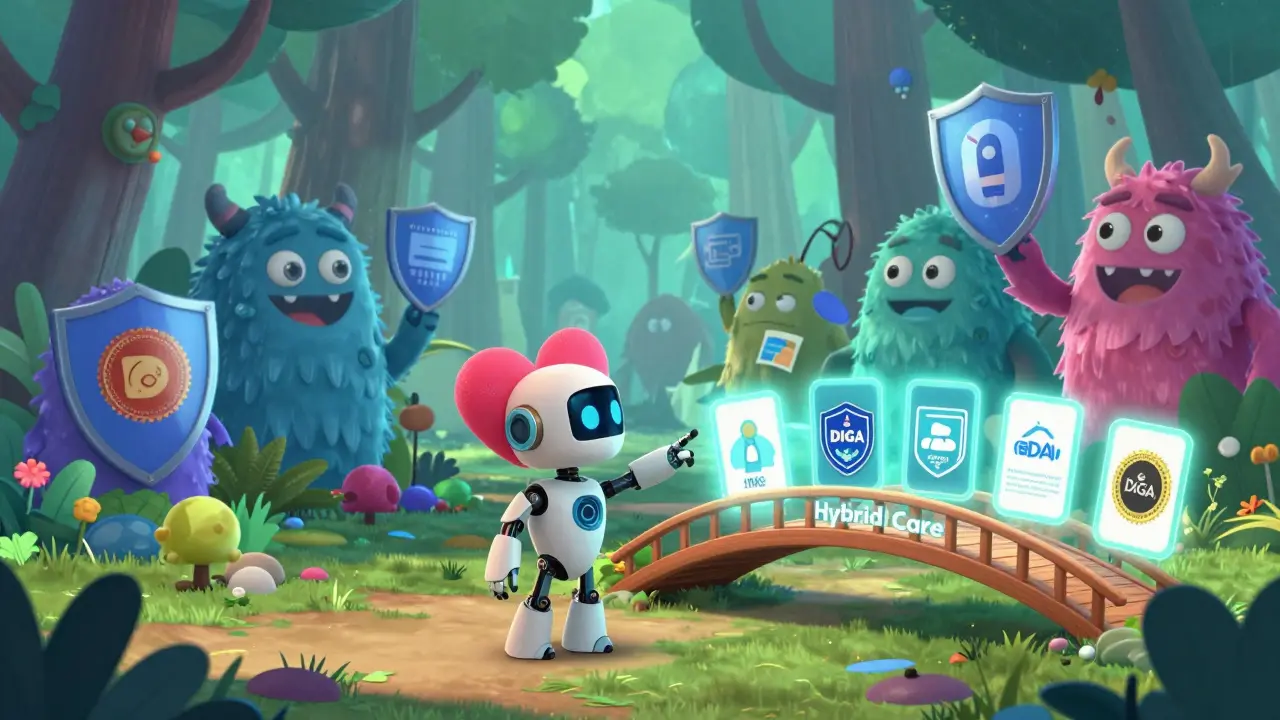
- Works: Hybrid models-combining app-based tracking with scheduled video sessions with a licensed therapist. These have 43% higher completion rates than fully digital or fully in-person care.
- Works: Apps that are clinically validated, transparent about data use, and integrated into healthcare systems (like Germany’s DiGA).
- Doesn’t Work: Apps that rely on gamification or vague affirmations without clinical backing.
- Doesn’t Work: Apps that don’t offer human support when things get serious.
- Doesn’t Work: Apps that hide their data policies or sell your information.
The most effective tools don’t try to replace therapy. They make it easier. They remind you to take your mood notes. They help you prep for your next session. They connect you to a real person when you’re stuck.
How to Choose Wisely
Don’t just download the app with the most downloads. Don’t trust the five-star reviews. Here’s what to look for:
- Is it clinically validated? Look for peer-reviewed studies or regulatory approval (like DiGA in Germany or FDA clearance in the U.S.).
- Is your data protected? Check the privacy policy. Does it say they encrypt messages? Do they sell data? If they won’t say clearly, walk away.
- Is there human support? Can you talk to a real therapist? Is it included in the price? Or do you need to pay extra?
- Is it tailored to your needs? A depression app isn’t the same as a sleep app. Don’t pick one because it’s popular. Pick one because it’s designed for your situation.
- Can you cancel easily? Many apps lock you into long subscriptions. Make sure you can get out without a fight.
And remember: no app can diagnose you. If you’re struggling, talk to a doctor. Use digital tools as a helper-not a cure.
The Future: Integration, Not Isolation
The next big shift won’t be in AI or fancy features. It’ll be in connection. By 2027, 65% of mental health apps are expected to have direct referral pathways to licensed professionals. That means if your app notices you’ve been down for two weeks straight, it won’t just suggest a breathing exercise. It’ll say, “Your therapist should know about this. Would you like me to send them a note?”
That’s the future. Not robots replacing therapists. But apps helping therapists do their job better. Not replacing human care-making it more accessible, more timely, and more responsive.
Right now, the digital mental health space is a wild west. Lots of promise. Lots of scams. Lots of data leaks. But it doesn’t have to stay that way. With better regulation, clearer standards, and more transparency, these tools could become a real part of mental healthcare-not a distraction from it.
Are mental health apps safe to use?
Some are, some aren’t. Many apps collect sensitive data without clear privacy protections. Look for apps that encrypt your data, don’t sell it to advertisers, and are clinically validated. Apps approved under Germany’s DiGA system or cleared by the FDA are more trustworthy. Avoid apps that don’t clearly explain how your data is used.
Can teletherapy replace in-person therapy?
For many people, teletherapy works just as well as in-person sessions-especially for anxiety, depression, and stress. But it’s not a one-size-fits-all solution. People with severe mental illness, trauma, or crisis situations often need in-person care, medication management, or hospital-level support. Teletherapy is best used as a supplement or alternative when access to in-person care is limited.
Why do people stop using mental health apps?
Most people stop because the apps don’t deliver real results. The advice becomes repetitive, the interface feels clunky, or the free version locks key features behind a paywall. Studies show only about 29% of young users stick with apps past the first month. App fatigue, unmet expectations, and lack of human connection are the top reasons.
Are mental health apps covered by insurance?
In most countries, no-not yet. But Germany is leading the way. Under its DiGA system, certain apps for depression and anxiety can be prescribed by doctors and covered by public health insurance. In the U.S., some employer-sponsored plans and Medicare Advantage plans are starting to cover teletherapy services, but coverage for standalone apps is rare. Always check with your provider before signing up.
Do AI chatbots in mental health apps really work?
They can help with mild symptoms like stress or low mood by guiding users through CBT techniques. Apps like Wysa and Youper have clinical studies backing their methods. But they’re not therapy. They can’t build trust, recognize complex trauma, or respond to emergencies. Think of them as a first aid kit-not a hospital. They’re best used as a supplement, not a replacement, for human care.
How do I know if a mental health app is legitimate?
Look for three things: 1) Clinical validation (peer-reviewed studies or regulatory approval), 2) Clear privacy policies that say they don’t sell your data, and 3) Access to licensed professionals. Avoid apps that rely only on user ratings or downloads as proof of quality. Dr. Sarah Ketchen Lipson says those metrics don’t reflect clinical safety or effectiveness.
If you’re considering a mental health app, start small. Try one with a free trial. Track how you feel after two weeks. If nothing changes-or if you feel worse-talk to a professional. Digital tools can help, but they’re only as good as the care behind them.





13 Comments
Ryan W
Let’s cut through the woke tech buzz: most of these apps are data-harvesting scams dressed up as therapy. You think Calm gives a damn about your mental health? It wants your biometrics, your sleep patterns, your emotional triggers-then sells them to advertisers who target you with antidepressant ads. And don’t get me started on ‘AI therapists.’ If I wanted a chatbot that says ‘I’m here for you’ in 12 different ways, I’d talk to my Alexa. Real therapy isn’t gamified. It’s messy. It’s uncomfortable. It’s human. Stop outsourcing your pain to Silicon Valley.
Henry Jenkins
There’s a real tension here between accessibility and efficacy. On one hand, teletherapy has democratized access-people in rural Appalachia or small-town Nebraska can now connect with specialists they’d never afford or reach otherwise. On the other, the lack of regulation means we’re building a mental health infrastructure on quicksand. The DiGA model in Germany isn’t just bureaucratic red tape-it’s a necessary standard. If an app claims to treat depression, it should be held to the same evidentiary bar as fluoxetine. We don’t let untested supplements claim to cure cancer; why do we let apps claim to cure trauma? The science is there-we just need the will to enforce it.
Nicholas Miter
i’ve used youper for like 3 months. it was kinda helpful at first, but honestly after a while it just started repeating the same prompts like ‘how are you feeling today?’ and ‘what’s one thing you’re grateful for?’ and i’m like… bro, i told you yesterday i’m still grieving my dad. you don’t need to ask again. the free version is basically a demo. and yeah, the data stuff? i didn’t read the privacy policy because who reads those? but now i’m kinda paranoid every time i type ‘i feel worthless’ into the app. maybe i’m just too tired to care anymore.
TONY ADAMS
why do you people overthink this? just call a friend. or go for a walk. or scream into a pillow. apps are for people who don’t want to face their shit. you’re not broken-you’re just lazy.
George Rahn
Behold the apotheosis of neoliberal malaise: we outsource the sacred act of healing to venture capital-funded algorithms, then congratulate ourselves for ‘innovating’ mental healthcare. The commodification of suffering has reached its zenith-where the soul is reduced to a dataset, and empathy is a feature toggle. We have traded the quiet sanctity of the therapist’s office for the garish glow of a smartphone screen, and called it progress. But progress without moral architecture is merely entropy wearing a hoodie.
Ashley Karanja
Really appreciate how this breaks down the difference between wellness apps and clinical tools-it’s such an important distinction. I work in digital health and we’ve seen firsthand how the ‘one-size-fits-all’ model fails people with complex trauma. The hybrid model you mentioned? That’s the future. Apps that nudge you to journal, then seamlessly connect you to a licensed clinician when patterns emerge-that’s ethical innovation. Also, the data privacy piece is CRITICAL. I’ve reviewed 40+ apps for my org, and 90% of them have ‘we may share anonymized data’ buried in the TOS. Anonymized doesn’t mean untraceable. Your journal entries, combined with your device ID and location, can still be re-identified. Always check for HIPAA compliance or GDPR-level encryption. And if they don’t list it? Run.
James Nicoll
So let me get this straight-we’ve got apps that analyze your heartbeat to detect anxiety, but you still can’t text your therapist at 2am without paying $90 a week? The irony is thicker than a TikTok comment section. Next they’ll sell us ‘empathy NFTs’ and call it mental health innovation. At least back in the day, your therapist didn’t upsell you a $12/month meditation pack after you cried about your breakup.
Uche Okoro
In Nigeria, we don’t have access to these apps-not because we don’t need them, but because data is expensive and infrastructure is nonexistent. The irony is that Western companies profit from our collective trauma while we’re stuck using WhatsApp to check in on friends who might be suicidal. Digital mental health isn’t a luxury-it’s a necessity. But when the solution only exists for those who can afford fiber optic, we’re not solving a crisis. We’re exporting it.
Ashley Porter
Just wanted to add-some apps like Sanvello actually integrate with EHRs if your provider uses them. That’s huge. If your therapist can see your mood logs without you having to manually report it, treatment becomes way more dynamic. It’s not magic, but it’s way better than guessing how you’ve been feeling since your last appointment.
shivam utkresth
As someone from India where therapy is still taboo, these apps are the only way millions of us even begin to talk about mental health. My cousin used Wysa after her mom passed-she didn’t tell anyone. But the app didn’t judge. It didn’t ask why she was crying. It just waited. And sometimes, that’s enough. The tech isn’t perfect, but it’s a lifeline. We need more of these tools, not less-but they need to be affordable, localized, and culturally aware. A CBT bot that says ‘take a deep breath’ doesn’t help when your grief is tied to caste shame or arranged marriage pressure. Context matters.
John Wippler
Let’s reframe this: mental health apps aren’t here to replace therapists-they’re here to remove the barriers that keep people from reaching them. Think of them as the GPS to therapy, not the therapist themselves. You wouldn’t say a map is useless because it doesn’t drive the car. The real failure isn’t the app-it’s a system that makes therapy unaffordable, inaccessible, and stigmatized. If an app helps someone take the first step toward help, that’s a win. The goal isn’t perfection-it’s progress. And progress starts with a single tap.
Curtis Younker
My boss signed me up for Lyra last year. Honestly? Life-changing. I had a panic attack during a Zoom call and the app immediately flagged it, offered a breathing exercise, and then auto-scheduled me with a therapist within 2 hours. No waiting. No shame. Just help. And the best part? My company pays for it. Why can’t all employers do this? Why do we treat mental health like a perk instead of a basic human right? We pay for gym memberships and coffee machines-why not therapy?
Shawn Raja
So we’re supposed to trust an app that says ‘I’m here for you’… but won’t tell us if it’s selling our trauma to Meta? Meanwhile, the guy who built the algorithm is probably sipping oat milk lattes in Palo Alto, oblivious to the fact that his ‘CBT bot’ just told a 17-year-old girl to ‘reframe her negative thoughts’ after she wrote ‘I don’t want to live anymore.’ That’s not innovation. That’s negligence with a UX design.