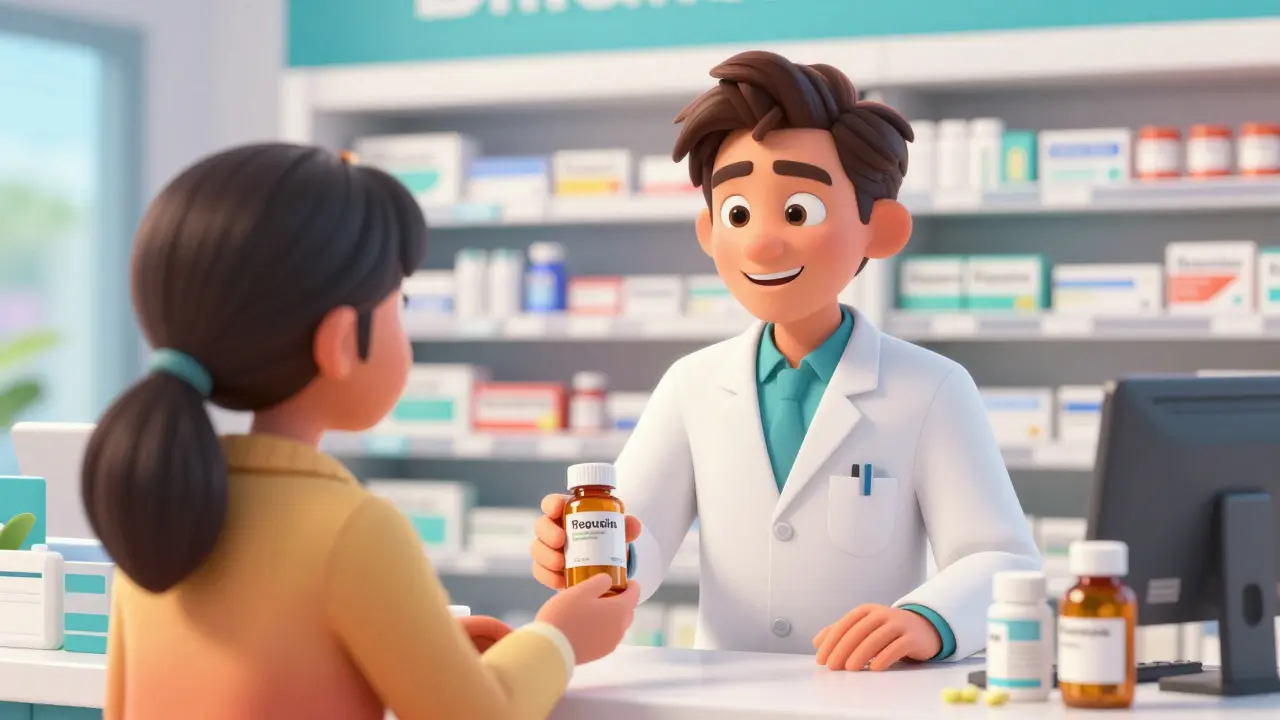
Imagine a scenario where 90% of the work is done by a small fraction of the budget. In the American pharmacy, that is exactly how generic medications operate. While they handle the vast majority of prescriptions, they cost a fraction of what brand-name alternatives do. If you have ever wondered why your pharmacist suggests a generic version of a pill, it is not just about your wallet-it is about keeping the entire US healthcare infrastructure from collapsing under the weight of pharmaceutical costs.
| Metric | Generic Medications | Brand-Name Medications |
|---|---|---|
| % of Prescriptions Filled | 90% (3.9 billion) | 10% (435 million) |
| Share of Total Spending | 12% ($98 billion) | 88% ($700 billion) |
| Impact on System | Drives Savings | Drives Costs |
The Massive Scale of Generic Savings
To understand the impact, we have to look at the numbers. In 2024, generic drug benefits is the financial advantage gained by using chemically equivalent versions of brand-name drugs. These medications delivered a staggering $482 billion in savings to the US healthcare system in a single year. That is a jump from $445 billion in 2023, proving that as more patents expire and more generics hit the market, the system breathes a bit easier.
Since 2016, the trend has been clear: generics consistently make up 9 out of every 10 prescriptions. Even more impressive is that their share of total spending has dropped from 27% to just 12% over the last few years. Despite the fact that more people are using these drugs, the total spending on generics has actually decreased by $6.4 billion since 2019. This is the only sector of the pharmaceutical world that consistently lowers costs while increasing access.
Enter Biosimilars: The New Frontier of Cost Cutting
Not all drugs are simple chemicals. Some are complex proteins made in living cells, known as biologics. For a long time, these were too hard to copy. Now, we have Biosimilars, which are highly similar versions of brand-name biological medicines. These are the "generics" of the biologic world, and they are starting to change the game for expensive chronic conditions.
Take the drug Humira, for example. For years, it was a dominant force in the market. However, thanks to private-label strategies by health plans, the use of Humira biosimilars jumped from a tiny 3% to 28% in 2024. We are seeing the same thing happen with Stelara. With seven FDA-approved biosimilars entering the market, these alternatives are priced at more than 80% less than the original product. If fully adopted in 2026, Stelara biosimilars alone could save the system $4.8 billion annually.
Since 2015, biosimilars have supported about 3.3 billion days of patient therapy. More importantly, they provided over 460 million "incremental days" of therapy-meaning patients got treatment they simply could not have afforded if only the brand-name version existed.

The "Pay for Delay" Problem and the Biosimilar Void
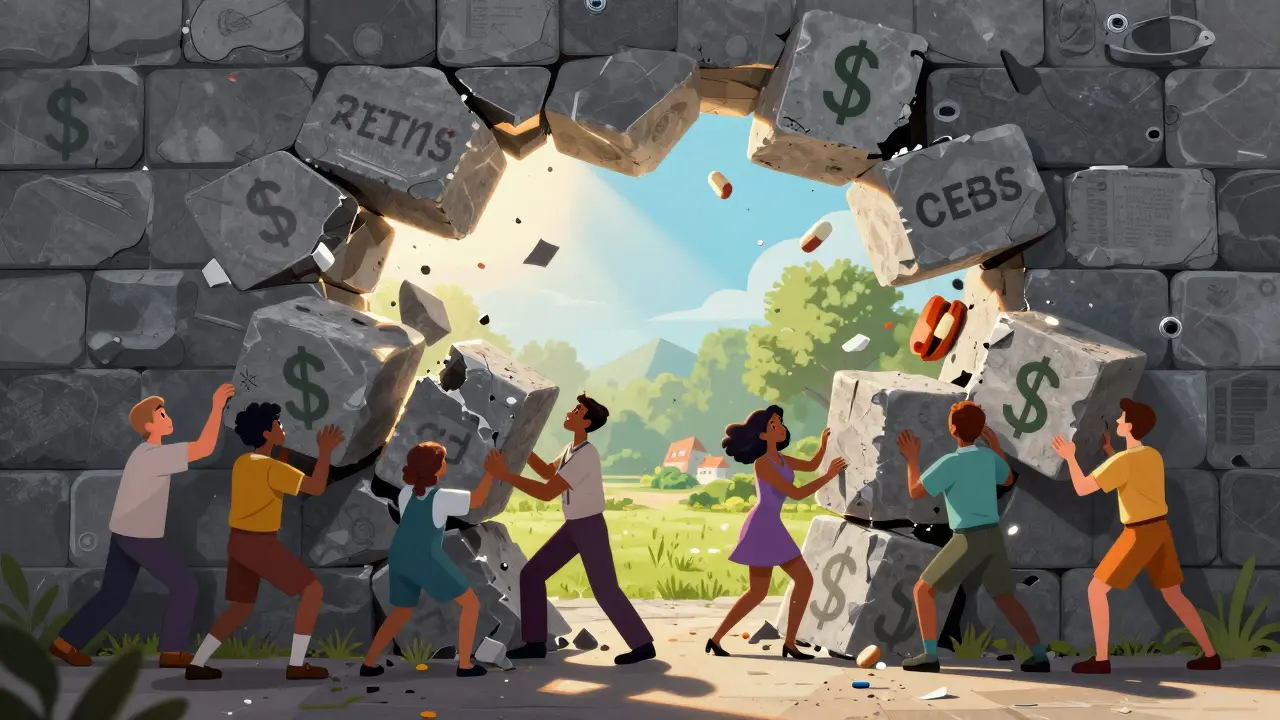
If generics are so great, why aren't they always available? The reality is that some brand-name companies use a tactic called "pay for delay." This is essentially a legal bribe where a brand-name manufacturer pays a generic company to keep their cheaper version off the market for a few more years. This artificially keeps prices high and blocks competition.
There is also a worrying gap called the "biosimilar void." Experts have found that 90% of brand-name biologics losing patent protection in the next ten years have zero biosimilar competition currently in development. If we don't fix this, the US could miss out on roughly $234 billion in potential savings over the next decade. It is a massive opportunity for cost reduction that is currently being ignored.
Real-World Impact on Patients and Policy
For the average person, these economics aren't just statistics-they are the difference between taking a life-saving medication or skipping a dose. Research shows that nearly 1 in 12 Americans have medical debt because of prescription costs. In many cases, the availability of a generic is the only reason a patient can afford their treatment. For instance, some patients have reported saving $300 a month just by switching to generic albuterol for asthma.
Governments are starting to step in. The Inflation Reduction Act is a primary example, introducing Medicare drug price negotiations. By expanding these negotiations to 30 drugs per year starting in 2026, the government could save between $500 and $550 billion over a decade. We've already seen success with insulin; public pressure and Medicare initiatives helped drive some non-branded insulin prices down from $275 to just $25 per vial.
How to Maximize These Savings
If you are a patient, a provider, or managing a health plan, there are concrete ways to leverage these benefits. It is not always as simple as asking for a generic; sometimes the system needs a push.
- Ask about therapeutic alternatives: If a brand-name drug is too expensive, ask your doctor if there is a generic in the same class that works just as well.
- Review your formulary: For those managing health plans, streamlining "prior authorization" for biosimilars can speed up adoption and lower costs.
- Check for "Private-Label" options: Some insurance plans have preferred biosimilar versions that are significantly cheaper than the standard brand name.
- Monitor patent cliffs: Keep an eye on which big-name drugs are losing patent protection, as this is when the biggest price drops usually happen.
What is the difference between a generic and a biosimilar?
Generics are chemically identical copies of simple brand-name drugs. Biosimilars are "highly similar" versions of complex biological drugs made from living organisms. Because biologics are so complex, biosimilars aren't identical copies, but they provide the same clinical result.
Are generic drugs as safe as brand-name drugs?
Yes. The FDA requires generic drugs to have the same active ingredient, strength, dosage form, and route of administration as the brand-name drug. They must prove "bioequivalence," meaning they work the same way in the body.
Why are some generic drugs still expensive?
Prices can stay high if there is only one manufacturer (a generic monopoly) or if "pay for delay" agreements have blocked other competitors from entering the market. Additionally, some specialty generics have higher manufacturing costs.
How much do generics actually save the system?
In 2024 alone, generic and biosimilar medicines saved the US healthcare system approximately $482 billion. They represent 90% of prescriptions but only 12% of the total spending.
What is the "biosimilar void"?
The biosimilar void refers to the fact that 90% of brand-name biologics losing patent protection in the next decade currently have no biosimilars in development, representing a missed savings opportunity of about $234 billion.


15 Comments
Carol Yang
It's honestly so great to see more people getting access to medicine they can actually afford. ❤️
Sharyl Foster
Everyone acts like generics are some miracle, but let's be real, the quality is often hit or miss depending on where the active ingredients are sourced. I've had a couple of generic switches that just didn't hit the same as the brand name, and it's not just in my head. The bioequivalence thing is a baseline, not a guarantee of identical performance in every single patient. Plus, the 'savings' usually just go back into the insurance companies' pockets through higher premiums anyway, so who's really winning here?
Jaclyn Vo
Omg the pay for delay thing is literally a crime!! 😱 Like why is this even legal? It's actually disgusting how these companies just buy off the competition to keep us paying thousands for something that should be cheap. I cannot even deal with how corrupt the pharma industry is 🙄🙄
Brittney Prince
Typical corporate propaganda. They tell you it's 'the same' so they can ship in cheap, low-grade fillers from overseas while the big pharma execs laugh all the way to the bank. If they really wanted us healthy, they wouldn't have to 'negotiate' prices in the first place. It's all a game to keep us dependent on the system. Don't trust the 'FDA approved' label blindly, they're basically in the pocket of the industry they're supposed to regulate.
Michael Deane
We need to stop relying on these foreign-made generics and start bringing all our pharmaceutical manufacturing back to American soil where we can actually control the quality and ensure our own citizens aren't getting junk from across the ocean, because it's a complete disgrace that the greatest superpower on earth is importing its life-saving medicine from competitors who don't have our best interests at heart and we should be pouring billions into domestic plants to make sure we're self-sufficient and proud of what we produce right here in the USA!
Andre Ojakäär
absolute madness that we even have to discuss this in the 21st century. the sheer scale of the biosimilar void is a joke. literally billions of dollars just vanishing into thin air because some lawyers decided to play games with patents. it is a systemic failure of the highest order and quite frankly an embarrassment to the medical community
Vijay AGarwal
This is an absolute game-changer! The scale of savings mentioned here is simply mind-blowing. To think that generics handle 90% of prescriptions while only taking up 12% of the spend is nothing short of a pharmaceutical miracle! It is an incredible triumph of efficiency over greed, and the potential of biosimilars to bring down the cost of biologics is just breathtaking. We are witnessing a seismic shift in how healthcare is delivered, and it's about time the patients finally got a break from those astronomical price tags! Absolute gold!
James Harrison
It's interesting to consider how we balance the need for innovation-which requires profit-with the ethical necessity of affordable access. It's a delicate tension between the individual's right to health and the corporate right to intellectual property.
Beena Garud
The economic disparity within the pharmaceutical sector reflects a broader societal struggle between commercial viability and the fundamental right to healthcare. One must contemplate the ethical implications of 'pay for delay' tactics, as they prioritize fiscal gain over human longevity.
Eric Mwiti
Oh sure, because the government 'negotiating' prices is definitely going to work perfectly and not just lead to companies pretending to lower prices while hiking them on something else. Pure genius.
Jon Moss
I feel for everyone dealing with that medical debt mentioned. It's a heavy burden to carry just for trying to stay healthy.
Michael Chukwuma
I completely agree with the point about therapeutic alternatives. It's something I always try to bring up in my own circles when people are struggling with costs.
Elle Torres Sanz
Let's try to look at this as an opportunity for growth. By embracing biosimilars and generic options, we're making the system more inclusive for people of all backgrounds. It's all about finding a path that works for everyone involved.
suresh kumar
This whole thing is a spicy mess of money and pills! The 'biosimilar void' sounds like some sci-fi horror movie where the cure exists but the lawyers hid it in a vault. Just absolutely wild how the money flows in this circus!
sachin singh
The data regarding the Inflation Reduction Act is quite promising. I am eager to see how the 2026 negotiations will actually manifest in the retail pricing for the general public.