Imagine standing in a pharmacy in Paris, Tokyo, or Buenos Aires. You hand the pharmacist your prescription from home. They look at it, frown slightly, and ask a question you can't quite understand. Panic sets in. Is this the right pill? Will they give you something stronger? Weaker? Or worse-something completely different?
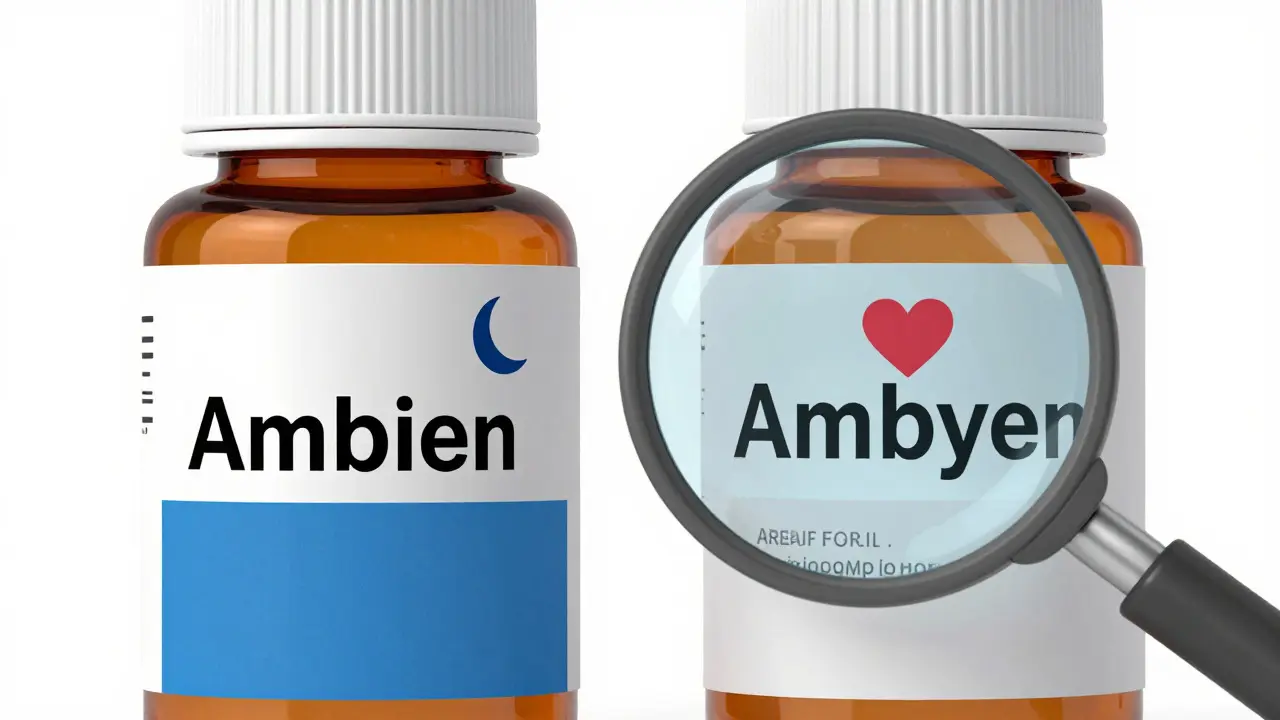
This isn't just a travel inconvenience; it's a safety hazard. Confusing brand names across borders has led to serious medical errors. For instance, travelers have accidentally mixed up Ambien, a common sleep aid in the U.S., with Ambyen, a heart medication used in Great Britain. The names sound identical, but the effects are worlds apart. Getting medication translation wrong can be dangerous.
If you are traveling internationally or managing prescriptions for someone who speaks another language, you need a reliable way to bridge the gap between your doctor's handwriting and the local pharmacist's shelves. This guide breaks down exactly how to translate medication names and doses safely, without relying on risky guesswork.
Why Brand Names Fail Across Borders
The biggest hurdle in international pharmacy visits is that drug manufacturers use different brand names for the exact same medicine in different countries. In the United States, you might know pain relief as Advil or Motrin. In France, that same active ingredient is sold as Ibuprofène. In Poland, you might see Abfen. If you walk into a Polish pharmacy asking for "Advil," the clerk might not know what you mean unless you specify the generic name.
Brand names are marketing tools. They change based on regional preferences, trademark laws, and local branding strategies. However, the chemical compound inside the pill-the active ingredient-remains constant. To navigate foreign pharmacies, you must shift your focus from the brand name to the International Nonproprietary Name (INN). The INN is a standardized generic name established by the World Health Organization (WHO) to identify pharmaceutical substances globally..
When you prepare for travel, check your medication bottle or patient information leaflet. Look for the name in italics or smaller print, often listed as "Active Ingredient" or "Generic Name." That is the universal key that unlocks any pharmacy door worldwide.
| U.S. Brand Name | Generic Name (INN) | Example Foreign Brand |
|---|---|---|
| Advil / Motrin | Ibuprofen | Ibuprofène (France), Brufen (India) |
| Tylenol | Acetaminophen / Paracetamol | Doliprane (France), Panadol (UK/Australia) |
| Zyrtec | Cetirizine | Zyrtec (EU), Reactine (Canada) |
| Nexium | Esomeprazole | Nexium (Global), Esoprazole (Generic) |
| Xanax | Alprazolam | Xanax (Global), Alprax (India) |
Decoding Dosage and Administration Instructions
Knowing the drug name is only half the battle. The other half is ensuring the dose is correct. Prescription abbreviations can be notoriously confusing, even for native speakers. When translated poorly, these instructions become lethal.
Consider the metric system differences. In the U.S., we often think in milligrams (mg). In some European contexts, older prescriptions might reference grams (g). A prescription for "1g" of a tablet means 1000mg. If a patient assumes "1g" refers to a single gram-sized pill when the standard strength is 500mg, they might take double the intended dose. Conversely, misreading "100mg" as "100g" is impossible physically, but misinterpreting decimal points-like 0.5mg vs 5mg-is a frequent error source.
You also need to understand frequency codes. Doctors often use Latin-derived abbreviations:
- BID: Twice a day (bis in die).
- TID: Three times a day (ter in die).
- QD: Once daily (quaque die).
- PRN: As needed (pro re nata).
In many countries outside the U.S., doctors write out these instructions fully in the local language. A French prescription might say "deux fois par jour" instead of BID. When showing your prescription to a foreign pharmacist, it helps to have a translated version of your dosage schedule. Apps like Google Translate can handle simple phrases like "take one pill every morning," but always verify complex regimens with a professional translator or a pharmacist before leaving home.
Tools and Resources for Safe Translation
Relying solely on memory or a quick smartphone search while stressed in an unfamiliar city is risky. Here are practical steps to prepare:
- Use Reputable Drug Databases: Websites like Drugs.com have international sections that list equivalent medications by country. Before you travel, type your medication name into these databases to see what it is called in your destination country. Save screenshots of these pages.
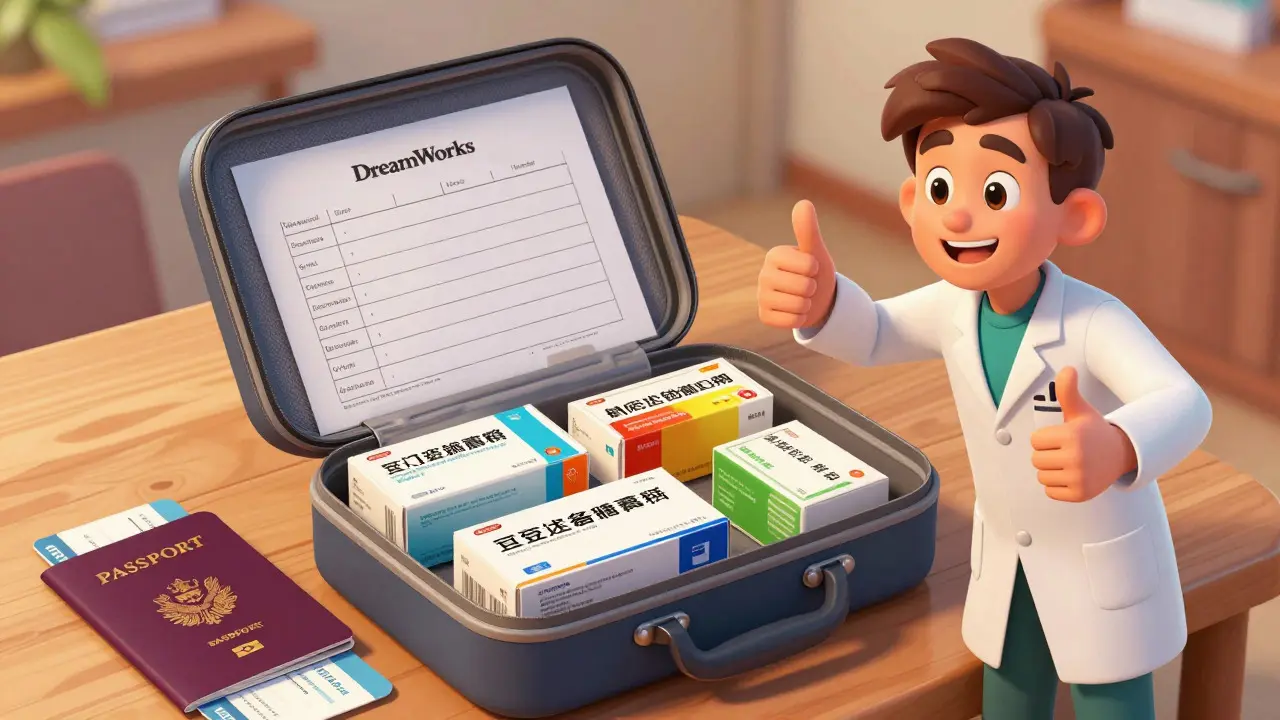
- Carry Original Packaging: Always bring your medication in its original box and blister packs. The packaging lists the INN, manufacturer, and batch number. Pharmacists recognize these details instantly, bypassing the need for verbal translation entirely.
- Get a Doctor’s Letter: Ask your prescribing physician for a letter on official letterhead. It should state your diagnosis, the medication name (brand and generic), the dosage, and the duration of treatment. Have this letter translated into the local language if possible. Many hospitals offer certified translation services for discharge summaries and prescriptions.
- Leverage Professional Services: For chronic conditions requiring long-term supply abroad, consider using specialized medical translation services. Companies like RxTran and First Databank provide certified translations for Patient Instructions (SIGs) and Consumer Medication Information (CMI). While these are often used by pharmacies, patients can sometimes request their own records be translated for travel purposes.
Avoid using AI translation tools for the actual prescription document itself. AI struggles with context. It might translate "take with food" correctly, but miss the nuance of "on an empty stomach" versus "after meals" if the phrasing is ambiguous. Human-certified translators understand pharmaceutical nuances that algorithms miss.
Navigating Local Pharmacy Regulations
Every country has strict rules about what drugs you can bring in and what requires a local prescription. Some medications legal in the U.S. are controlled substances elsewhere. For example, codeine-containing cough syrups require a prescription in many European countries, whereas they were once over-the-counter in the U.S.
Before you go, check the customs regulations of your destination. Most governments publish lists of prohibited medications on their health ministry websites. If you need a controlled substance, carry a copy of your prescription and a doctor’s note explaining why you need it. This documentation acts as your passport through customs inspections.
In countries like New York State, regulations such as NY SafeRx mandate that pharmacies provide translated labels in specific languages (Chinese, Italian, Russian, Spanish) for certain high-risk medications. While this doesn't apply directly to foreign travel, it highlights the growing global standard for clear, multilingual communication in healthcare. Expect similar rigor abroad. Pharmacists there are trained to protect their license by verifying identities and prescriptions strictly.
What to Do If You Run Out of Medication
Even with perfect planning, things happen. You lose your bag, or your trip extends longer than expected. If you need to refill a prescription abroad:
- Visit a Hospital Pharmacy: In many countries, hospital pharmacies are better equipped to handle complex international cases than small neighborhood shops. They often have English-speaking staff or access to broader international databases.
- Show the Pill: If you have any remaining pills, show them to the pharmacist. Visual identification is powerful. Combine this with the INN name written down clearly.
- Ask for the Generic: Explicitly ask for the generic version of your drug. It is cheaper and more likely to be available under the standard INN name rather than a local brand variant.
- Verify the Strength: Double-check the milligram strength on the new package against your old one. A mismatch here is the most common cause of dosing errors during travel refills.
Remember, pharmacists are allies, not obstacles. They want to ensure you get the right treatment. Approach them with respect, clear documentation, and patience. Use gestures, pictures, and written notes to supplement your conversation.
Preparing Your Travel Medical Kit
Don't wait until you're sick to figure this out. Prepare a dedicated medical kit two weeks before departure. Include:
- A printed list of all medications with Brand Name, Generic Name (INN), Dosage, and Frequency.
- Original packaging for all drugs.
- A copy of your prescription(s).
- A doctor’s letter summarizing your condition and treatment plan.
- Basic OTC remedies (painkillers, antihistamines) purchased locally upon arrival to avoid carrying large quantities of restricted items.
This preparation reduces anxiety and ensures continuity of care. It transforms a potentially chaotic situation into a manageable administrative task.
Can I use Google Translate for my prescription?
You can use Google Translate for basic communication, like asking where the pharmacy is, but do not rely on it for translating dosage instructions or drug names. AI tools often miss critical medical nuances and can misinterpret abbreviations. Always cross-reference with a human pharmacist or a certified medical translation service for safety.
What is the difference between a brand name and a generic name?
A brand name is the trademarked name given by the manufacturer (e.g., Tylenol). A generic name is the scientific name of the active ingredient (e.g., Acetaminophen/Paracetamol). Generic names are standardized globally via the WHO INN system, making them the safest reference point when traveling abroad.
Do I need a doctor's note to fill a prescription in another country?
It is highly recommended. While some countries may allow short-term refills with just the original prescription and packaging, others require a local doctor's consultation. A doctor's note from your home country explains the necessity of the medication, which helps overcome language barriers and regulatory hurdles.
Are medication names the same in Europe as in the US?
Often, no. While the generic names (INN) are usually similar, brand names differ significantly. For example, the U.S. brand "Ambien" is known as "Stilnox" in Japan and various other names in Europe. Always check the generic name to ensure you are getting the correct active ingredient.
How much does professional medical translation cost?
Costs vary widely. Individual document translation might cost $50-$150 per page depending on complexity and language pair. Enterprise systems for pharmacies start higher, around $3,500 annually. For travelers, the cost of a certified translation of a few key documents is minimal compared to the risk of medical errors.