Why Manufacturing Qualifications Matter More Than Ever
Walk onto any modern factory floor, and you won't just see machines; you'll see a complex dance between human skill and digital precision. The days when a high school diploma was the only ticket to a steady job in manufacturing are long gone. Today, the gap between what workers know and what factories need is widening. In fact, data from the National Association of Manufacturers shows that 78% of manufacturers report skills gaps that directly impact their operations. This isn't just about hiring more people; it's about ensuring those people have the right qualifications for manufacturing staff.
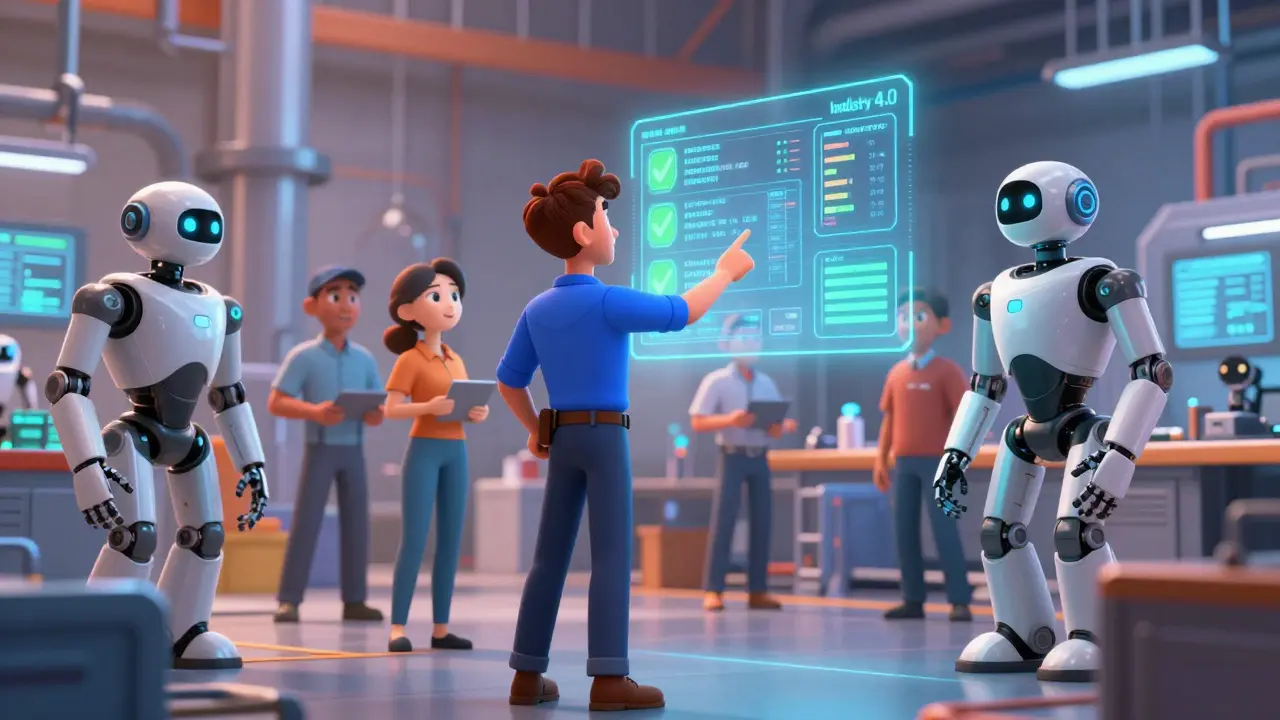
When we talk about qualifications, we aren't just talking about degrees hanging on a wall. We're talking about a mix of formal education, specific certifications, safety protocols, and increasingly, digital literacy. With the rise of Industry 4.0 technologies-think IoT sensors, AI-driven predictive maintenance, and collaborative robots-the baseline for entry has shifted. A worker who can operate a lathe but cannot interpret the data dashboard controlling it is at a disadvantage. This shift creates a urgent need for structured personnel training programs that bridge the gap between traditional mechanical skills and modern technical demands.
The Three Tiers of Manufacturing Credentials
Not all roles on the shop floor require the same level of expertise. Understanding the tiered nature of manufacturing qualifications helps both employers design better training programs and employees plan their career paths. Generally, these qualifications fall into three distinct categories based on complexity and responsibility.
- Entry-Level Production Roles: These positions typically require a high school diploma or GED. According to RSS Inc., 92% of manufacturing employers accept this as a baseline credential. However, "entry-level" no longer means "no skills." Employers expect basic math proficiency, ability to read blueprints, and foundational safety knowledge. Without additional certification, turnover rates in these roles can be 37% higher than in certified positions.
- Technical and Skilled Trades: Roles like welding technicians, CNC operators, or mechatronics specialists often demand 1-2 years of post-secondary education. Community college programs in Welding Technology or Mechanical Engineering Technology are standard here. These programs provide hands-on experience with specific machinery and processes, costing between $3,000 and $8,000 annually. Graduates from these programs boast a 91% job placement rate, making them a high-return investment for students.
- Engineering and Management: For process improvement, quality assurance leadership, or plant management, a bachelor’s degree in Industrial Engineering or a related field is usually required. This path involves four years of study focusing on physics, statistics, and systems design. While the cost is higher ($20,000-$50,000 per year), these credentials open doors to strategic roles where decisions affect entire production lines.
Core Certifications That Drive Career Growth
While degrees provide theoretical foundations, certifications prove practical competence. They are portable, meaning they travel with you if you change jobs, which is crucial in an industry with fluctuating labor markets. Here are the most impactful credentials currently shaping the workforce.
| Certification Name | Issuing Organization | Target Audience | Key Benefit / ROI |
|---|---|---|---|
| Certified Production Technician (CPT) | MSSC | Frontline Operators | 76% higher wage potential; nationally portable |
| Six Sigma Green Belt | ASQ / IASSC | Process Improvers | $85,000 median salary; focuses on defect reduction |
| Manufacturing Technician Level 1 (MT1) | Manufacturing Skills Institute | High School / Entry Workers | Validated across 42 states; integrates with K-12 pathways |
| Six Sigma Black Belt | ASQ | Senior Leaders | $110,000+ median salary; leads major projects |
The Certified Production Technician (CPT) program, developed by the Manufacturing Skill Standards Council (MSSC), is arguably the gold standard for frontline workers. It validates skills in four core areas: safety, quality practices, manufacturing processes, and maintenance awareness. Unlike internal company training, CPT is recognized nationwide, giving workers leverage in negotiations and mobility in the job market.
For those focused on efficiency and quality control, Six Sigma certifications are indispensable. Starting with White Belts and moving up to Master Black Belts, these credentials teach statistical methods to reduce variation and defects. A Green Belt holder earns a median of $85,000, while Black Belts command over $110,000. The investment in time is significant-Green Belt preparation requires 100-160 hours-but the return in salary and career stability is substantial.

Safety: The Non-Negotiable Foundation
No discussion of manufacturing qualifications is complete without addressing safety. It is not just a legal requirement; it is a moral and economic imperative. OSHA reports that proper safety training reduces workplace injuries by 52% in manufacturing settings. Yet, only 38% of small manufacturers implement regular safety recertification, according to the National Safety Council.
Effective safety training goes beyond handing out earplugs and hard hats. It must include:
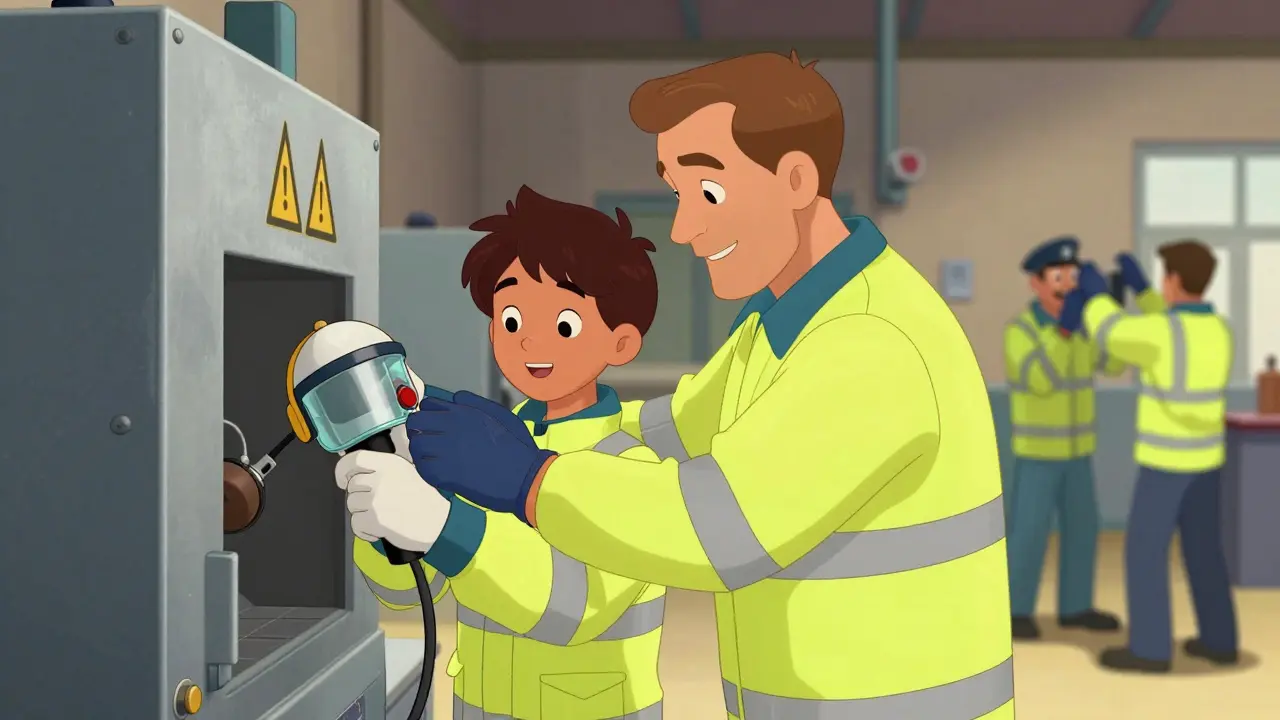
- PPE Proficiency: Correct usage, inspection, and replacement schedules for Personal Protective Equipment.
- Emergency Response: Drills for fires, chemical spills, and machine lockouts.
- Ergonomics: Techniques to prevent repetitive strain injuries, which are among the most common manufacturing ailments.
- Hazmat Handling: Specific protocols for dangerous goods, often requiring specialized courses like those offered by Hazmat School.
Companies that treat safety training as a checkbox exercise rather than a continuous culture face higher insurance premiums, downtime due to accidents, and low morale. Integrating safety metrics into performance reviews ensures that workers prioritize safe behaviors even under production pressure.
Bridging the Digital Divide: Soft Skills and Tech Literacy
Here is a surprising statistic: Harvard Business School professor Dr. John P. Kotter found that 70% of production failures trace back to communication breakdowns, not technical deficiencies. This highlights a critical gap in traditional manufacturing training: soft skills.
Modern manufacturing teams are diverse, often mixing veteran mechanics with young digital natives. Effective collaboration requires clear communication, conflict resolution, and adaptability. Training programs that ignore these aspects fail to prepare workers for the reality of the shop floor.
Simultaneously, digital literacy is becoming a hard skill. With Industry 4.0 integration, workers must understand:
- Data Interpretation: Reading real-time dashboards to monitor machine health.
- Basic Programming: Understanding logic gates in PLCs (Programmable Logic Controllers).
- AR/VR Tools: Using augmented reality glasses for assembly guidance, which user reports suggest can reduce errors by 39%.
The challenge? Resistance. Vector Solutions notes that 68% of veteran workers initially struggle with adopting new digital systems. Cross-training initiatives that rotate workers through multiple stations help mitigate this fear by building confidence and versatility, reducing resistance by 41%.
Building a Sustainable Training Strategy
For employers, the question isn't just "what qualifications do we want?" but "how do we build them cost-effectively?" Small manufacturers often cite cost as a barrier, with 63% reporting difficulty financing comprehensive training. However, larger enterprises see an ROI within 14 months through reduced errors and downtime.
Successful strategies include:
- Blended Learning: Combining online modules for theory with hands-on lab sessions. This saves time and allows workers to learn at their own pace.
- Mentorship Programs: ASQ data shows that Six Sigma retention rates jump from 57% to 85% when paired with mentorship. Pairing new hires with experienced veterans transfers tacit knowledge that manuals can't capture.
- Micro-Credentials: Instead of one massive course, offer stackable certificates. Deloitte predicts 63% of manufacturers will adopt this model by 2025. It allows workers to earn recognition incrementally, keeping motivation high.
- Leveraging External Resources: The Manufacturing Extension Partnership (MEP) offers free consultations through 1,400+ centers nationwide. Utilizing these resources can offset internal training costs.
Documentation is key. Use skills matrices to track individual progress. Manufacturers using documented development plans see 27% higher retention rates. When workers see a clear path for growth, they stay longer and perform better.
Future-Proofing Your Workforce
By 2030, the Manufacturing Institute estimates that 2.1 million jobs may go unfilled due to inadequate training infrastructure. The solution lies in proactive adaptation. Look toward modular, AI-powered learning platforms that adapt to individual learner speeds. Expect state incentives, like Virginia’s $2,200 funding for MT1 teacher certification, to expand to other regions. And remember, while technology changes, the core principles of safety, quality, and teamwork remain constant. Investing in these fundamentals today ensures your team is ready for whatever tomorrow brings.
What is the minimum education required for manufacturing jobs?
Most entry-level manufacturing positions require a high school diploma or GED. However, technical roles often need 1-2 years of community college, and engineering roles typically require a bachelor's degree. Certifications like CPT can supplement lower educational levels.
Is Six Sigma certification worth the cost?
Yes, especially for career advancement. Green Belt holders earn a median of $85,000, and Black Belts earn over $110,000. The certification demonstrates expertise in process improvement, which is highly valued in quality-focused industries.
How does safety training impact productivity?
Proper safety training reduces workplace injuries by 52%, according to OSHA. Fewer accidents mean less downtime, lower insurance costs, and higher employee morale, all of which contribute to increased overall productivity.
What are the best ways to train older workers on new technology?
Use blended learning approaches and mentorship. Cross-training rotations help build confidence. Augmented reality tools can also simplify complex tasks. Patience and emphasizing the 'why' behind new tech adoption are crucial for overcoming resistance.
Can small manufacturers afford comprehensive training programs?
While upfront costs are a concern, ROI is typically achieved within 14 months through reduced errors and downtime. Leveraging free resources like MEP centers and adopting micro-credential models can make training more affordable for smaller businesses.