Pharmacovigilance Signal Detection Simulator
Simulation Parameters
Configure the scenario to see how different factors impact safety signal detection.
Detection Analysis
Adjust parameters and click "Run Simulation" to compare Traditional Reporting vs. Social Media Monitoring.
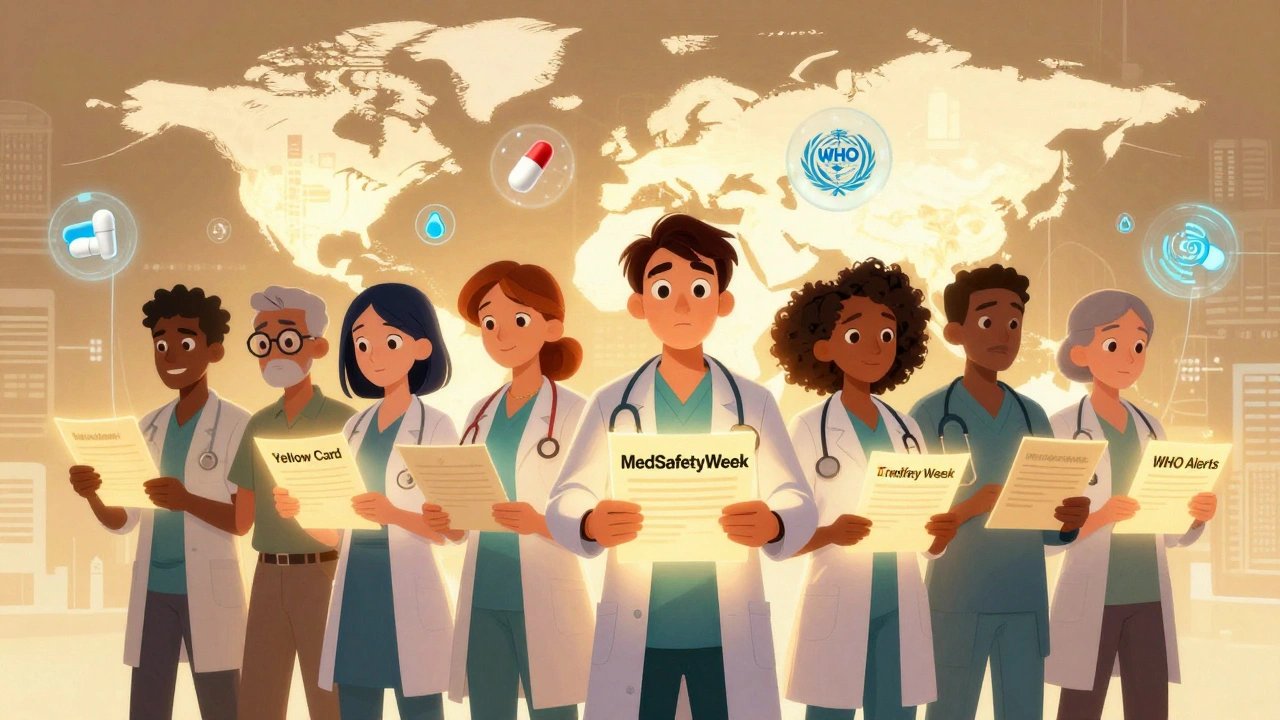
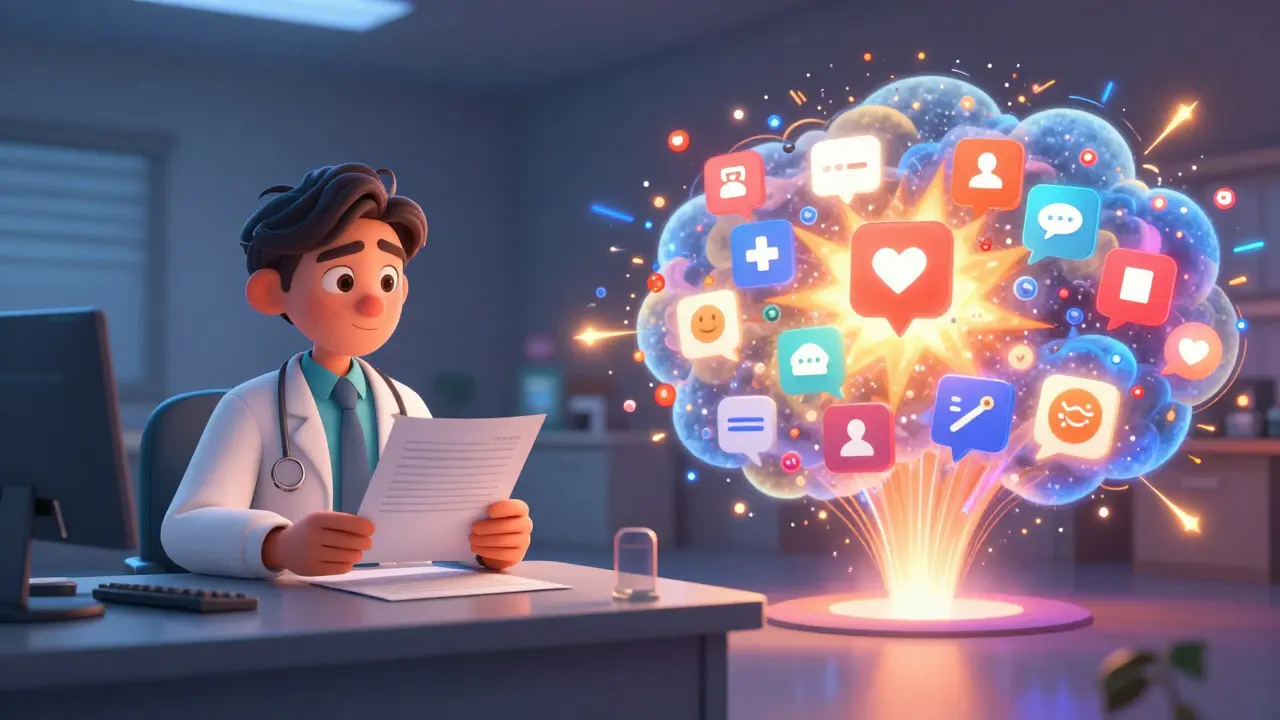
Imagine a new medication hitting the market. Weeks pass. No official reports of side effects come in through traditional channels. But on Twitter and Reddit, thousands of users are complaining about severe headaches and dizziness. This is the reality of modern pharmacovigilance, which is the science and activities relating to the detection, assessment, understanding, and prevention of adverse effects or any other drug-related problems. Traditionally, this field relied on doctors and patients filling out formal forms. Today, it increasingly involves scanning billions of social media posts for clues.
The shift isn't just theoretical. With over 5 billion people using social media globally, sharing an average of two hours and twenty minutes daily, these platforms have become massive, unfiltered databases of patient experiences. For pharmaceutical companies and regulators, this presents a golden opportunity to catch safety signals faster than ever before. But it also brings significant risks, from data noise to privacy breaches. Understanding how to navigate this digital landscape is crucial for anyone involved in drug safety.
The Shift from Traditional Reporting to Digital Listening
Traditional pharmacovigilance systems have a well-known flaw: underreporting. Historically, only 5% to 10% of actual adverse events make it into official databases. Patients often forget to report minor issues, or doctors assume they are unrelated to the medication. Social media changes this dynamic by capturing spontaneous, real-time reactions directly from patients.
This approach emerged significantly around 2014 when the Innovative Medicines Initiative (IMI) launched the WEB-RADR project. This collaborative effort, involving the European Commission and major pharma giants like AstraZeneca and Novartis, aimed to test if social media could reliably detect adverse drug reactions (ADRs). The goal was simple: use the internet's vast reach to supplement traditional methods and identify emerging safety signals earlier.
The potential speed advantage is stark. In a 2024 case study, researchers found that social media monitoring identified a potential safety signal for a new diabetes medication 47 days before the first formal report reached regulatory authorities. That’s nearly seven weeks of early warning time, which can be critical in preventing widespread harm.
How Technology Extracts Safety Signals from Noise
Scanning millions of posts manually is impossible. So, how do companies turn chaotic social feeds into actionable safety data? They rely on advanced natural language processing (NLP) and artificial intelligence (AI).
The process typically involves two main techniques:
- Named Entity Recognition (NER): This technology sorts raw text into specific categories. It identifies medication names, prescribed dosages, and mentions of symptoms. For example, if a user writes, "I started taking X yesterday and now I’m dizzy," NER flags "X" as the drug and "dizzy" as a potential adverse effect.
- Topic Modeling: When specific side effects aren't predetermined, topic modeling uses automated keyword searches to cluster related discussions. It helps identify emerging patterns without needing a predefined list of symptoms.
According to Amethys Insights’ 2024 technical review, 73% of major pharmaceutical companies now use AI for pharmacovigilance. These systems can process approximately 15,000 social media posts per hour with an 85% accuracy rate in identifying genuine adverse event reports. However, this high volume comes with a caveat: much of the data is irrelevant or misleading.
| Feature | Traditional Reporting | Social Media Monitoring | |
|---|---|---|---|
| Data Volume | Low (5-10% capture rate) | Very High (Billions of posts) | |
| Verification Level | High (Medical professional input) | Low (Unverified user claims) | Real-Time |
| Speed of Detection | Slow (Weeks to months) | Fast (Days to hours) | |
| Patient Perspective | Filtered through healthcare providers | Direct and unfiltered | |
| False Positive Rate | Low | High (Up to 97% for rare drugs) |

The Risks: Data Quality, Bias, and Privacy
While the promise of real-time insights is exciting, the reality is messy. The WEB-RADR project’s 2019 analysis published in the Journal of Pharmaceutical Medicine revealed a sobering truth: social media had limited value in detecting or confirming signals for the majority of drugs studied. Why? Because social media data lacks context.
In 92% of social media posts analyzed, critical medical history details were missing. Did the patient take another medication? Do they have a pre-existing condition? Without this information, it’s hard to prove causation. Additionally, dosage information was unreliable in 87% of cases. A post saying "Drug Y made me sick" doesn’t tell you if the patient took the correct dose or mixed it with alcohol.
There’s also the issue of representativeness. Dr. Elena Rodriguez highlighted in her 2023 Journal of Medical Ethics publication that social media data skews toward younger, more computer-literate demographics. Elderly patients, who are often the primary consumers of many medications, are underrepresented. This creates a blind spot in safety monitoring.
Privacy is another major concern. Users often share sensitive health information publicly, unaware that pharmacovigilance systems might capture it. As one Reddit user noted, "I’ve seen multiple instances where patients shared highly sensitive health information publicly, only to have it captured by pharmacovigilance systems without their knowledge or consent." This raises ethical questions about informed consent in digital surveillance.
Success Stories and Industry Adoption
Despite the challenges, success stories exist. Venus Remedies documented a case in March 2023 where social media monitoring identified a cluster of rare skin reactions to a newly launched antihistamine. This led to a product label update 112 days faster than traditional reporting channels would have allowed. Such examples demonstrate the tangible value of digital listening when done correctly.
Industry adoption is growing rapidly. A 2024 survey by CCRPS found that 78% of pharmaceutical companies now employ some form of social media monitoring for pharmacovigilance. Of these, 43% reported at least one significant safety signal detection through social media in the past two years. The market reflects this trend, with the social media pharmacovigilance segment projected to grow from $287 million in 2023 to $892 million by 2028.
However, adoption varies by region. European companies show a 63% adoption rate, compared to 48% in North America and 29% in Asia-Pacific. This disparity stems from differing regulatory frameworks and privacy laws, such as the GDPR in Europe, which imposes stricter rules on data handling.

Implementation Challenges and Best Practices
Setting up a robust social media pharmacovigilance system is not plug-and-play. It requires specialized infrastructure and skilled personnel. According to Trilogy Writing’s 2023 implementation guide, a basic system needs integration with 3-5 major platforms (Twitter, Facebook, Instagram, Reddit, and health forums), strong NLP capabilities, and a multi-stage human validation workflow.
The learning curve is steep. Staff require an average of 87 hours of specialized training to effectively manage these systems. They must learn to distinguish genuine adverse events from misinformation, exaggeration, or irrelevant chatter. Common challenges include:
- Multilingual Content: 63% of major pharma companies struggle to process non-English content consistently.
- Data Duplication: 41% of social media-sourced reports are duplicates, though collaborations like the one between IMS Health and Facebook have improved de-duplication rates to 89%.
- Regulatory Compliance: Navigating evolving privacy regulations across different jurisdictions remains complex.
To mitigate these risks, experts recommend treating social media data as a supplementary source, not a replacement for traditional reporting. Dr. Sarah Peterson, Director of Global Pharmacovigilance at Pfizer, emphasized that social media should provide "critical early warnings" but must be "properly validated" before influencing safety assessments.
The Future: AI Integration and Regulatory Evolution
Looking ahead, AI will play an increasingly central role. The FDA announced a pilot program in March 2024 with six major pharmaceutical companies to test AI-enhanced social media monitoring systems. The goal is to reduce false positive rates below 15%, making the data more reliable for regulatory decision-making.
Regulators are also catching up. The EMA updated its pharmacovigilance guidelines in April 2024, requiring companies to document their social media monitoring strategies and validation processes in periodic safety update reports. This move aims to standardize practices and ensure transparency.
As Professor Michael Chen of Imperial College London noted, while social media has limitations, establishing clear principles for its use is essential. The future likely involves tighter integration of validated social media data with traditional pharmacovigilance systems, creating a hybrid model that leverages the speed of digital tools with the rigor of clinical evidence.
What is social media pharmacovigilance?
Social media pharmacovigilance is the systematic monitoring and analysis of social media platforms to identify and evaluate reports of adverse drug reactions (ADRs). It supplements traditional reporting systems by providing real-time, unfiltered patient perspectives on medication safety.
Why is traditional pharmacovigilance considered insufficient?
Traditional systems suffer from underreporting, capturing only 5-10% of actual adverse events. Patients often fail to report minor issues, and there are delays in data collection. Social media offers a way to capture spontaneous, real-time feedback that might otherwise go unnoticed.
What are the main risks of using social media for drug safety monitoring?
Key risks include data noise, lack of verification, missing medical history, and privacy concerns. Social media posts often lack context, leading to high false positive rates. Additionally, data may be biased toward younger, tech-savvy demographics, excluding older patients.
How accurate is AI in detecting adverse drug reactions on social media?
Current AI systems can process thousands of posts per hour with approximately 85% accuracy in identifying genuine adverse event reports. However, 68% of potential mentions still require manual verification due to misinformation or irrelevant context.
Which regulatory bodies are addressing social media pharmacovigilance?
The European Medicines Agency (EMA) and the U.S. Food and Drug Administration (FDA) have both issued guidance and launched initiatives regarding social media pharmacovigilance. The EMA updated its guidelines in 2024 to require documentation of social media monitoring strategies, while the FDA announced a pilot program for AI-enhanced monitoring in 2024.
Can social media replace traditional adverse drug reaction reporting?
No, social media should not replace traditional reporting. Experts view it as a supplementary tool for early signal detection. Traditional systems provide verified, detailed medical data that social media lacks. A hybrid approach combining both sources is recommended for comprehensive safety monitoring.