
Hypoglycemia Risk Calculator
Hypoglycemia is a common side effect of insulin therapy. This tool helps you understand your specific risk based on your current regimen and habits.
Based on clinical studies showing 2-3 severe episodes per year for those on intensive insulin regimens
Your hypoglycemia risk assessment will appear here after calculation.
When you start insulin therapy, it’s not just about getting your blood sugar under control-it’s about learning to live with two very real side effects: hypoglycemia and weight gain. These aren’t rare quirks. They’re common, sometimes unavoidable, and they shape how people actually manage their diabetes every day.
What Hypoglycemia Really Feels Like
Hypoglycemia means your blood sugar drops below 70 mg/dL (3.9 mmol/L). For someone on insulin, it’s not just a number on a meter. It’s your hands shaking, your heart racing, your vision blurring. You might feel sweaty, confused, or suddenly exhausted. In severe cases, you pass out. And if no one’s around to help, it can be life-threatening. This isn’t theoretical. People with type 1 diabetes on intensive insulin regimens experience 2 to 3 severe low-blood-sugar episodes every year. That’s not a one-off scare-it’s a recurring fear. The Diabetes Control and Complications Trial showed that tight control triples the risk of severe hypoglycemia. And while that control cuts diabetes complications by 76%, the trade-off is real: you’re trading long-term health for daily danger. Many people learn to live with it by checking their blood sugar 4 to 6 times a day. Others use continuous glucose monitors (CGMs), which beep when levels dip too low. But even with tech, it’s not foolproof. About 25% of people with type 1 diabetes develop hypoglycemia unawareness after 15 to 20 years-meaning they no longer feel the warning signs. That’s when a simple snack turns into an emergency.Why Insulin Makes You Gain Weight
Insulin doesn’t just move glucose into your cells. It tells your body to store fat. Before insulin therapy, your body was losing glucose through urine because it couldn’t use it. That meant losing calories. Once you start insulin, that glucose gets used-and stored. Calories that once escaped now turn into fat. It’s not just theory. Studies show people gain an average of 4 to 6 kilograms (9 to 13 pounds) in the first year of insulin therapy. Some gain more. Some gain less. It depends on how much you eat, how active you are, and how precisely your doses match your meals. And here’s the catch: many people intentionally skip insulin doses to avoid gaining weight. One study found that 15 to 20% of patients underdose on purpose. That’s dangerous. Skipping insulin leads to high blood sugar, which damages nerves, kidneys, and eyes over time. So now you’re trading weight gain for organ damage.How to Fight Hypoglycemia Before It Starts
The key isn’t avoiding insulin-it’s avoiding the spikes and crashes that cause lows. That means:- Using modern insulin analogues like insulin glargine (Lantus) or insulin degludec (Tresiba). These work more steadily than older NPH insulin, reducing nighttime lows by 20 to 40%.
- Matching your insulin dose to your carbs. Learn your insulin-to-carb ratio. If you eat 40 grams of carbs, do you need 4 units of insulin? Or 3? Get that number right.
- Using correction factors. If your blood sugar is 12 mmol/L and your target is 6 mmol/L, how much insulin do you need to bring it down? This isn’t guesswork-it’s math.
- Monitoring patterns. Are you always low after lunch? Maybe your lunchtime dose is too high. Are you crashing at 3 a.m.? Your basal insulin might be too strong.
Managing Weight Gain Without Giving Up Insulin
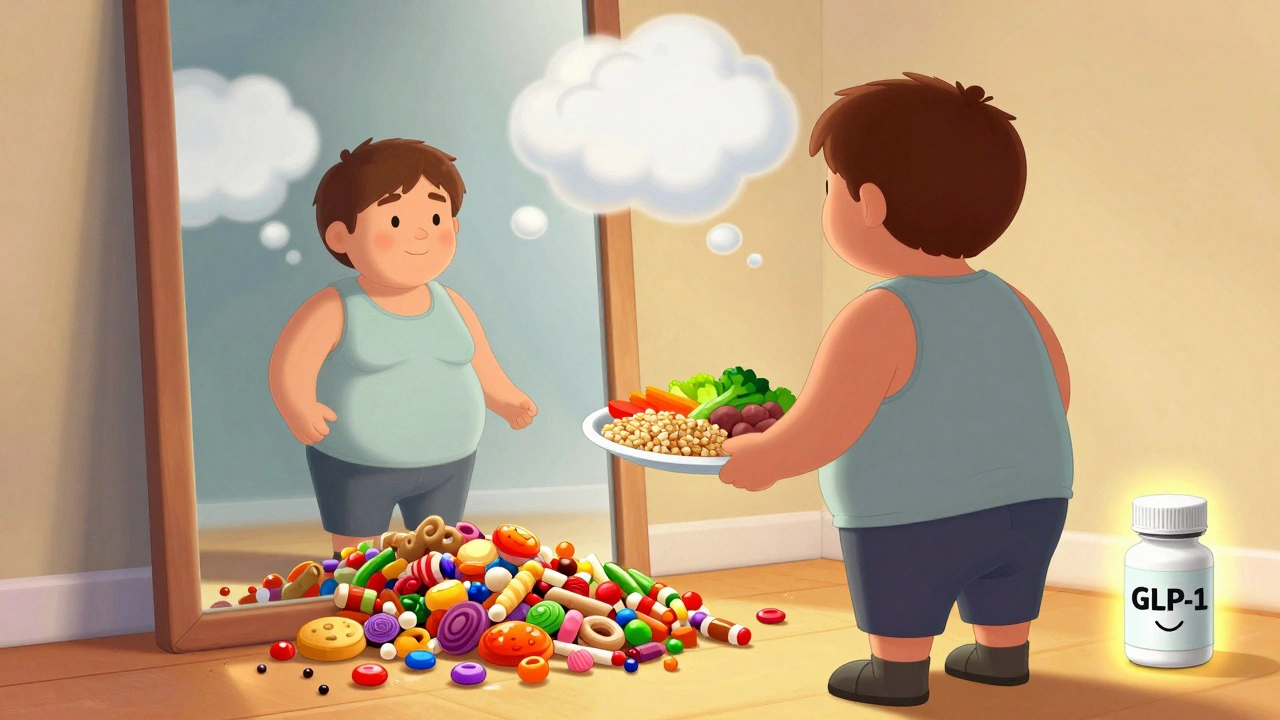
You don’t have to accept weight gain as a given. Here’s what works:- Start with diet counseling before you even begin insulin. A 2023 study showed that early nutritional support cut average weight gain from 6.2 kg to just 2.8 kg in the first year.
- Focus on protein and fiber. They fill you up without spiking your blood sugar. Swap white bread for whole grain. Choose eggs or Greek yogurt over sugary cereal.
- Don’t overcorrect lows. If your blood sugar is 3.5 mmol/L, you need 15 grams of fast-acting sugar-like 4 glucose tablets or half a cup of juice. Not a whole bag of candy. Too much sugar leads to rebound highs, then more insulin, then more fat storage.
- Move more. Even 30 minutes of walking a day helps your body use insulin better. That means you need less of it-and gain less weight.
When the Fear of Low Blood Sugar Controls Your Life
The emotional toll of hypoglycemia is real. Many people say they’re more afraid of a low than of long-term complications. So they keep their blood sugar higher than recommended-sometimes above 10 mmol/L-to avoid crashes. That’s called “chronic hyperglycemia avoidance.” But that’s not safe either. High blood sugar for years leads to nerve damage, kidney disease, and vision loss. You’re trading one risk for another. The solution isn’t just better tech-it’s better support. Talking to a diabetes educator, joining a peer group, or seeing a therapist who understands diabetes stress can change everything. You don’t have to live in fear. You can learn to manage it.
What’s New and What’s Working
Technology is changing the game. Closed-loop insulin systems-sometimes called artificial pancreases-automatically adjust insulin based on your glucose levels. In trials, they cut time spent in hypoglycemia by 72% compared to traditional pumps. And newer insulins like Tresiba (insulin degludec) are designed to be ultra-stable. They reduce nighttime lows even more than older long-acting insulins. For older adults or those with heart disease, these are often the first choice. The bottom line? Insulin is still the most effective tool we have for controlling diabetes. But it’s not perfect. The goal isn’t to eliminate side effects-it’s to manage them so they don’t control your life.What You Can Do Today
If you’re on insulin:- Check your blood sugar before meals, at bedtime, and if you feel shaky or dizzy.
- Keep fast-acting sugar (glucose tablets, juice) with you at all times.
- Ask your doctor about switching to a newer insulin analogue if you’re still having frequent lows.
- Request a referral to a diabetes educator or dietitian. Don’t wait until you’ve gained 10 kg.
- Consider a CGM if you’re not using one. It’s not luxury-it’s safety.
- Teach someone close to you how to use glucagon.
Can insulin cause seizures?
Yes, severe hypoglycemia from insulin can cause seizures if blood sugar drops too low and isn’t treated quickly. This happens when the brain doesn’t get enough glucose to function. It’s a medical emergency. If someone is having a seizure from low blood sugar, call emergency services immediately and give glucagon if available.
Why do I gain weight even when I eat less?
Insulin stops your body from losing glucose in urine, which means you’re now absorbing all the calories you eat. Before insulin, excess sugar was flushed out. Now, it’s stored as fat. Even if you eat less, your body is more efficient at storing energy. That’s why weight gain is common-even with careful eating.
Is it safe to skip insulin doses to avoid weight gain?
No. Skipping insulin to avoid weight gain leads to high blood sugar, which damages your kidneys, eyes, nerves, and heart over time. The weight gain from insulin is manageable with diet, exercise, and newer medications-but uncontrolled diabetes is not. Talk to your doctor about alternatives instead of skipping doses.
Do all insulins cause the same amount of weight gain?
No. Older insulins like NPH tend to cause more weight gain and more lows. Newer analogues like insulin glargine (Lantus) and insulin degludec (Tresiba) are designed to work more steadily, reducing both hypoglycemia and weight gain. Switching insulins can make a real difference.
Can I lose weight while on insulin?
Yes. Many people lose weight while on insulin by combining it with GLP-1 agonists like semaglutide, eating fewer refined carbs, increasing protein and fiber, and moving more. Weight loss isn’t automatic, but it’s possible-and often necessary for long-term health.
What should I do if I pass out from low blood sugar?
If someone passes out from low blood sugar, call emergency services immediately. Do not try to give them food or drink-they could choke. If you have glucagon, give it right away. If you don’t, wait for help. After recovery, follow up with your doctor to adjust your insulin plan and prevent future episodes.
How often should I check my blood sugar if I’m on insulin?
At least 4 to 6 times a day if you’re on multiple daily injections or an insulin pump. Check before meals, at bedtime, and if you feel symptoms of low or high blood sugar. If you use a continuous glucose monitor (CGM), you’ll get real-time trends, reducing the need for fingersticks-but still check manually if the CGM seems off or you feel symptoms.





12 Comments
Rebecca Dong
Okay but what if insulin is just a big pharma scam to keep us dependent? I read on a forum that the FDA banned natural insulin alternatives because they couldn’t profit off them. My cousin in Belize cured her diabetes with cactus juice and a prayer-now she’s hiking Machu Picchu. Who’s really in control here?
Stephanie Maillet
It’s fascinating-how we’ve turned a physiological necessity into a moral dilemma. Insulin isn’t the villain; it’s the bridge between survival and suffering. We blame the drug, but the real tragedy is the system that makes weight gain and hypoglycemia feel like personal failures. What if we stopped asking people to ‘manage’ their bodies, and started asking why their bodies are being asked to suffer so much?
Raj Rsvpraj
Look, in India, we don’t have the luxury of CGMs or semaglutide. We use NPH insulin, and we eat roti and dal-no fancy protein diets. People here gain weight? Of course they do. But they also live longer than Americans who think a kale smoothie fixes everything. You think your ‘personalized insulin ratios’ matter when your neighbor dies of a heart attack because he skipped insulin to avoid gaining 5 kilos? Stop romanticizing your privilege.
Frank Nouwens
Thank you for writing this with such clarity and compassion. I’ve been on insulin for 12 years, and this is the first time I’ve read an explanation that didn’t make me feel like a failure. The part about hypoglycemia unawareness-that hit me hard. I didn’t realize I’d lost my warning signs until I passed out at work. I’m getting a CGM next week. Small steps.
Aileen Ferris
so like… insulin makes you fat? wow. who knew? also i thought glp-1s were only for rich people who wanna lose weight for instagram? turns out they’re also for people who dont wanna die? weird.
Michelle Edwards
You’re not alone in feeling scared of lows. I used to keep juice boxes in my purse, my car, my coat pocket-just in case. But here’s the thing: you don’t have to live in fear. Start small. One glucose tablet before bed. One walk after dinner. One conversation with your doctor. Progress, not perfection. You’ve got this.
Neelam Kumari
Of course you gained weight. You didn’t cut out the carbs. You didn’t stop eating like a 12-year-old after a birthday party. Insulin doesn’t make you fat-your choices do. If you can’t control your eating, don’t blame the medicine. Get a therapist. Or a mirror. Either works.
Queenie Chan
Insulin is the quiet alchemist of the body-turning the poison of glucose into the gold of cellular energy. But oh, how the alchemy leaves residue: fat clinging like autumn leaves to the branches of a weary tree. And yet… isn’t that the paradox of survival? We trade the freedom of chaos for the safety of control, even when control feels like a cage. The real question isn’t how to lose weight-it’s how to love the body that holds you, even when it betrays you.
Michaux Hyatt
For anyone new to insulin: don’t panic. Yes, you’ll gain some weight. Yes, you’ll have lows. But here’s what nobody tells you-your body adapts. You learn your numbers. You find your rhythm. I went from 6 fingersticks a day to one CGM, and my A1c dropped from 9.8 to 6.1. You’re not broken. You’re learning. And you’re not doing it alone.
Jack Appleby
Let’s be clear: the notion that ‘newer insulins reduce weight gain’ is statistically misleading. The difference between NPH and degludec in weight outcomes is negligible when confounded by caloric intake. The real variable is behavioral compliance-not pharmacokinetics. And anyone who claims GLP-1 agonists are ‘lifelines’ without acknowledging their $1,000/month price tag and gastrointestinal side effects is either misinformed or paid by Novo Nordisk. Please, let’s stop the marketing speak.
Kaitlynn nail
insulin = weight gain? shocker. next you’ll tell me breathing makes you tired.
Sarah Clifford
so like… the whole post is just ‘get a CGM and eat less’? what a revolutionary idea. i bet the author also thinks people who smoke should just quit. wow. mind blown.