
Statin Baseline CK Necessity Checker
Check the factors that apply to you to see if a baseline Creatine Kinase (CK) test is strongly recommended based on clinical risk guidelines.
Understanding CK Results
| CK Level | Meaning | Typical Action |
|---|---|---|
| < 3x ULN Normal | Mild fluctuation | Continue therapy |
| 3x to 10x ULN Moderate | Moderate injury | Weekly monitoring |
| > 10x ULN Severe | Rhabdomyolysis risk | Discontinue statin |
You're about to start a statin to lower your cholesterol, and your doctor mentions a blood test for something called "CK." You might wonder why you need a snapshot of your muscle enzymes before you've even taken a single pill. Does it actually predict how you'll react to the drug, or is it just another box for the clinic to check? The truth is, baseline CK testing isn't a one-size-fits-all requirement, but for some people, it's the only way to tell if a future muscle ache is caused by the medication or something else entirely.
When we talk about Creatine Kinase, or CK, we're talking about an enzyme found primarily in your heart and skeletal muscles. Creatine kinase is a muscle enzyme that leaks into the bloodstream when muscle tissue is damaged. In a perfect world, your CK levels stay steady. But if you experience muscle breakdown-ranging from mild soreness to the severe, life-threatening condition known as Rhabdomyolysis-that enzyme floods your blood. Because some statins can cause this muscle leakage, doctors use CK as a biological red flag.
The Real Value of a Pre-Statin Snapshot
Why bother testing before you start? The biggest reason is that "normal" is a relative term. Some people naturally live with CK levels that are 300% higher than someone else's, and they feel perfectly fine. If you don't know your starting point, a slightly elevated result six months into therapy might look like a drug side effect, when in reality, that's just how your body operates.
Establishing a baseline helps your healthcare provider differentiate between a pre-existing condition and a drug reaction. For example, if you have a chronic neuromuscular issue or recently did a heavy workout, your CK will be high. If the doctor sees this before you start the medication, they won't panic when they see a similar number later. In fact, experts like Dr. Christie Ballantyne have noted that having this baseline data prevents about 15-20% of patients from unnecessarily stopping their medication because they mistakenly attributed muscle aches to the statin.
Who Absolutely Needs a Baseline Test?
While the American Heart Association doesn't mandate a baseline CK for every single person, there are specific "high-risk" groups where skipping this test is a gamble. If you fall into these categories, a baseline measurement is critical for your safety.
- People with Kidney Issues: If your eGFR (estimated glomerular filtration rate) is below 60 mL/min/1.73m², your body may struggle to clear the medication, increasing the risk of muscle toxicity.
- Hypothyroidism Patients: An underactive thyroid is a known trigger for statin-induced muscle pain. Since about 12.5% of people starting statins have this condition, checking the thyroid and CK baseline together is a smart move.
- Users of High-Intensity Statins: If you're prescribed high doses of Atorvastatin (40-80mg) or Rosuvastatin (20-40mg), your absolute risk of myopathy jumps. Knowing your baseline makes monitoring these potent doses much safer.
- Combination Therapy: If you're taking a statin alongside a fibrate (another type of cholesterol drug), your risk of muscle damage increases 6 to 15 times. In these cases, a baseline isn't just helpful-it's essential.
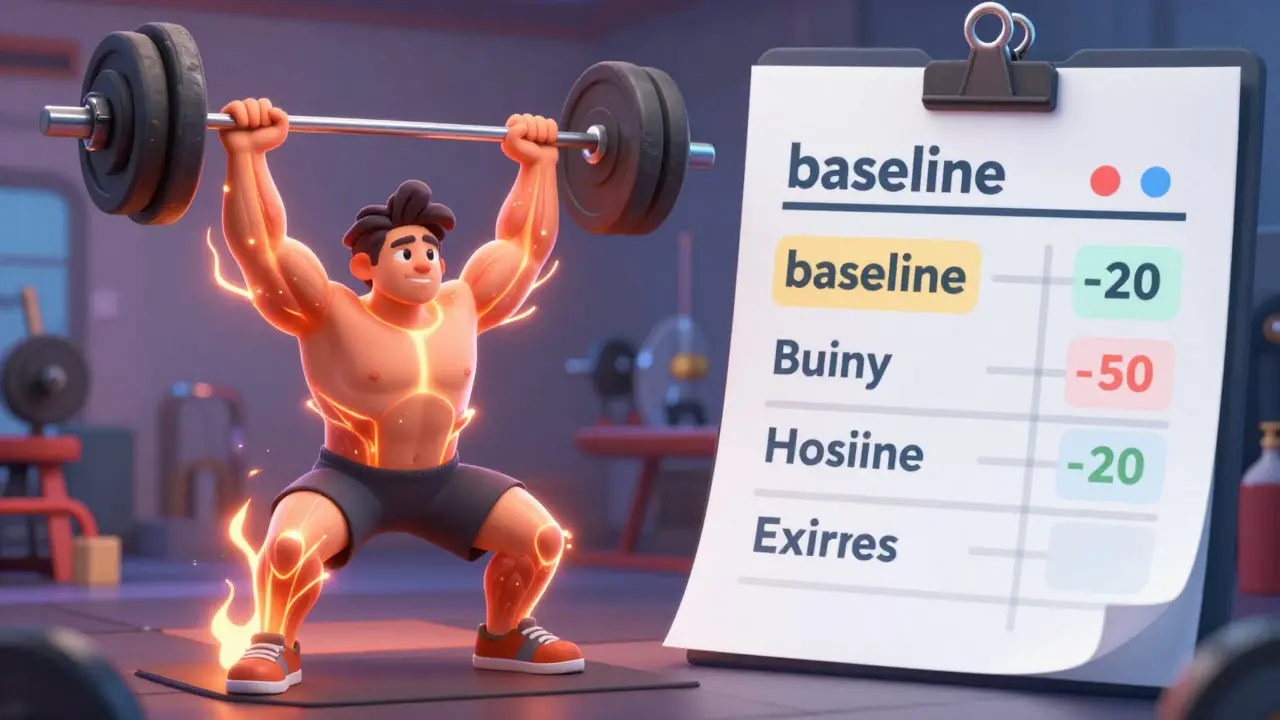
Understanding the Numbers: What Do the Results Mean?
Reading a lab report can be confusing because "normal" ranges vary by lab. Generally, men have higher limits (145-195 U/L) than women (65-110 U/L). However, the absolute number matters less than the multiplier. Doctors look at the Upper Limit of Normal (ULN) to make decisions.
| CK Level | Clinical Meaning | Typical Action |
|---|---|---|
| Less than 3x ULN | Likely normal or mild fluctuation | Continue therapy as planned |
| 3x to 10x ULN | Moderate muscle injury (if symptomatic) | Weekly monitoring; consult specialist |
| Greater than 10x ULN | Severe myopathy/Rhabdomyolysis risk | Immediate discontinuation of statin |
The Great Debate: Necessary Tool or Waste of Money?
Not every doctor agrees on the necessity of baseline testing. On one side, the American Association of Clinical Endocrinologists strongly recommends it for everyone. On the other, some European guidelines view it as optional. Why the split? Because in a massive review of nearly 48,000 patients, some researchers found that monitoring didn't actually lower the rate of muscle injuries.
There's also a financial argument. Some health campaigns, like Choosing Wisely Canada, point out that millions of dollars are spent on these tests every year, yet only about 1.2% of abnormal baseline results actually change how the doctor starts the treatment. If you're a young, healthy person with no kidney issues, a baseline CK might truly be an unnecessary expense. But if you're 75 or have a complex medical history, that same test becomes a vital safety net.

How to Get an Accurate Baseline Reading
If you're going in for a baseline test, you can't just wing it. Your activity levels can completely skew the results. A hard gym session or even a deep-tissue massage can cause CK to leak into your blood, leading to a "false positive" that might scare your doctor into giving you a lower dose than you actually need.
To get a clean reading, follow these simple rules:
- Avoid Vigorous Exercise: Stop any intense workouts at least 48 to 72 hours before your blood draw. This includes heavy lifting or long runs.
- Skip the Injections: Avoid intramuscular injections shortly before the test, as these cause localized muscle trauma.
- Timing Matters: Ensure the test is done within 4 weeks of starting your medication. A test from three years ago is useless as a baseline.
- Be Honest About Meds: Tell your doctor if you're taking amiodarone or other drugs that interact with statins, as these can amplify the effect on your muscles.
Looking Beyond the Blood Test
The medical world is starting to realize that a blood test isn't the only way to manage statin safety. We're seeing a shift toward "patient-reported outcomes." This means if you feel genuine muscle pain, that's often more important than a CK number that's only slightly elevated. Some of the latest data suggests that CK elevations less than 10 times the normal limit don't always correlate with bad clinical outcomes.
We're also seeing the rise of genetic testing. Some people have a specific variation in a gene called SLCO1B1. If you have this, you're significantly more likely to experience muscle issues with certain statins, regardless of what your baseline CK says. In the future, a quick genetic swab might replace the need for repeated blood draws.
Do I need a CK test if I feel fine on my statins?
Generally, no. Most international guidelines agree that routine, serial CK monitoring for patients who have no muscle symptoms provides very little clinical benefit. If you feel great and your kidneys are healthy, your doctor likely won't ask for repeat tests.
Can exercise cause a false high CK reading?
Yes, absolutely. Vigorous exercise causes micro-tears in the muscle, which releases CK into the bloodstream. This is why it's recommended to avoid heavy workouts for at least 48 hours before your baseline test to avoid an inaccurate result.
What is the difference between myalgia and rhabdomyolysis?
Myalgia is general muscle ache or soreness, which is relatively common (affecting 5-10% of users). Rhabdomyolysis is a severe, rare condition where muscle breakdown is so intense it can lead to kidney failure. This is marked by CK levels typically 10 times higher than the upper limit of normal.
Why do some people have naturally higher CK levels?
CK levels vary widely based on genetics, ethnicity, and muscle mass. For instance, African Americans often have baseline levels 50-100% higher than other groups. This is exactly why a personal baseline is more useful than a generic laboratory "normal" range.
Will a high baseline CK stop me from taking statins?
Not necessarily. A high baseline just tells your doctor where you're starting. Unless the level is dangerously high (indicating an active disease), they will likely still prescribe the statin but will be much more vigilant in monitoring any new symptoms you report.





8 Comments
Joshua Nicholson
Eh, sounds like a lot of extra poking for something that barely changes the outcome.
Tama Weinman
Funny how they're pushing these tests to "monitor" us while the pharma companies just keep cranking out these statins that mess with your muscles.
It's all a cycle to keep you tied to the clinic and the pharmacy. They tell you it's a "safety net" but it's really just more data for them to track how we react to their chemical cocktails. Don't trust the "normal" ranges they give you because those are just arbitrary numbers designed to make you feel like you're sick when you're not. Just follow the money and you'll see why the guidelines are always shifting every couple of years.
Randall Barker
The utter lack of discipline in modern healthcare is appalling.
People treat their bodies like disposal bins for chemicals and then act shocked when their muscles atrophy. We have abandoned the philosophical pursuit of wellness in favor of a pill for every ailment. A blood test is a mere band-aid on a systemic failure of lifestyle and morality. If you cannot control your cholesterol through temperance and will, you deserve the anxiety of these tests. It is a moral failing to rely on a baseline CK test to feel "safe" while ignoring the decadence of the modern diet. We are trading our vitality for the convenience of a prescription bottle. This isn't medicine, it's a slow descent into biological bankruptcy. The arrogance of thinking a lab value can replace a virtuous life is staggering. Wake up and take responsibility for your own vessel before the chemicals do it for you.
Autumn Bridwell
OMG I had a similar thing happen with my cousin's husband and it was just a total nightmare!
He didn't get a baseline and then he just woke up one day and couldn't even walk to the bathroom because his legs felt like lead! I remember screaming at the doctor because they didn't do the test first. It was just so dramatic and scary for the whole family!
Dana Chichirita Nicoleta
I truly believe that taking these proactive steps in our health journey allows us to embrace a future filled with vitality and strength, provided we have the patience to follow the correct protocols!
It is simply wonderful that we have access to such precise diagnostic tools that can alleviate the fear of the unknown, and I am just so thrilled that patients are being encouraged to understand the nuance of their own unique biological makeup through these baseline tests. Even if it takes a few extra minutes at the clinic, the peace of mind that comes from knowing your own starting point is an absolutely priceless gift that allows one to move forward with confidence and grace!
Kim Hyunsoo
The genetic part is so wild... 🧬 I wonder if the SLCO1B1 thing is why some people just can't handle any dose at all regardless of their CK levels? 😵💫 Pretty fascinating stuff!
Sophia Rice
I think its really helpful to know this b4 starting meds. My doctor did this for me and it made me feel much more at ease with the whole proccess.
Adele Shaw
Typical garbage. Why do we even bother with these European guidelines that try to tell us it's optional? We do things right here in the US and we keep our people safe while the rest of the world just gambles with their lives!