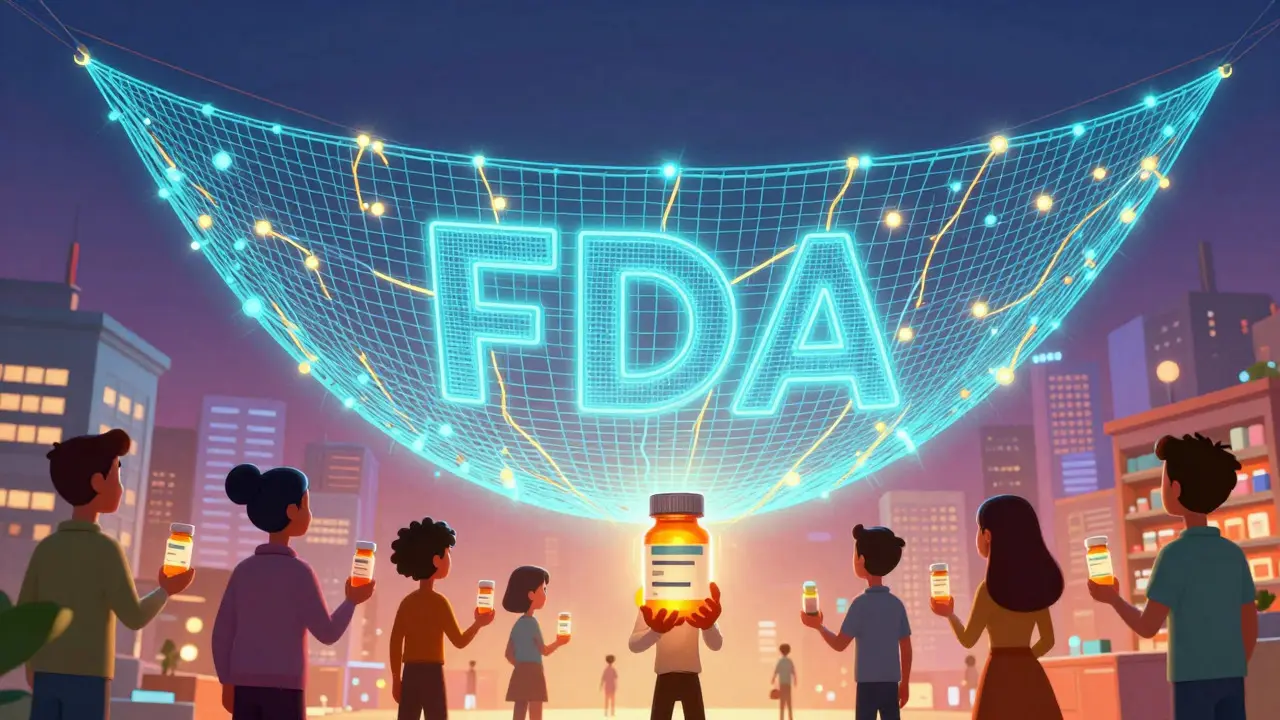
You trust that the pill in your hand works. You expect it to be safe. But once a generic drug leaves the factory and lands on pharmacy shelves, does anyone actually watch it? The short answer is yes. The U.S. Food and Drug Administration (FDA) runs a massive, multi-layered safety net for generic medications long after they get the green light. It isn’t just about checking if the drug was made correctly in a lab. It’s about spotting hidden dangers that only show up when millions of real people take the medicine.
Generic drugs make up about 90% of all prescriptions filled in the United States. That means most of us are taking them daily. If there were a flaw in one batch, or if a specific ingredient caused unexpected reactions in older adults, the impact would be huge. So, how does the FDA keep an eye on this vast ocean of pills, liquids, and inhalers? They don’t rely on luck. They use a combination of digital databases, hospital records, factory inspections, and strict legal frameworks. Here is exactly how that system works.
The Foundation: Why Post-Approval Monitoring Matters
To understand the monitoring, you first have to understand the gap. Before a generic drug hits the market, it must prove it is "bioequivalent" to the brand-name original. This usually involves small studies with 24 to 36 healthy volunteers. These studies check if the generic enters your bloodstream at the same speed and strength as the brand name. It’s a solid start, but it’s not perfect.
Those small groups of young, healthy volunteers don’t look like the general public. They don’t include pregnant women, children, or elderly patients with multiple health conditions. As the FDA itself admits, it is impossible to know every risk before approval. The true safety picture only emerges over months and years of widespread use. This phase is called post-market surveillance. It is the period where the FDA shifts from asking "Is this drug equivalent?" to "Is this drug safe for everyone, everywhere?"
This shift was formalized by laws like the 21st Century Cures Act of 2016. This law forced the FDA to create more structured rules for watching drugs after they are sold. It recognized that safety isn't a one-time test; it's a continuous job.
The Digital Watchtower: FAERS and Spontaneous Reporting
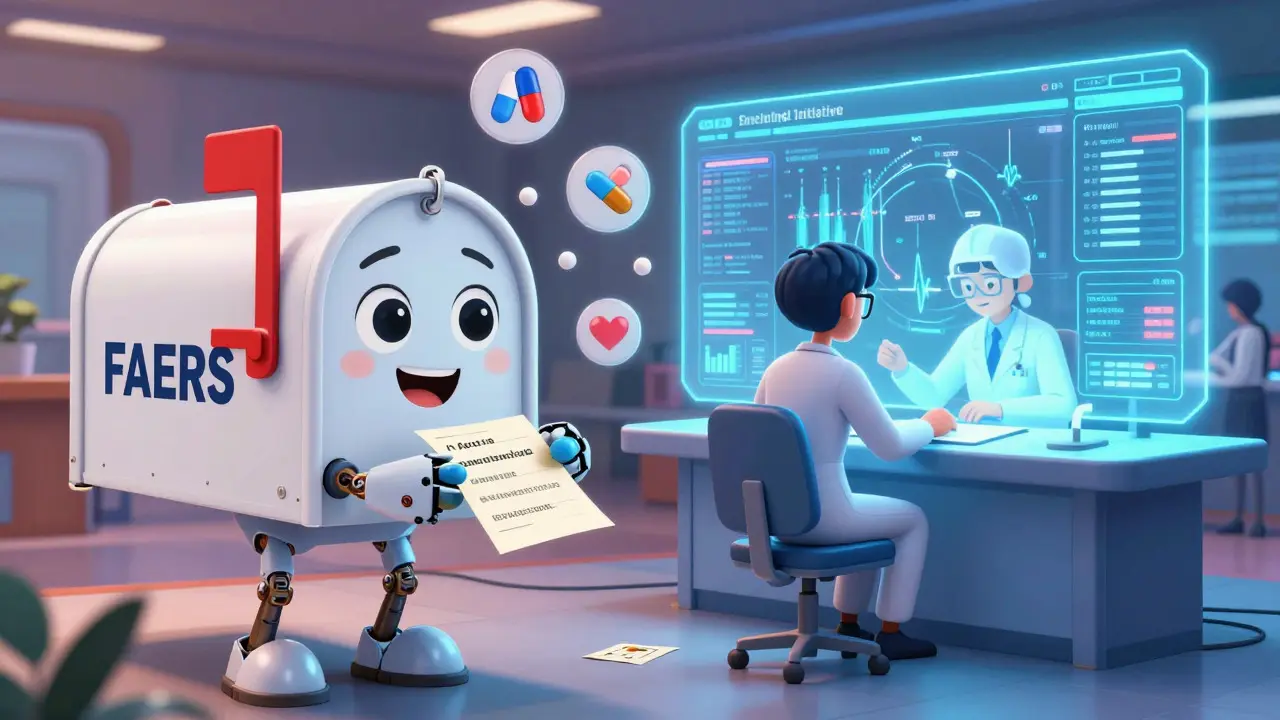
The backbone of the FDA’s listening system is a database called FAERS (FDA Adverse Event Reporting System). Think of FAERS as a giant digital mailbox. Doctors, pharmacists, patients, and even consumers can send reports here if they suspect a drug caused a bad reaction.
In 2022 alone, the FDA processed over 1.4 million reports through its MedWatch portal, which feeds into FAERS. Teams of epidemiologists and scientists sift through these reports looking for patterns. If ten doctors suddenly report liver damage linked to a specific generic antibiotic, that becomes a "signal." A signal doesn’t mean the drug is definitely dangerous, but it means the FDA needs to investigate.
This method has a major weakness: underreporting. Experts estimate that only 1% to 10% of actual adverse events ever make it into FAERS. Most people never report side effects. They might just stop taking the pill or blame their age. Because of this, the FDA knows FAERS is incomplete. It catches the loud signals, but it often misses the quiet ones. That’s why they needed a better tool.
Active Surveillance: The Sentinel Initiative
If FAERS is passive listening, the Sentinel Initiative (FDA's active electronic health record surveillance system) is active hunting. Launched in 2008 and expanded significantly since, Sentinel connects the FDA directly to the electronic health records (EHRs) of over 100 million patients across dozens of healthcare systems.
Instead of waiting for a doctor to fill out a form, the FDA can run queries against this massive dataset. For example, if a new generic heart medication hits the market, FDA scientists can instantly search Sentinel to see if patients taking it are ending up in the emergency room for bleeding issues more often than those taking other drugs. This allows for near-real-time detection of safety problems. It removes the human error of forgetting to report a side effect. By 2025, the goal is to have even deeper integration, making this system faster and more precise.
Quality Control: Inspections and Impurity Checks
Safety isn’t just about chemical reactions in the body. It’s also about what’s physically in the pill. Sometimes, a generic drug contains impurities-trace chemicals left over from manufacturing-that can be harmful. Or, the inactive ingredients (like dyes or binders) might cause allergic reactions in sensitive people.
The FDA’s Office of Pharmaceutical Quality (OPQ) handles this side of the equation. They oversee the review of impurities. If a generic manufacturer produces a drug with higher levels of certain contaminants than allowed, OPQ steps in. They work with the Office of Generic Drugs (OGD) to assess the toxicity risk using scientific literature and lab data.
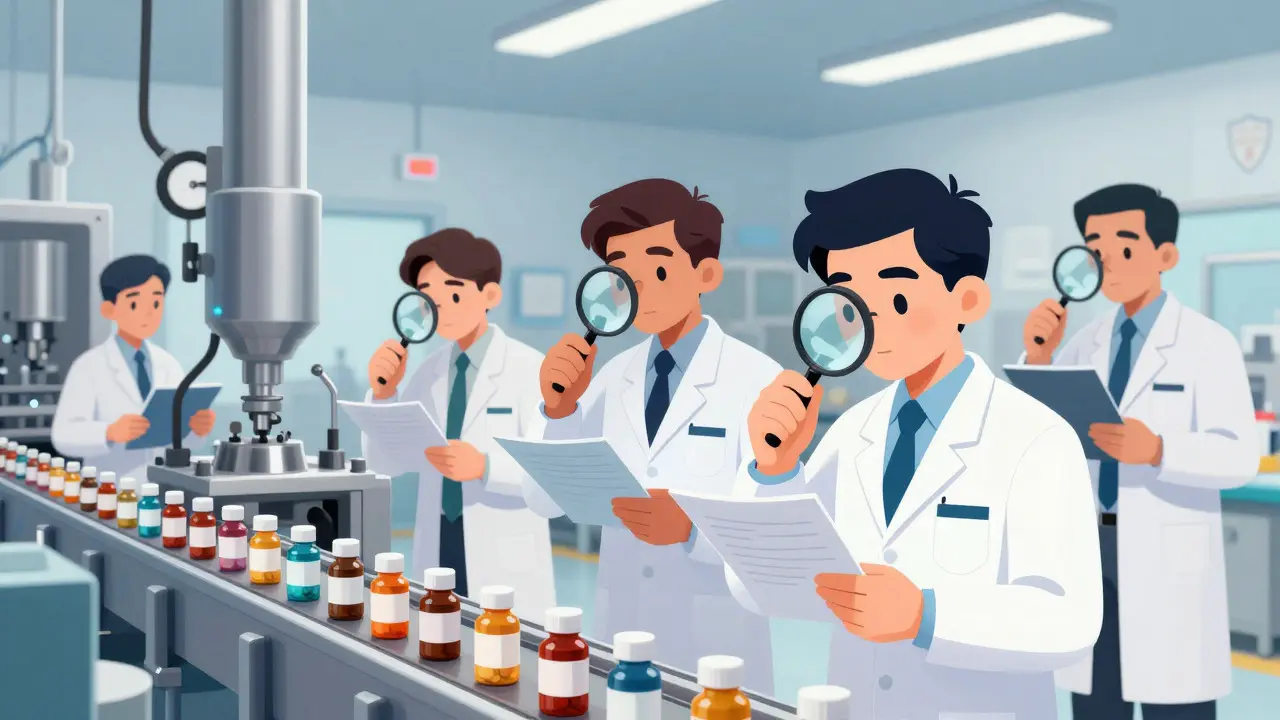
To ensure manufacturers follow the rules, the FDA conducts roughly 1,200 domestic and 600 foreign facility inspections every year. These aren’t always polite visits. Many are unannounced. Inspectors check everything from raw material storage to laboratory testing logs. They look for "Current Good Manufacturing Practices" (cGMP) violations. If a factory is dirty or cutting corners, the FDA can shut it down or recall the products. This physical oversight complements the digital data from FAERS and Sentinel.
| Method | Data Source | Strengths | Limitations |
|---|---|---|---|
| FAERS | Spontaneous reports from doctors/patients | Captures rare, unexpected events; low cost | High underreporting (only 1-10% of events); no denominator data |
| Sentinel Initiative | Electronic health records (100M+ patients) | Active, real-time analysis; large sample size | Dependent on quality of hospital data entry; privacy constraints |
| cGMP Inspections | Physical factory audits | Detects manufacturing flaws and contamination | Resource-intensive; cannot inspect every batch |
| Impurity Review | Lab tests and applicant submissions | Ensures chemical purity matches brand standards | Complex molecules are harder to analyze accurately |
Who Makes the Decisions?
Data is useless without experts to interpret it. Inside the FDA, the Office of Generic Drugs (OGD) leads the charge. But they don’t work alone. A key group is the OGD Clinical Safety and Surveillance Committee. This team includes physicians, chemists, and scientists from various departments.
They meet regularly to discuss "newly identified safety signals." If Sentinel flags a potential issue with a generic asthma inhaler, this committee debates whether it’s a real problem or a statistical fluke. They decide if the risk outweighs the benefit. Their decisions can lead to serious actions: updating the drug label with new warnings, sending letters to doctors, demanding voluntary recalls, or, in extreme cases, pulling the drug from the market entirely.
Funding the Watchdogs: GDUFA III
All this monitoring costs money. The FDA doesn’t fund it solely through taxes. Since 2012, the industry has paid user fees to cover the cost of reviewing and monitoring generic drugs. This program is called GDUFA (Generic Drug User Fee Amendments).
We are currently under GDUFA III, which runs from 2023 to 2027. Under this agreement, generic manufacturers pay approximately $65.7 million annually. In exchange, the FDA commits to specific performance goals, like reviewing applications faster and maintaining robust safety surveillance. This fee structure ensures the FDA has the budget to hire more data scientists and inspectors, keeping the system running smoothly even as thousands of new generic applications arrive each year.
Challenges and Gaps in the System
Despite these advanced tools, the system isn’t flawless. One big challenge is "therapeutic inequivalence." Even if two drugs are bioequivalent, slight differences in inactive ingredients can affect how some patients feel. For example, a patient might tolerate the brand name fine but get a headache from the generic due to a different dye. These subtle issues are hard to detect because patients rarely report them as "adverse events," and they don’t show up clearly in broad database searches.
Another issue is complex generics. Simple pills are easy to monitor. But devices like nasal sprays, inhalers, or extended-release capsules are tricky. How do you measure if the spray delivers the right amount of medicine to the nose? The FDA has improved its methods here, but experts argue that monitoring for these complex products still lags behind simple tablets.
Finally, there is the problem of concentration. The top 10 companies control about 65% of the U.S. generic market. While this makes regulation easier (fewer factories to inspect), it creates concentrated risk. If one major manufacturer has a quality control failure, it affects a huge portion of the population instantly.
What Can You Do?
You play a role in this safety net too. If you experience a strange reaction after starting a new generic medication, don’t just ignore it. Report it. You can file a report via the FDA’s MedWatch website. Your single report might be the piece of evidence that helps connect the dots for the scientists analyzing FAERS data. The system relies on human input to catch what algorithms miss.
Understanding how the FDA watches generic drugs gives you confidence in your medication. It’s not a static approval; it’s a living, breathing process of constant verification. From the labs in Maryland to the hospitals in your state, a web of data and expertise works to ensure that the affordable generics you take are as safe as the expensive brands.
How does the FDA monitor generic drugs after they are approved?
The FDA uses a multi-layered approach including the FAERS database for spontaneous adverse event reports, the Sentinel Initiative for active analysis of electronic health records from over 100 million patients, and routine or unannounced factory inspections to ensure manufacturing quality. Specialized committees review safety signals to determine if regulatory action is needed.
What is the Sentinel Initiative?
The Sentinel Initiative is the FDA’s active surveillance system that links to electronic health records from numerous healthcare networks. Unlike passive reporting, it allows the FDA to proactively query data to detect safety signals in real-time among millions of patients, improving the speed and accuracy of safety monitoring.
Are generic drugs monitored differently than brand-name drugs?
The core safety systems (FAERS, Sentinel) apply to all drugs. However, generic monitoring places extra emphasis on bioequivalence maintenance and impurity checks because generics rely on smaller initial clinical trials (24-36 volunteers) compared to brand-name drugs. The FDA specifically watches for therapeutic inequivalence due to differences in inactive ingredients.
Can I report a side effect from a generic drug?
Yes. Patients and healthcare professionals can report adverse events to the FDA through the MedWatch program. These reports feed into the FAERS database and help identify potential safety signals that automated systems might miss. Reporting is voluntary but crucial for comprehensive safety surveillance.
What happens if the FDA finds a safety issue with a generic drug?
Depending on the severity, the FDA may require updated labeling with new warnings, issue Dear Healthcare Provider Letters, mandate voluntary product recalls, or in rare severe cases, withdraw the drug from the market. The OGD Clinical Safety and Surveillance Committee evaluates the risk to determine the appropriate action.
What is GDUFA and how does it relate to safety monitoring?
GDUFA (Generic Drug User Fee Amendments) is a reauthorization act that allows the FDA to collect user fees from generic drug manufacturers. Currently under GDUFA III (2023-2027), these fees fund the resources needed for efficient review and post-market safety surveillance, ensuring the FDA has the staff and technology to monitor drug safety effectively.