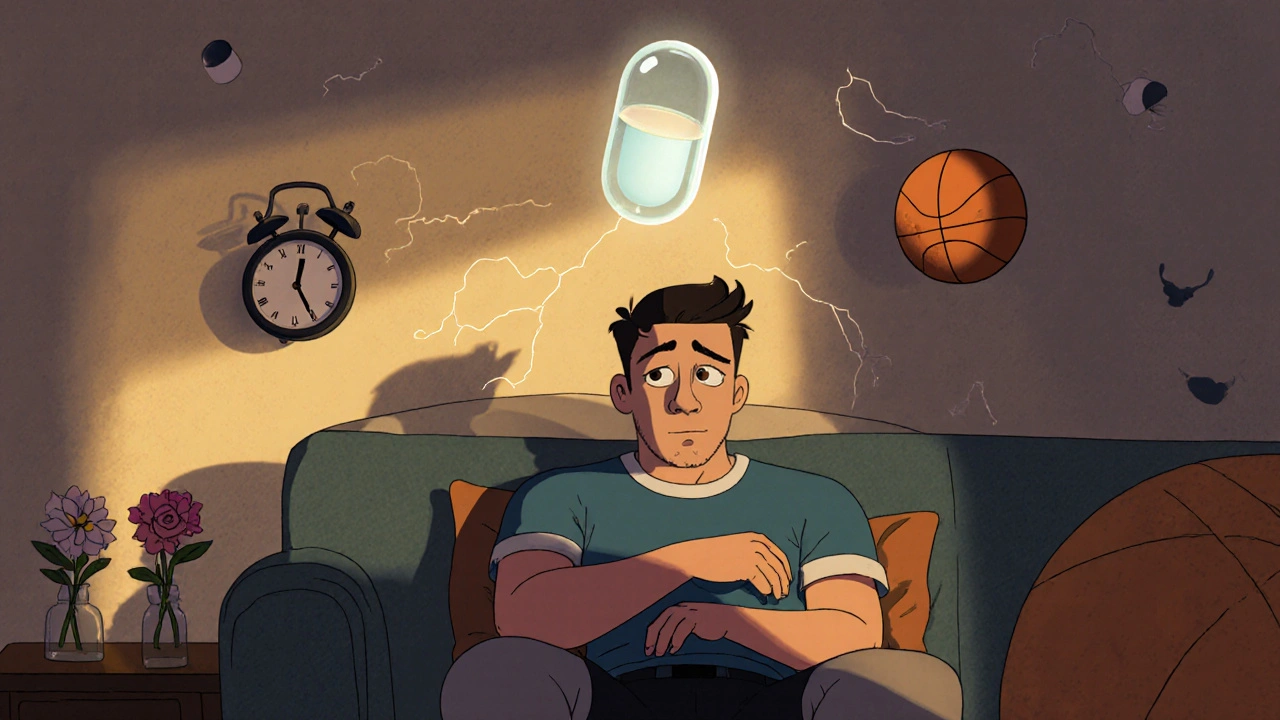
Opioid-Induced Androgen Deficiency (OPIAD) Risk Checker
When you’re on long-term opioids for chronic pain, you might not connect your low energy, lack of sex drive, or mood swings to the medication. But there’s a growing body of evidence showing that opioids don’t just dull pain-they can also shut down your body’s natural testosterone production. This condition, called Opioid-Induced Androgen Deficiency (OPIAD), affects between 50% and 90% of men using opioids for more than a few months. It’s not rare. It’s not rare at all. And it’s often missed.
How Opioids Kill Testosterone
Your body makes testosterone through a chain reaction starting in the brain. The hypothalamus sends out signals (GnRH) to the pituitary gland, which then tells the testes to produce testosterone. Opioids disrupt this chain at the very beginning. They bind to receptors in the hypothalamus and blunt the pulsing signal needed to keep testosterone production going. It’s like turning off a faucet-slowly, quietly, and without warning. Long-acting opioids like methadone and buprenorphine are especially good at doing this. One study found men on methadone had average testosterone levels of just 245 ng/dL-well below the normal range of 300-1000 ng/dL. Those on buprenorphine did better, but still averaged 387 ng/dL. That’s not just low. That’s clinically significant. The longer you’re on opioids, the worse it gets. After 90 days, testosterone drops 35-50%. After a year, it can be 50-75% below baseline. And it doesn’t matter if you’re taking them for pain, addiction treatment, or cancer symptoms. The mechanism is the same.What Low Testosterone Feels Like
If you’ve been on opioids for months and feel like you’ve lost your spark, you’re not imagining it. Here’s what OPIAD actually looks like in real life:- Low libido: 68-85% of affected men report little to no interest in sex.
- Erectile dysfunction: Happens in 60-75% of cases-not because of nerves or blood flow issues, but because your body isn’t making enough testosterone to support it.
- Chronic fatigue: You’re not lazy. You’re exhausted. Studies show fatigue scores in these patients are 2.5 times higher than normal.
- Depression and irritability: Testosterone isn’t just about sex. It’s tied to mood. Men with OPIAD show 40% higher depression symptoms on standardized tests.
- Muscle loss and weight gain: You might notice you’re losing strength in the gym or gaining belly fat despite eating the same. Testosterone helps build muscle and burn fat. When it drops, your body composition shifts.
- Bone weakness: Bone mineral density in the spine can drop 15-20%. That means higher risk of fractures, even from minor falls.
- Anemia: Hemoglobin levels often fall to 12.3 g/dL, compared to a normal 14-18 g/dL. That contributes to fatigue and shortness of breath.
Testing for OPIAD
If you’re on opioids long-term and have any of these symptoms, ask for a blood test. Don’t wait. Don’t assume it’s normal. You need two things:- Total testosterone and free testosterone measured in the morning (between 7-10 a.m.), because testosterone levels drop through the day.
- Two low readings, taken weeks apart. One low result could be a fluke. Two confirm it’s a pattern.
- Do you have a decreased libido?
- Have you lost height?
- Have you noticed a decreased enjoyment of life?
- Do you feel weaker?
- Have you had a recent decrease in energy?
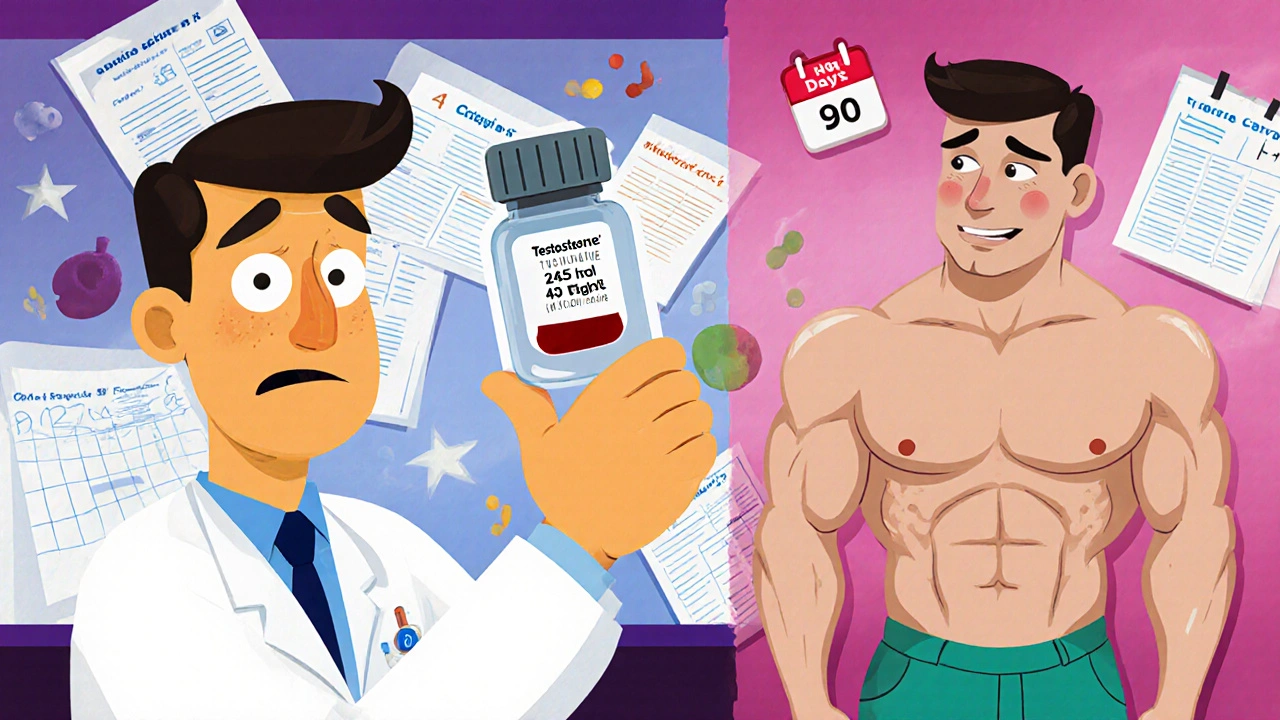
Treatment: Testosterone Replacement Therapy (TRT)
If your levels are low and your symptoms match, TRT is the most effective option. It’s not a cure for opioid dependence. But it can fix the hormone damage opioids caused. There are four main ways to give testosterone:- Injections: Testosterone cypionate or enanthate, 100-200 mg every 1-2 weeks. Fast, cheap, effective. You’ll feel a boost in energy and libido within weeks.
- Gels: Applied daily to skin (50-100 mg). Easy to use, but you have to avoid skin-to-skin contact until it dries-otherwise, you risk transferring it to partners or kids.
- Patches: Worn daily on the skin. Can cause irritation but steady delivery.
- Buccal tablets: Placed between gum and cheek twice daily. Less common, but avoids skin contact.
- Erectile function improve from 12.5 to 19.8 on a standard scale.
- Lean muscle mass increase by 3.2 kg.
- Fat mass drop by 2.1 kg.
- Pain sensitivity decrease by 30%-yes, testosterone helps with pain too.
- 49% lower risk of dying from any cause.
- 42% lower risk of heart attack or stroke.
- 35% lower risk of hip or femur fractures.
- 26% lower risk of anemia.
Who Shouldn’t Take Testosterone
TRT isn’t for everyone. It’s dangerous if you have:- Prostate cancer or a history of it.
- Breast cancer.
- Severe heart failure.
- Untreated sleep apnea.
- Polycythemia: Blood thickens in 15-20% of users. Can lead to clots. Requires monitoring.
- Lower HDL (“good”) cholesterol: Drops 10-15 mg/dL. A concern if you already have heart disease.
- Acne: Happens in about 25% of gel users.
- Increased stroke risk: Relative risk goes up 1.3-1.8x.
- Increased blood clot risk: 1.4-2.0x higher.
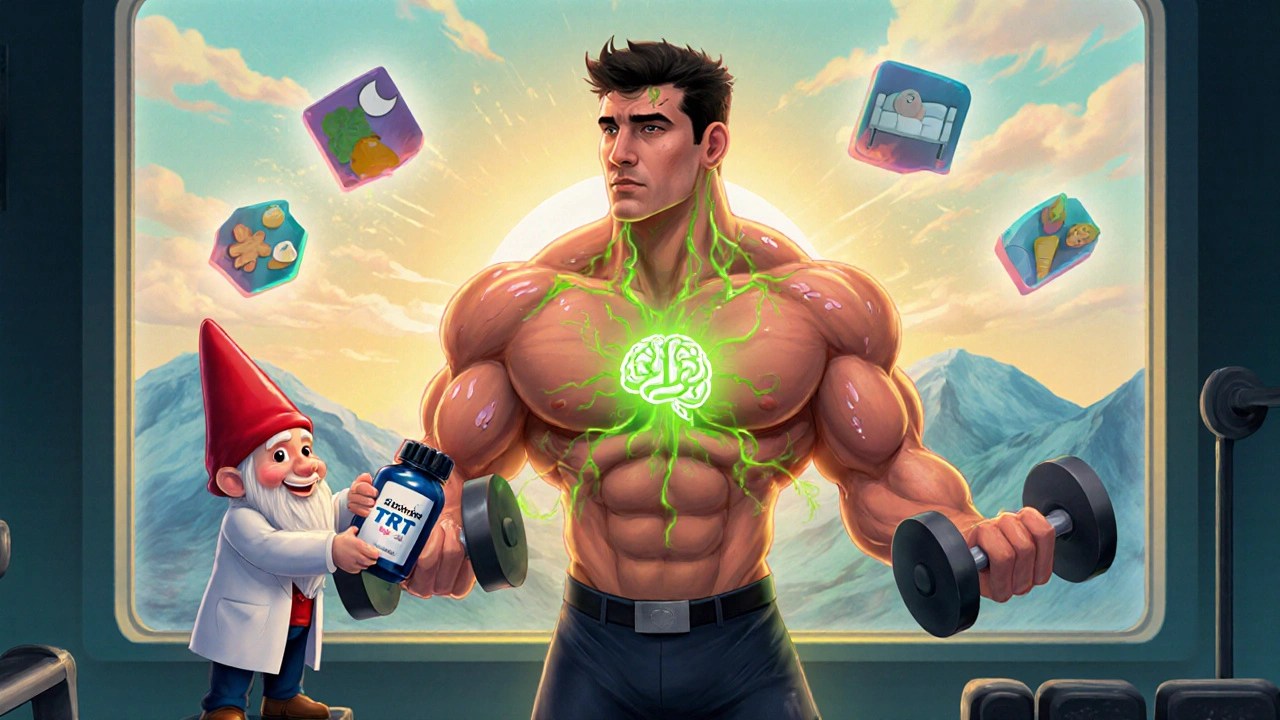
Natural Ways to Support Testosterone
TRT isn’t your only option. If you’re not ready for hormones-or your doctor won’t prescribe them-these steps can help:- Keep your weight down: Men with a BMI under 25 have 20-30% higher testosterone than those overweight.
- Exercise regularly: Three strength sessions a week can boost testosterone by 15-25%. Squats, deadlifts, push-ups-anything that builds muscle.
- Sleep 7-9 hours a night: Poor sleep cuts testosterone by 20%.
- Avoid alcohol: More than 14 drinks a week lowers testosterone by 25%.
- Quit smoking: Smokers have 15-20% lower levels.
- Don’t develop diabetes: Diabetics have 25-35% lower testosterone. Managing blood sugar helps.
The Bigger Picture
Over 58 million people used opioids globally in 2022. That means millions are silently losing testosterone. Yet most doctors don’t test for it. Most patients don’t know to ask. This isn’t about replacing opioids. It’s about recognizing a side effect that’s been hiding in plain sight. Opioids are powerful tools for pain. But they come with hidden costs. Testosterone loss is one of the most common-and most treatable. If you’re on opioids long-term and feel off, don’t ignore it. Talk to your doctor. Get tested. You don’t have to live with fatigue, low drive, or mood swings because you’re on pain meds. There’s a way forward.What Comes Next?
If you’ve been diagnosed with OPIAD:- Start with blood work-total and free testosterone, morning sample.
- Track your symptoms with a simple journal: energy, mood, libido, sleep.
- Discuss TRT with an endocrinologist or pain specialist familiar with hormone therapy.
- Don’t stop opioids without medical guidance-withdrawal can be dangerous.
- Combine TRT with lifestyle changes for the best results.
Low testosterone isn’t weakness. It’s a biological side effect. And like any side effect, it can be managed.
Can opioids cause low testosterone in women?
Yes, though it’s less studied. Women on long-term opioids can experience suppressed estrogen and androgen levels, leading to irregular periods, low libido, fatigue, and mood changes. Some doctors may consider DHEA supplementation, but evidence is limited. Testing hormone levels and working with an endocrinologist is key.
How long does it take for testosterone to return after stopping opioids?
It varies. Some men see recovery within 3-6 months after stopping opioids. Others take over a year. The longer you were on opioids, the longer recovery may take. In some cases, the damage is permanent without hormone therapy. Testing is the only way to know.
Is testosterone replacement safe for people with chronic pain?
Yes, when monitored. Studies show TRT can actually reduce pain sensitivity and improve function in opioid users. It doesn’t replace pain management but improves overall health, making it easier to tolerate pain and participate in rehab. Always work with a doctor who understands both pain and endocrinology.
Can I get testosterone without a prescription?
No, and you shouldn’t try. Testosterone is a controlled substance. Products sold online without a prescription are often fake, contaminated, or dangerously dosed. They can cause liver damage, heart problems, or infertility. Always get tested and prescribed through a licensed provider.
Does buprenorphine cause less testosterone suppression than methadone?
Yes. Studies show men on buprenorphine have testosterone levels about 140 ng/dL higher than those on methadone. If you’re on opioids for addiction treatment and have low testosterone, switching to buprenorphine (if appropriate) may help. But don’t switch without medical supervision.
What if my doctor says low testosterone is just aging?
Aging lowers testosterone slowly-about 1% per year after 30. OPIAD drops it by 50-75% in months. If you’re under 50 and on opioids, your symptoms are likely from the medication, not aging. Ask for lab tests. If they refuse, get a second opinion from an endocrinologist or pain specialist.

13 Comments
Hannah Magera
I never realized how much my low energy and lack of interest in sex were tied to my pain meds. I thought I was just getting older or burned out. This post literally changed my perspective. I went to my doctor last week and asked for testosterone tests-turns out my levels were half of what they should be. I’m starting TRT next month and already feel like I can breathe again.
Thank you for writing this. So many people are suffering silently.
Austin Simko
Big Pharma knows this. They don’t tell you because they make more money keeping you on opioids and then selling you more pills for the side effects.
Nicola Mari
This is exactly why modern medicine has lost its way. Instead of fixing the root cause-like encouraging discipline, exercise, and willpower-doctors just slap on hormones like a bandage. You think testosterone will fix your life? Maybe you should stop relying on chemicals and start taking responsibility.
Sam txf
Let me get this straight-you’re telling me a guy on methadone for five years has testosterone levels lower than a 70-year-old who hasn’t touched a gym since 1998? And we’re supposed to be shocked? This isn’t medicine, it’s a slow-motion suicide pact disguised as pain management.
TRT isn’t a cure-it’s damage control for a system that got lazy. And don’t even get me started on how many docs still think ‘low T is just aging.’ Bullshit. It’s negligence.
George Hook
I’ve been on buprenorphine for chronic back pain for nearly three years now. I noticed my energy tanked around year two, and I stopped lifting weights because I felt like a zombie. I didn’t connect it to the meds until I read this. I finally got tested last month-total T was 298, free T was 5.2. Both borderline. My PCP said ‘it’s fine, you’re not in the red zone.’ But I knew something was off. I pushed for a second opinion and ended up seeing an endocrinologist who put me on a low-dose gel. Within six weeks, I could lift again. My mood improved. I slept better. It’s not magic-it’s biology. And it’s fixable. If you’re on long-term opioids and feel off, don’t accept ‘it’s normal.’ Ask for the labs. You deserve to feel like yourself again.
jaya sreeraagam
OMG this is so important!! I’ve been telling my husband for months that he’s not himself since he started the pain meds, but he kept saying ‘I’m just tired’ and ‘it’s the pain’-turns out he had OPIAD!! We found this article together and went to the doctor right away. His T was 287, and now he’s on gel and we’re both so much happier!!
Also, I started doing squats and walking every day with him and my own energy is way better!! We’re both sleeping through the night now!!
PLEASE if you’re on opioids and feel blah-don’t ignore it!! Get tested!! It’s not weakness, it’s science!!
Also, don’t drink alcohol!! I quit wine and my skin cleared up too!!
Love you all!! Stay strong!!
Katrina Sofiya
Thank you for this comprehensive, evidence-based, and compassionate overview. As a healthcare professional, I have encountered numerous patients who have suffered silently from opioid-induced androgen deficiency. The fact that this condition remains underdiagnosed is a systemic failure of medical education and clinical practice. The data presented here is unequivocal: testosterone replacement therapy, when appropriately indicated and monitored, significantly improves quality of life, reduces morbidity, and enhances functional capacity. I encourage all clinicians to adopt the Endocrine Society guidelines and initiate routine screening for patients on chronic opioid therapy. This is not an optional consideration-it is a standard of care.
kaushik dutta
From a global health equity perspective, this issue is even more acute in low-resource settings where opioid substitution programs are expanding without endocrine monitoring infrastructure. In India, for example, methadone maintenance therapy is increasingly common, yet testosterone screening is virtually nonexistent due to cost, stigma, and lack of provider training. The biomedical mechanism is universal-opioids suppress HPG axis regardless of geography-but the clinical response is wildly asymmetric. We need decentralized point-of-care testing, community health worker training, and policy integration of endocrine screening into harm reduction frameworks. Otherwise, we’re institutionalizing iatrogenic hypogonadism as a silent pandemic among marginalized populations. This isn’t just a medical issue-it’s a human rights issue.
doug schlenker
I’ve been on oxycodone for 11 years after a spinal injury. I didn’t realize how much my relationship with my wife had deteriorated until I read this. We stopped being intimate, and I thought it was me-not the drugs. I got tested and my levels were 210. I started TRT and it’s been 9 months. I’m not the same man. I’m not ‘fixed’-but I’m back. I can hold her hand without feeling empty. I can laugh again. I still have pain. I still take meds. But now I’m alive. This isn’t about replacing one drug with another. It’s about restoring what was stolen. Thank you for writing this. I wish I’d known 5 years ago.
Olivia Gracelynn Starsmith
My doctor told me my low T was normal for my age. I didn’t push back. I didn’t know better. After reading this I looked up my old lab results and saw I dropped from 680 to 310 in 18 months. I’m on TRT now. I feel like I’ve been sleeping my whole life and just woke up. Don’t wait. Get tested. Even if your doctor says no. Get a second opinion. You’re worth it.
Skye Hamilton
So now we’re just going to hormone everyone who’s on pain meds? What’s next? Give everyone SSRIs because they’re sad? Maybe the real problem is that we’ve turned medicine into a vending machine for mood fixes. I’d rather just sit in my pain than be a chemical puppet.
Maria Romina Aguilar
...but... what if... you... don’t... want... to... take... hormones...? ...I mean... isn’t... it... possible... to... just... live... with... it...? ...I’m... not... saying... it’s... right... but... I’m... just... wondering... if... there’s... space... for... that...? ...
Brandon Trevino
Let’s be clear: the 49% reduction in all-cause mortality with TRT is statistically significant but clinically misleading. The study was observational. Confounding variables include baseline activity levels, socioeconomic status, and healthcare access. The hazard ratios are inflated by selection bias. Furthermore, the 1.8x stroke risk increase is not trivial. This isn’t a panacea-it’s a risk-benefit calculus requiring individualized decision-making. Your doctor’s job isn’t to prescribe testosterone because you feel tired. It’s to interpret labs, assess comorbidities, and weigh long-term consequences. Stop treating endocrinology like a Netflix binge. This isn’t empowerment-it’s medical oversimplification dressed up as advocacy.