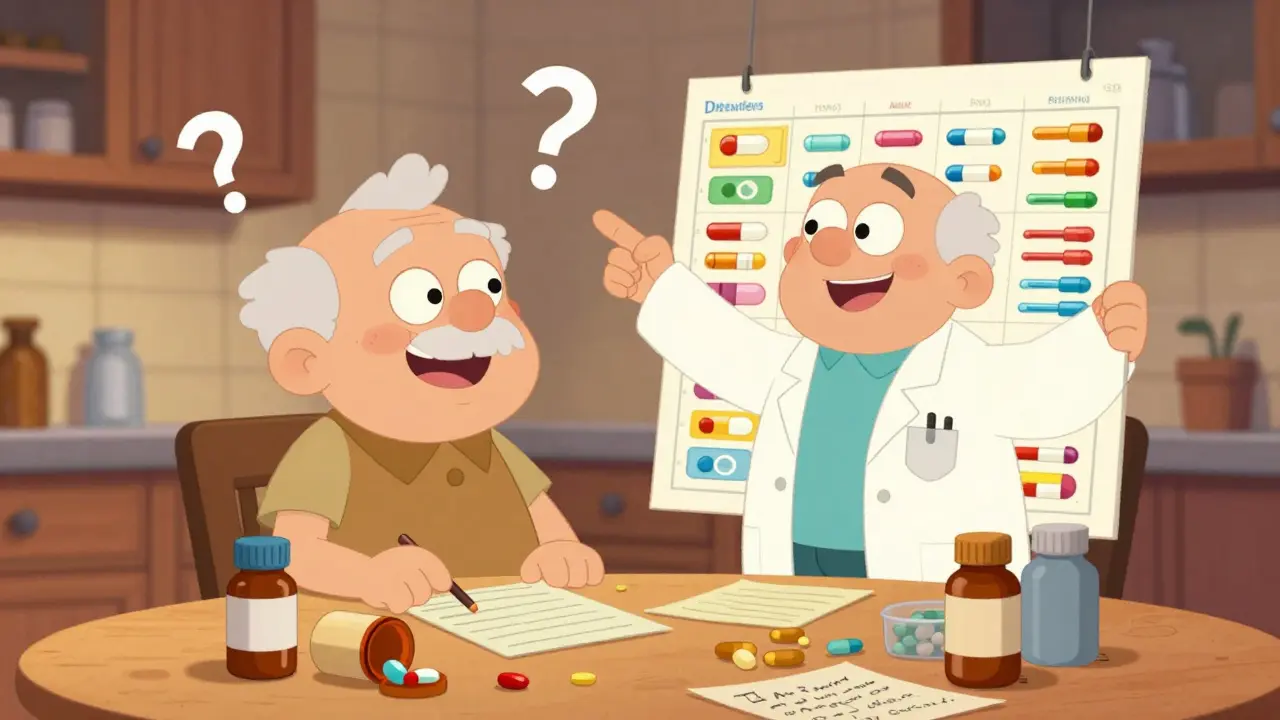
Every year, millions of Medicare beneficiaries get a chance to sit down with a pharmacist and review every single pill, supplement, and over-the-counter medicine they’re taking. This isn’t just a quick chat-it’s a Medicare Annual Medication Review, also called a Comprehensive Medication Review (CMR). And if you’re on Part D and take multiple medications, this could be one of the most important health appointments you’ll have all year.
Many people think their doctor handles all their medication questions. But doctors see you for 10-15 minutes at most. Pharmacists? They spend 45 to 60 minutes with you, going through every bottle you have, checking for dangerous combinations, asking why you skip doses, and even finding cheaper alternatives. The goal? Keep you safe, stop unnecessary side effects, and save you money.
Who Qualifies for a Medicare Annual Medication Review?
You don’t automatically get this review just because you have Medicare. There are specific rules. As of 2025, you qualify if you:
- Have at least three chronic conditions like diabetes, heart disease, high blood pressure, COPD, or kidney disease
- Take at least eight Medicare Part D-covered prescription medications (including maintenance drugs like insulin, blood pressure pills, or cholesterol meds)
- Spent at least $1,623 out of pocket on those medications in the past year
That last number matters. If you’re paying more than $1,623 a year for your prescriptions, you’re eligible-even if you don’t have eight pills. CMS updated this threshold in 2025 to include more people. Some plans also now consider people with two chronic conditions if they’re at high risk, like those recently discharged from the hospital.
But here’s the catch: you might qualify and still not get contacted. Plan sponsors have 60 days after you enroll to reach out, but many don’t follow up unless you remind them. Don’t wait. Call your Part D plan’s member services and ask, “Am I eligible for a Comprehensive Medication Review this year?”
What’s Actually Covered in the Review?
The review isn’t just about prescription drugs. It includes everything you take:
- All prescription medications (even if they’re not covered by Part D)
- Over-the-counter pills like ibuprofen, antacids, or sleep aids
- Vitamins and supplements (especially fish oil, ginkgo, or St. John’s wort)
- Herbal remedies and home treatments
- Topical creams or patches (like pain patches or nicotine patches)
The pharmacist will check for:
- Duplicate medications (two drugs that do the same thing)
- Drug interactions (like blood thinners mixing with herbal supplements)
- Side effects you haven’t told anyone about
- Medications you might not need anymore
- Costly alternatives that work just as well
- Adherence issues (why you skip doses or run out early)
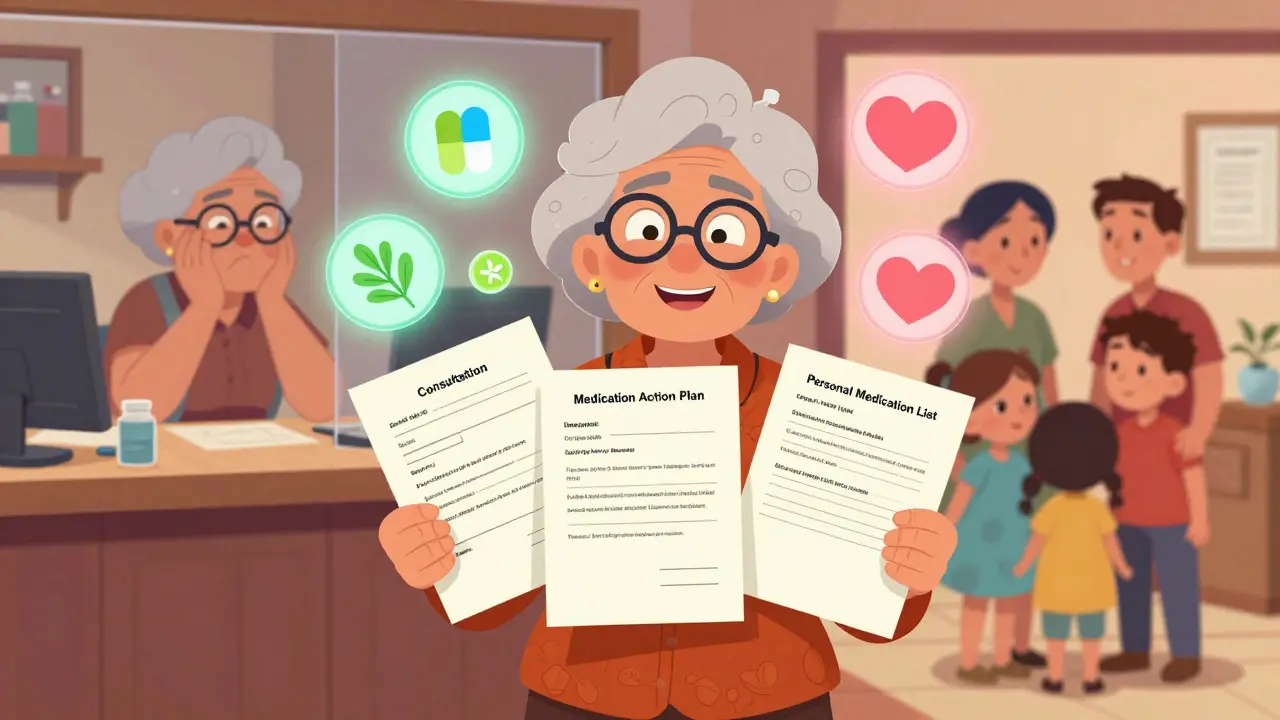
They’ll also give you three documents after the review:
- Consultation Letter - A summary of what was discussed
- Medication Action Plan - A clear list of changes, like stopping a pill or switching to a cheaper version
- Personal Medication List - An updated, easy-to-read list of everything you take, with doses and times
You keep these. Give them to your doctor. Put them in your wallet. Show them to emergency responders if you’re ever hospitalized.
Why Most People Miss the Point (And How to Avoid It)
Studies show that 78% of people who come prepared say the review was helpful. Only 42% of those who showed up with no list or bottles felt it was useful.
Why? Because people think, “I know what I take.” But most don’t. A 2023 study found that on average, patients forget or misreport 2-3 medications during these reviews. One woman thought she took only four pills a day. When she brought her bottles, it turned out she was taking eight-plus a daily aspirin, a sleep aid, and turmeric capsules. That’s 11 substances. Three of them raised her blood pressure.
Don’t be that person. Here’s how to prepare properly.
How to Prepare: A Step-by-Step Guide
Set aside 60-90 minutes the week before your appointment. Don’t rush it.
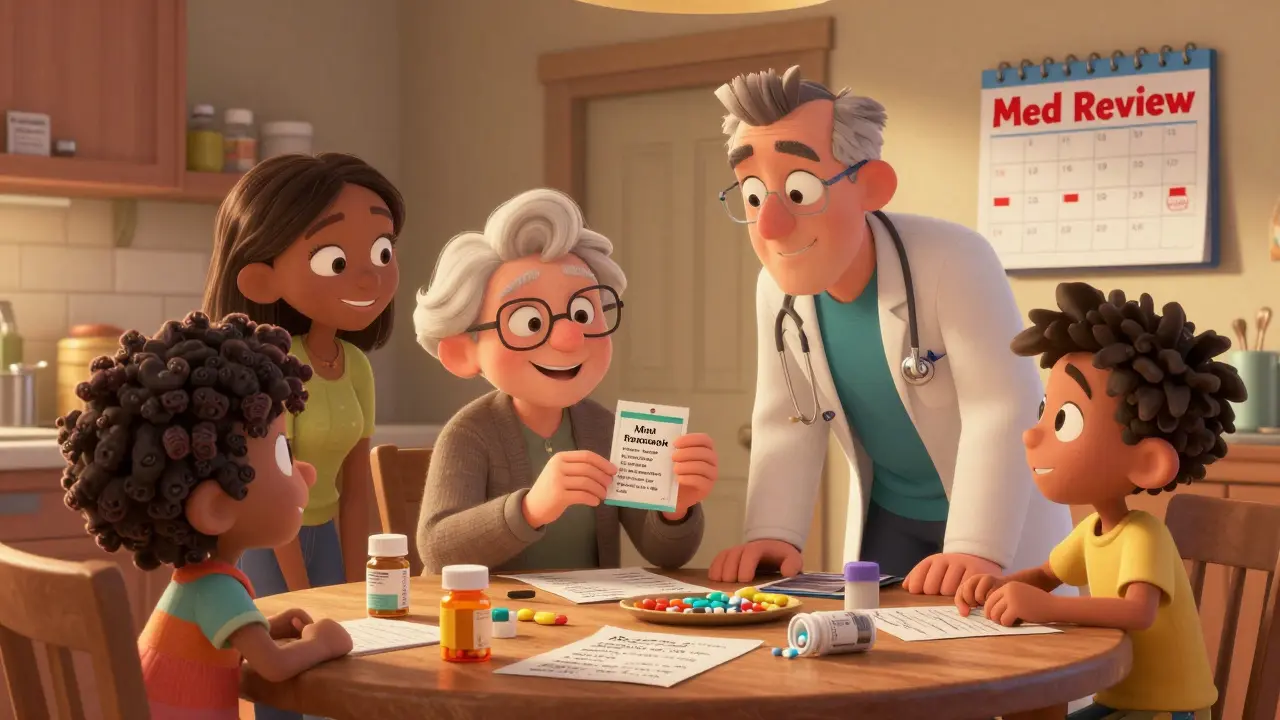
- Gather every medication you take - Put all pills, liquids, patches, creams, and supplements in one place. Use the original bottles. Don’t rely on memory or pill organizers. The pharmacist needs to see the label-dosage, frequency, and prescriber name.
- Take photos of each label - If you can’t bring the bottles (too many, too heavy), take clear photos. Make sure the text is readable. Include the pharmacy name and phone number.
- Write down your concerns - What’s bothering you? “I feel dizzy after my blood pressure pill.” “I can’t afford this new antidepressant.” “I take my insulin at night but forget sometimes.” Write it all down. Even small things matter.
- Check your recent health changes - Did you go to the ER last year? Get a new diagnosis? Have lab work done? Bring those results. Changes in kidney or liver function can affect how your body handles meds.
- Create a timeline - List each medication and when you started it. Did your doctor change your dose in March? Did you stop a pill in June? Write it out. This helps the pharmacist spot patterns.
- Bring someone with you - A spouse, child, or friend. People forget things under pressure. Two sets of ears are better than one.
Pro tip: Use the free Medicare.gov Medication Tracker tool to build your list ahead of time. Print it out. Bring it with you.
What to Ask During the Review
You’re not just listening-you’re leading. Come with questions:
- “Is this medicine still necessary? I’ve been on it for years.”
- “Are there cheaper options? My copay went up again.”
- “Could this be causing my fatigue or confusion?”
- “Is this supplement safe with my heart medication?”
- “What happens if I skip a dose?”
- “Can you help me simplify this? I’m taking 12 pills a day.”
Don’t be shy. Pharmacists are trained to help. They’ve seen it all. If they say, “That’s normal,” ask, “But is it safe for me?”
Real Stories: What Happens When People Prepare
One man in Ohio was taking two different blood pressure pills that did the same thing. He didn’t know. His pharmacist caught it and switched him to one cheaper pill. He saved $180 a month.
A woman in Florida was taking melatonin, ginkgo, and fish oil-all for sleep and memory. The pharmacist found they were increasing her risk of bleeding because she was on warfarin. She stopped the supplements and switched to a safer sleep aid. No more bruising.
Another senior in Texas was skipping her diabetes meds because she couldn’t afford them. The pharmacist connected her with a patient assistance program. Her copay dropped from $75 to $0.
These aren’t rare cases. They’re the norm-when people show up prepared.

What If You Don’t Qualify?
Even if you don’t meet the Medicare CMR criteria, you can still ask for a medication review. Most pharmacies offer free consultations. Walk in with your list. Ask, “Can you review my meds for interactions or costs?” Many pharmacists will do it, especially if you’re a regular customer.
Some community health centers and senior centers also offer free medication reviews. Call your local Area Agency on Aging. They often partner with pharmacists to help older adults.
And if you’re on Medicaid or dual-eligible (Medicare and Medicaid), you may qualify for an even more thorough review called a Medication Therapy Management (MTM) program-sometimes with more frequent check-ins.
What Happens After the Review?
You’ll get your three documents in the mail within 10-14 days. Don’t ignore them.
- Review the Medication Action Plan. If they recommend stopping a drug, talk to your doctor first. Don’t quit cold turkey.
- Update your Personal Medication List and keep it with you. Update it every time you get a new prescription.
- Call your pharmacy if you don’t get your documents. Sometimes they get lost.
- Set a reminder for next year. The review is annual, but your meds change all the time.
Some plans now offer telehealth CMRs. If you’re comfortable on Zoom, ask if that’s an option. It’s just as effective-and saves you a trip.
Why This Matters More Than Ever
By 2026, over 65% of eligible Medicare beneficiaries are expected to get their annual review. That’s up from 57% in 2022. Why? Because it works. CMS data shows that people who complete a CMR have 22% fewer hospital visits related to medication problems. They spend less on unnecessary drugs. They live better.
But it only works if you show up ready. This isn’t a test. It’s your health. You’re not just a patient-you’re the expert on your own body. The pharmacist is there to help you connect the dots.
Don’t wait for them to call. Don’t hope it’ll be “good enough.” Take 90 minutes now to gather your pills, write your questions, and bring your list. Your future self will thank you.
Do I need to pay for a Medicare Annual Medication Review?
No. The Medicare Annual Medication Review is completely free for eligible beneficiaries. It’s covered under your Part D plan, and you won’t be charged a copay or fee for the consultation or the written documents you receive.
Can I do the review over the phone or video call?
Yes. Medicare allows CMRs to be done via telehealth-phone or video. Many plans now offer this option. If you have mobility issues, live in a rural area, or just prefer staying home, ask your Part D plan if they offer virtual reviews. The process and outcomes are the same as an in-person visit.
What if I don’t have all my pill bottles?
Bring what you can. If you don’t have the bottles, take clear photos of the labels on your phone. You can also call your pharmacy and ask them to email or print your current medication list. But don’t rely on memory. Even small omissions-like a daily aspirin or a sleep aid-can lead to missed interactions.
How often should I update my personal medication list?
Update it every time you start, stop, or change a dose of any medication-even if it’s just a one-time antibiotic. Keep the latest version in your wallet, on your phone, and with a family member. Many emergency responders ask for it during a medical crisis.
Can my family member attend the review with me?
Absolutely. In fact, it’s strongly encouraged. A second set of ears helps you remember advice, ask questions you forgot, and understand changes to your regimen. The pharmacist will ask for your permission to speak with your family member, so just let them know you want them there.
What if the pharmacist says I don’t need a certain medication?
They can recommend stopping a medication, but only your doctor can officially discontinue it. Ask the pharmacist to send a written note to your doctor with their suggestion. Then schedule a quick follow-up with your doctor to discuss it. Never stop a medication on your own, especially for conditions like high blood pressure, diabetes, or depression.
Are herbal supplements really checked during the review?
Yes. Herbal supplements, vitamins, and teas are included in every CMR. Many can interact dangerously with prescription drugs. For example, St. John’s wort can reduce the effectiveness of blood thinners and antidepressants. Ginkgo can increase bleeding risk. The pharmacist needs to know everything you’re taking-even if you think it’s “natural” and harmless.
What if I’m not happy with the results of my review?
You have the right to request a second review or speak with a different pharmacist. Call your Part D plan’s member services and ask for a supervisor. You can also contact the Medicare Rights Center for free counseling. Your health matters too much to leave it unresolved.




15 Comments
Alex Smith
So let me get this straight - you’re telling me I can walk into a pharmacy, hand over my 12 pill bottles, and they’ll actually help me cut costs AND stop me from accidentally turning into a human chemistry experiment? And it’s FREE? I feel like I just found the secret loophole in the American healthcare system.
Vincent Clarizio
Look, I’ve been doing this for decades - I’ve seen people die because they didn’t know that St. John’s wort and warfarin are basically a love triangle with a knife in the middle. This isn’t just a review, it’s a civil service. You think your grandma’s turmeric capsule is harmless? Nah. That’s the quiet assassin. I once had a client on blood thinners who was also taking ‘natural energy boosters’ - turns out it was a blend of ginseng, yohimbine, and crushed dragon scales (okay, maybe not dragon scales, but it felt like it). He ended up in the ER with a heart rate like a jackhammer. Don’t be that guy. Bring the damn bottles. Write down your symptoms. Don’t assume the pharmacist is just there to count pills. They’re your last line of defense before the system eats you alive.
Priya Patel
I love this so much!! My mom did this last year and she cried because she found out she was paying $80 a month for a pill that was now $2 with a coupon. She’s been telling everyone at her bridge club. We need more of this!! 💕
Madhav Malhotra
In India, we don’t have this system - but my cousin in Chicago told me about it. We just go to the local pharmacist and say, ‘Bhaiya, check these pills.’ They do it anyway, for free, because they care. Maybe America needs more of that human touch, not just rules and thresholds.
Michael Patterson
Why is this even a thing? If you can’t remember what meds you’re on, maybe you shouldn’t be allowed to drive, let alone manage polypharmacy. This is just enabling cognitive decline. The system is broken if we need a 60-minute pharmacy session just to keep people from overdosing on their own forgetfulness.
Jason Shriner
Wow. Another government-funded pep talk for seniors. Next they’ll give us a free hug and a lollipop after we list our supplements. At least they didn’t call it ‘Medicare Wellness Coaching’ yet. I’m just waiting for the mandatory yoga session after the CMR.
Matthew Miller
Oh great. Another bureaucratic waste of time. You’re telling me I have to gather 12 bottles, take photos, write down my feelings, and then wait two weeks for a document I could’ve gotten from my damn pharmacy app? This isn’t healthcare - it’s performance art for people who think their meds are a Broadway musical.
Christian Basel
CMR is a classic example of cost-shifting. Pharmacists are now de facto clinical pharmacologists because physicians are overworked and insurers won’t pay for proper medication management. The real issue? The system incentivizes volume over value. You’re not getting a review - you’re getting triage dressed up as care.
Priscilla Kraft
This is the kind of thing that actually saves lives. I helped my aunt prep for hers last year - she was on 14 meds and didn’t realize two were duplicates. The pharmacist found a dangerous interaction with her thyroid med and a supplement she thought was ‘just for energy.’ She’s now on 8 meds, feels better, and saves $300/month. Bring the bottles. Write it down. It’s not hard. It’s just important.
Roshan Joy
Just did this last week! Took my whole medicine cabinet to the pharmacy. Turned out I was taking two different versions of the same blood pressure pill. Also found out my ‘natural’ sleep aid had melatonin AND diphenhydramine - double dose! Pharmacist gave me a new list and even called my doctor for me. So simple. So helpful. 🙌
Sean Feng
Just bring your pills. That’s it. No need for photos or timelines or emotional journaling. If you can’t remember what you’re taking, maybe you’re too old to be managing your own meds. The system is broken, not you.
Alfred Schmidt
THIS IS WHY PEOPLE DIE IN THIS COUNTRY!! I LOST MY MOM BECAUSE SHE WASN’T TOLD HER FISH OIL WAS MAKING HER BLOOD THIN TOO MUCH!! SHE WAS ON WARFARIN AND TOOK GINKGO AND ST. JOHN’S WORT FOR ‘MEMORY’ AND NO ONE ASKED!! THIS ISN’T A ‘REVIEW’ - IT’S A LAST CHANCE TO NOT DIE FROM STUPIDITY!!
Sam Davies
How quaint. An American ritual where we outsource our medical literacy to pharmacists because we’ve outsourced everything else - parenting, nutrition, critical thinking. I suppose next they’ll hand out a pamphlet titled ‘How to Not Be a Liability to the Healthcare System.’
Adewumi Gbotemi
My uncle in Lagos, Nigeria, takes 8 pills a day and never saw a pharmacist. He just asks the guy at the drug stall. But here, you get a whole process, papers, a plan. That’s good. That’s care. I wish more places did this.
Jennifer Littler
As a clinical pharmacist, I can confirm: 90% of medication errors come from incomplete lists. The ‘I think I take…’ approach is dangerous. The CMR isn’t bureaucracy - it’s harm reduction. If you’re eligible, DO IT. And if you’re not? Still ask. Most pharmacists will do it anyway. We’re not paid enough to say no.