When someone you love is taking five or more medications, it’s not just complicated-it’s risky. About 89% of adults 65 and older take at least two prescription drugs. One in seven takes five or more. And every year, senior medications lead to more than 350,000 hospitalizations in the U.S. alone. Most of these aren’t accidents. They’re the result of miscommunication.
Why Talking About Medications Matters
It’s not enough to just take the pills. You need to understand why you’re taking them, what they’re supposed to do, and what might go wrong. The American Geriatrics Society’s Beers Criteria, updated in 2023, lists 30 types of medications that are risky for older adults. Some of these are still commonly prescribed-like certain sleep aids, antihistamines, and painkillers-that can cause confusion, falls, or kidney damage in seniors.Adverse drug reactions are the third leading cause of hospital stays for people over 65. And here’s the kicker: nearly half of them are preventable. The biggest reason? Poor communication between patients, families, and doctors.
What to Bring to the Appointment
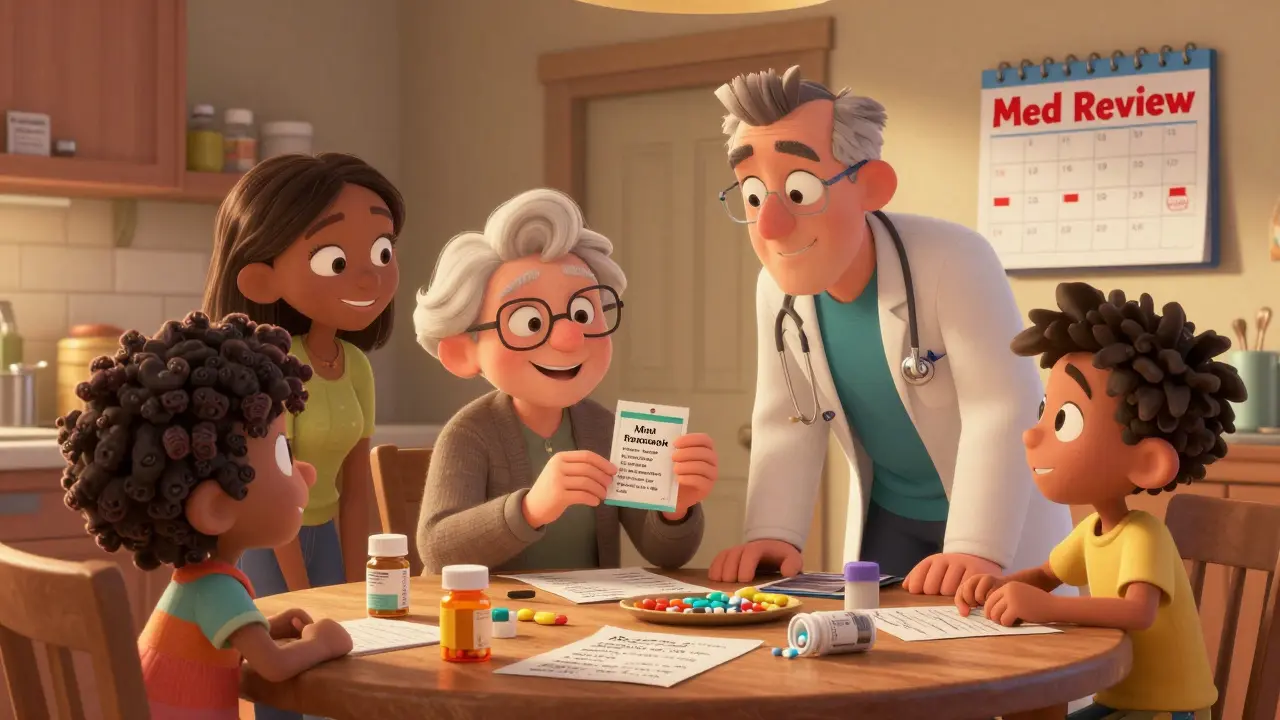
Don’t rely on memory. Don’t say, “I think I take two pills in the morning.” Show them.- Bring every bottle-prescription, over-the-counter, vitamins, herbs, supplements. Even the ones you haven’t taken in months.
- Write down every medication: name, dose, time of day, and why your doctor prescribed it.
- Put them all in one bag. No sorting. No hiding. Just the real thing.
A 2022 study in the Journal of General Internal Medicine found that when seniors brought their actual medications to appointments, doctors discovered discrepancies in 25% of cases. That means one in four people were taking something they weren’t supposed to-or missing something they were.
Four Essential Questions to Ask
Don’t leave the office without answers. Here are the four questions every senior or caregiver should ask:- How does this medication help my specific condition? Don’t settle for “it’s for your blood pressure.” Ask: “Will this lower my risk of stroke? By how much?”
- What are the side effects I should watch for? Some side effects aren’t obvious-like dizziness, confusion, or constipation. These are often mistaken for aging.
- Could this interact with anything else I’m taking? Even aspirin or St. John’s wort can cause dangerous reactions with heart meds or antidepressants.
- What should I do if I miss a dose? Some pills are fine to skip. Others can cause dangerous spikes or drops. Know the rule before it happens.
These aren’t just questions. They’re safety checks. A 2023 study in Annals of Internal Medicine found that seniors who asked these questions had 18% fewer adverse drug events.
How to Communicate So You’re Understood
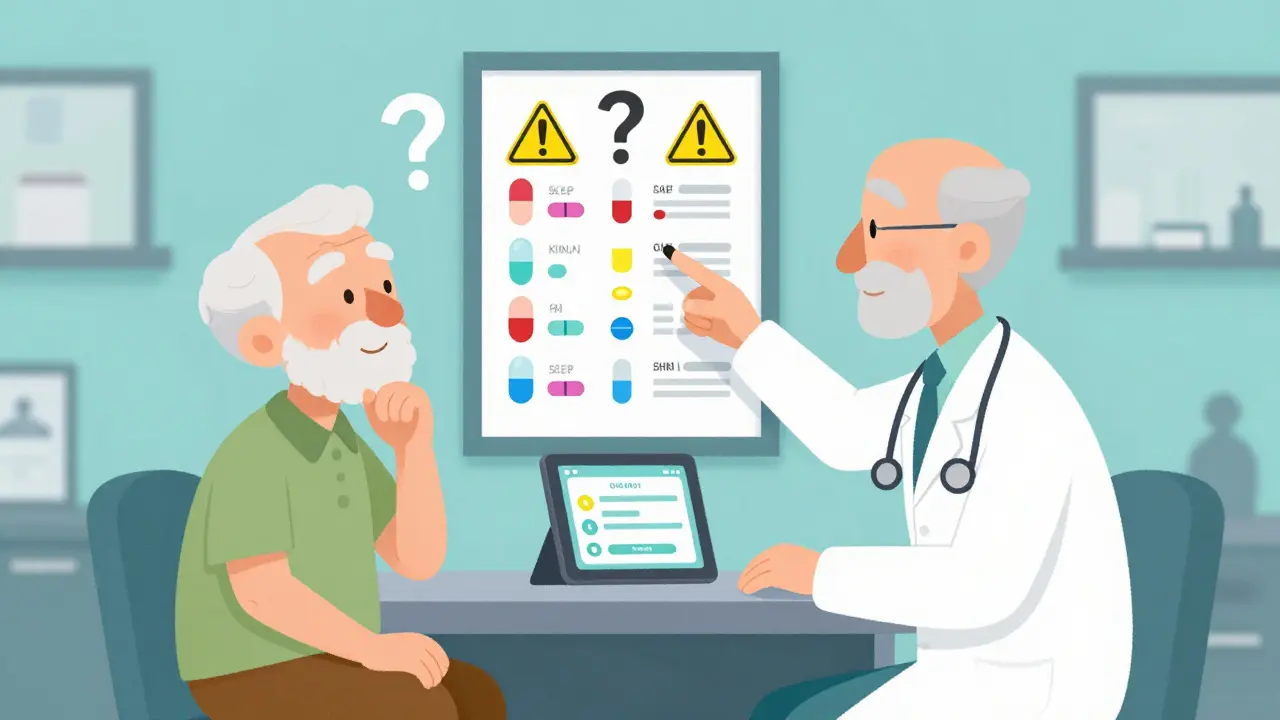
Doctors are busy. Seniors may have hearing loss, memory issues, or anxiety. Communication needs to be intentional.- Speak slowly. Use simple words. Say “dizziness” instead of “orthostatic hypotension.”
- Ask the doctor to explain one thing at a time. Don’t let them dump six new instructions at once.
- Use the “teach-back” method: “So if I miss my pill, I should wait until tomorrow and skip the missed dose-right?”
- Make eye contact. Hold their hand if it helps. This isn’t just polite-it helps people remember.
According to the American Medical Association, using teach-back improves medication adherence by 31%. That’s not a small number. It’s life-changing.
Use Tools to Stay on Track
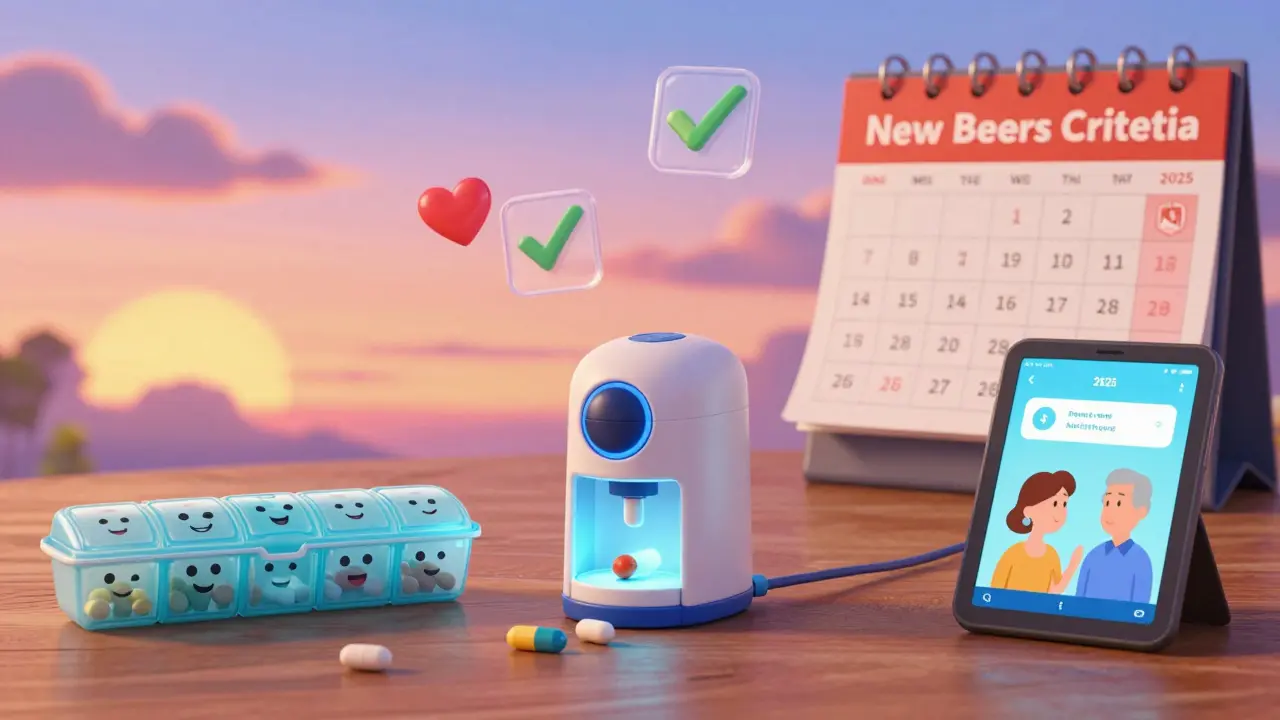
Memory fails. Schedules get messy. That’s why tools matter.- Pill organizers with morning, afternoon, evening, and night slots help prevent double-dosing or skipping.
- Medication apps like Medisafe or Round Health send alerts, track refills, and can even notify a family member if a dose is missed.
- Automated dispensers release pills at set times and lock until the right moment-great for those with dementia.
- Synchronization programs from pharmacies let you get all your refills on the same day each month. No more juggling 10 different pickup dates.
And here’s a simple trick: tie medication times to daily habits. Take your morning pills after brushing your teeth. Take your evening ones before your favorite TV show. Routines stick better than alarms.
When to Schedule a Medication Review
You don’t need to wait for a crisis. Make it routine.- Ask for a full medication review at least once a year-or anytime there’s a new diagnosis, hospital stay, or change in health.
- Ask: “Is there anything here I can stop?”
- Ask: “Are all these still needed?”
A 2022 study in BMJ Quality & Safety found that regular reviews reduced polypharmacy (taking too many drugs) by 27%. That means fewer pills, fewer side effects, and fewer trips to the ER.
Starting in January 2024, Medicare now requires a full medication review for anyone taking eight or more prescriptions. But don’t wait for them to call. Be the one to ask.
The Role of Caregivers
Caregivers aren’t just helpers-they’re essential partners in safety.- Go to appointments with the senior. Even if they’re alert, hearing loss or stress can make it hard to process information.
- Take notes. Write down what the doctor says. Don’t assume you’ll remember.
- Report changes: increased confusion, falls, loss of appetite, mood swings. These could be signs of a bad reaction.
- Keep an updated list of all meds and share it with every provider-primary care, specialists, ER staff.
According to the Agency for Healthcare Research and Quality, medication errors cause about 30% of hospitalizations among seniors. Most of these happen because no one had the full picture.
What to Do If You’re Overwhelmed
It’s okay to feel lost. There are too many pills, too many names, too many rules.- Start small. Pick one medication to understand better this week.
- Ask your pharmacist. They’re medication experts and often have more time than doctors.
- Use a free resource like the Health in Aging Foundation’s website for printable checklists.
- Call your local Area Agency on Aging-they can connect you with free medication counseling.
You don’t need to fix everything at once. Just get one thing right. Then the next. Progress beats perfection.
What’s Changing in 2025
The system is catching up. In October 2024, the American Geriatrics Society will release a new version of the Beers Criteria with specific communication tips for doctors on how to talk to seniors about stopping harmful drugs. That’s huge.Pharmacies are rolling out more synchronization programs. The FDA has cleared 12 new senior-friendly medication apps since early 2023. And by 2027, most senior care facilities are expected to use digital platforms that connect patients, caregivers, pharmacists, and doctors in real time.
But technology won’t fix bad communication. Only you can do that.
What if my parent refuses to talk about their medications?
Start with empathy. Say, “I’m not trying to take control-I just want to make sure you’re safe.” Offer to go with them to the next appointment. Bring the meds in a bag and say, “Let’s just see what the doctor says.” Often, resistance fades when the conversation feels collaborative, not confrontational.
Can I just stop a medication if I think it’s causing problems?
No. Stopping some drugs suddenly can be dangerous-like blood pressure or antidepressant pills. Always talk to the doctor first. But do report side effects immediately. Write them down: “I’ve felt dizzy since starting this pill two weeks ago.” That’s the first step to changing it.
Do I need to tell the doctor about vitamins and supplements?
Yes. A lot of seniors take fish oil, turmeric, or ginkgo thinking they’re harmless. But these can interfere with blood thinners, blood pressure meds, and even chemotherapy. Always list everything-even if you think it’s “just a supplement.”
How often should I update the medication list?
Update it every time there’s a change: a new prescription, a dose change, or if you stop a pill. Keep the list in your wallet, on your phone, and share it with any new provider. A current list reduces errors by 35%, according to the Agency for Healthcare Research and Quality.
What if my doctor dismisses my concerns?
You have the right to a second opinion. Say, “I’d like to get another perspective on this.” Ask for a referral to a geriatrician-a doctor who specializes in older adults. They’re trained to spot medication issues others miss. Don’t stay with a provider who doesn’t listen.
Managing senior medications isn’t about memorizing every detail. It’s about staying involved, asking questions, and making sure no one is flying blind. The goal isn’t to take fewer pills for the sake of it-it’s to take only what’s truly helping. And that starts with a conversation.





13 Comments
Marlon Mentolaroc
Just had my grandma’s med review last week-brought all her bottles in a grocery bag like the post said. Doctor found three she wasn’t even taking anymore and two she was doubling up on. One was a sleep aid she’d been on since 2018. We cut it. She slept better without it. Crazy how easy it is to just... keep going.
Shelby Marcel
omg yes i did this with my dad and he was so mad i was ‘med police’ but then he got dizzy and fell and now he’s like ‘maybe u were right’ lol. pill organizer is a lifesaver. also why do docs always say ‘just take it’ like its a magic spell??
blackbelt security
This is the kind of stuff that saves lives. Not flashy. Not viral. Just quiet, consistent, human care. If you’re reading this and you’re a caregiver-you’re doing something sacred. Keep going.
Patrick Gornik
Let’s deconstruct the epistemological framework of pharmaceutical compliance in geriatric populations. The hegemony of biomedical discourse reduces complex polypharmacy to a transactional checklist-ignoring the phenomenological lived experience of aging as a process of ontological erosion. The Beers Criteria, while statistically valid, is a neoliberal tool of medicalized control, pathologizing natural decline under the guise of ‘safety.’
Meanwhile, the ‘teach-back’ method functions as a performative ritual of compliance, reinforcing caregiver-subject asymmetry. We must interrogate the power dynamics embedded in the very act of ‘asking questions.’ Is agency truly granted-or merely simulated? And why are we still relying on analog pill organizers in the age of AI-driven pharmacovigilance?
Real change isn’t in the bag of bottles. It’s in dismantling the institutional inertia that treats elders as pharmacological problems rather than persons.
Tommy Sandri
While the article provides a comprehensive overview, I would encourage readers to also consider the role of interdisciplinary care teams. Pharmacists, nurses, and social workers are often underutilized in medication reconciliation. In Canada, the ‘Medication Management Review’ program has reduced hospital admissions by 22% in similar populations. A structured, team-based approach may offer more sustainable outcomes than individual patient advocacy alone.
Luke Davidson
My mom started taking turmeric for ‘inflammation’ and didn’t tell anyone. Then she got a nosebleed that wouldn’t stop. Turns out it was thinning her blood like crazy. She’s fine now, but I cried for an hour after the ER. I know people think supplements are ‘natural’ so they’re safe-but nope. They’re drugs too. Just unregulated ones. Always tell your doc. Even if you think they’ll roll their eyes. They won’t. Not if you’re calm about it.
And if you’re scared to ask questions? Start with ‘I just want to make sure I’m not missing something.’ That’s all you need. You’re not being annoying. You’re being smart.
Karen Conlin
Listen. I’ve been a nurse for 32 years. I’ve seen people die because someone didn’t bring their meds to the appointment. I’ve seen grandmas on 11 pills who didn’t know half of them were for something else. This post? It’s not ‘helpful advice.’ It’s a survival manual.
And if your doctor acts like you’re wasting their time? Walk out. Find someone who treats your parent like a human, not a chart. You owe them that. And if you’re a kid with a tired parent? Do the bag thing. Bring the bottles. Even if they yell. Even if they say ‘I’ve been doing this for 20 years.’ You’re not taking control. You’re saving their life.
And yes-use the teach-back. Say it back to them. ‘So if I miss it, I skip it and don’t double up tomorrow?’ If they don’t answer clearly? That’s your sign to get a second opinion. No excuses.
asa MNG
ok but like… why do we even have to do this?? why is it on US to be medical detectives?? my uncle just died from a bad med combo and now i have to babysit his meds?? 🤬
also i use emoji for everything now so here: 🧪💊🤯
and why is the app called ‘Round Health’?? sounds like a yoga studio. also i think my mom is secretly hoarding old pills in her sock drawer. i saw a bottle labeled ‘heart stuff’ from 2007. why is this still here??
Heather McCubbin
I’ve been saying this for years and everyone thinks I’m dramatic but the system is rigged. They don’t want you to ask questions because then they’d have to admit they don’t know what they’re doing. My aunt got prescribed a benzo for ‘anxiety’ at 82 and now she can’t walk without falling. They didn’t even ask if she drinks tea. Tea. Tea!!
And now they want to ‘review’ her meds? Too late. She’s in rehab. And guess who’s paying? The family. The system doesn’t care until it’s too late.
And don’t even get me started on Medicare. They’ll send you a letter in 2024 saying ‘we’ll review your meds’-but only if you’re on 8 pills. What about the 7-pill people? They’re invisible. Like we’re all just waiting for the death toll to hit the threshold.
Shanta Blank
My mom’s doctor told her she ‘didn’t need’ her blood pressure med because she ‘felt fine.’ FELT FINE?? So now she’s got a 30% chance of stroke because she didn’t have a lab test in 18 months??
And the worst part? She believes him. Because he’s a doctor. And she’s been told her whole life to ‘trust the expert.’
But the expert didn’t even look at her pill bottles. He just nodded and wrote a script. I’m done. I’m switching doctors. I don’t care if he’s ‘top rated.’ He’s dangerous.
Chloe Hadland
I just started helping my neighbor with her meds. She’s 89. She’s sweet. She forgets things. We use the pill organizer and she laughs when the alarm goes off. She says it sounds like a cartoon. I think it’s beautiful. We don’t talk about all the scary stuff. We just take the pills. And then we drink tea. Sometimes that’s enough.
Amelia Williams
My dad used to say ‘I don’t need no app to tell me when to take my pills.’ Then he missed his heart med for three days and ended up in the ER. Now he’s obsessed with his phone. He checks the app every morning like it’s his favorite game. I didn’t think he’d ever change. But he did. Because he didn’t want to go back. So yeah-apps work. Even for the stubborn ones.
Viola Li
Let’s be real-this whole guide assumes the patient has family. What about the lonely elderly? The ones with no one to bring the bottles? The ones who can’t afford the apps or the pill organizers? The system doesn’t care about them. It only cares when someone complains. And if you’re poor, old, and alone? No one’s coming. This guide is for the lucky ones.