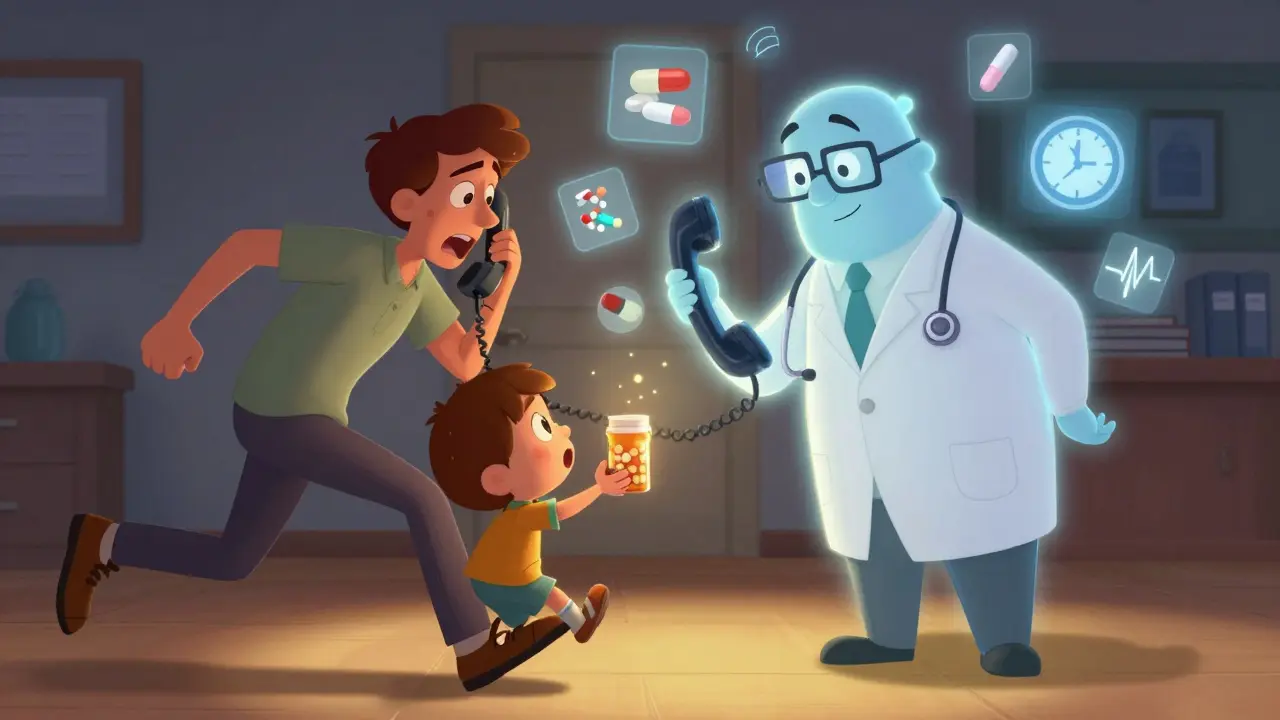
When a child swallows a handful of pills, or an adult accidentally takes double the dose of their blood pressure medicine, panic sets in. You don’t have time to Google symptoms or wait for a doctor’s appointment. That’s when the poison control hotline becomes your fastest, most reliable lifeline. In the U.S., calling 1-800-222-1222 connects you to a specialist who can tell you exactly what to do - often keeping you out of the ER entirely.
How the Poison Control Hotline Actually Works
The poison control hotline isn’t just a phone number. It’s a network of 53 accredited centers across the country, all linked by the same national number: 1-800-222-1222. When you call, your area code automatically routes you to the nearest center. There’s no wait time for a generalist - you’re connected directly to a Specialist in Poison Information (SPI), usually a pharmacist, nurse, or doctor with years of toxicology training. These specialists don’t guess. They use over 1,500 evidence-based algorithms developed from decades of real poisoning cases. Every call is logged into the National Poison Data System (NPDS), the only real-time poisoning surveillance database in the U.S. That means if someone in California reports a new reaction to a weight-loss supplement, that data instantly helps specialists in New York handle the next similar case. You can also text “poison” to 797979 or use the webPOISONCONTROL tool at poisonhelp.org. The online tool walks you through six key questions: what was taken, how much, when, the person’s age and weight, and your zip code. It gives you a risk assessment in under three minutes - and it’s 97% accurate compared to human specialists.What to Report About Medications - The Exact Details That Save Lives
Don’t say “I took too much Tylenol.” That’s not enough. Specialists need specifics. Here’s what you must report:- Exact name: “Tylenol Extra Strength, 500mg per tablet” - not just “Tylenol.” Brand and generic names matter. A pill labeled “APAP” is acetaminophen, and that’s critical.
- Amount ingested: “Three 500mg tablets” or “half a bottle of 20mg sertraline.” Estimate if you’re unsure, but be as precise as possible.
- Time of ingestion: “At 2:15 PM today” - not “a few hours ago.” Timing determines treatment windows, especially for drugs like acetaminophen, where the antidote works best within 8 hours.
- Patient details: Age, weight in kilograms (if you don’t know it, give pounds - they’ll convert), and any existing health conditions like liver disease or pregnancy.
- Symptoms: “Nausea and dizziness since 3 PM” or “no symptoms yet.” Even small changes matter.
And don’t forget polypharmacy. About one in three serious medication poisonings involves interactions between two or more drugs. If the person takes blood thinners, antidepressants, or heart meds, list them all. A common painkiller like ibuprofen can be dangerous when mixed with certain blood pressure pills - and specialists need to know that upfront.
What Happens After You Call
Most calls - about 60% - are resolved without a trip to the hospital. The specialist might tell you to:- Watch for symptoms at home
- Give activated charcoal (if appropriate and timed right)
- Administer N-acetylcysteine for acetaminophen overdose
- Drink water or avoid food
For high-risk cases, they’ll schedule follow-up calls. In acetaminophen cases, they’ll check in at 4, 8, and 24 hours to monitor liver enzymes before damage can occur. New Mexico Poison & Drug Information Center reports a 92% success rate in reaching patients for these follow-ups.
You’ll also get an email summary with the exact product names, risk level, and instructions. About 78% of callers keep this email as a reference - and many bring it to the ER if things worsen.
Why This Service Saves Money - and Lives
Every dollar spent on poison control returns $7.67 in saved healthcare costs, according to a 2020 study. Why? Because it prevents unnecessary ER visits. In 2022, poison centers handled over 2.1 million cases. Of those, nearly half were medication-related - and 83% of pediatric cases were managed at home. The system is funded by government grants (62%), hospital support (28%), and state funding (10%). It’s free to use, confidential, and available in over 150 languages. No ID, no insurance, no cost.When to Call - And When Not to Wait
Call immediately if:- A child swallowed any pill, even one they’re prescribed
- Someone took more than the recommended dose of any medication
- There’s any change in behavior - drowsiness, confusion, vomiting, rapid heartbeat
- You’re unsure whether it’s dangerous
Don’t wait for symptoms. Many medications, like opioids or sedatives, can cause delayed respiratory failure. Waiting even an hour can be deadly.
There are exceptions. If someone is unconscious, not breathing, or having seizures, call 911 first. Then call poison control while waiting for help. They’ll guide emergency responders in real time.
What the System Can’t Handle - And What to Do Instead
The webPOISONCONTROL tool and automated systems can’t manage cases involving more than two substances or intentional overdoses. About 8% of medication calls fall into this category. In those cases, you must speak to a live specialist - so always call 1-800-222-1222 if you’re unsure. Also, the system doesn’t cover illegal drugs or novel psychoactive substances like synthetic cannabinoids or fentanyl analogs. These are rising fast - opioid poisonings increased 22.3% between 2018 and 2022. Specialists are updating protocols quarterly, but if you’re dealing with something new, they’ll still give you the best advice possible based on similar cases.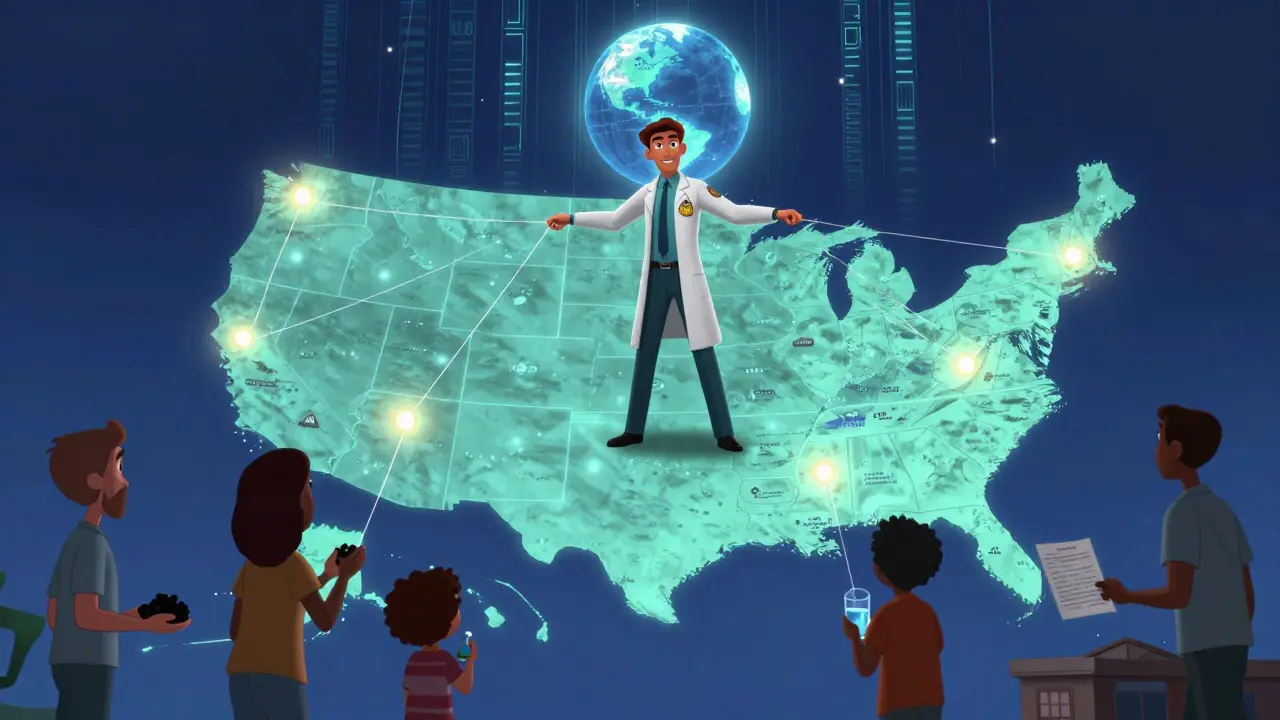
Real Stories - What Works
A pharmacist on Reddit shared how a call to poison control saved a toddler from liver failure after swallowing 12 children’s Tylenol drops. The specialist instructed the parent to give N-acetylcysteine within the 8-hour window - a treatment only known to trained toxicologists. The child recovered fully. In another case, a woman took her husband’s blood pressure pills thinking they were vitamins. She called poison control immediately. They told her to drink water, avoid lying down, and monitor her heart rate. She avoided the ER and had no side effects. These aren’t rare. The 2022 National Consumer Satisfaction Survey showed 94.7% of users rated medication advice as “excellent” or “good.”What’s Next for Poison Control
The system is getting smarter. In 2023, the CDC funded $4.7 million to update algorithms for new weight-loss drugs and opioid analogs. Thirty-one centers now offer video consultations for complex cases. And by 2025, the NPDS will be integrated with electronic health records at over 40 major hospitals - meaning poison control data can automatically alert ER doctors before the patient even walks in. But funding is fragile. The Bipartisan Budget Act secured $50 million annually through 2027, but inflation could cut service capacity by 15% without more support. That’s why every call matters - not just for the person on the line, but to prove this service is essential.Is the poison control hotline really free?
Yes. There is no charge to call 1-800-222-1222 or use the webPOISONCONTROL tool. It’s funded by government grants and hospital support, so you never pay out of pocket.
Can I call poison control for my pet?
No. The U.S. poison control hotline only handles human exposures. For pets, contact the ASPCA Animal Poison Control Center at (888) 426-4435. They charge a consultation fee, but they’re the only nationwide resource for animal poisonings.
What if I don’t know the exact medication name?
Bring the bottle or take a photo of the pill. If you can’t, describe the color, shape, and any letters or numbers on it. Specialists can often identify it from that. Don’t guess - just give as much detail as you can.
Do I need to call if my child swallowed one pill?
Yes. Even one pill can be dangerous for a child, especially if it’s a strong medication like a blood pressure pill, antidepressant, or opioid. Children are more sensitive to drugs than adults. Always call - it takes less than two minutes.
Can I use poison control if I’m not in the U.S.?
The 1-800-222-1222 number only works within the United States. If you’re abroad, look up your country’s national poison center. Many countries have similar services, but you’ll need to find the local number. Some international travelers keep their home country’s poison control number saved in their phone just in case.

8 Comments
Kathy McDaniel
I called poison control last year when my 2-year-old got into my ibuprofen. They were calm, fast, and told me to watch for vomiting and give water. We didn’t even go to the ER. Honestly? They saved me a $2k bill and a panic attack.
PS: I saved their number in my phone under 'Life Saver'. You should too.
Murphy Game
You know what they don’t tell you? The NPDS is basically a government-run poison database that tracks every single mistake people make.
They’re logging your kid’s accidental Tylenol intake, your grandma’s mix-up with blood thinners, your cousin’s 'I thought this was a vitamin' moment - and storing it all.
Who’s accessing this? Who’s selling it? Why does the CDC fund this and not my local food bank?
Just saying… this feels like surveillance with a nice smile.
suhail ahmed
In India, we don’t have anything like this - and honestly, it’s terrifying. I once saw a neighbor rush to the hospital after her toddler swallowed a multivitamin. They gave her a bill for ₹18,000 and told her to 'come back if symptoms show'.
This system? It’s not just smart - it’s revolutionary. A pharmacist in New Mexico knowing what to do because someone in Oregon reported a weird reaction? That’s science with soul.
We need this everywhere. Not just as a service - as a human right.
Candice Hartley
I literally saved 1-800-222-1222 in my phone as 💊🆘.
My niece swallowed one of my antidepressants last month. Called them. They said 'monitor for drowsiness, don’t induce vomiting, call back if she sleeps more than 3 hours'.
She was fine. No ER. No trauma. Just a 2-minute call.
Thank you, poison control. You’re the unsung heroes. 🙏
astrid cook
I’m just saying - if you’re the type of person who leaves pills on the counter, you deserve what happens.
Why should taxpayers fund your carelessness?
My neighbor’s kid got into her Xanax. She didn’t even lock the cabinet.
Now she gets free expert advice? That’s not help - that’s enabling.
Maybe if people stopped being lazy, we wouldn’t need this service.
Andrew Clausen
The article claims the webPOISONCONTROL tool is '97% accurate compared to human specialists.' That’s statistically misleading. The study cited measured accuracy against a sample of 1,200 simulated cases - not real-world emergencies.
Also, the '60% resolved without ER' statistic ignores the fact that many patients are referred to ERs later when symptoms emerge.
And while you say 'no ID, no insurance, no cost' - the system is funded by hospitals that bill for ER visits they’re trying to prevent. Conflict of interest? Maybe.
Don’t get me wrong - it’s useful. But stop framing it as flawless.
Desaundrea Morton-Pusey
Poison control? Yeah right. First they tell you to drink water. Then they say 'call 911 if she stops breathing.' Like I’m supposed to know what 'stops breathing' looks like?
And why do they always say 'don't induce vomiting' when every TV show says to?
This whole thing feels like a scam to make people feel better while the system collapses.
Also - why is this free? Nothing’s free in America.
John O'Brien
I work in ER. I’ve seen it. People show up with a printed email from poison control and say 'they said this was fine.'
90% of the time? They’re right. We don’t even need to do labs. Just watch.
But here’s the thing - I’ve also seen parents who waited 6 hours because they 'didn’t want to bother them.'
Don’t be that person. Call. Now. It’s not a bother. It’s your lifeline.
And yeah - save the number. Put it on your fridge. Tell your mom. Your sister. Your dumbass brother-in-law who thinks 'a little extra Adderall' is fine.