When the first generic version of a brand-name drug hits the market, it doesn’t mean the race is over. In fact, it’s just the beginning of a chaotic, high-stakes game where price drops, legal battles, and corporate strategy determine who survives-and who gets left behind.
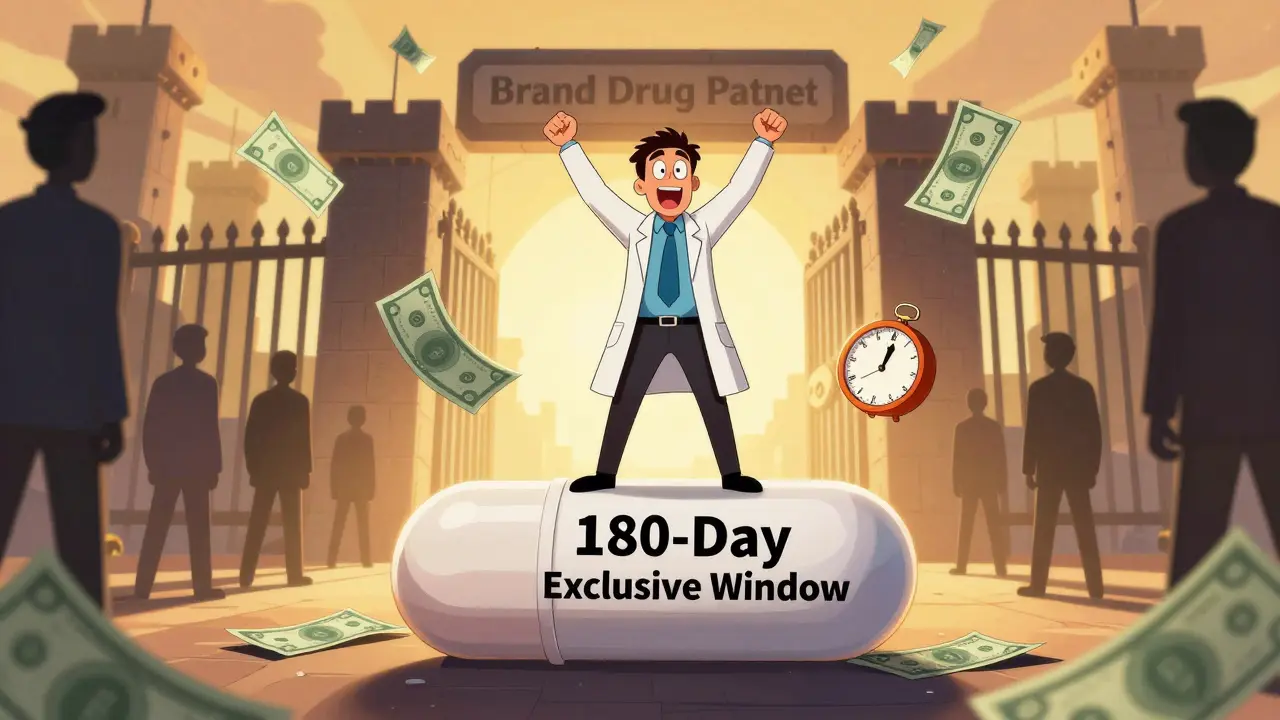
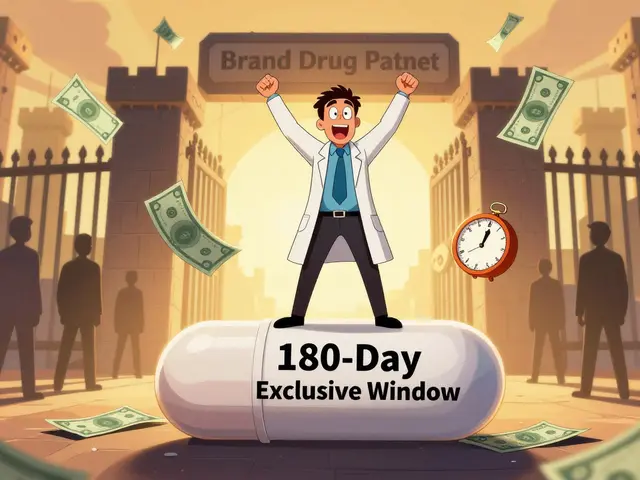
The 180-Day Window: What the First Generic Gets
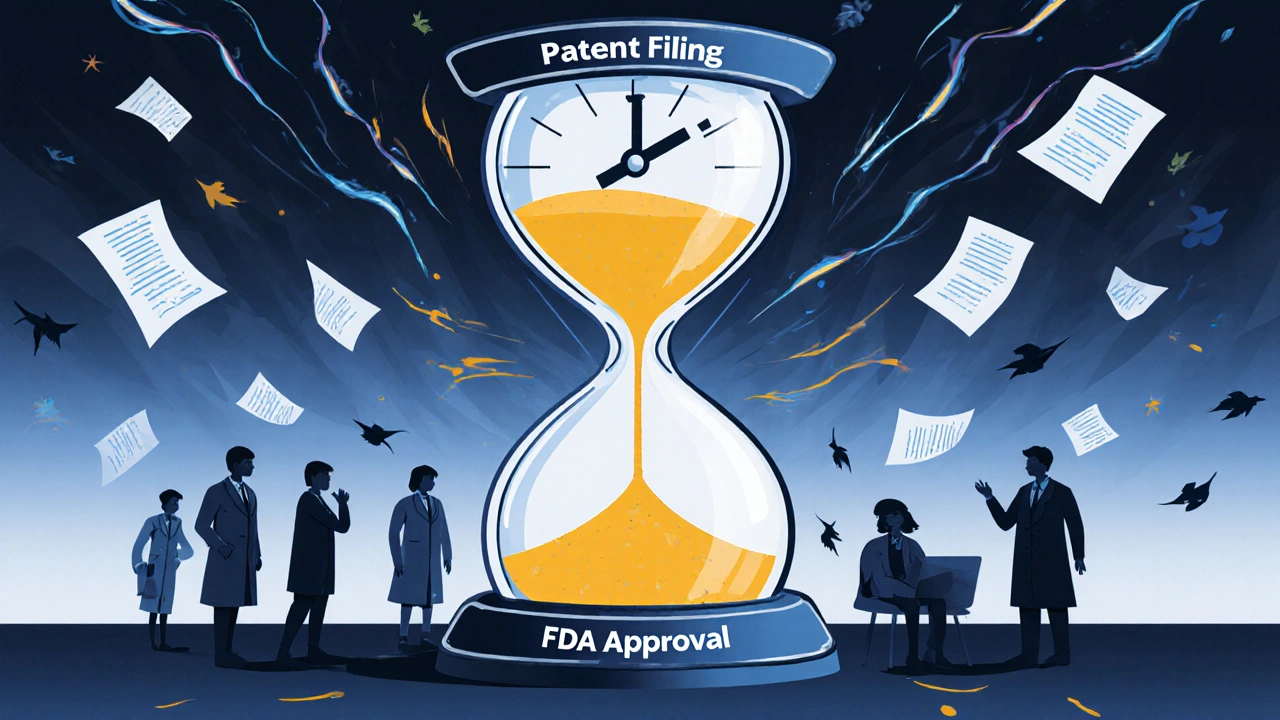
The first company to successfully challenge a brand drug’s patent under the Hatch-Waxman Act gets 180 days of exclusive rights to sell its generic version. During that time, it captures 70-80% of the market. Prices are still high-around 70-90% of the original brand price-because there’s no competition yet. This window isn’t just a reward; it’s a lifeline. Developing a generic and fighting a patent lawsuit costs $5-10 million. That 180-day window is how the first entrant recoups that investment.Take Crestor, the cholesterol drug. When its patent expired in 2016, the first generic hit the market at $280 a month. Within six months, it was selling for $100. But the real crash came after more companies joined. By 2017, eight generics were competing. The price dropped to $10 a month. The first generic made its money fast. The rest fought over scraps.
Why the Second and Third Entrants Change Everything
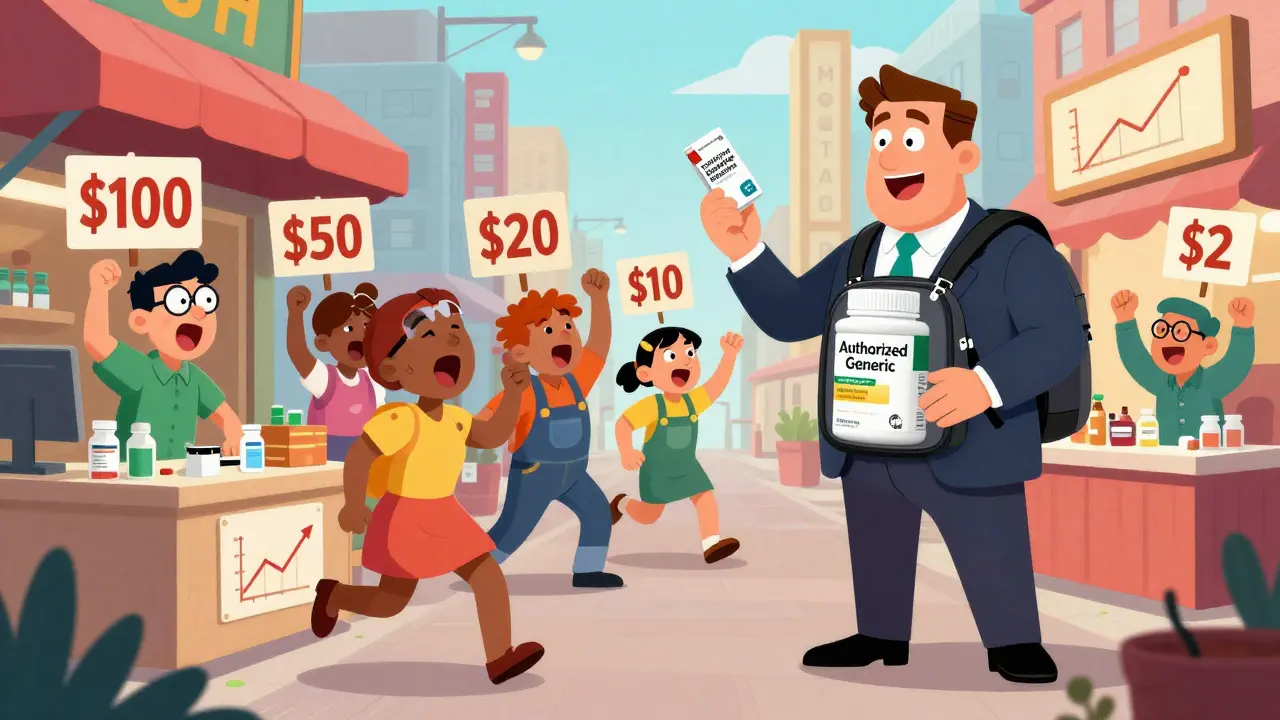
The moment that 180-day clock runs out, the floodgates open. The second generic enters. Then the third. And with each new player, prices plunge.Here’s how it breaks down, based on FDA data:
- One generic: 83% of brand price
- Two generics: 66% of brand price
- Three generics: 49% of brand price
- Four generics: 38% of brand price
- Five or more: 17% of brand price
The biggest drop? Between the second and third entrant. That’s when prices fall 25-30% in a matter of months. It’s not just about more suppliers-it’s about competition turning from a trickle into a torrent. Manufacturers can’t hold prices when five others are selling the exact same pill for less.
Authorized Generics: The Brand’s Secret Weapon
Here’s the twist: the brand company doesn’t just sit back and watch. Many launch their own generic version-called an authorized generic-through a subsidiary. It’s legal. It’s common. And it’s devastating to the first generic.In 2019, when the first generic for Januvia (a diabetes drug) entered, Merck launched its own authorized generic on the same day. Within six months, it had grabbed 32% of the market. The first generic’s share dropped from 80% to 45%. Revenue? Down 35%.
Why do brands do this? Because they’d rather control the discount than lose the entire market. Sixty-five percent of big-brand drugs launch authorized generics during the first generic’s exclusivity period. It’s not a betrayal-it’s business. And it’s why some first entrants walk away with far less than they expected.
How Later Entrants Play the Game
Companies entering after the first aren’t starting from scratch. They can copy the bioequivalence studies done by the first entrant. That cuts development costs by 30-40%. But that doesn’t mean it’s easy.They face three big hurdles:
- Manufacturing: Most later entrants rely on contract manufacturers (CMOs). By 2022, 78% of second-and-later generics were made by CMOs, compared to just 45% for the first entrant. That means quality control becomes a gamble. Sixty-two percent of generic drug shortages involve products with three or more manufacturers-often because one CMO had a bad batch.
- Regulatory delays: Even though they can piggyback on existing data, the FDA sometimes requires extra testing for complex drugs. That can add 6-12 months to their timeline.
- Citizen petitions: Brand companies file these to delay approvals. Between 2018 and 2022, they filed 1,247 petitions targeting drugs with at least one generic already approved. Each one delays the next entrant by an average of 8.3 months.
And then there’s the CREATES Act. Before 2020, brand companies could refuse to sell drug samples to generic makers. That meant waiting 18.7 months just to get the product to test. Now, thanks to the law, it takes 4.3 months. That’s a game-changer for later entrants.
The Real Battle: PBMs and Formulary Wars
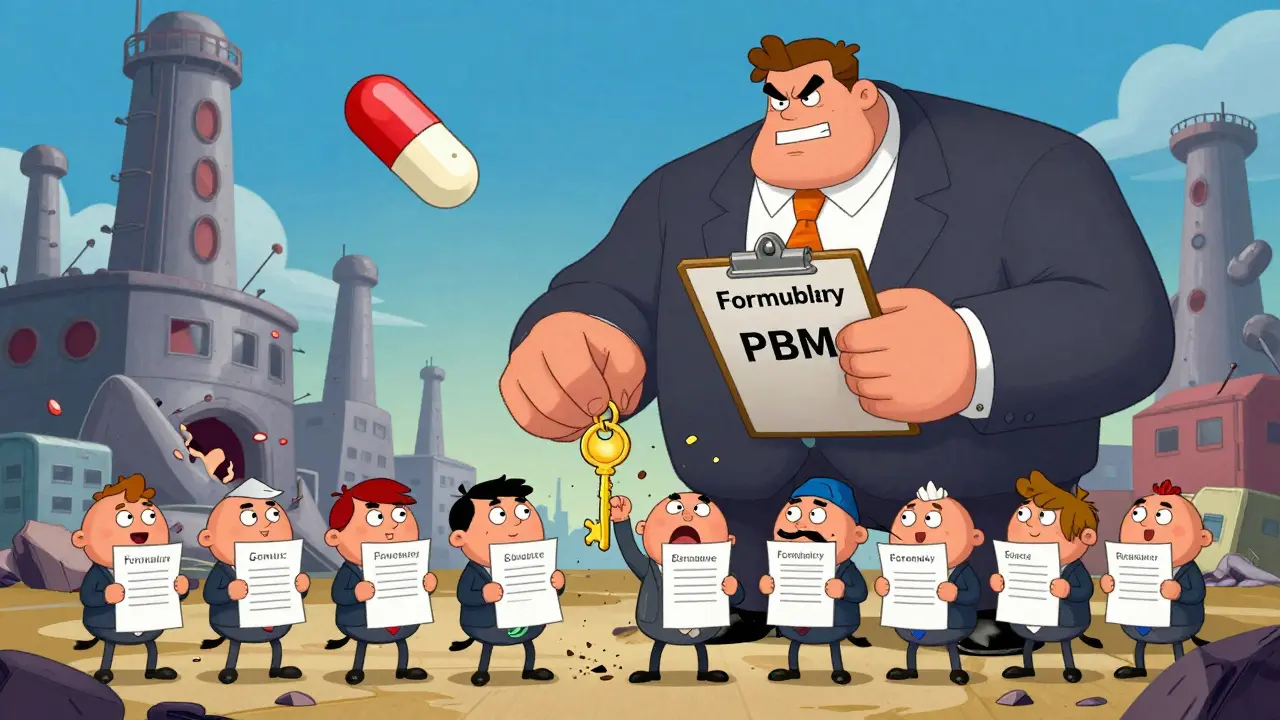
Getting FDA approval doesn’t mean you’re selling anything. In the U.S., pharmacy benefit managers (PBMs) control access. They decide which generics go on insurance formularies.Here’s the catch: 68% of PBM contracts use a “winner-take-all” model. That means only one generic gets 100% of the placement-even if five are approved. The first to sign the deal wins. It doesn’t matter who got FDA approval first. It matters who got the contract first.
That creates a new kind of first-mover advantage. A company that enters third or fourth can still dominate if they strike a deal with a big PBM like CVS Caremark or UnitedHealth’s OptumRx. The others? They’re stuck selling to cash-paying patients or small pharmacies at rock-bottom prices.
Market Collapse and Consolidation
The result? Chaos. After multiple generics enter, prices crash so hard that manufacturers can’t make money. Some quit. Others get bought.In 2018, there were 142 companies holding generic drug approvals. By 2022, that number dropped to 97. The average number of competitors in a generic market fell from 5.2 to 3.8. Why? Because too many players chasing too little profit leads to market exits.
And shortages? They spike. In 2022, 37% of generic markets with multiple competitors had a shortage within 18 months. That’s nearly five times higher than during the first generic’s exclusivity period. When five companies are all selling the same $2 pill, no one can afford to keep making it.
Biosimilars Are Different
Biosimilars-generic versions of biologic drugs like Humira-are not the same as small-molecule generics. They cost $100-250 million to develop. Manufacturing is harder. So prices don’t crash as fast.With two biosimilars, prices drop to 70-75% of the brand. With four or more, they hit 50-55%. That’s still a big drop, but nowhere near the 80-90% drop seen in simple generics. And because of the high cost, only a few companies enter. You won’t see eight biosimilars for one drug like you might for a statin.
What’s Next? Staggered Entry and Market Control
Some markets are starting to avoid the free-for-all. In the Humira biosimilar market, six companies agreed to staggered entry dates between 2023 and 2025. No one gets to flood the market all at once. It’s a settlement-part legal, part business strategy.Experts like Dr. Scott Gottlieb, former FDA commissioner, say this kind of controlled entry could stabilize the market. Too much competition leads to shortages and bankruptcies. Too little leads to high prices.
The future might not be about who enters first. It might be about who enters smart.
Why This Matters
This isn’t just about drug companies. It’s about patients. When prices drop, more people can afford their meds. But when manufacturers quit making a drug because it’s too cheap, patients lose access. The system is designed to lower costs-but it’s breaking under its own weight.The first generic wins the race. But the real victory goes to whoever understands the game after the finish line.


13 Comments
Amy Insalaco
The entire framework of generic drug competition is a neoliberal fantasy built on the illusion of market efficiency. The Hatch-Waxman Act was never about patient access-it was a legislative carve-out for pharmaceutical conglomerates to legitimize rent-seeking under the banner of ‘affordability.’ The 180-day exclusivity window? A carefully engineered monopolistic trap disguised as incentive. And let’s not pretend the FDA’s role is neutral; it’s a regulatory capture machine, cozying up to CMOs and PBMs while patients bleed out from formulary exclusivity. The real tragedy isn’t price collapse-it’s that we’ve normalized systemic exploitation as ‘innovation.’
kate jones
There’s a critical oversight in most discussions about generic competition: the role of bioequivalence standards. The FDA’s acceptance of ‘similar pharmacokinetics’ as sufficient for interchangeability ignores real-world variability in excipients, dissolution profiles, and patient metabolism. A 2021 JAMA study found 18% of patients on multi-source generics reported adverse shifts in therapeutic response compared to brand or first-entry generics. This isn’t about profit-it’s about clinical integrity. We need tiered labeling: ‘bioequivalent’ ≠ ‘therapeutically equivalent.’
Natasha Plebani
It’s fascinating how we’ve anthropomorphized the market as if it has agency-‘the market crashes,’ ‘competition floods in’-when in reality, it’s just a series of contractual decisions made by executives with fiduciary duties to shareholders, not patients. The collapse in pricing isn’t organic; it’s engineered. The real question isn’t why prices fall, but why we celebrate it as progress when it leads to supply chain fragility and drug shortages. Is a $2 pill worth anything if no one can find it on the shelf? The system optimizes for cost, not continuity. And continuity is what keeps people alive.
Rob Webber
Let me be clear: the first generic company that gets that 180-day window is a traitor to the American patient. They’re not heroes-they’re corporate mercenaries who got lucky with a patent challenge and then gouged seniors for six months. And now we’re supposed to feel bad when they get crushed by competition? Fuck that. If you’re making $280/month pills while people skip insulin, you deserve to lose. The market ate your lunch. Good.
Yanaton Whittaker
AMERICA FIRST! Why are we letting foreign CMOs make 78% of our generics? China and India are running the show and we’re sitting here talking about ‘formularies’ like it’s a fucking book club. We need tariffs on generic imports, domestic manufacturing mandates, and a ban on PBMs that don’t prioritize U.S.-made pills. This isn’t capitalism-it’s economic surrender. 🇺🇸
Kathleen Riley
One must consider the epistemological implications of pharmaceutical commodification. The transition from therapeutic necessity to market commodity constitutes a profound ontological rupture in the patient-provider relationship. When the pill becomes a fungible unit of exchange, its symbolic value as a cure is subsumed by its transactional value. This ontological inversion, facilitated by institutional actors such as PBMs and CMOs, renders the patient not as a subject of care, but as a data point in a cost-minimization algorithm.
Beth Cooper
Okay but have you ever heard of the Great Generic Cover-Up? The FDA and Big Pharma are in cahoots. Authorized generics? That’s not business-it’s a cartel. They let one company in to create the illusion of competition, then they roll out their own version to crush it. And the CMOs? They’re all owned by the same 3 private equity firms. You think the price drop is because of competition? Nah. It’s because they’re slowly starving out the small players so they can buy them cheap. And then? They raise prices again. It’s all a loop. They want you to think it’s about savings. It’s about control.
Lily Steele
I’ve seen this play out with my dad’s blood pressure med. First generic was $120, then dropped to $8, then disappeared for months. We had to switch three times. It’s not about who wins the race-it’s about who keeps the medicine on the shelf. Maybe we need a public option for generics. Not just cheaper, but guaranteed.
Gaurav Meena
From India, I can tell you-this system is broken but not hopeless. Many small labs here make quality generics at 1/10th the cost. The real issue isn’t manufacturing-it’s access. If PBMs stopped favoring the highest bidder and started favoring the most reliable supplier, shortages would drop. And yes, we need better regulation, but also more trust in global partners. We’re not enemies-we’re lifelines. 🙏
Katie and Nathan Milburn
It’s ironic that the same people who scream about corporate greed are the ones who cheer when generics destroy the first entrant. The first company took the risk. They spent millions. They lost sleep. And now we treat them like villains for trying to survive. Maybe the problem isn’t the market-it’s our moral calculus. We want cheap drugs, but we don’t want anyone to pay the price for them.
Beth Beltway
Let’s cut through the fluff. The entire generic ecosystem is a Ponzi scheme disguised as healthcare reform. The first entrant is a pawn. The authorized generic is the house edge. The CMOs are the shell companies. The PBMs are the laundering agents. And the FDA? They’re the silent partners collecting regulatory fees while patients die from shortages. This isn’t capitalism. It’s institutionalized predation. And no, I’m not being dramatic. The data doesn’t lie.
Claire Wiltshire
One point often missed: the CREATES Act was a critical step, but it only addresses sample access. What about active pharmaceutical ingredient (API) access? Many brand companies still restrict API sales to generic manufacturers, forcing them to reverse-engineer from finished products-a process that increases batch variability and regulatory risk. Until we mandate API availability as part of patent expiry agreements, we’re just rearranging deck chairs on the Titanic.
Darren Gormley
Here’s the real kicker: biosimilars are the future, and they’re being sabotaged by the same people who cried about ‘high drug prices’ for generics. Why? Because the model doesn’t work the same way. You can’t make a biosimilar for $5 million. So the market stays small. And that’s fine. But now we’re trying to force the same ‘five competitors = 17% price’ logic onto biologics. That’s like trying to run a Ferrari on bicycle fuel. We need different rules. Or better yet-stop pretending all drugs are the same. 🤷♂️