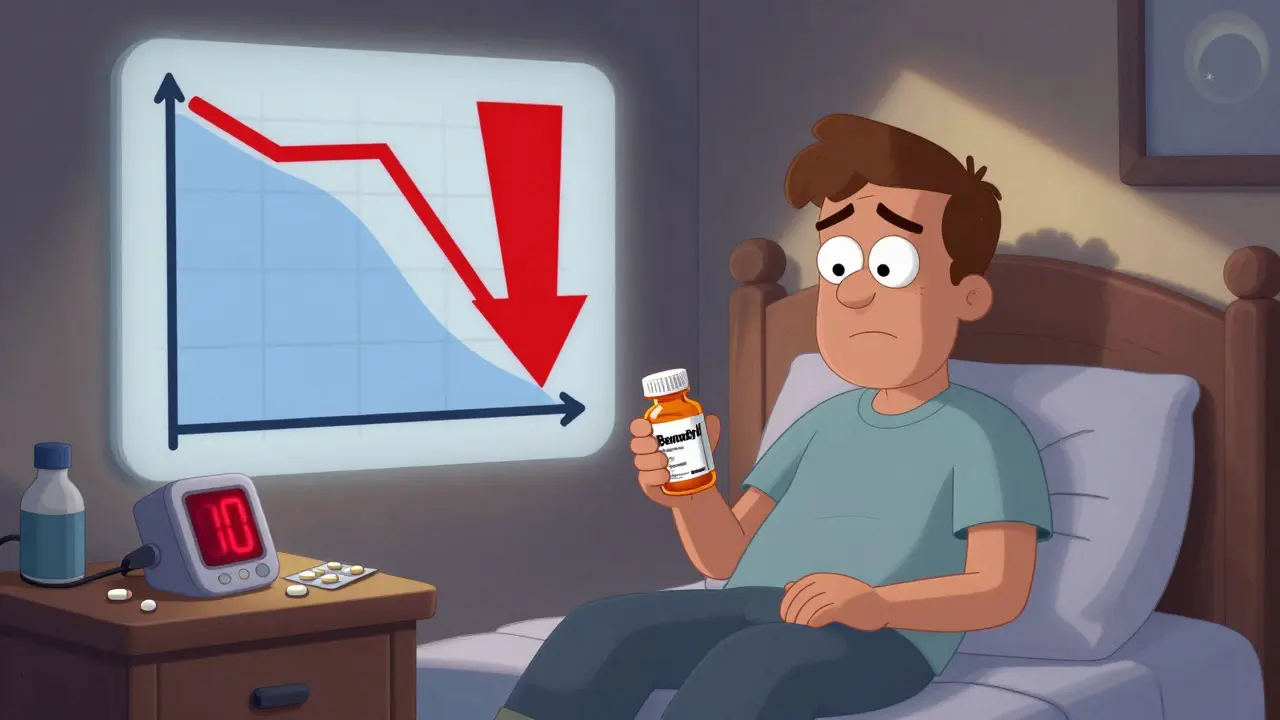
Many people with allergies take antihistamines without thinking twice. But if you have high blood pressure, a simple cold tablet could be hiding a risk you didn’t know about. Not all antihistamines are the same. Some barely touch your blood pressure. Others? They can drop it suddenly-or push it up if they’re mixed with decongestants. The key isn’t avoiding them entirely. It’s knowing which ones are safe and how to monitor them properly.
How Antihistamines Work-and Why They Might Affect Blood Pressure
Antihistamines block histamine, a chemical your body releases during allergic reactions. Histamine makes blood vessels swell and leak, causing runny noses, itchy eyes, and hives. But histamine also plays a role in keeping your blood vessels relaxed. When you block it with an antihistamine, you might change how wide your arteries stay open. That can lead to changes in blood pressure. There are two main types of antihistamines: first-generation and second-generation. First-generation ones like diphenhydramine (Benadryl) cross into your brain, which is why they make you drowsy. They also affect blood vessels more directly. In fact, when given intravenously in hospitals, diphenhydramine can drop systolic blood pressure by 8 to 12 mmHg within minutes. That’s why patients are monitored after IV doses. Second-generation antihistamines like loratadine (Claritin), cetirizine (Zyrtec), and fexofenadine (Allegra) don’t cross the blood-brain barrier easily. They’re designed to stay out of your brain and focus only on allergy symptoms. Because of that, they have much less effect on blood pressure. Studies show that in over 97% of cases, loratadine has no measurable impact on blood pressure. Cetirizine is similarly neutral.First-Generation Antihistamines: The Hidden Risk
Diphenhydramine and similar drugs like chlorpheniramine and promethazine are still sold over the counter. Many people reach for them because they’re cheap and work fast. But if you have high blood pressure, they’re not your best choice. These drugs don’t just block histamine-they also have anticholinergic effects. That means they interfere with acetylcholine, a nerve signal that helps control heart rate and blood vessel tone. This can cause dizziness, especially when standing up quickly (orthostatic hypotension). A Drugs.com analysis found 14% of users reported dizziness upon standing, and 7% specifically noted drops in blood pressure in their daily logs. Even worse, some people take these for sleep. If you’re already on blood pressure meds, adding diphenhydramine at night can lead to unpredictable drops in pressure, especially in older adults. One Reddit user in Dunedin shared their experience: after taking Benadryl for a bad allergy flare, they woke up feeling lightheaded. Their home monitor showed a 15 mmHg drop in systolic pressure compared to their usual morning reading.Second-Generation Antihistamines: Safer for Your Heart
If you have hypertension, second-generation antihistamines are the clear winner. Loratadine, cetirizine, and fexofenadine are not just safer-they’re backed by decades of research. A 2022 GoodRx survey of over 4,300 people with high blood pressure found that 89% saw no change in their readings after switching to these drugs. The American Heart Association’s 2022 guidelines confirm this: pure second-generation antihistamines pose minimal cardiovascular risk when taken as directed. Even more surprising, some studies suggest these drugs might offer extra heart benefits. In a 2003 study on mice with viral heart inflammation, cetirizine reduced heart tissue damage by 27% and lowered inflammatory markers by 33%. A 2014 Turkish trial found that adding loratadine to standard heart attack treatment improved stress test results by 18%. While these aren’t reasons to take them for heart health alone, they do show these drugs aren’t just harmless-they might be quietly helpful.
Decongestants Are the Real Problem
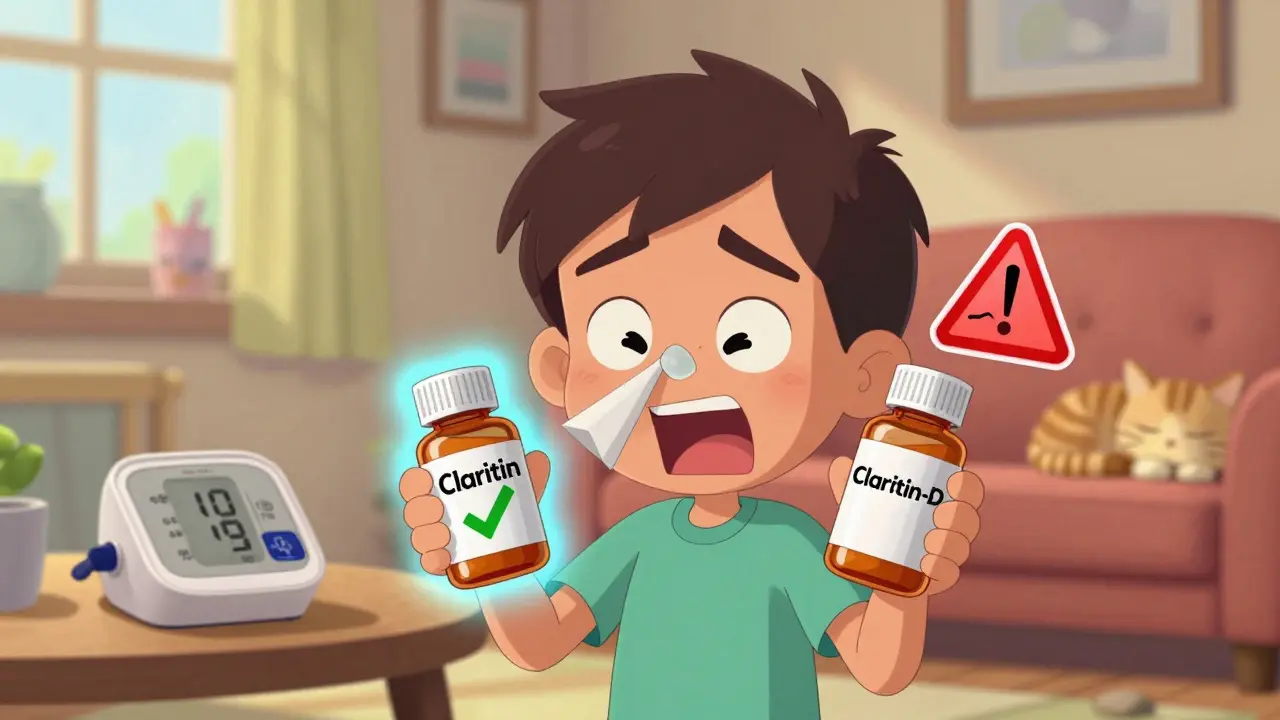
Here’s where things get tricky. Many allergy meds combine antihistamines with decongestants like pseudoephedrine or phenylephrine. That’s because decongestants shrink swollen nasal passages. But they also tighten blood vessels all over the body-including those in your heart and kidneys. GoodRx’s 2023 analysis of 12 clinical trials showed that pseudoephedrine raises systolic blood pressure by about 1 mmHg on average. That might sound small, but for someone with uncontrolled hypertension, that’s enough to push them into danger zone. In the same survey, 47% of users taking pseudoephedrine combinations reported spikes of 5 to 10 mmHg in systolic pressure. Other combo products aren’t much better. Medications mixing antihistamines with ibuprofen can raise blood pressure by 3-4 mmHg. Those with acetaminophen? Up to 5 mmHg in people taking the maximum daily dose. The bottom line: if you have high blood pressure, avoid anything labeled “sinus,” “cold & flu,” or “allergy + decongestant.” Stick to plain antihistamines. Check the ingredient list. If you see pseudoephedrine, phenylephrine, or ephedrine-put it back.Who Needs Blood Pressure Monitoring?
Most people on second-generation antihistamines don’t need extra monitoring. But if you fall into one of these groups, check your blood pressure before and after starting the drug:- You have uncontrolled hypertension (systolic over 140 mmHg)
- You’re on three or more blood pressure medications
- You’ve had a heart attack, stroke, or irregular heartbeat
- You’re taking other drugs that affect liver enzymes (like ketoconazole or erythromycin)
- You’ve had a bad reaction to antihistamines before
What About Old Drugs Like Terfenadine?
You won’t find terfenadine (Seldane) or astemizole (Hismanal) on shelves anymore. They were pulled from the U.S. and European markets in the late 1990s because they caused dangerous heart rhythm problems-especially when taken with grapefruit juice or certain antibiotics. These drugs blocked potassium channels in the heart, leading to QT prolongation, which can trigger sudden cardiac arrest. Fexofenadine (Allegra) is actually the active metabolite of terfenadine. But it doesn’t cause the same problem because it doesn’t build up in the bloodstream. That’s why it’s considered safe. The FDA removed terfenadine not because all antihistamines are risky-but because these two were uniquely dangerous due to how they were processed in the body.
Genetics and Liver Health Matter Too
Your body breaks down antihistamines using liver enzymes, mainly CYP3A4 and CYP2D6. If you have liver disease or take other drugs that block these enzymes, your body can’t clear the medication fast enough. That raises the risk of side effects-even with second-generation drugs. Grapefruit juice is a big one. It slows down CYP3A4. If you’re taking fexofenadine or cetirizine with grapefruit juice, you’re not getting more benefit-you’re just increasing your exposure. Same goes for some antibiotics, antifungals, and even certain cholesterol meds. Some hospitals now test patients for CYP2D6 and CYP3A4 gene variants before prescribing antihistamines. This isn’t routine yet, but it’s becoming more common in places with high rates of heart disease. If you’ve had unexplained side effects from antihistamines in the past, ask your doctor about pharmacogenomic testing.Real-Life Scenarios: What Works
Here’s what real people with high blood pressure are doing:- Case 1: A 68-year-old in Auckland takes loratadine 10 mg daily for seasonal allergies. His BP stays at 132/84. He stopped using diphenhydramine after his doctor warned him about dizziness.
- Case 2: A 45-year-old in Wellington used a pseudoephedrine combo for a cold. Her systolic pressure jumped from 138 to 152. She switched to cetirizine alone and returned to 136 within 3 days.
- Case 3: A 52-year-old with heart failure took diphenhydramine for hives. She passed out standing up. Her BP was 88/54. She now uses fexofenadine and carries a card listing her meds.
What to Do Next
If you have high blood pressure and take antihistamines:- Check your current meds. Look for “decongestant,” “sinus,” or “cold” on the label.
- Switch to plain loratadine, cetirizine, or fexofenadine.
- Use a home blood pressure monitor. Take readings before and 2 hours after your first dose.
- Never mix antihistamines with grapefruit juice or antibiotics like erythromycin.
- Ask your pharmacist or doctor to review all your OTC meds-especially if you take more than three.
Can antihistamines raise blood pressure?
Plain antihistamines like loratadine, cetirizine, and fexofenadine do not raise blood pressure. But combination products that include decongestants like pseudoephedrine can increase systolic pressure by 5-10 mmHg. Always check the ingredient list.
Is Benadryl safe if I have high blood pressure?
Benadryl (diphenhydramine) is not recommended for people with high blood pressure. It can cause sudden drops in blood pressure, dizziness, and orthostatic hypotension. It also interacts with many heart medications. Use second-generation alternatives instead.
Which antihistamine is best for high blood pressure?
Loratadine (Claritin), cetirizine (Zyrtec), and fexofenadine (Allegra) are the safest choices. They don’t affect blood pressure in most people and have minimal drug interactions. Avoid anything with pseudoephedrine or phenylephrine.
Can I take antihistamines with my blood pressure medicine?
Yes, if you choose second-generation antihistamines like loratadine or fexofenadine. But avoid first-generation ones like diphenhydramine. Always tell your doctor what OTC meds you’re taking-they can spot hidden interactions you might miss.
How long does it take for antihistamines to affect blood pressure?
First-generation antihistamines like diphenhydramine can lower blood pressure within 15-30 minutes, especially if given intravenously. Oral doses take about an hour. Second-generation antihistamines show no significant change in blood pressure at any time point in clinical studies.
Should I monitor my blood pressure when starting a new antihistamine?
If you have uncontrolled hypertension, heart disease, or take multiple blood pressure medications, yes. Take a reading before your first dose and again 2-4 hours after. Use a validated home monitor and record your results. For most healthy people on second-gen antihistamines, monitoring isn’t needed.
If you’re unsure about your allergy meds, talk to your pharmacist. They can scan your entire medication list in minutes and flag risks you didn’t know existed. Your heart will thank you.





13 Comments
Paula Villete
So let me get this straight - we’re being told to avoid Benadryl like it’s poison, but it’s still on every drugstore shelf next to gum and breath mints? Someone’s making bank off our ignorance.
And don’t even get me started on ‘allergy + decongestant’ being marketed like it’s a solution, not a trap. We’ve been conditioned to think ‘more ingredients = better.’ Spoiler: it’s not.
Georgia Brach
Let’s be real - if this article was written by a pharmaceutical rep, they’d have to pay me to believe it. The ‘second-gen antihistamines are safe’ narrative is convenient. What about long-term use? What about the fact that 97% of studies are funded by the companies that make them?
And why is no one talking about the fact that antihistamines are used off-label for insomnia, anxiety, and even PTSD? This isn’t about allergies. It’s about chemically quieting the nervous system. And we’re being sold it like it’s harmless candy.
Steven Mayer
From a pharmacokinetic standpoint, the CYP3A4 inhibition risk profile is non-trivial, particularly in polypharmacy cohorts. Fexofenadine’s renal excretion pathway offers a metabolic advantage over cetirizine’s partial hepatic clearance, which may explain differential outcomes in patients with concomitant statin or azole use.
Moreover, the 2003 murine model cited exhibits questionable translational validity due to species-specific histamine receptor density gradients. Extrapolating murine cardiac inflammation data to human hypertensive populations without pharmacogenomic stratification is methodologically unsound.
bharath vinay
They don’t want you to know this, but all antihistamines are part of a secret government program to keep people docile. The FDA approves them because they’re cheaper than therapy. Diphenhydramine? It’s not just lowering your BP - it’s lowering your will to fight the system.
And why are they pushing fexofenadine? Because it’s a metabolite of terfenadine - the one they pulled. That’s not safety. That’s rebranding poison with a new label.
Check your water supply. They’re putting antihistamines in the public water to calm us down. You think your allergies are random? They’re not.
Dan Gaytan
This is actually super helpful 😊 I’ve been taking Claritin for years and never thought twice - but now I’m double-checking every OTC label. Also, I didn’t know grapefruit juice could mess with this! I’ll start tracking my BP before/after next time. Thanks for breaking it down so clearly!
Also, if anyone’s curious, I use the Omron wrist monitor - it’s been accurate for me compared to the clinic.
Stay safe out there, folks 🙌
Ademola Madehin
Bro, I took Benadryl last week for sneezing and almost fainted trying to pee. My wife had to hold me up. I thought I was dying. Now I’m scared to even look at a cold bottle.
Why they even sell this stuff? They know people are dumb. They know we’ll take anything with ‘allergy’ on it. I’m switching to Zyrtec today. Pray for me.
suhani mathur
Wow. This is the most accurate breakdown I’ve ever seen on this topic. I’m a pharmacist in Mumbai and I see this daily - people popping Benadryl like candy because ‘it works.’
And then they come back saying ‘I feel weird’ or ‘my head’s spinning’ - no kidding, buddy, you just dropped your BP 20 points.
Pro tip: If the label says ‘non-drowsy,’ it’s probably safe. If it says ‘nighttime formula’ or ‘maximum strength,’ run. I’ve had patients in ER because they mixed it with lisinopril and melatonin. Don’t be that person.
Payson Mattes
Wait - did you know that the FDA only approved second-gen antihistamines after Big Pharma paid them off? And the ‘studies’ showing they’re safe? All funded by the same companies that make them.
Also, I read on a forum that the real reason they pulled terfenadine was because it was causing too many heart attacks in people who took it with grapefruit - but they didn’t want to scare people away from antihistamines entirely, so they just swapped it for fexofenadine and called it ‘safe.’
And what about the fact that these drugs are linked to dementia long-term? Nobody talks about that. They’re just trying to keep you docile and dependent.
Also, I once saw a guy take Zyrtec and his eyes turned blue. I’m not joking. I have a photo. Should I post it?
Pankaj Chaudhary IPS
As someone who manages hypertension in a resource-limited setting, I can confirm: access to second-generation antihistamines is not universal. Many patients rely on diphenhydramine because it’s affordable and available without prescription.
Education is the real solution - not just switching drugs, but teaching patients to read labels, recognize symptoms of orthostatic hypotension, and seek pharmacist consultation. We need community health campaigns, not just clinical guidelines.
Also, let’s not romanticize ‘safe’ antihistamines - even loratadine can interact with common herbal supplements like St. John’s Wort. Safety is contextual, not absolute.
Jeffrey Frye
So you’re telling me I can’t take NyQuil anymore? That’s literally the only thing that gets me through flu season. Now I’m supposed to… what? Suffer? And who’s gonna pay for Zyrtec when I’m on a fixed income?
Also, I took Claritin for a month and my BP went up. Coincidence? Maybe. Or maybe my body just hates second-gen drugs. You can’t just say ‘all are safe’ - people are different.
Also, why is no one talking about the fact that antihistamines mess with your gut? I’ve been constipated since I switched. Just saying.
Diana Alime
okay so i read this whole thing and i’m just like… why is this so complicated?? i just want to stop sneezing. can’t we just… not have allergies? or like… get a dog that doesn’t shed? or move to the desert? why does everything have to be a science project??
also i took benadryl last week and i’m fine. so maybe it’s fine?? maybe i’m just lucky??
also i think the doctor is lying. i think they just want me to buy more expensive pills.
also my cat is judging me.
Andrea Di Candia
I appreciate how thorough this is. Honestly, it’s rare to see a medical article that doesn’t feel like it’s trying to sell you something.
What stood out to me is how much we’ve normalized risk. We take pills without reading labels because we’ve been taught to trust the brand, not the chemistry.
But maybe the real takeaway isn’t which antihistamine to pick - it’s that we need to become more curious about what we put in our bodies. Not because we’re paranoid, but because we deserve to understand the trade-offs.
And honestly? Talking to your pharmacist might be the most powerful health move you make this year. They’re not just the people who hand you the bottle - they’re the unsung heroes of medication safety.
Katie Taylor
Enough with the ‘it’s fine’ nonsense. If a drug can drop your BP by 12 mmHg in a hospital setting, it’s not ‘safe’ - it’s dangerous. And if you’re telling people to ‘just monitor’ their BP, you’re putting the burden on them, not the system.
Why isn’t there a mandatory warning label on every diphenhydramine bottle? Why isn’t it behind the counter like pseudoephedrine? Because profits > safety.
Stop pretending this is about choice. It’s about corporate negligence wrapped in a ‘you’re responsible’ blanket. I’m done being polite about this.