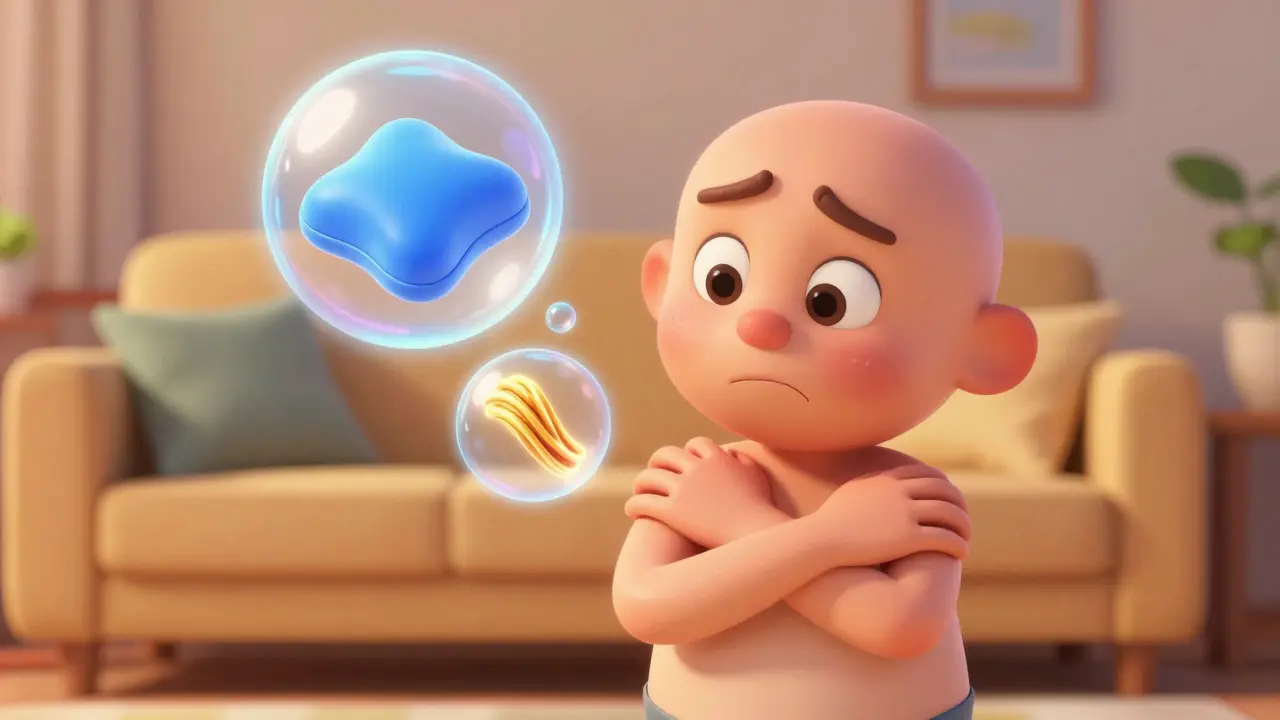
You feel a sharp pain in your shoulder when you reach for a high shelf, or maybe your knee throbs after a long walk. You know something is inflamed, but is it Bursitis is the inflammation of the bursa, which are small, fluid-filled sacs that act as cushions between bones and soft tissues, or is it Tendinitis is the inflammation or irritation of a tendon, the thick fibrous cord that attaches a muscle to a bone? Getting this right isn't just about the name-it's about the cure. Treating a tendon like a bursa (or vice versa) can actually slow down your recovery or, in some cases, make the injury worse.
Quick Guide to Joint Inflammation
If you're in pain right now, here is the fast track to understanding what you're dealing with:
- Bursitis: Think of it as a "cushion problem." The pain is often diffuse and feels like a deep ache. It usually hurts more when you put direct pressure on the joint (like sleeping on your side).
- Tendinitis: Think of it as a "cable problem." The pain is more localized and follows a specific line. It typically flares up during a specific movement, like twisting your wrist or flexing your ankle.
Why the Distinction Matters for Your Recovery
It might seem like splitting hairs, but the biological difference between these two structures changes how you should treat them. For instance, Corticosteroids (cortisone shots) are fantastic for bursitis, with some reports showing a 78% improvement within a month. However, if you inject cortisone directly into an inflamed tendon, you risk weakening the tendon fibers, which can actually increase the chance of a tear.
Data from the Journal of Orthopaedic & Sports Physical Therapy shows that when people get the wrong initial treatment, their symptoms last over three times longer. We're talking about an average recovery of nearly 19 weeks instead of just under 6. The goal is to get the diagnosis right the first time so you aren't wasting months on the wrong exercises.
Common Trouble Spots in the Body
While you have about 160 bursae and hundreds of tendons, a few areas are notorious for these issues. The shoulder is the most complicated because Rotator Cuff tendinitis and subacromial bursitis often happen at the same time-roughly 65% of the time, in fact.
| Joint Area | Bursitis Type (Cushion) | Tendinitis Type (Cable) |
|---|---|---|
| Shoulder | Subacromial bursa | Rotator cuff tendons |
| Elbow | Olecranon bursa | Lateral epicondyle (Tennis Elbow) |
| Knee | Prepatellar bursa | Patellar tendon |
| Hip/Ankle | Trochanteric bursa (Hip) | Achilles tendon (Ankle) |
How to Spot the Difference: Diagnostic Clues
If you're trying to figure out which one you have, pay attention to how it hurts. For bursitis, the pain is often "positional." For example, if you have hip bursitis, lying on that side in bed will feel like a hot poker. The swelling is often more visible and feels "squishy."
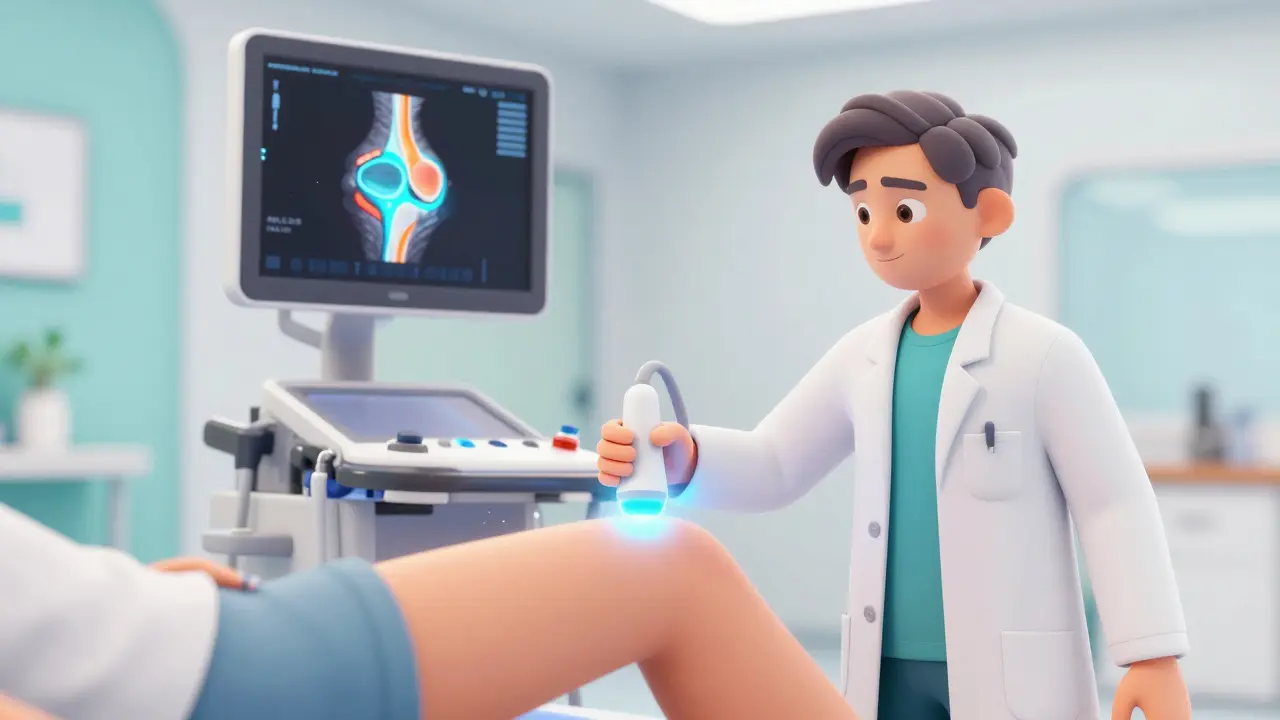
Tendinitis is more "functional." You might feel fine while sitting, but the moment you perform a specific action-like typing or jumping-the pain spikes. This is because the tendon is being stretched or loaded. To confirm this, doctors often use Ultrasound, which has a high sensitivity rate of about 92% for detecting these issues, though an MRI is the gold standard for persistent cases.
The Roadmap to Getting Better
Whether it's a bursa or a tendon, the first line of defense is almost always conservative. You don't want to jump straight to surgery, which is only needed in about 5% of cases. Follow this graduated approach:
- The Quiet Phase (7-10 Days): Focus on the RICE method (Rest, Ice, Compression, Elevation). Use NSAIDs (like ibuprofen) for short-term inflammation, but keep it to 10-14 days to protect your stomach.
- The Motion Phase: Start gentle range-of-motion exercises. The key here is the "pain monitoring rule": your discomfort should stay below a 3 out of 10. If it hits a 5, you're pushing too hard and may be causing more damage.
- The Strengthening Phase: For tendinitis, this is where the real work happens. Eccentric strengthening-which involves lengthening the muscle under tension-is the secret. For example, those doing "heel drops" for Achilles issues often see a 68% sustained improvement over six months.
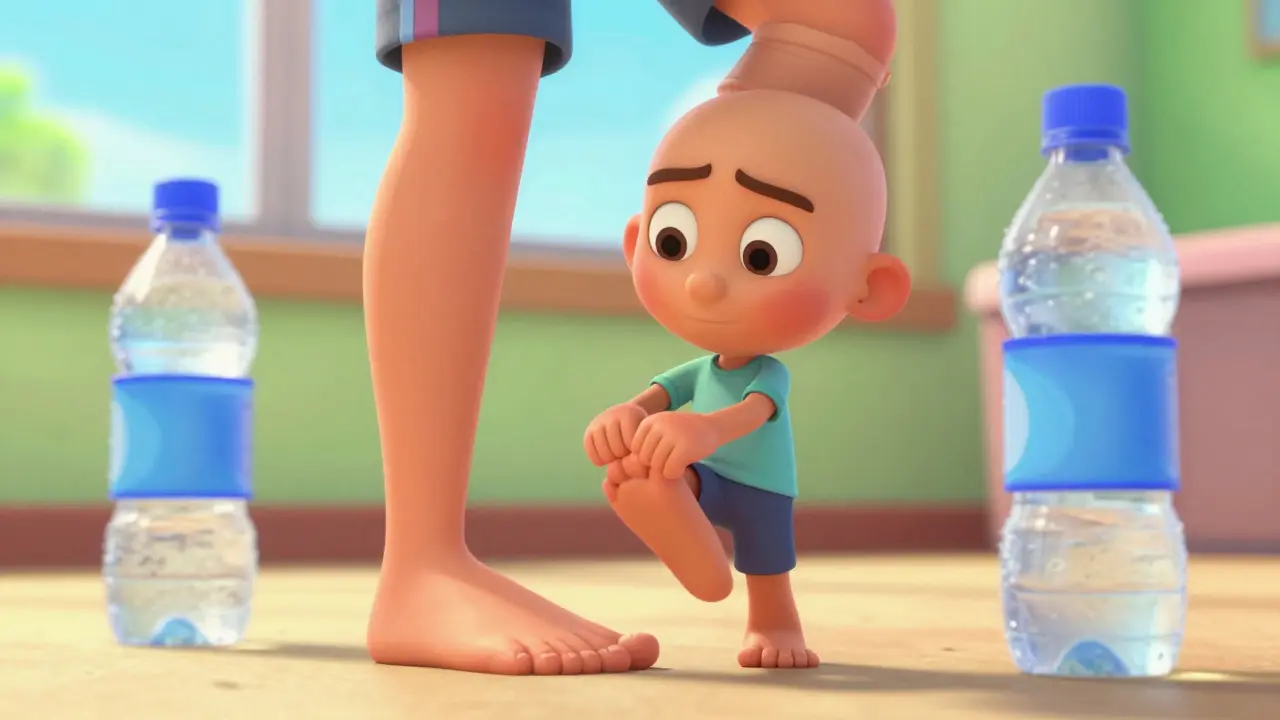
Pro tip: If you're icing at home, don't just use a pack. Many people find that rolling a frozen water bottle over the affected area provides a more targeted massage and better relief.
Modern Alternatives and New Tech
If the standard routine isn't working, regenerative medicine is stepping in. Platelet-Rich Plasma (PRP) therapy is gaining ground, especially for chronic tendinitis. While it's more expensive than a cortisone shot, a 2023 trial showed PRP had a 67% improvement rate at six months, compared to just 42% for steroids.
We're also seeing a shift in how we track these injuries. Wearable tech, including specialized motion tracking on smartwatches, can now detect the exact movement patterns that lead to tendinitis. This means you could potentially get a warning on your wrist before the inflammation even starts.
Can I have both bursitis and tendinitis at the same time?
Yes, absolutely. In fact, it's very common, especially in the shoulder. About 65% of people with shoulder pathology have both subacromial bursitis and rotator cuff tendinitis. Because they are located so close together, the inflammation in one often irritates the other.
How long does it actually take to heal?
Bursitis typically resolves faster, often within 4 to 6 weeks of rest and anti-inflammatories. Tendinitis is a slower burn; because tendons have less blood flow than bursae, they require more time and structured rehabilitation, typically ranging from 12 to 16 weeks.
Should I keep exercising if it hurts a little?
Follow the 3/10 rule. A tiny bit of "therapeutic discomfort" (2-3 on a pain scale) is usually fine during rehab. However, if the pain reaches 5 or higher, or if the pain lasts long after you've stopped the exercise, you are likely aggravating the tissue and should scale back.
Is surgery ever necessary?
Rarely. Fewer than 5% of patients require surgical intervention. Surgery is usually reserved for cases where there is a complete tendon tear or where the bursa has become chronically thickened and cannot be resolved with injections or therapy.
Are cortisone shots safe for long-term use?
They are great for short-term relief, but using them too often can be risky. Most guidelines recommend limiting these injections to 2 or 3 per year. Overusing them can lead to tissue weakening and an increased risk of tendon rupture.




15 Comments
Ben Jima
The a-z breakdown here is super helpful for anyone trying to navigate the early stages of recovery. I've seen a lot of folks ignore that 3/10 pain rule and end up right back at square one, so emphasizing that threshold is key. Definitely recommend staying consistent with the eccentric movements if you're dealing with the tendon side of things!
Anand Mehra
stats are just numbers if you dont get the bio-mechanics right. basic stuff really
Daniel Runion
Oh please!!! As if a frozen water bottle is some kind of "pro tip" that hasn't been common knowledge for decades!!! I've seen better advice on a cereal box!!!
Carol Yang
Glad this exists, sounds like a good way to just take it easy and heal up properly.
Sharyl Foster
The 3/10 rule is kind of arbitrary. Some people have a way higher pain tolerance than others, so a '3' for one person is a '7' for another. It's not a scientific standard.
Ben Jima
You've got a point about individual tolerance, but the goal is to create a general guideline to prevent people from pushing into a range that causes actual tissue damage.
Hayley Redemption
It's adorable how people actually believe that a basic list of bullet points constitutes a comprehensive medical guide. The lack of depth regarding the histopathological differences between these conditions is honestly staggering, though I suppose this is the level of discourse we should expect here.
Gauri Parab
Exactly. Why bother with an MRI when an ultrasound is '92% sensitive'? That's just a convenient way to push cheaper diagnostics on people. The whole 'road map' is just a simplified version of what any competent physical therapist tells you in the first five minutes.
Brittney Prince
The wearable tech part is what really creeps me out. Now they just want to track every single movement of our joints to 'predict' injury? Sounds like a great way for insurance companies to hike up premiums because your smartwatch said you're prone to tendinitis before it even happens.
William Zhigaylo
It is utterly reprehensible that such anecdotal 'tips' are being presented as medical gold. One must adhere to strict clinical protocols, yet here we are discussing frozen water bottles as if they were revolutionary breakthroughs in orthopedic care. This is a mockery of professional medicine.
Nila Sawyer
Omg I totally love how this explains everything so clearly!! 🌟 I've been struggling with my wrist for ages and now I think it's actually tendinitis because it only hurts when I'm typing away at my laptop for hours! It's so wonderful to have these little guides to help us feel more empowered about our own bodies and how to heal them with positivity and patience! Keep sharing this kind of energy!! ✨💖
Nikita Shabanov
The distinction between eccentric and concentric loading is often overlooked in general guides. For those with Achilles issues, focusing on the lowering phase of the heel drop is where the actual remodeling of the tendon occurs. It requires a lot of patience but the results are usually far more sustainable than just icing the area.
Vijay AGarwal
Let me tell you, the pain from a subacromial bursa flare-up is absolutely agonizing! It feels like there's a hot coal sitting right in your shoulder joint! I tried the RICE method for a week and it felt like nothing was happening until I finally started the gentle range of motion work. The difference is night and day!
Michael Deane
I don't care about the 'modern alternatives' or the fancy PRP stuff, we just need to get back to the grit and hard work that built this country. Spend less time staring at a smartwatch and more time actually doing the exercises properly, that's how you get a real recovery without needing a thousand-dollar shot in your hip.
Kristen O'Neal
I think we can all agree that regardless of the specific diagnosis, the most important thing is just getting professional eyes on the injury before trying something like cortisone. It's interesting how the recovery times vary so much between the two structures, and it really highlights why the diagnosis phase is the most critical part of the whole process.