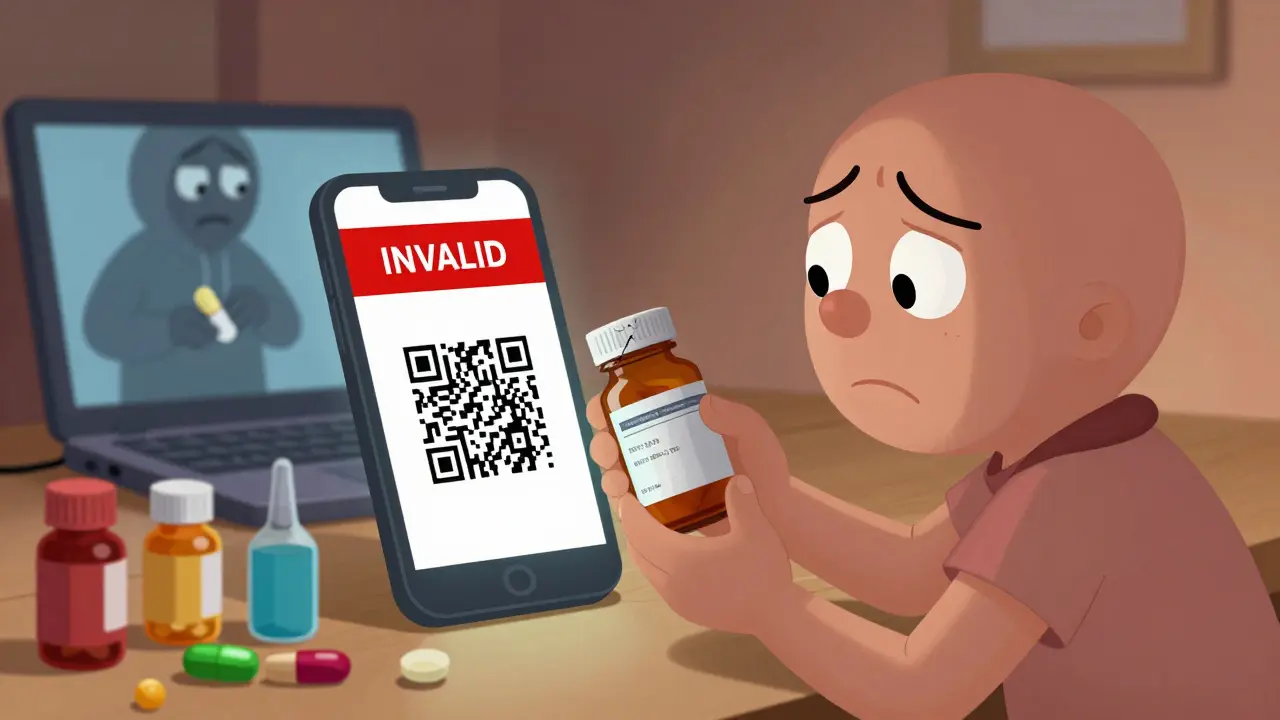
Every year, millions of people around the world take medicine they think is real-only to find out later it was fake. These aren’t just poorly made copies. They’re dangerous. Some contain no active ingredient at all. Others have the wrong dose, toxic chemicals, or even rat poison. And they’re getting harder to spot.
You might think this only happens in faraway countries. But it’s happening here, too. Online pharmacies with fake websites, shady social media sellers, and even counterfeit pills sold in person are all part of a $200 billion global black market. The World Health Organization says 10% to 30% of medicines in low-income countries are fake. Even in the U.S. and Europe, where regulations are strong, 1% of prescriptions still come from illegitimate sources-and that’s millions of pills.
The truth? No system is perfect. Serialization, QR codes, blockchain tracking-these help. But they don’t catch everything. The final line of defense? You.
What Exactly Is a Counterfeit Drug?
A counterfeit medicine isn’t just a knockoff. It’s any product that’s deliberately mislabeled. That means:
- The packaging says it’s from Pfizer, but it’s not.
- The pills look right, but they don’t contain the right chemical.
- The expiration date is fake, or the bottle was reused.
- The barcode or serial number doesn’t scan properly.
Some counterfeits are so good, even pharmacists get fooled. In 2023, a batch of fake insulin was found in Germany-packaged exactly like the real thing, down to the color of the cap. The only difference? It had no active ingredient. Patients who used it suffered severe hypoglycemia. One died.
Counterfeits don’t just hurt people. They erode trust in medicine. If you start doubting every pill you take, you might skip doses or avoid treatment altogether. That’s often worse than the fake drug itself.
How to Spot a Fake Medicine (The BE AWARE Checklist)
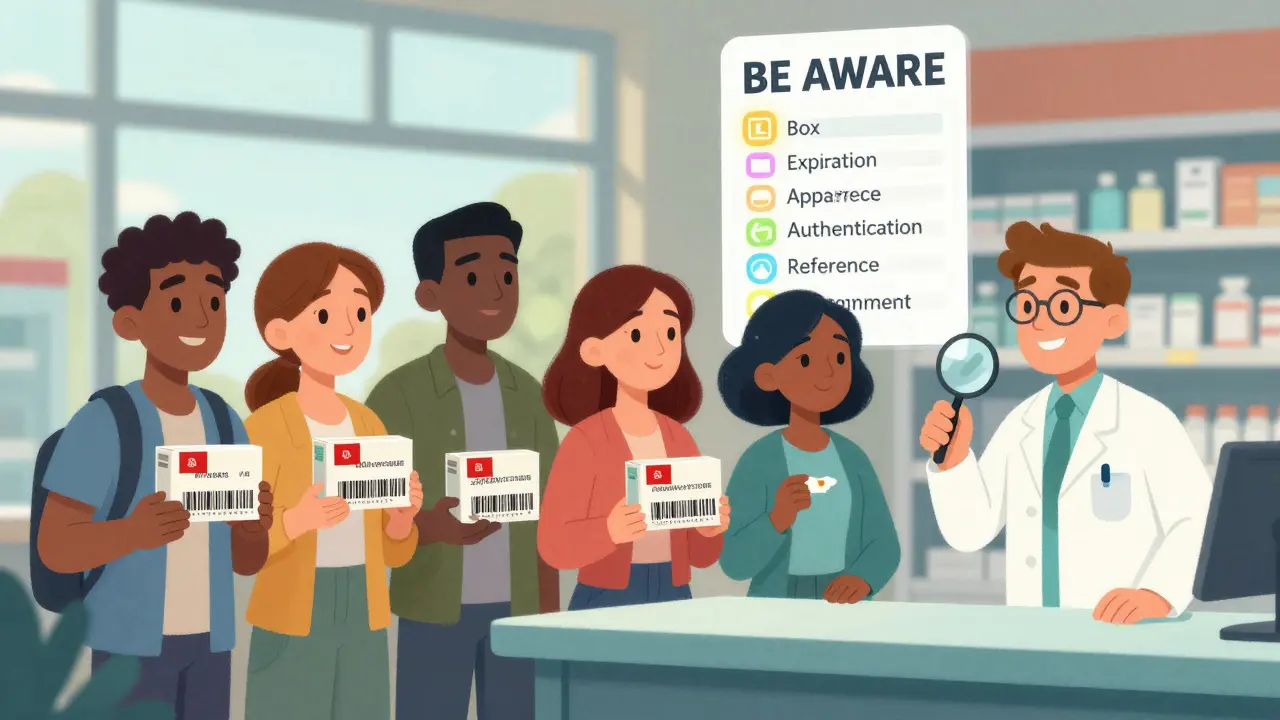
You don’t need a lab to spot red flags. The World Health Professions Alliance created a simple tool called BE AWARE. Here’s how to use it:
- B - Box integrity: Is the seal broken? Is the box dented, torn, or taped? Legitimate medicine comes in sealed, factory-fresh packaging.
- E - Expiration date: Is it faded? Is the font different from your last bottle? Check if the date matches the batch number on the box.
- A - Appearance: Does the pill look different? Wrong color? Odd shape? Strange markings? Even if the brand is the same, the pill should look identical to what you’ve taken before.
- A - Authentication features: Does the box have a unique code? Is there a QR code? In Europe and parts of Latin America, every prescription medicine has a 2D barcode you can scan with your phone. If it doesn’t scan, or the website says “invalid,” walk away.
- R - Reference materials: Is the leaflet inside the box printed clearly? Are there spelling errors? Are instructions in your language? Fake medicines often have terrible translations.
- E - Environment: Where did you get it? If you bought it from a website without a .pharmacy seal, or from a stranger on Instagram, you’re at high risk.
One woman in Brazil noticed her diabetes pills were smoother than usual. She compared them to her last bottle. The markings were off by a millimeter. She called ANVISA, Brazil’s health agency. They traced the batch-it was counterfeit. She saved her husband’s life.
Where Fake Medicines Come From (And How to Avoid Them)
Most counterfeit drugs enter through one channel: unverified online pharmacies.
A 2023 study by the National Association of Boards of Pharmacy (NABP) found that 41% of U.S. consumers have bought medicine online without checking if the site was legit. And 18% of them got sick afterward.
Here’s how to stay safe:
- Only buy from websites with the .pharmacy domain. You can verify them at nabp.net.
- If a site doesn’t require a prescription for controlled drugs like Xanax, Viagra, or insulin, it’s fake.
- Don’t trust “discount” prices. If it’s 80% cheaper than your local pharmacy, it’s not a deal-it’s a trap.
- Stick to licensed pharmacies you’ve used before. If you’re traveling, ask your doctor for a list of verified international pharmacies.
Even in-person pharmacies can be risky if they’re not properly regulated. In some countries, street vendors sell fake antibiotics in plastic bags. If you’re unsure, ask to see the box before they open it. Legitimate pharmacies will let you inspect it.
Technology Helps-But Only If You Know How to Use It
Companies are adding new tools to fight counterfeits:
- QR codes on medicine boxes (launched in France in 2024) link to official product info.
- Digital leaflets replace paper inserts-only accessible after scanning the code.
- Blockchain pilots in India let you trace a pill’s journey from factory to pharmacy.
But here’s the catch: if you don’t know these features exist, you won’t use them. A 2024 Reddit survey found only 28% of users checked tamper seals. Sixty-three percent didn’t know how to verify serial numbers-even though EU law requires it.
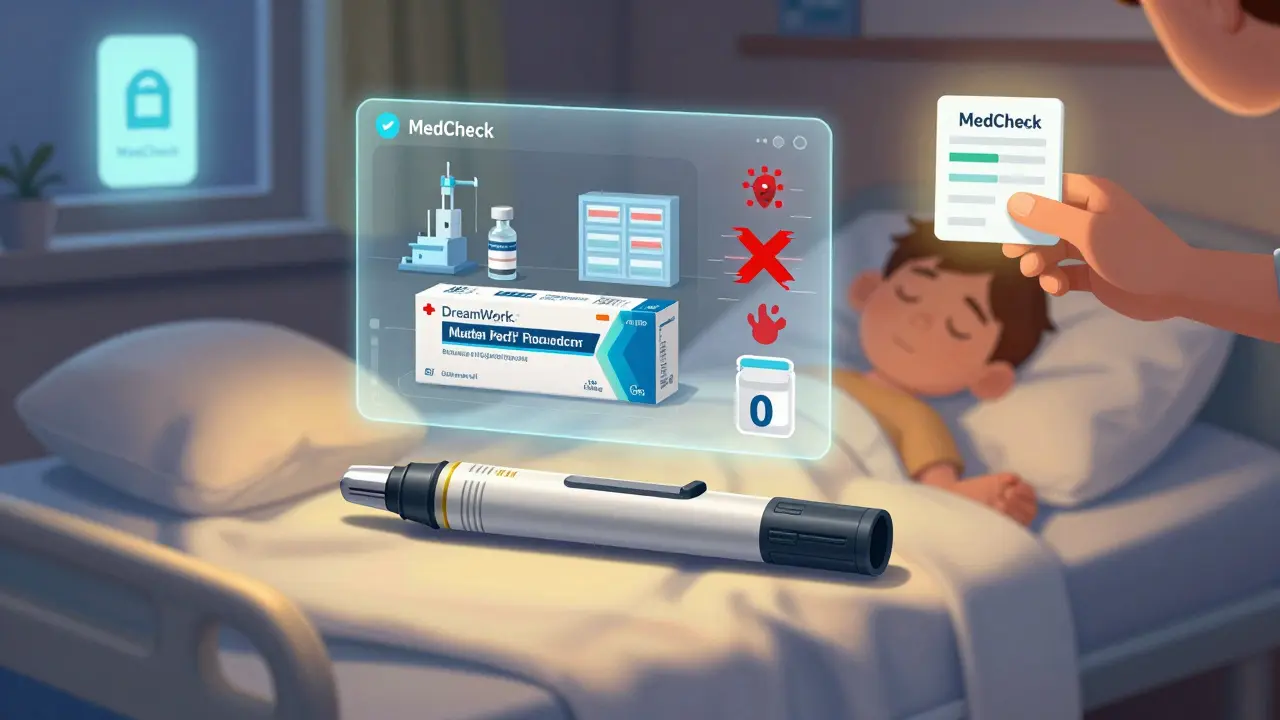
Download a free app like MedCheck (used by over 1.2 million people). It lets you scan barcodes and cross-check them with official databases. It’s simple. It works. And it’s free.
What to Do If You Find a Fake
Don’t throw it away. Don’t flush it. Don’t ignore it.
Report it.
In the U.S., call the FDA’s MedWatch hotline at 1-800-FDA-1088. In the EU, contact your national medicines agency. In Brazil, use ANVISA’s online portal. In India, use the CDSCO portal.
Pfizer reported that in 2023, 14,000 consumer reports led to 217 counterfeit seizures across 116 countries. That’s 3.2 million dangerous pills kept off the market-because someone spoke up.
Your report doesn’t just help you. It helps someone else’s parent, child, or grandparent.
Why This Matters More Than You Think
Counterfeit drugs don’t just cause immediate harm. They fuel antibiotic resistance. They make diseases harder to treat. They waste healthcare resources. And they cost lives.
Think about this: if you take a fake malaria drug, you don’t just get sicker. You spread the disease. If you take a fake heart pill, you could have a stroke. If you take a fake insulin, you could die.
And here’s the hardest truth: in places where real medicine is expensive or hard to get, people buy fakes out of desperation. That’s not negligence-it’s survival. But that doesn’t make the risk any smaller.
That’s why vigilance isn’t just about checking seals. It’s about demanding better. Asking your pharmacist: “Is this verified?” Telling your doctor: “I’m worried about where this came from.” Supporting policies that make medicine safer for everyone.
Final Reminder: You’re Not Alone
You don’t have to be an expert. You don’t need a medical degree. You just need to be curious.
Compare your pills. Check the box. Scan the code. Ask questions. Report anything that feels off.
The system isn’t perfect. But you? You’re the last person who touches that pill before it enters your body. And that makes you the most important part of the safety chain.
Don’t wait for someone else to fix it. Start today. Look at your next pill. Ask yourself: Does this seem right?
It might save your life.

12 Comments
Arun ana
Really appreciate this breakdown. I work in pharmacy back in India and we see fake meds all the time-especially for diabetes and blood pressure. People buy from street vendors because they’re cheaper, not knowing it’s life or death. The BE AWARE checklist is gold. I’ve started printing it and handing it out to patients. Small thing, but it helps.
Also, the MedCheck app? I’ve got it on my phone. Scanned my dad’s blood thinner last month-turns out the batch number didn’t match. Called the hospital, they confirmed it was fake. Saved his life. Thanks for the heads-up.
Joanna Ebizie
OMG I just checked my blood pressure pills and the cap color is slightly off. I thought it was just lighting. I’m throwing them out right now. This is terrifying. Who even makes this stuff??
Elizabeth Bauman
Let’s be real-this is all because the government lets foreign labs make our meds. China and India are flooding our market with cheap poison because our politicians are too busy taking bribes to care. We used to make everything here. Now? Our grandmas are dying because some guy in Bangalore slapped a Pfizer label on chalk and sugar.
And don’t even get me started on QR codes. That’s just a distraction. Real safety is made in America, not scanned on a phone. If you’re buying anything that didn’t come from a U.S. pharmacy, you’re asking for trouble. And if you’re not outraged, you’re part of the problem.
Billy Poling
While I commend the intent of this article, I must emphasize that the systemic vulnerabilities exposed here are not merely the result of consumer negligence but rather the inevitable consequence of deregulatory policies that have prioritized corporate profit margins over public health infrastructure. The proliferation of counterfeit pharmaceuticals is a direct outcome of the fragmentation of supply chains, the erosion of federal oversight mechanisms, and the commodification of healthcare as a market good rather than a human right. The BE AWARE checklist, while useful on an individual level, is a Band-Aid on a hemorrhage. What is required is not passive vigilance but active institutional reform: mandatory national serialization, publicly accessible blockchain registries, and the reestablishment of domestic manufacturing capacity for critical medications. Until we treat medicine as a public good rather than a product to be outsourced for cost efficiency, we will continue to gamble with lives under the illusion of personal responsibility. The WHO statistics are not anomalies-they are indictments.
Dylan Smith
I never thought about the leaflet being wrong but I checked mine last week and the spelling was off on the side effects. I thought it was just bad printing. Now I’m scared to take anything. I don’t even know who to trust anymore. I just take what my doctor gives me but what if that’s fake too
Why does this even happen
Mike Smith
This is one of the most important pieces I’ve read this year. Thank you for laying it out so clearly.
Here’s what I tell my patients: If it feels off, it probably is. Don’t be embarrassed to ask questions. Don’t be afraid to walk away. Your life is worth more than saving $20.
And if you find something suspicious-report it. It’s not snitching. It’s saving lives. You’re not just protecting yourself. You’re protecting someone’s mother, someone’s child, someone’s best friend. That’s powerful. That’s responsibility. That’s courage.
Keep being vigilant. Keep speaking up. The system needs you.
Ron Williams
Just had a conversation with my cousin in Mexico City. He’s got a diabetes pump and buys his insulin from a local clinic. Said the boxes look perfect, but the liquid inside looks cloudy. He didn’t know what to do. I told him to call the Mexican health hotline and scan the code. He did. Turned out it was fake. They shut down the clinic last week.
Point is-this isn’t just a U.S. problem. It’s everywhere. And the people who suffer the most? They’re the ones who can’t afford to be picky.
Thanks for the reminder that awareness isn’t luxury. It’s survival.
Kitty Price
Just scanned my anxiety meds with MedCheck. It said ‘valid’ but the app showed the batch was from 2021. Mine’s from 2024. So I called my pharmacy. They said they got a new shipment last week. I asked to see the box. They were like ‘uhhh we don’t usually let you’ but I insisted. Turned out the seal was taped. I walked out. Called the FDA. They said thanks and to keep an eye out.
So yeah. I’m weirdly proud of myself for being annoying. 😊
Colleen Bigelow
They’re putting microchips in the pills now. That’s why they want you to scan the codes. So they can track you. So they can control you. The FDA doesn’t care if you live or die-they care if you’re compliant. And if you’re not scanning your meds, you’re already under surveillance. They don’t want you to know this. That’s why they call it ‘safety.’ It’s control. And they’re using fake drugs to normalize it.
Don’t trust the app. Don’t trust the QR code. Don’t trust the government. The only safe medicine? The one you grow in your backyard. Or don’t take at all.
Randolph Rickman
Let me tell you-I used to think this was all hype. Then my sister took a fake antibiotic for a UTI. Got sepsis. Spent three weeks in the hospital. Barely made it.
She didn’t buy online. She bought it at a discount pharmacy in the mall. Looked legit. Price was good. Packaging was fine.
That’s the scary part. It doesn’t have to be sketchy to be deadly.
So now I check every pill. I scan every code. I ask every pharmacist. I tell everyone I know. Not to scare them. To save them.
You’re not being paranoid. You’re being smart. Keep going.
Kayleigh Campbell
So let me get this straight-we’ve got blockchain, QR codes, AI verification apps, and still people are dying from chalk pills because they didn’t check the cap color?
Wow. We’ve built a civilization that can land robots on Mars but can’t make sure your heart pill isn’t made in a garage with a printer and a dream.
It’s not that we’re lazy. It’s that we’ve been trained to believe ‘it’s fine’ until it’s not.
So yeah. Scan the code. Check the seal. Be weird about it.
Because apparently, the future of medicine is just… hoping.
Dave Alponvyr
My grandma died from a fake blood thinner. I didn’t know until after.
Check your pills.
That’s all.