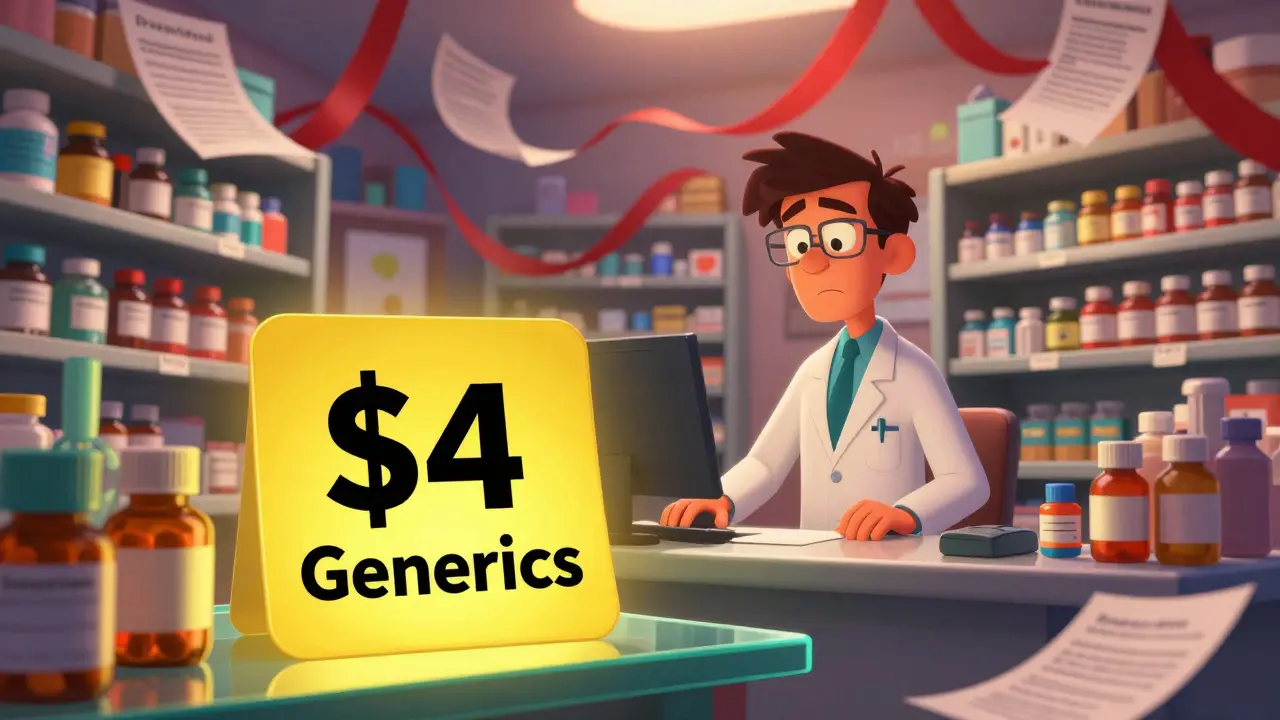
Walk into any pharmacy in the United States today, and you are likely to see a sign advertising "$4 generics" or even "$2 prescriptions." It feels like a simple win for consumers. But behind that bright yellow sticker lies a tangled web of federal laws, state regulations, and private contracts that determine how much money actually changes hands when you pick up your medication. The system is not broken by accident; it is designed this way. Understanding pharmacy reimbursement models requires looking past the shelf price to see how laws force insurers, Pharmacy Benefit Managers (PBMs), and pharmacies to negotiate over every pill.
The core tension in this system is between cost containment and access. Laws were written to encourage the use of cheaper generic drugs to save billions in healthcare spending. However, the mechanisms used to enforce these savings-such as Maximum Allowable Cost (MAC) pricing and rebate structures-often squeeze independent pharmacies and create confusion for patients. This article breaks down how these legal frameworks operate, who benefits, and why the gap between what an insurance plan pays and what a pharmacy receives is widening.
The Legal Foundation: Hatch-Waxman and Generic Entry
To understand today’s payments, we have to look back at the rules that allowed generic drugs to exist in their current form. The Hatch-Waxman Act of 1984 is the cornerstone of modern pharmaceutical regulation. Officially known as the Drug Price Competition and Patent Term Restoration Act, it created a streamlined pathway called the Abbreviated New Drug Application (ANDA). This allowed manufacturers to prove a generic drug was bioequivalent to a brand-name drug without repeating expensive clinical trials.
This law did two things simultaneously. First, it accelerated the entry of low-cost generics into the market. Second, it established a complex patent protection system for brand-name manufacturers to recoup their research costs. For decades, this balance worked reasonably well. Generics captured about 90% of prescription volume while accounting for only a fraction of total drug spending. However, as the number of generic competitors increased, the economics shifted. The law intended to lower prices through competition, but subsequent reimbursement policies began to distort those market forces.
| Legislation/Policy | Year | Primary Impact on Reimbursement |
|---|---|---|
| Hatch-Waxman Act | 1984 | Created ANDA pathway for generics; balanced patent rights with competition. |
| Medicare Modernization Act | 2003 | Established Medicare Part D, introducing private PBMs into federal coverage. |
| Inflation Reduction Act | 2022 | Capped out-of-pocket costs at $2,000 annually (2025); affected utilization patterns. |
| No Surprises Act (PBM provisions) | 2022 | Banned gag clauses; required transparency in cash vs. copay pricing. |
How Pharmacies Get Paid: AWP vs. MAC Pricing
When a pharmacy dispenses a drug, they need to be reimbursed for two things: the cost of the drug itself (ingredient cost) and the labor/service involved in dispensing it (dispensing fee). The ingredient cost is where the legal battles happen.
For many years, reimbursements were based on the Average Wholesale Price (AWP) minus a percentage discount. The idea was that AWP represented what the pharmacy paid, and the discount covered their profit margin. In reality, AWP became a inflated benchmark that rarely reflected actual acquisition costs. As regulators realized this, they introduced Maximum Allowable Cost (MAC) programs, particularly for Medicaid and increasingly for commercial plans.
Under MAC pricing, the insurer sets a ceiling on what they will pay for a specific generic drug. If the pharmacy buys the drug for less than the MAC, they keep the difference. If they buy it for more, they absorb the loss. This model assumes pharmacies have perfect bargaining power and can always find the cheapest supplier. In practice, supply chain disruptions, minimum order quantities, and regional shortages often make this impossible. Independent pharmacies report margins on generic drugs dropping to single digits, sometimes below 2%, because MAC rates are set too low relative to real-world purchasing conditions.
Medicare Part B uses a different approach called "buy and bill," where providers purchase drugs and submit claims using HCPCS codes. This creates a separate reimbursement stream for infused or injected drugs, further fragmenting the system. Pharmacists must navigate these distinct rules daily, ensuring they do not lose money on high-volume, low-margin generic scripts.
The Role of PBMs and Spread Pricing
You cannot discuss reimbursement without talking about Pharmacy Benefit Managers (PBMs). These intermediaries sit between insurers and pharmacies. They negotiate rebates with drug manufacturers, build formularies (lists of covered drugs), and process claims. The big three-CVS Caremark, Express Scripts, and OptumRX-handle over 80% of U.S. prescription claims.
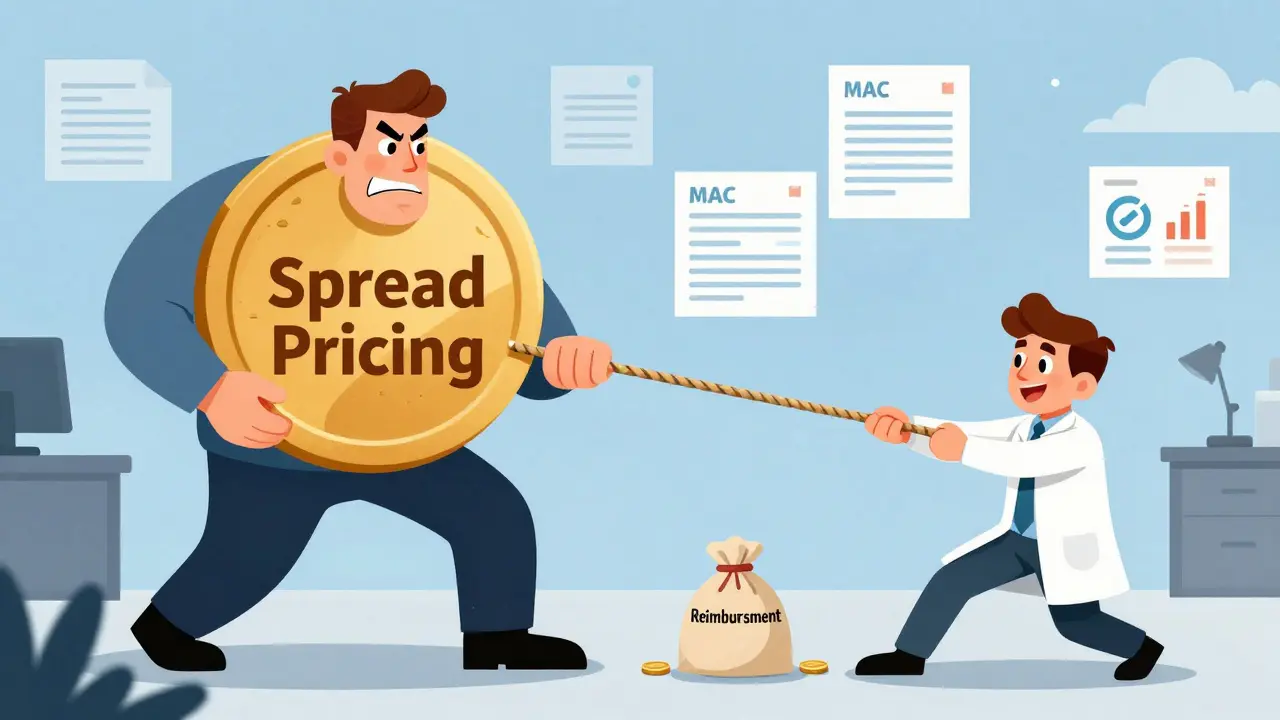
PBMs generate revenue through several channels, but one of the most controversial is spread pricing. Here is how it works: An insurer pays the PBM a certain amount for a generic drug. The PBM then pays the pharmacy a lower amount. The PBM keeps the difference. This spread is often hidden from both the patient and the insurer. While large retail chains may have negotiated better terms, independent pharmacies frequently receive payments that are significantly below what they paid the wholesaler.
Manufacturers argue that high rebates demanded by PBMs force them to raise list prices, creating a vicious cycle. Meanwhile, pharmacies argue that spread pricing erodes their viability. Recent state laws in 44 states have attempted to increase transparency, requiring PBMs to disclose these spreads. However, federal preemption and complex contract language still allow significant opacity in how generic payments are calculated.
State Laws and Substitution Mandates
Federal law sets the baseline, but state laws dictate the specifics of generic substitution. Most states have automatic substitution laws, meaning pharmacists must dispense a generic equivalent unless the prescriber explicitly writes "Dispense as Written" (DAW). This legal mandate drives the high volume of generic usage.
However, states also regulate Preferred Drug Lists (PDLs), especially in Medicaid programs. State Pharmacy and Therapeutics (P&T) committees review drugs and classify them as preferred or non-preferred. Preferred generics often have lower copays for patients and higher reimbursement rates for pharmacies. Non-preferred generics might require prior authorization, adding administrative burden.
Some states have enacted "fairness" laws requiring insurers to reimburse pharmacies at least at their acquisition cost. Others have banned "gag clauses," which previously prevented pharmacists from telling patients if paying cash would be cheaper than using their insurance copay. The ban on gag clauses, reinforced by the No Surprises Act, has empowered patients to compare prices, but it has also highlighted the absurdity of some reimbursement structures where the copay exceeds the cash price.
Medicare Part D and the $2 Generic Model
Medicare Part D covers over 50 million beneficiaries. Its reimbursement structure heavily influences the broader market. Historically, Part D relied on tiered formularies, with generics on the lowest tier having minimal copays. However, variability across plans led to inconsistent patient costs.
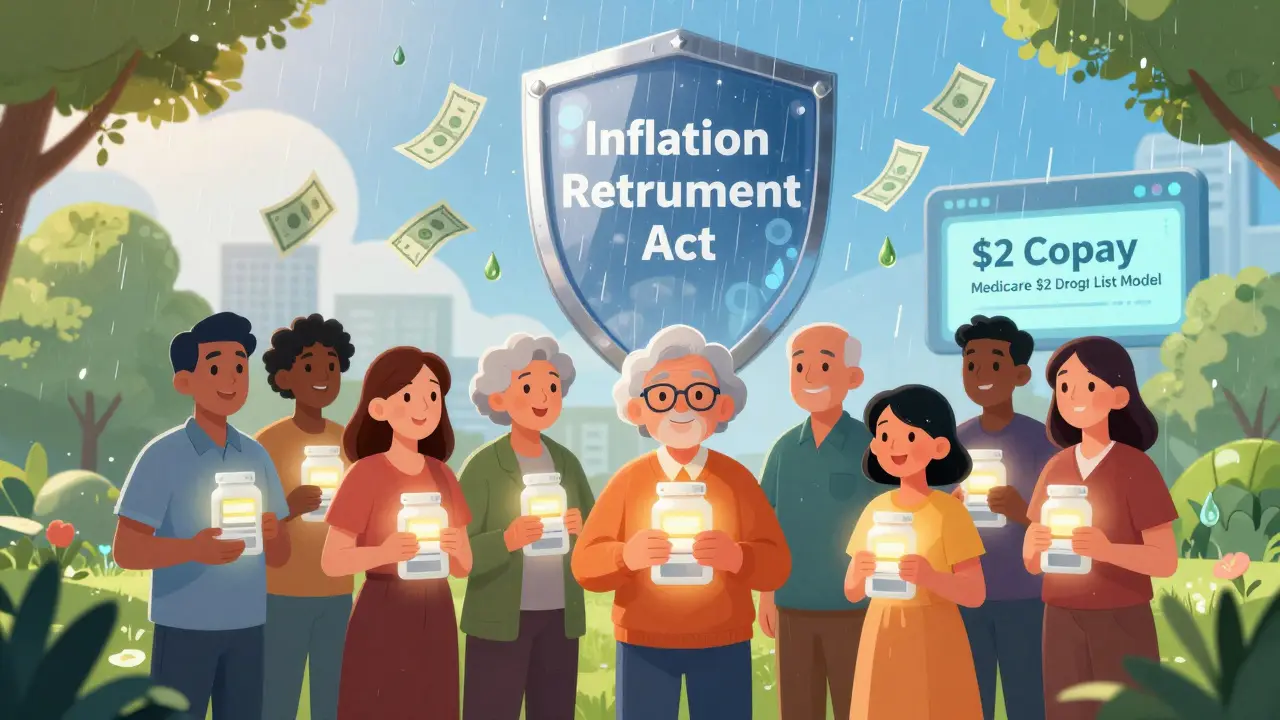
In response, the Centers for Medicare & Medicaid Services (CMS) proposed the Medicare $2 Drug List Model. This voluntary model tests whether standardizing copays at $2 for clinically important, low-cost generics improves adherence and satisfaction. Drugs are selected based on clinical guidelines, frequency of use, and manufacturer count to avoid supply risks.
If successful, this model could reshape how all insurers handle generic payments. By simplifying cost-sharing, it reduces the friction for patients. For pharmacies, it offers predictable, albeit potentially lower, reimbursement per script. The challenge lies in ensuring that the $2 copay plus the dispensing fee covers the pharmacy’s actual costs, especially when MAC prices fluctuate.
Real-World Impact on Patients and Providers
The abstract numbers of reimbursement models translate into concrete experiences for people. For patients, the goal is affordability. Programs like Medicare’s Extra Help cap generic copays at $4.50. Yet, without subsidies, patients face variable costs depending on their plan’s deductible and formulary placement. Some patients still pay more out-of-pocket for generics due to high deductibles, defeating the purpose of choosing a cheaper drug.
For pharmacists, the impact is operational stress. Prior authorizations for generic switches consume hours of staff time. Data shows physicians and office staff spend nearly 20 hours weekly handling these requests. When a generic is short or unavailable, pharmacists must navigate complex substitution protocols, often facing pushback from insurers who refuse to cover the next best alternative.
Independent pharmacies are closing at an alarming rate. Margins compressed from 3.2% in 2018 to just 1.4% in 2023 for generic drugs. This trend threatens community health access, particularly in rural areas where large chains do not operate. The reimbursement model, designed to save system-wide costs, is inadvertently consolidating the industry into fewer, larger players.
Future Trends and Regulatory Shifts
The landscape is evolving. The Inflation Reduction Act’s $2,000 annual out-of-pocket cap for Medicare Part D (starting in 2025) changes how patients interact with their benefits. With catastrophic costs capped, patients may be more willing to use higher-tier drugs if necessary, potentially shifting generic utilization patterns.
Additionally, the Federal Trade Commission is scrutinizing "pay-for-delay" settlements, where brand manufacturers pay generic makers to delay market entry. Breaking these agreements could increase generic competition, driving prices down further and altering reimbursement baselines.
Value-based payment models are also on the horizon. Instead of fee-for-service, insurers may tie reimbursements to health outcomes. This shift could reward pharmacies that successfully manage chronic conditions with generics, providing a new revenue stream beyond simple dispensing fees. However, experts predict this transition will take 5-7 years to mature.
What is the difference between AWP and MAC pricing?
AWP (Average Wholesale Price) is a benchmark price that historically included a discount to estimate reimbursement. MAC (Maximum Allowable Cost) is a hard ceiling set by insurers for generic drugs. Under MAC, if the pharmacy pays more than the MAC, they lose money; if they pay less, they keep the difference. MAC is generally lower and more restrictive than AWP-based calculations.
Why do PBMs use spread pricing?
Spread pricing allows PBMs to earn revenue by paying pharmacies less than what they charge insurers. It is a profit center for PBMs but often results in pharmacies being reimbursed below their acquisition cost, squeezing their margins.
How does the Hatch-Waxman Act affect generic prices?
The Hatch-Waxman Act created the ANDA pathway, allowing faster approval of generics without full clinical trials. This increased competition, driving down prices. However, it also protected brand patents, leading to complex litigation strategies that can delay generic entry.
What is the Medicare $2 Drug List Model?
It is a CMS initiative testing standardized $2 copays for specific low-cost, clinically important generics. The goal is to improve medication adherence and simplify costs for Medicare beneficiaries by removing variability in generic pricing.
Are independent pharmacies losing money on generics?
Many are. Due to aggressive MAC pricing and PBM spread pricing, average margins for independent pharmacies on generic drugs have dropped to around 1.4%. This makes it difficult to stay profitable without high volume or additional services.
What happened to gag clauses in pharmacies?
Gag clauses, which prevented pharmacists from informing patients if cash payment was cheaper than their copay, were banned federally under the No Surprises Act and by many states earlier. Pharmacists can now legally advise patients on the most cost-effective payment method.