Pill Splitting Safety Checker
Enter your medication details below to check if it is generally considered safe to split at home.
Select options and click Check Safety to see results.
Splitting a pill in half seems like a simple way to save money or get the right dose. You buy a higher-strength tablet, cut it down the middle, and take one piece. It sounds smart, especially when prescriptions are expensive. But here is the catch: not every pill can be split safely. Some medications will crumble into dust, others will release their entire dose at once, causing dangerous side effects. Getting this wrong can turn a cheap fix into a serious health risk.
You need to know exactly which pills are safe to split and which ones must stay whole. This guide breaks down the rules, the tools you need, and the specific medications that should never touch a blade. We will look at what makes a tablet suitable for splitting, how to do it correctly, and when you should walk away from the idea entirely.
What Makes a Pill Safe to Split?
Not all tablets are created equal. The structure of a pill determines whether it can survive being cut. The most obvious sign is a score line. This is a shallow groove pressed into the center of the tablet by the manufacturer. If you see a score line, the drug maker designed that tablet to be split. However, even with a score line, some tablets may still crumble or split unevenly due to their formulation.
The type of release mechanism is just as important. Immediate-release tablets are generally safe to split if they are scored. These pills dissolve quickly in your stomach, releasing the drug all at once. Splitting them simply reduces the amount of drug released, which is usually fine for dosage adjustments.
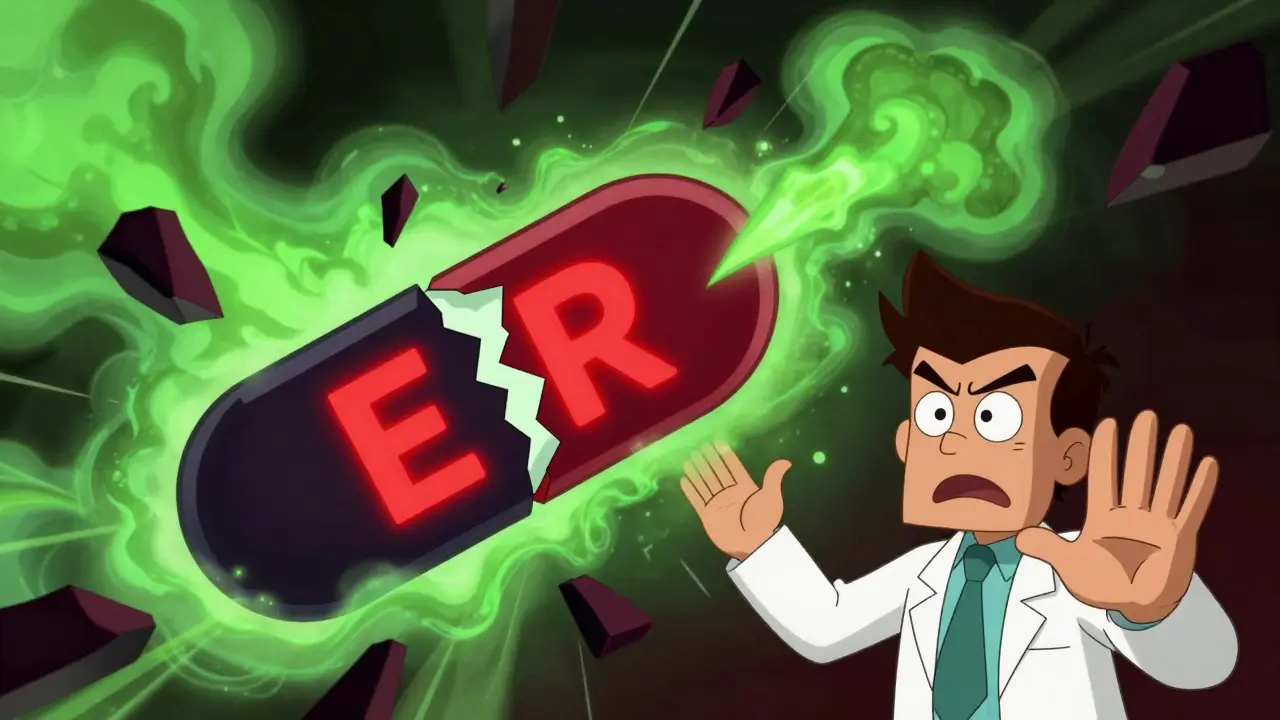
On the other hand, special delivery systems make splitting dangerous. Extended-release (ER), sustained-release (SR), controlled-release (CR), and enteric-coated tablets are engineered to release medication slowly over time or protect the drug from stomach acid. Breaking these coatings destroys the timing mechanism. Instead of getting a steady dose over 12 hours, your body gets the full 12-hour dose instantly. This can lead to toxicity or severe side effects.
| Tablet Type | Safe to Split? | Why? |
|---|---|---|
| Immediate-Release (Scored) | Yes, usually | Dissolves quickly; score line ensures even split. |
| Extended-Release (ER/SR/CR) | No | Destroys slow-release mechanism; causes dose dumping. |
| Enteric-Coated | No | Coating protects drug/stomach; splitting exposes drug to acid. |
| Capsules | No | Contains powder or beads; cannot be evenly divided. |
| Hazardous Drugs (Chemo) | No | Risk of exposure to toxic particles during handling. |
Medications That Are Generally Safe to Split
If your doctor prescribes an immediate-release tablet with a score line, splitting is often a viable option. Many common medications fall into this category. According to data from GoodRx and pharmaceutical guidelines, several classes of drugs are frequently split to adjust doses or reduce costs.
- Blood Pressure Medications: Amlodipine (Norvasc) is a common example. It is often prescribed in 5mg and 10mg strengths. Splitting a 10mg scored tablet can provide two 5mg doses, saving money if the price difference between strengths is significant.
- Antidepressants: SSRIs like citalopram (Celexa), escitalopram (Lexapro), and sertraline (Zoloft) are frequently available in scored immediate-release forms. Doctors often start patients on low doses and titrate up, making splitting a practical tool.
- Statins: Some cholesterol-lowering drugs, such as atorvastatin (Lipitor), come in scored versions that can be split for lower dosages.
- Sedatives and Anti-Anxiety Meds: Benzodiazepines like alprazolam (Xanax) and clonazepam (Klonopin) are often scored. However, because these drugs have a narrow therapeutic index, precision is critical. Even small variations in dose can affect effectiveness or safety.
Always check the package insert or ask your pharmacist. Just because a drug is in a "safe" category doesn't mean every brand or generic version is scored or stable after splitting.
Medications That Should Never Be Split
Some pills carry serious risks if divided. The Institute for Safe Medication Practices (ISMP) and the FDA list specific categories that are strictly off-limits for home splitting.
- Extended-Release Formulations: Look for abbreviations like ER, SR, XR, CR, LA, or SA on the label. Examples include oxycodone extended-release (OxyContin) and metformin extended-release. Splitting these releases the entire dose at once, which can cause overdose symptoms like extreme drowsiness, respiratory depression, or rapid heart rate.
- Enteric-Coated Tablets: These have a special coating that prevents the drug from dissolving in the stomach. They are designed to pass through to the intestines. Aspirin enteric-coated is a common example. Splitting it exposes the drug to stomach acid, which can cause irritation or ulcers, and destroys the intended release site.
- Capsules: Capsules contain powders, liquids, or tiny beads. You cannot split a capsule evenly. Opening one and pouring out half the contents is inaccurate and dangerous. The beads inside many extended-release capsules are individually coated; crushing or dividing them ruins the release mechanism.
- Hazardous Drugs: Oral chemotherapy agents and certain hormonal therapies are classified as hazardous. Handling broken pieces can expose you to toxic particles through skin contact or inhalation. Paroxetine (Paxil) is also noted by NIOSH as having reproductive toxicity risks if handled improperly.
- Narrow Therapeutic Index Drugs: These drugs have a very small window between a helpful dose and a harmful one. Warfarin (blood thinner), levothyroxine (thyroid hormone), and phenytoin (seizure medication) fall here. Even a slight error in splitting-getting 60% instead of 50% of the pill-can lead to treatment failure or toxicity. While some are scored, the margin for error is too high for most patients to manage safely at home.
How to Split Pills Safely and Accurately
If you have confirmed that your medication is safe to split, technique matters. Using a knife or scissors leads to crumbling, uneven doses, and waste. Studies show that improvised methods result in dose variations of 25-40%, whereas proper tools keep variation under 15%.
Here is the step-by-step process for safe splitting:
- Get a Tablet Splitter: Buy a dedicated pill cutter. These devices cost between $5 and $25 and feature a blade housed in a plastic frame with a compartment to hold the pill. They ensure the blade aligns perfectly with the score line.
- Wash Your Hands: Clean hands prevent contamination. Dry them thoroughly so the pill doesn’t stick to your fingers.
- Check the Pill: Ensure the tablet is dry and intact. Moisture can make pills soft and prone to crumbling.
- Align the Score Line: Place the tablet in the cutter’s compartment so the score line sits directly under the blade. Press down firmly and evenly. Do not twist or saw.
- Split One Dose at a Time: Never split your entire month’s supply at once. Exposed halves lose potency faster due to air and moisture. Split only the pill you are about to take.
- Store Properly: If you must store a split half, use an opaque, airtight container. Replace split tablets every 72 hours to maintain effectiveness. Light and air degrade many active ingredients.

Cost Savings vs. Risks: Is It Worth It?
Money is often the main reason people split pills. In many cases, a 10mg tablet costs the same as a 5mg tablet. Splitting effectively doubles your supply. For chronic conditions requiring long-term medication, this can save hundreds of dollars a year.
However, consider the hidden costs. If splitting leads to inconsistent dosing, you might experience breakthrough symptoms or side effects. This could result in extra doctor visits or emergency room trips, which far outweigh the savings. Additionally, some insurance plans cover lower-dose generics better than higher-dose ones. Always compare the total out-of-pocket cost before deciding to split.
For medications with a narrow therapeutic index, the risk of dose inaccuracy is too high. The potential harm from under-dosing or overdosing outweighs the financial benefit. In these cases, talk to your doctor about cheaper alternatives, patient assistance programs, or generic options.
When to Talk to Your Doctor or Pharmacist
Never start splitting pills without professional advice. Your pharmacist is the best resource. They can tell you if your specific brand or generic is scored and stable. They can also demonstrate how to use a pill splitter correctly.
Discuss splitting with your doctor if:
- You have trouble swallowing whole pills (dysphagia).
- You need a dose that isn’t commercially available.
- Medication costs are causing you to skip doses.
Your doctor may prescribe a different strength, switch you to a liquid formulation, or recommend a cheaper alternative. Sometimes, the best solution isn’t splitting-it’s finding a medication that fits your needs and budget without compromise.
Can I split any pill that has a score line?
Not necessarily. While a score line indicates the manufacturer designed the tablet for splitting, you must still confirm it is an immediate-release tablet. Extended-release or enteric-coated pills may have score lines but should never be split because it destroys their protective coating or release mechanism.
Is it safe to split my blood pressure medication?
Many blood pressure medications, such as amlodipine, are safe to split if they are immediate-release and scored. However, some formulations are extended-release. Always check the label for "ER," "XR," or "SR." If present, do not split. Consult your pharmacist to verify your specific prescription.
How long can I store split pills?
You should split pills immediately before taking them. If you must store them, keep them in an opaque, airtight container and replace them within 72 hours. Exposure to air and light degrades the medication's potency over time.
Can I split capsules?
No, capsules should never be split. They contain powders, liquids, or tiny beads that cannot be divided evenly. Opening a capsule also destroys any special coatings designed to control how the drug is released in your body.
What tools should I use to split pills?
Use a dedicated tablet splitter or pill cutter. Avoid using knives, scissors, or your fingernails. Improvised tools lead to crumbling and inaccurate doses. A proper splitter ensures the blade aligns with the score line for a clean, even cut.