
Immunocompromised Patient Infection Risk Calculator
This tool helps you understand your personal infection risk based on your current immunosuppressive medications. Enter your treatment details to get a risk assessment, specific infection warnings, and practical recommendations.
When your immune system is weakened-whether from an autoimmune disease, organ transplant, chemotherapy, or long-term steroid use-taking medication becomes a tightrope walk. You need the drug to control your condition, but every pill carries a hidden danger: infection. For immunocompromised patients, a simple cold can turn into pneumonia. A minor cut can lead to a hospital stay. And sometimes, the signs of trouble don’t look like trouble at all.
What Does It Mean to Be Immunocompromised?
Being immunocompromised means your body’s defense system isn’t working like it should. You might not get sick more often than others-but when you do, it hits harder and lasts longer. This isn’t just about having a weak immune system. It’s about having one that’s actively suppressed, usually by medication. Common causes include:- Autoimmune diseases like rheumatoid arthritis, lupus, or Crohn’s disease
- Organ transplants (kidney, liver, heart)
- Cancer treatments like chemotherapy or radiation
- Long-term use of corticosteroids (like prednisone)
- Biologic drugs targeting immune cells
The Big Risk: Infections That Don’t Look Like Infections
Most people know fever, chills, and coughing are signs of infection. But for someone on immunosuppressants, those signs often disappear. Corticosteroids, for example, can mask fever. A patient on 30mg of prednisone daily might have a severe lung infection-but no fever, no chills, just worsening fatigue. That’s why doctors warn: if you feel off, don’t wait for symptoms to get classic. A 2012 meta-analysis of over 4,000 patients found that those on corticosteroids had a 60% higher chance of developing infections than those not on them. The risk jumps sharply above 20mg of prednisone per day and after two weeks of use. Even short courses can be risky if you’re already immunocompromised. And it’s not just bacteria. Viruses like herpes zoster (shingles), cytomegalovirus (CMV), and even the JC virus (which causes a rare brain infection called PML) can flare up. Fungal infections like Pneumocystis jirovecii pneumonia (PCP) are also common in people on long-term immunosuppressants.How Different Medications Raise Different Risks
Not all immunosuppressants are the same. Each class affects the immune system in unique ways-and carries its own danger profile.Corticosteroids: The Silent Suppressors
Drugs like prednisone, methylprednisolone, and dexamethasone work by shutting down inflammation. But they also reduce white blood cell production. At doses above 20mg/day, infection risk climbs fast. The risk isn’t just about dose-it’s about duration. Even a 10-day course can be dangerous if you’re already vulnerable.Conventional DMARDs: Methotrexate and Leflunomide
Methotrexate is one of the most common drugs for rheumatoid arthritis. About 70% of patients find it effective. But nearly half stop taking it within a year because of side effects: nausea, fatigue, mouth sores, and liver stress. Regular blood tests (CBC, liver enzymes) are required every month during the first few months. Leflunomide causes similar issues. Hair loss, diarrhea, and liver toxicity are common. Neither drug is as risky as biologics-but together with steroids, their effects multiply.Biologics: Powerful, But Dangerous
Drugs like adalimumab (Humira), infliximab (Remicade), and etanercept (Enbrel) target specific parts of the immune system. They’re highly effective-but they also carry the highest infection risk among all immunosuppressants. Patients on biologics report frequent cases of shingles, tuberculosis reactivation, and fungal infections. Reddit communities like r/RheumatoidArthritis are full of stories: “I got pneumonia after my third Humira shot.” “I had to be hospitalized for staph after a small cut.” The Arthritis Foundation confirms: biologics are significantly more likely to cause infections than older DMARDs.Calcineurin Inhibitors and Chemotherapy
Cyclosporine and tacrolimus are used after transplants. They prevent rejection-but increase risk of EBV, hepatitis C, and polyomavirus. Tacrolimus users often describe it as “life-changing” for their transplant-but also say they live in constant fear of infection. Chemotherapy drugs like cyclophosphamide and paclitaxel hit hard. They don’t just target cancer-they wipe out immune cells. Patients on chemo are often told to avoid crowds, wear masks, and skip public events. Even a minor cold can become life-threatening.Combination Therapy: When Risks Multiply
Doctors sometimes combine drugs to get better control. A patient might take methotrexate + prednisone + a biologic. Sounds logical-but it’s dangerous. The risk isn’t just added. It’s multiplied. Studies show that combining steroids with other immunosuppressants increases the chance of serious or opportunistic infections far beyond what you’d expect from each drug alone. One patient described it like this: “I was on three drugs. I thought I was being careful. Then I got Pneumocystis pneumonia. I didn’t even know I was sick until I couldn’t breathe.”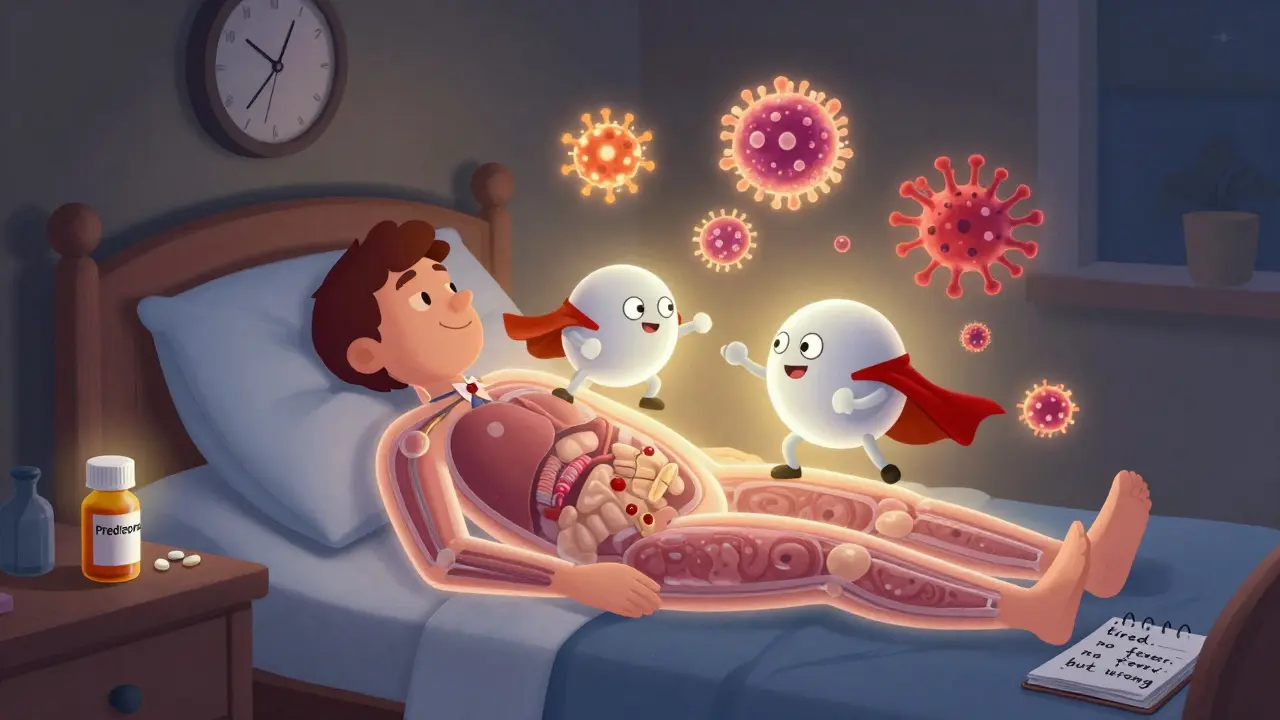
What You Can Do: Practical Steps for Safety
You can’t stop your medication. But you can reduce your risk.- Wash your hands like your life depends on it. At least 20 seconds. Scrub under nails, between fingers. Use hand sanitizer when soap isn’t available.
- Wear a mask in crowded places. Hospitals, public transit, grocery stores during flu season-these are high-risk zones.
- Get vaccinated-but not all vaccines are safe. Live vaccines (like MMR, chickenpox, nasal flu) are off-limits. Inactivated shots (flu, pneumonia, COVID-19, hepatitis B) are usually okay-but may not work as well. Talk to your doctor before getting any shot.
- Check your skin daily. A red spot, a blister, a sore that won’t heal-these could be early signs of infection. Don’t wait.
- Know your baseline. Keep a record of your normal energy levels, appetite, and sleep. If you feel “off,” even slightly, call your doctor. Don’t assume it’s just fatigue from the meds.
- Get regular blood tests. CBC, liver, and kidney function tests are non-negotiable. Methotrexate patients need them monthly. Others need them every 3-6 months.
The Paradox: COVID-19 and Immunosuppression
Early in the pandemic, everyone assumed immunocompromised people would die from COVID-19. But a 2021 Johns Hopkins study shocked the medical world: patients on immunosuppressants had outcomes just as good as those without them. Why? One theory: some of these drugs may be calming the body’s dangerous overreaction to the virus-the cytokine storm. So while the immune system can’t fight the virus well, it also can’t overreact and damage the lungs. That doesn’t mean you’re safe. You still need vaccines, masks, and caution. But it does mean the rules aren’t as simple as “weaker immune system = worse outcome.”What’s Next? Personalized Medicine and Better Tools
Doctors are starting to move away from one-size-fits-all dosing. New research looks at genetic markers to predict who’s more likely to have side effects or infections. Blood tests are being developed to measure immune function in real time-not just count white cells, but see how well they’re working. JAK inhibitors (like tofacitinib) are newer drugs that target specific pathways, hoping to reduce broad immune suppression. They’re promising-but still carry infection risks. The bigger threat? Antibiotic resistance. The World Health Organization warns that by 2050, drug-resistant infections could kill 10 million people a year. Immunocompromised patients are at the front of that line.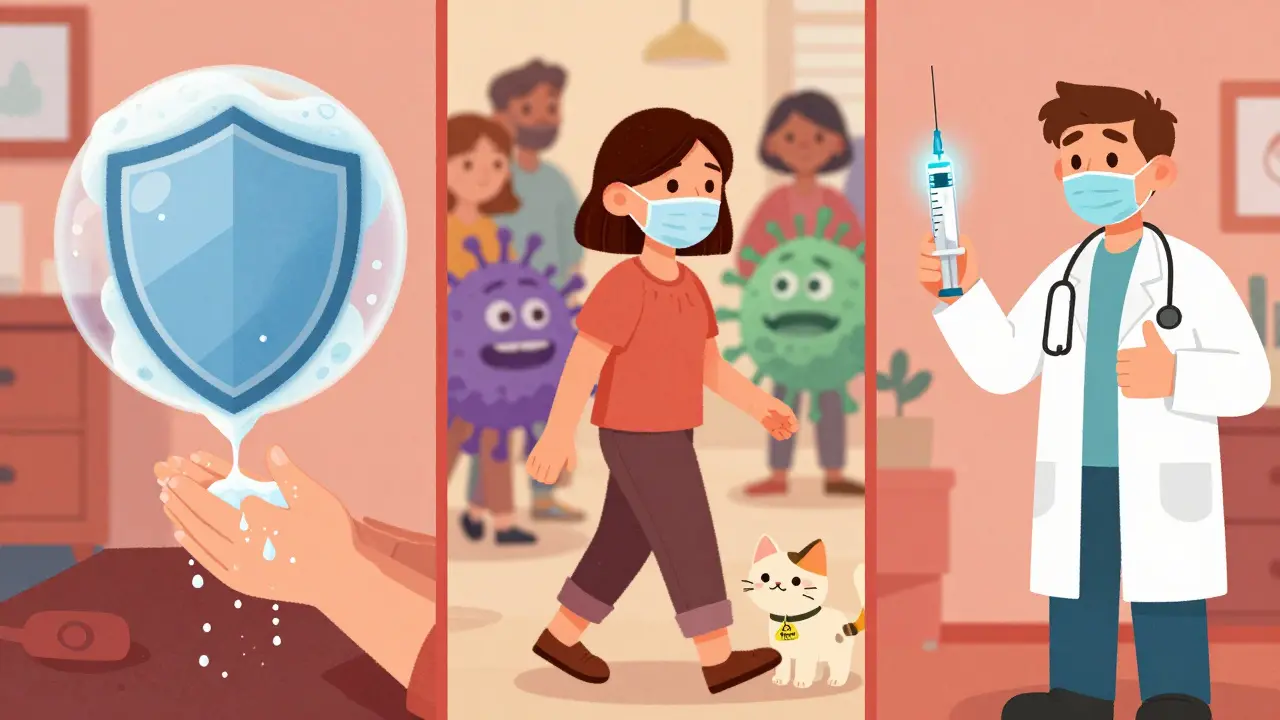
Living with the Balance
No one wants to live in fear. But living with immunosuppression means learning to respect risk without being paralyzed by it. Many patients say the trade-off is worth it. “I couldn’t walk before methotrexate,” says one woman in her 50s. “Now I can play with my grandkids. I just have to be smarter about germs.” The key is partnership. Your doctor isn’t just prescribing pills-they’re helping you navigate a minefield. Ask questions. Keep records. Report changes. Don’t downplay symptoms because “it’s probably nothing.” Because for immunocompromised patients, “nothing” can turn into everything-fast.When to Call Your Doctor Immediately
Don’t wait for a fever. Call your provider if you have:- Any new, unexplained fatigue lasting more than 48 hours
- A sore throat, cough, or shortness of breath-even if mild
- A rash, blister, or red, warm, swollen area on your skin
- Diarrhea or vomiting that lasts more than 24 hours
- Headache with confusion or vision changes
- Any new pain that doesn’t go away
Can I still get vaccinated if I’m immunocompromised?
Yes-but only certain vaccines. Avoid live vaccines like MMR, chickenpox, and the nasal flu shot. Inactivated vaccines like the flu shot, pneumonia shot, hepatitis B, and COVID-19 boosters are safe and recommended. However, they may not work as well as they do in people with healthy immune systems. Talk to your doctor about timing-some vaccines work best before starting immunosuppressants.
Why don’t I get a fever when I’m sick?
Corticosteroids and some other immunosuppressants suppress the body’s ability to raise its temperature in response to infection. That doesn’t mean you’re not sick-it means your body can’t signal it the way it used to. Fatigue, confusion, chills, or a change in appetite can be your only warning signs. Always trust how you feel, not whether you have a fever.
Are biologics riskier than older drugs like methotrexate?
Yes, generally. Biologics target specific immune cells and can increase the risk of serious infections-including tuberculosis, fungal infections, and shingles-more than traditional drugs like methotrexate. But they’re also more effective for some conditions. The decision isn’t about which is “worse,” but which balances your disease control with your infection risk. Many patients switch from methotrexate to biologics when the first drug stops working.
Can I travel if I’m immunocompromised?
You can-but with extra care. Avoid areas with high infection risks like outbreaks of measles, dengue, or malaria. Check CDC travel advisories. Bring extra medication, hand sanitizer, and masks. Avoid raw food, unclean water, and crowded places. Talk to your doctor before any trip, especially overseas.
What should I do if I think I’ve been exposed to someone with COVID-19?
Call your doctor immediately. Even if you feel fine, you may need preventive treatment like monoclonal antibodies or antiviral pills like Paxlovid. Don’t wait for symptoms. Early intervention can prevent hospitalization. Also, get tested right away-even if you’re asymptomatic.
Is it safe to be around pets if I’m immunocompromised?
Yes, but with precautions. Avoid cleaning litter boxes or bird cages. Don’t let pets lick your face or open wounds. Wash your hands after handling them. Some animals can carry germs like toxoplasmosis or salmonella that are dangerous for you. If you have a new pet, talk to your doctor first.
How often should I get blood tests?
It depends on your medication. Methotrexate patients need a CBC and liver test every month during the first 6 months, then every 3 months if stable. For biologics, blood tests are usually done every 3-6 months. For transplant patients on tacrolimus or cyclosporine, tests may be weekly at first, then monthly. Always follow your doctor’s schedule-these tests catch problems before you feel them.





12 Comments
Marlon Mentolaroc
Okay but let’s be real - if you’re on prednisone and your doctor says 'just take it easy,' they’re not giving you a life hack, they’re giving you a death sentence wrapped in a pamphlet. I’ve seen people go from hiking to hospital in 72 hours because they thought 'a little tired' was normal. It’s not.
siva lingam
so u take meds u get sick its not that hard
Shelby Marcel
i just got my third humira shot last week and now i have this weird rash on my neck… i thought it was stress but now im paranoid. anyone else have this? or am i just overthinking? idk anymore
Patrick Gornik
The entire paradigm of immunosuppressive therapy is a neoliberal bioeconomic construct designed to externalize mortality risk onto the individual while corporations monetize the illusion of control. We’ve turned human physiology into a spreadsheet - CD4 counts as KPIs, neutrophils as quarterly projections. The real infection isn’t Pneumocystis - it’s the systemic epistemic violence of medical paternalism disguised as safety protocols. You’re not being cautious. You’re being commodified.
Izzy Hadala
The 2012 meta-analysis referenced is robust, but it’s critical to contextualize the risk stratification. The 60% increased infection incidence applies to cohorts with cumulative steroid exposure exceeding 7.5 g/year. For patients on low-dose, intermittent regimens (<10 mg prednisone equivalent), the absolute risk remains modest. The clinical imperative is not avoidance, but stratified surveillance: serial CRP, procalcitonin, and lymphocyte subset analysis offer more predictive value than symptom reliance alone. A 2023 Lancet study corroborates this biomarker-driven approach.
Phil Maxwell
i just nod along to this stuff. i’m on methotrexate. i wash my hands. i wear a mask when i go to the pharmacy. i don’t go to concerts. i don’t argue with my doctor. i just… live. it’s not glamorous. but it’s mine.
Juan Reibelo
I’ve been on tacrolimus for 11 years post-kidney transplant. I don’t go to the mall. I don’t hug my nieces when they’re sick. I keep a thermometer next to my bed. And yes - I’ve had shingles. Twice. But I’m here. And I’m grateful. Every single day, I choose caution. Not because I’m scared - because I’ve seen what happens when you don’t.
Heather McCubbin
people on immunosuppressants are just walking time bombs and no one wants to admit it but like you think your flu shot protects you but it doesnt and your doctor is just lying to you to keep you quiet and then one day you wake up and youre in the icu and your family is crying and you never even got to say goodbye to your cat
blackbelt security
You’re not weak for needing this. You’re not broken for being careful. You’re the quiet warrior who shows up - even when your body feels like it’s betraying you. Every hand wash, every mask, every blood test - that’s courage. Not the loud kind. The kind that doesn’t post about it. But still shows up.
Tiffany Wagner
i just took my methotrexate and now i feel like i got hit by a truck but i dont tell anyone because theyll say oh its just side effects but what if its not what if its the pneumonia that kills you and i just dont want to be that person who waited too long
Tommy Sandri
In Japan, immunocompromised patients are often provided with community-based infection surveillance teams, including home visits by nurses during flu season. This model reduces hospitalization rates by 38% compared to North American solo-management approaches. Cultural context matters: collectivist societies prioritize preemptive care, while individualistic models emphasize personal responsibility - often without adequate structural support.
Shanta Blank
you know what’s worse than getting sick? realizing your doctor has been prescribing you the same dose for 5 years even though your weight dropped 40lbs and your liver enzymes are in the stratosphere and you’re too tired to argue because you’ve been told 'it’s normal' for the last 3 years and now your body is a graveyard of side effects and no one cares until you’re on a ventilator