Imagine trying to walk across a room and having to stop halfway because you simply cannot catch your breath. For millions of people living with chronic lung disease, this is not a hypothetical scenario-it is daily life. The frustration, the fear of running out of air, and the gradual loss of independence can feel overwhelming. But there is a proven solution that goes far beyond just taking medication. It is called pulmonary rehabilitation.
Pulmonary rehabilitation (PR) is often misunderstood as just "exercise for lungs." In reality, it is a comprehensive medical intervention designed to improve both the physical and psychological well-being of patients with chronic respiratory conditions. According to the joint statement by the American Thoracic Society (ATS) and the European Respiratory Society (ERS), PR is a tailored program involving exercise training, education, and behavior change. It is not a quick fix; it is a long-term strategy to help you breathe easier, move more freely, and live better.
What Exactly Is Pulmonary Rehabilitation?
To understand why PR works, we need to look at what it actually involves. It is not a one-size-fits-all approach. Every program starts with a thorough assessment of your current health status. This includes spirometry (lung function tests), exercise testing, and evaluations of your quality of life. Based on these results, a multidisciplinary team creates a plan specifically for you.
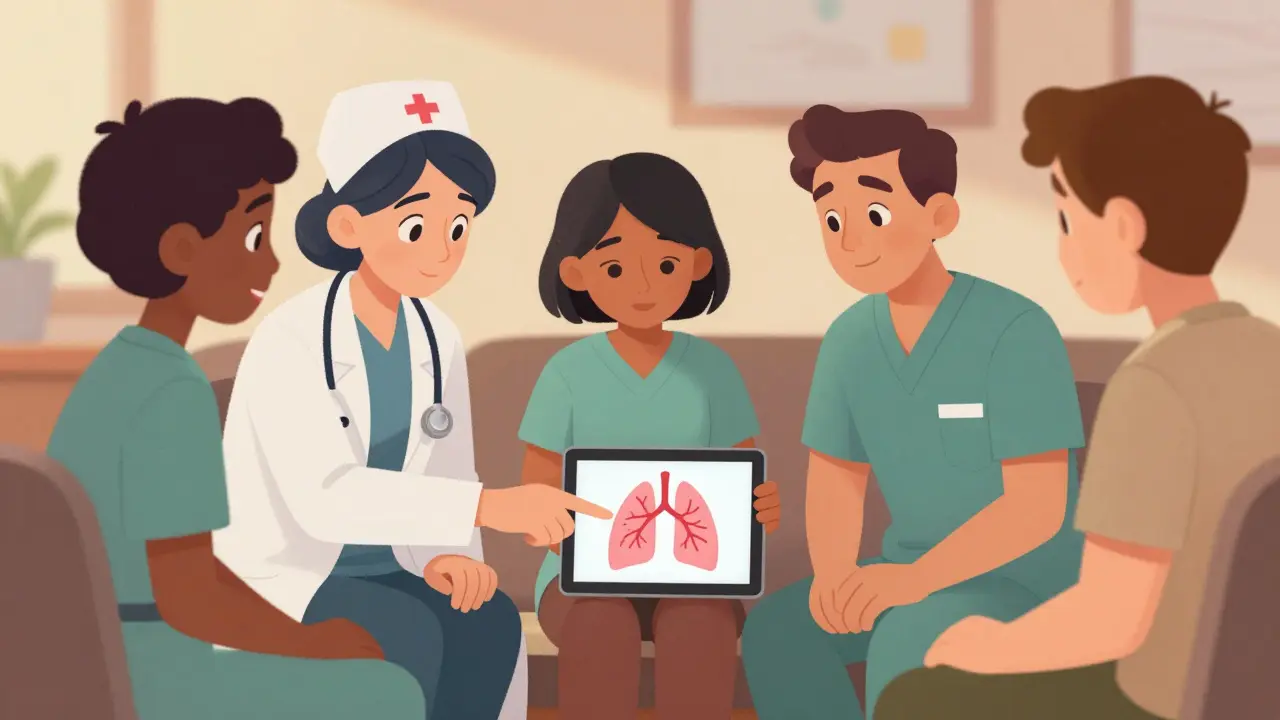
This team typically includes physicians, nurses, respiratory therapists, physical therapists, dietitians, and psychologists. Why so many specialists? Because chronic lung disease affects more than just your breathing. It impacts your muscles, your nutrition, your mental health, and your ability to perform daily tasks. PR addresses all of these areas simultaneously.
| Component | Description | Key Benefit |
|---|---|---|
| Exercise Training | Aerobic (walking, cycling) and resistance training tailored to your capacity. | Improves muscle strength and endurance, reducing breathlessness during activity. |
| Self-Management Education | Learning about disease pathophysiology, medication use, and symptom recognition. | Empowers patients to manage their condition and prevent exacerbations. |
| Behavioral Change | Strategies for smoking cessation, stress management, and healthy lifestyle adoption. | Addresses root causes and promotes long-term adherence to health-enhancing behaviors. |
| Psychological Support | Counseling and support groups to address anxiety and depression related to breathlessness. | Improves mental well-being and social connections. |
Who Should Consider Pulmonary Rehabilitation?
You might think PR is only for people in the late stages of lung disease. That is a common misconception. In fact, guidelines now recommend PR for anyone with a chronic respiratory disease who experiences symptoms or functional limitations, regardless of how severe their lung function decline is.
The most common condition associated with PR is Chronic Obstructive Pulmonary Disease (COPD). However, the benefits extend to other conditions as well:
- Interstitial Lung Disease (ILD): Patients with scarring of the lung tissue can benefit from improved exercise tolerance.
- Pulmonary Hypertension: PR helps manage symptoms and improve quality of life, though evidence is still evolving.
- Bronchiectasis: Helps with airway clearance techniques and general fitness.
- Cystic Fibrosis: Supports lung function and overall physical health.
- Lung Transplant Candidates: Both pre- and post-transplant care utilize PR to optimize outcomes.
If you find yourself struggling with simple tasks like climbing stairs, dressing, or walking to the mailbox, you are likely a candidate. The key indicator is not just your diagnosis, but how much your symptoms impact your daily life.
The Science Behind the Benefits
Skeptics might wonder if exercise is enough to make a difference when your lungs are damaged. The data says yes-and then some. A systematic review published in the ATS 2023 guidelines analyzed 127 randomized controlled trials involving nearly 11,000 participants. The results were striking.
Patients who completed pulmonary rehabilitation showed clinically significant improvements compared to those receiving usual care alone:
- Exercise Capacity: An average increase of 38.5 meters on the 6-minute walk test. That might sound small, but it translates to being able to walk further without stopping for breath.
- Dyspnea (Breathlessness): A reduction of 0.8 points on the Medical Research Council scale. This means less perceived effort when breathing.
- Quality of Life: An improvement of 8.7 points on the St. George's Respiratory Questionnaire, which measures how respiratory symptoms affect daily living.
Compared to pharmacological interventions like long-acting bronchodilators, PR produces greater improvements in dyspnea and exercise capacity. Dr. Richard Casaburi, a leading researcher in the field, noted that PR produced "greater improvements in exercise endurance than any single pharmacological intervention," with mean increases in endurance time significantly higher than medication alone.
What Does a Typical Program Look Like?
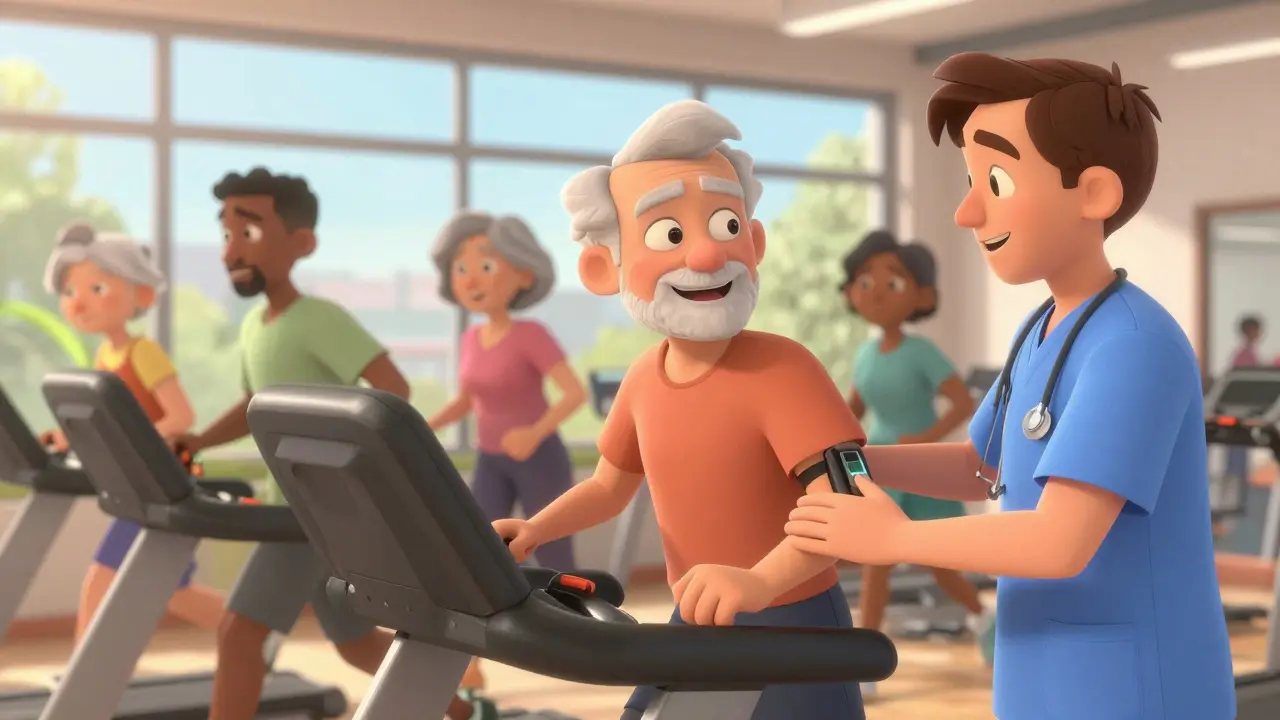
Most pulmonary rehabilitation programs last between 6 and 12 weeks. During this time, you will typically attend supervised sessions two to three times per week. Each session lasts about 60 to 90 minutes.
The structure usually follows this pattern:
- Warm-up: Gentle movements to prepare your body and lungs.
- Aerobic Exercise: Activities like treadmill walking, stationary cycling, or arm ergometry. You will work at 60-80% of your peak work rate for 20-30 minutes.
- Strength Training: Resistance exercises targeting major muscle groups, using weights or bands. This helps counteract the muscle wasting often seen in chronic lung disease.
- Cool-down: Stretching and relaxation techniques.
- Education Group: Sessions led by nurses or dietitians covering topics like energy conservation, nutrition, and medication management.
For severely deconditioned patients, neuromuscular electrical stimulation may be used to help activate muscles without requiring intense voluntary effort. The goal is progressive overload-starting slow and gradually increasing intensity as your body adapts.
Barriers to Access and How to Overcome Them
Despite its proven benefits, access to pulmonary rehabilitation remains a significant challenge. Only about 10-15% of eligible COPD patients in the United States participate in PR. Why such low numbers? Several barriers exist:
- Geographical Accessibility: Only 57% of US counties have certified PR programs. If you live in a rural area, traveling to a clinic several times a week can be exhausting and costly.
- Referral Gaps: Many patients are never referred by their doctors due to lack of awareness or systemic issues.
- Reimbursement Issues: While Medicare covers up to 36 sessions annually, the reimbursement rates often do not cover the full cost of running a high-quality program. This leads to financial strain for providers and limited availability.
- Transportation and Cost: Even with insurance, co-pays and travel expenses can deter participation.
However, new solutions are emerging. Telehealth platforms are increasingly offering virtual PR options. A 2023 trial in JAMA Network Open found that telehealth-delivered PR produced equivalent outcomes to in-person programs for exercise capacity and dyspnea improvement. This is a game-changer for those who cannot easily travel to a clinic.

Patient Experiences: Real Stories, Real Results
Numbers tell part of the story, but patient testimonials bring it to life. In a 2022 qualitative study, 89% of participants cited "the ability to walk to the mailbox without stopping" as their most meaningful outcome. That simple act represents regained independence.
Consider the case of a 68-year-old patient with GOLD stage 3 COPD documented by the Cleveland Clinic. Before PR, his 6-minute walk distance was 182 meters. After completing the program, he walked 327 meters. More importantly, he could independently shop for groceries for the first time in five years. He reported feeling less anxious about his breathing and more confident in managing his health.
Online communities also reflect these positive changes. On Reddit’s r/COPD forum, users frequently share stories of reduced oxygen dependence and improved mood after completing PR. One user noted going from needing 1 liter of oxygen to being off oxygen completely during daily activities after eight weeks of rehabilitation.
How to Get Started
If you are interested in pulmonary rehabilitation, here are the steps to take:
- Talk to Your Doctor: Ask for a referral. Be specific about your symptoms and how they limit your daily activities.
- Check Local Availability: Use resources like the American Lung Association’s Lung HelpLine or search for certified programs in your area.
- Verify Insurance Coverage: Contact your insurer to understand your benefits. Medicare covers PR for qualifying conditions, but prior authorization may be required.
- Prepare Mentally: Commit to the program. Adherence is crucial for success. Average attendance rates are around 78%, so aim to be in the top tier.
- Explore Telehealth Options: If local programs are inaccessible, ask your provider about remote PR services.
Remember, pulmonary rehabilitation is not a sign of weakness; it is a proactive step toward reclaiming your life. It requires effort, but the rewards-in terms of breathlessness, mobility, and confidence-are well worth it.
Is pulmonary rehabilitation covered by insurance?
In the United States, Medicare covers up to 36 sessions of pulmonary rehabilitation annually for eligible patients with chronic respiratory diseases. Private insurance plans vary, but many cover PR if deemed medically necessary. Always check with your provider and insurer for specific details regarding co-pays and prior authorizations.
How long does a typical pulmonary rehabilitation program last?
Most programs run for 6 to 12 weeks, with patients attending supervised sessions two to three times per week. Each session typically lasts 60 to 90 minutes. Some intensive or home-based programs may vary in duration, but the 6-12 week model is the standard supported by clinical guidelines.
Can I do pulmonary rehabilitation at home?
Yes, home-based pulmonary rehabilitation is an option, especially for those with transportation barriers. However, studies show that supervised programs generally yield better adherence and slightly superior outcomes. Telehealth-guided home programs are becoming more common and have shown comparable results to in-person care in recent trials.
What conditions qualify for pulmonary rehabilitation?
While COPD is the most common indication, PR is recommended for various chronic respiratory diseases including interstitial lung disease (ILD), pulmonary hypertension, bronchiectasis, cystic fibrosis, and pre/post-lung transplant care. Eligibility is based on symptoms and functional limitations rather than just lung function severity.
Does pulmonary rehabilitation improve survival rates?
Research indicates that pulmonary rehabilitation can reduce hospital readmissions by up to 32% within 12 months post-exacerbation. Additionally, a 2023 analysis suggested an 18.2% reduction in all-cause mortality for post-hospitalization COPD patients who participated in PR, highlighting its role in long-term health outcomes.