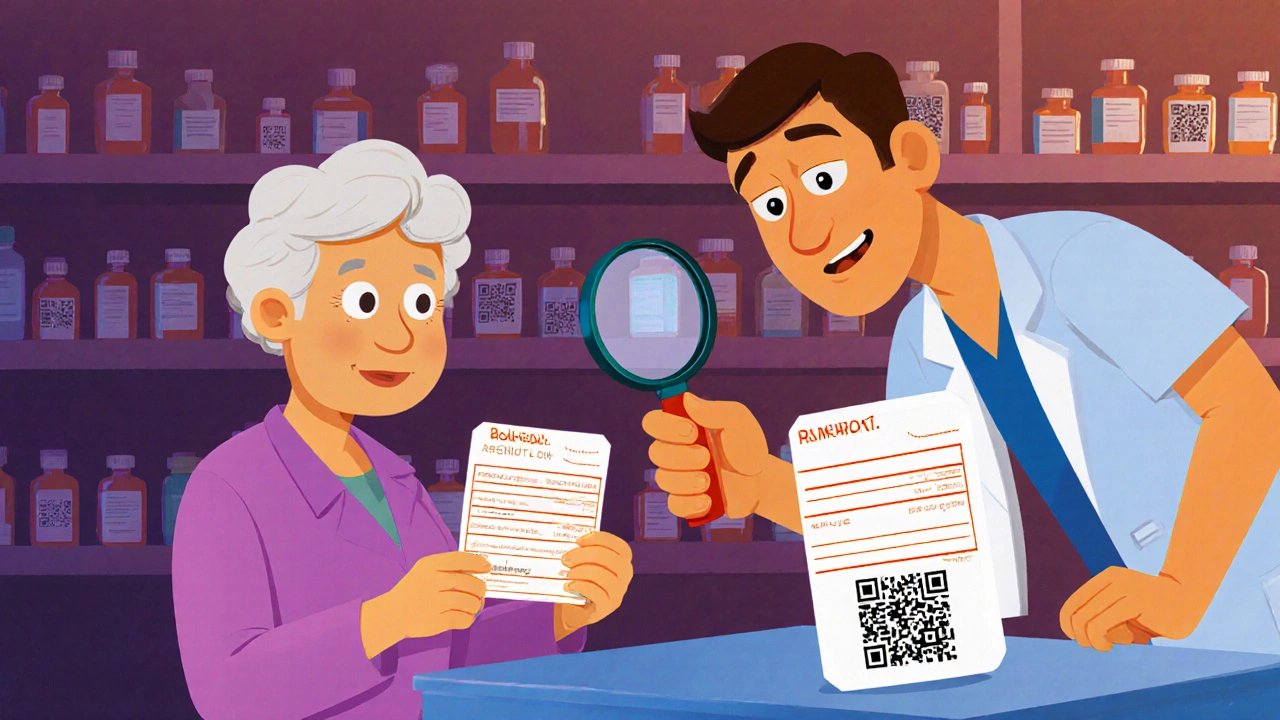
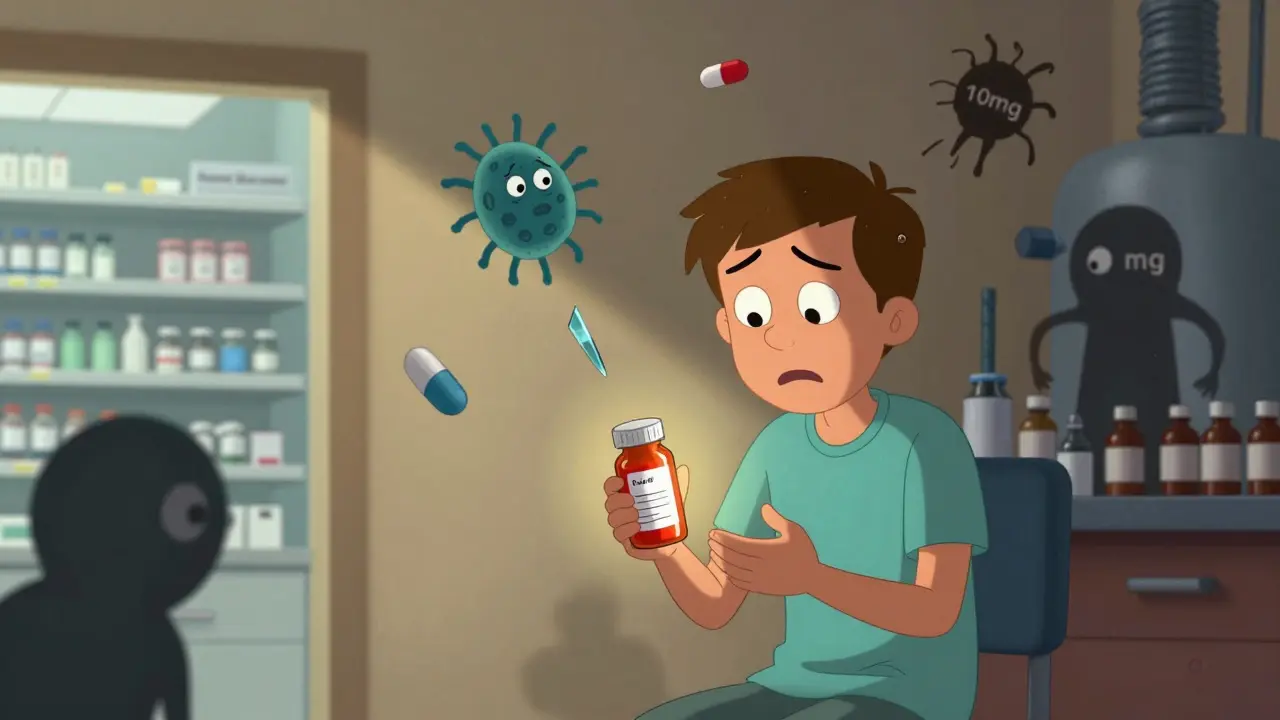
Every year, over 1.3 million medication errors happen in the U.S. - and nearly a quarter of them come from people misunderstanding their prescription labels. It’s not because pharmacists are careless. It’s because the labels are confusing, inconsistent, and often too small to read. You pick up your medicine, glance at the bottle, and assume you know what to do. But what if you’re wrong? A single mistake - taking the wrong dose, mixing meds with food, storing them in the wrong place - can land you in the hospital.
What’s on Your Prescription Label (And What’s Missing)
Your prescription label isn’t just a sticker. It’s a legal document. By law, it must include nine key pieces of information: your name, the prescriber’s name, the drug’s brand and generic name, strength, dosage form (like tablet or liquid), quantity, directions for use, number of refills, and the pharmacy’s contact info. That’s the baseline. But what’s not on the label can be just as dangerous.For example, 107 high-risk medications - like opioids, estrogen, and isotretinoin - come with a separate Medication Guide. These are printed sheets that explain serious risks. But most people never open them. If your pill bottle doesn’t come with a guide, ask for it. Don’t assume it’s not needed.
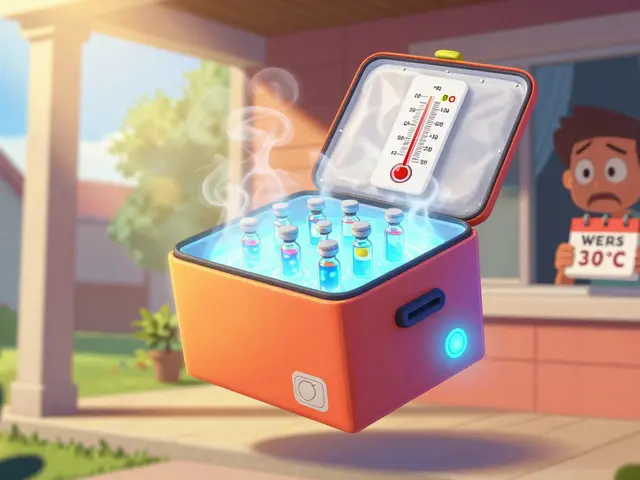
Expiration dates are required, but storage instructions? Not always clear. About 15% of prescriptions need refrigeration. If your insulin, some antibiotics, or liquid thyroid meds sit on your counter for weeks because the label didn’t say to keep them cold, they lose potency. That’s not just waste - it’s a health risk.
Ask These 7 Questions Before You Leave the Counter
You’ve got two minutes. Use them wisely. Here’s what to ask:- Is this the right medicine for me? Confirm the brand and generic name. Sometimes, the pharmacy switches brands without telling you. Amlodipine is the generic for Norvasc. If you’ve been on Norvasc for years and suddenly get amlodipine, ask if it’s the same. It usually is - but you should know.
- How do I take this? Don’t just nod when the pharmacist says “once daily.” Ask: Should I take it with food? On an empty stomach? At night or in the morning? Some meds work better with food; others cause nausea if taken that way. Antibiotics like doxycycline can’t be taken with dairy - it blocks absorption.
- What happens if I miss a dose? This is rarely written on the label. Should you take it late? Skip it? Double up? Each drug has a different rule. Get it in writing.
- What side effects should I watch for? The label lists common ones. But you need to know the red flags. For statins, muscle pain could mean a rare but serious condition. For blood thinners, unusual bruising or bleeding means call your doctor - don’t wait.
- How should I store this? Room temperature? Refrigerated? Keep away from light? Moisture? If you’re unsure, ask. A pill left in a hot bathroom can break down. Insulin left unrefrigerated for more than 28 days loses effectiveness.
- Can this interact with my other meds or supplements? Even over-the-counter stuff matters. St. John’s Wort can cancel out birth control. Grapefruit juice can make blood pressure meds too strong. List everything you take - including vitamins and herbal teas.
- Is there a Medication Guide for this? If the pharmacist says no, ask again. For high-risk drugs, it’s required by law. If they don’t have it, they must print it for you. Don’t leave without it.
Why Labels Vary - And Why That’s Dangerous
You might notice your prescription label looks different at CVS than at your local pharmacy. That’s because pharmacy labeling rules aren’t national. They’re set by state boards. In Alabama, generic names must appear unless the doctor says otherwise. In California, labels must include Spanish if the patient speaks it. In some states, font size is regulated. In others, it’s not.This inconsistency is a hidden danger. A 2021 study found only 42% of U.S. patients correctly understood their labels. In Germany, where labels follow a standardized EU format, 63% got it right. The U.S. system gives more info - but it’s messy. One study showed labels have 25 to 35 data points. The EU’s version has 18. More isn’t always better if it’s hard to read.
What to Do If You Can’t Read the Label
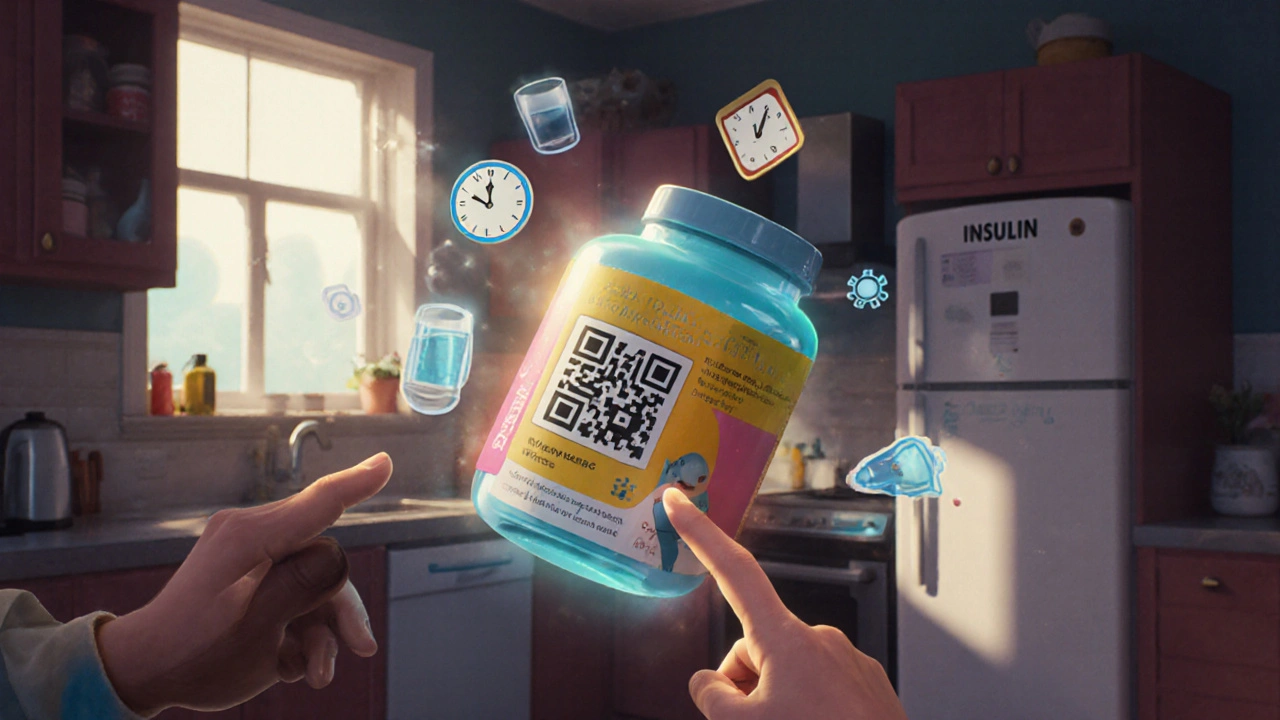
If your eyesight is fading, or the print is too small, you’re not alone. Over 7.6 million Americans over 45 have vision problems. But you don’t have to guess.Ask for a large-print label. Ninety-two percent of U.S. pharmacies offer this for free. You can also ask for a verbal explanation - repeat the instructions back to the pharmacist to confirm you got it right. That’s called the “teach-back” method, and it reduces errors by 58%, according to the American Society of Health-System Pharmacists.
If English isn’t your first language, you have rights. The Affordable Care Act requires pharmacies that take federal funds to provide translation services. Ask for an interpreter. Don’t rely on family members - they might misinterpret medical terms.
The New Tech: QR Codes and AR Labels
Some pharmacies are upgrading. You might see a QR code on your label. Scan it with your phone, and you’ll get a short video showing how to take the medicine, what to avoid, and how to store it. In 2022, pharmacies using QR codes cut medication errors by 31%.Even more advanced: augmented reality labels. Walgreens started testing these in 2023. Point your phone at the bottle, and digital instructions float over the label - telling you when to take it, how much, and what to watch for. It’s still new, but it’s coming fast.
By 2026, the FDA plans to require scannable QR codes on all high-risk prescriptions. That’s a big step. But until then, don’t wait for tech to fix things. Ask questions now.
How to Spot a Potential Error Before It Happens
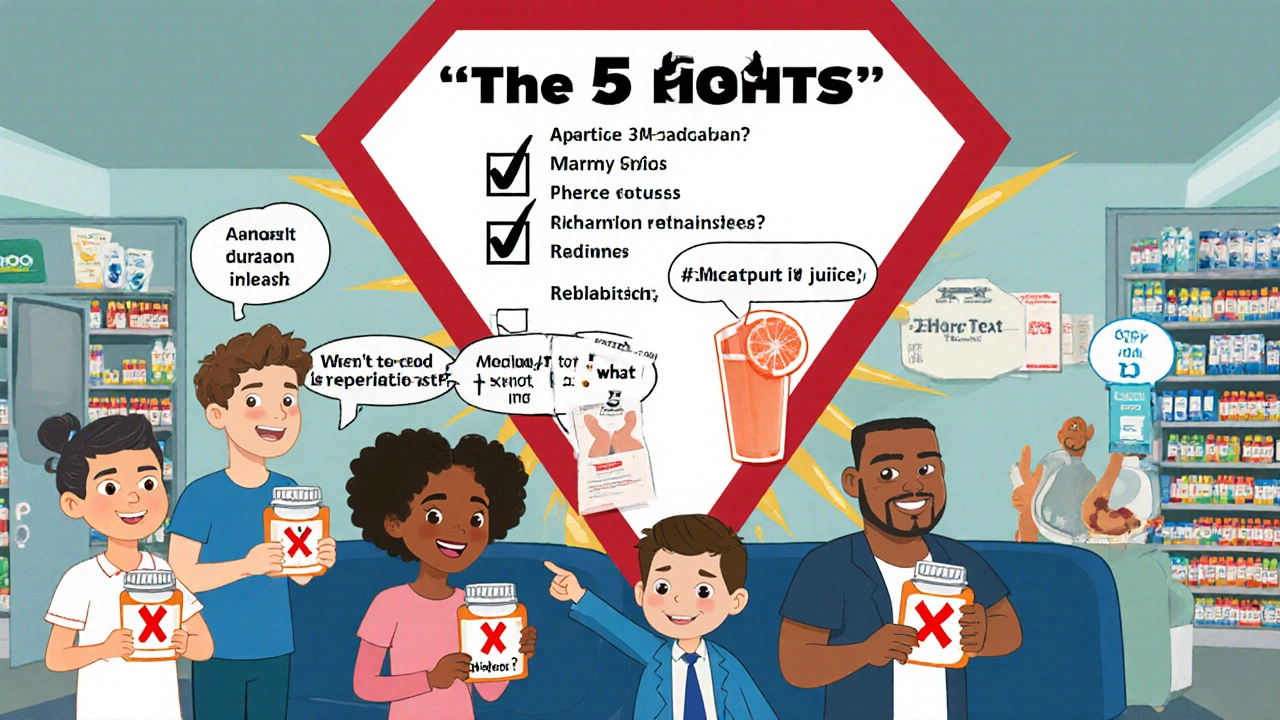
Before you walk away, run through the 5 Rights - the gold standard for medication safety:- Right Patient: Is your name on the label? Not your spouse’s. Not your child’s.
- Right Medicine: Does the name match what your doctor told you? If you were prescribed metformin but got glipizide, stop. Call the pharmacy.
- Right Dose: Is the strength correct? 10 mg vs. 20 mg is a big difference. Check the number.
- Right Way: Is it oral? Topical? Injected? If it’s a pill but the label says “for injection,” that’s a red flag.
- Right Time: Does the schedule make sense? “Take once daily” means every 24 hours - not with breakfast, lunch, and dinner.
If anything feels off - the pill looks different, the dose seems too high, the instructions are vague - say something. Pharmacists expect these questions. They’re trained to handle them.
What Happens When You Don’t Ask
A woman in Ohio took her blood pressure pill for two weeks without realizing it needed to be refrigerated. The medication degraded. Her pressure spiked. She ended up in the ER. Her label had the storage note - but it was on the back, in 8-point font.A man in Florida took his antibiotic with milk because the label didn’t say not to. The drug didn’t work. His infection got worse. He had to restart the full course.
These aren’t rare. They’re predictable. And they’re preventable.
Patients who ask questions reduce adverse drug events by 47%, according to the American Association of Colleges of Pharmacy. That’s not a small number. That’s life-changing.
Next Steps: Make It a Habit
Next time you pick up a prescription, don’t just grab it and go. Pause. Look. Ask. Spend two minutes. Write down the answers if you need to. Keep your labels in a folder. Review them every time you take a pill.Bring your list of meds to every doctor visit. Ask your pharmacist to review them together. Many pharmacies now offer free medication reviews - ask if yours does.
And if you ever feel unsure - even a little - call the pharmacy back. Better to be safe than sorry. Your health isn’t something you can afford to guess about.


14 Comments
Curtis Ryan
I never thought about how tiny the print is on these labels! I just assumed I was getting old, but turns out it's the pharmacy's fault. Got a large-print label last week for my blood pressure med and it's a game-changer. Seriously, if you're squinting, ask for it. Free and life-saving. 🙌
Rajiv Vyas
pharmacies are just part of the big pharma scam. they dont want you to understand your meds because then you'd ask why you're on 12 pills a day. the real answer? you're being poisoned slowly. ask questions? nah. stop taking everything and eat kale.
farhiya jama
Ugh. I hate going to the pharmacy. It's always so stressful. Like, why do I have to ask seven questions just to get a pill? Can't they just make it easy? I just want to take my medicine and go.
Astro Service
this is why america is falling apart. we got people who cant even read a label. if you cant understand your medicine, maybe you shouldnt be on it. get your act together. we dont need hand-holding. just take the pill like a grownup.
DENIS GOLD
Oh wow. Seven questions? That's cute. Next they'll be handing out flowcharts and a PowerPoint. I took my meds for 20 years without asking anything. Still alive. Guess I'm just lucky.
Ifeoma Ezeokoli
I used to think this was just my problem, but reading this made me realize so many of us are flying blind. My mom in Nigeria couldn't read her label, so I called the pharmacy and got an interpreter. They were so kind. We all deserve to understand what we're putting in our bodies. ❤️
Daniel Rod
This hits deep. I lost my dad because he didn't ask about his blood thinner. The label said 'take once daily' but didn't say 'avoid grapefruit.' He loved his morning juice. I wish someone had told him. 🕊️ Don't wait until it's too late. Ask. Even if it feels silly.
gina rodriguez
I started writing down all my meds in a little notebook after reading this. It’s helped me feel so much more in control. And I always repeat the instructions back to the pharmacist - it feels awkward at first, but they always appreciate it. 😊
Sue Barnes
If you can't read the label, get glasses. If you don't know what your meds do, you shouldn't be taking them. This whole 'ask questions' thing is just enabling laziness. People need to take responsibility for their own health.
jobin joshua
I scanned the QR code on my insulin bottle last week. It showed a video of how to store it. I had it in my glovebox. 😳 Thanks for this post. Saved my life. 🚗❄️
Sachin Agnihotri
I just want to say... thank you... for writing this... because honestly... most people don't realize... how dangerous these labels can be... and I'm glad someone finally... said it out loud...
Diana Askew
QR codes? AR labels? This is all just a distraction. They're tracking you. Every scan is logged. The government and Big Pharma are watching. You think they care if you take your pill? No. They want your data. Don't be fooled.
King Property
You people are ridiculous. You think asking questions is the solution? The real problem is that pharmacies are understaffed because the government won't fund them. Stop blaming the label. Blame the system. And stop being so damn passive. If you're too lazy to read, maybe you shouldn't be on meds at all.
Yash Hemrajani
lol at the '7 questions' list. I'm a pharmacist. I've seen this exact list in training. We love when patients ask. But 90% of them just say 'thanks' and leave. If you're gonna ask, ask smart. And bring your supplements list. I've seen people take ashwagandha with thyroid meds. Yeah... that went well.