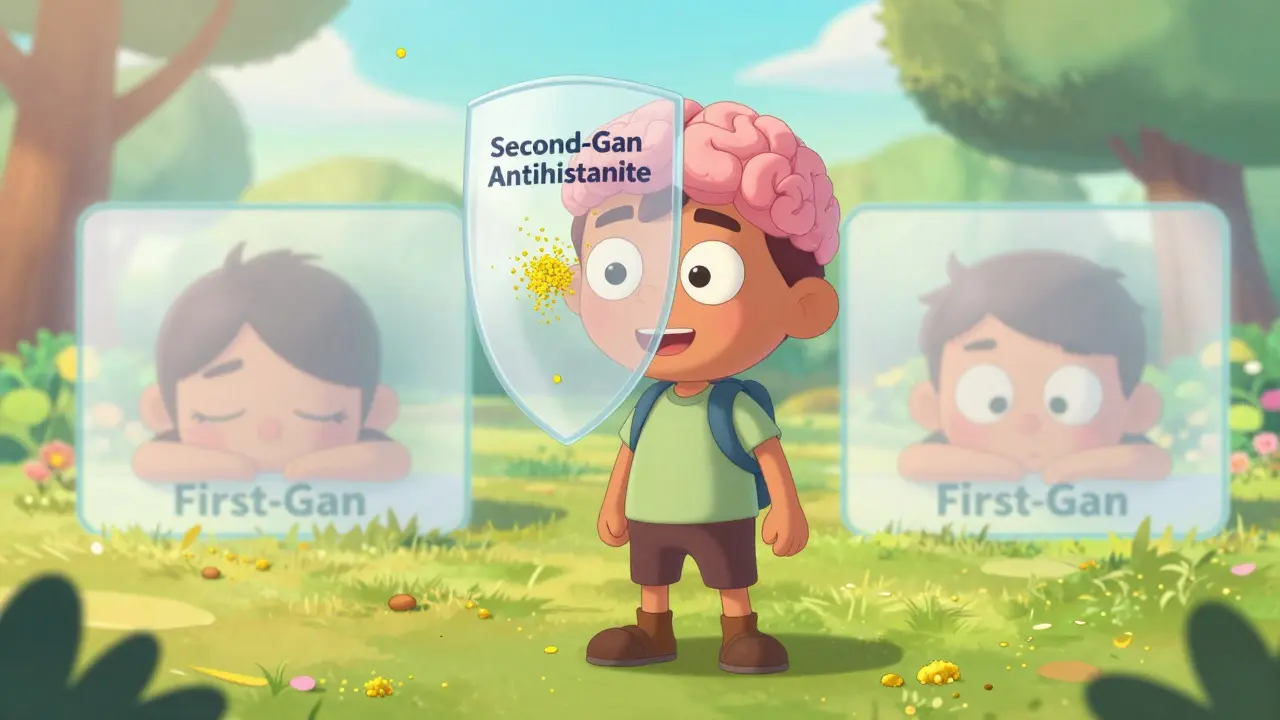
Antihistamine Selector: Find Your Best Allergy Relief
Find the second-generation antihistamine that best matches your allergy symptoms, lifestyle, and health needs.
Most people who take antihistamines for allergies have probably noticed something: some make them sleepy, and others don’t. If you’ve ever taken diphenhydramine (Benadryl) and felt like you needed a nap after lunch, you’re not alone. But there’s a better way. Second-generation antihistamines were designed to do the same job - block allergy symptoms - without the drowsiness. And for millions of people, they’ve made daily life possible without hitting the snooze button.
Why Second-Generation Antihistamines Are Different
First-generation antihistamines like diphenhydramine and chlorpheniramine work well, but they cross the blood-brain barrier easily. That’s why they cause drowsiness, dry mouth, and sometimes confusion. They don’t just block histamine in your nose and skin - they also mess with brain chemicals that keep you alert. Second-generation antihistamines like loratadine (a non-sedating antihistamine used for seasonal allergies and hives), cetirizine (an antihistamine effective for hay fever and chronic hives), and fexofenadine (a long-acting antihistamine with minimal sedation risk) are built differently. Their molecules are larger and more polar, which means they can’t slip easily into your brain. They stick to histamine receptors in your nose, throat, and skin - exactly where you need them - and leave your brain alone. This isn’t just theory. Studies show these drugs cause sedation in only 6-14% of users, compared to 50-60% for older antihistamines. That’s a drop of more than 70%. A 2024 cryo-EM study in Nature Communications confirmed that these drugs bind tightly to the histamine H1 receptor in peripheral tissues but barely touch receptors in the central nervous system. That’s why they’re called "non-sedating" - not because they never cause drowsiness, but because they’re far less likely to.How Long Do They Last? And How Do You Take Them?
One big advantage of second-generation antihistamines is how long they last. Most are designed for once-daily dosing. Here’s how they stack up:- Loratadine (Claritin): Works for 24 hours. Peak effect in 1-2 hours. Metabolized by the liver.
- Cetirizine (Zyrtec): Also 24-hour coverage. Starts working in about 1 hour. Half-life is around 8.3 hours.
- Fexofenadine (Allegra): Lasts 12-24 hours. Takes 1-3 hours to peak. Only 5% is processed by the liver - most leaves the body unchanged through urine and stool.
What They Don’t Do - And Why That Matters
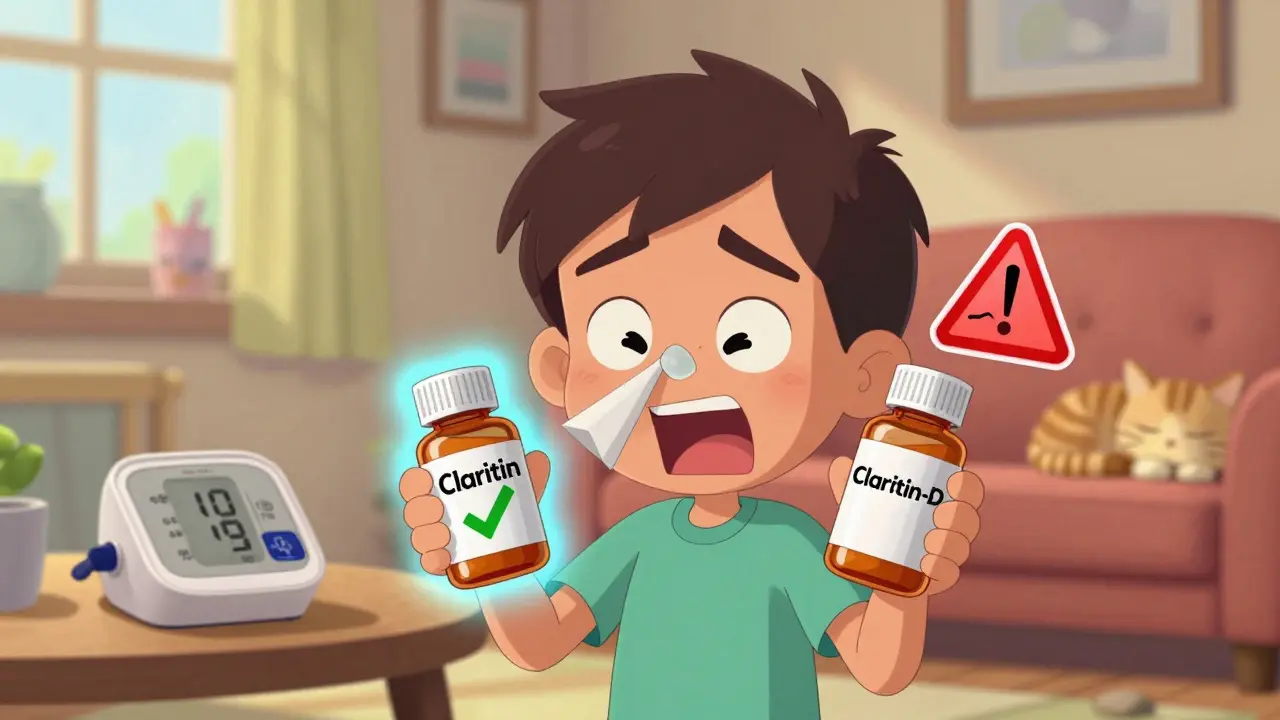
Here’s where things get tricky. These drugs are great for itching, runny nose, and sneezing caused by allergies. But they’re not magic. If you have nasal congestion - that stuffy, blocked-up feeling - they won’t fix it well. Why? Because they don’t block acetylcholine like first-generation antihistamines do. That’s why Benadryl sometimes seems to help with congestion more than Zyrtec or Claritin. That’s why many people end up using a second-generation antihistamine plus a nasal spray like fluticasone (Flonase) or oxymetazoline (Afrin). A 2023 Consumer Reports survey found that 41% of users needed extra help for congestion. Reddit users often say things like: "Fexofenadine stops my sneezing, but I still need Flonase for my nose." And here’s another surprise: second-generation antihistamines don’t help with cold symptoms. A 2001 study by Dr. Paul Muether at Johns Hopkins tested them against rhinovirus (the common cold). The older drugs reduced sneezing. The newer ones? Almost nothing. That’s because colds aren’t just about histamine - they involve other inflammatory pathways. These drugs were never meant to treat viral infections.
Side Effects You Might Still Experience
Yes, they’re safer. But they’re not perfect. - Drowsiness: Still happens. About 23% of Zyrtec users on WebMD report feeling sleepy. Why? Genetics. Some people metabolize cetirizine slower, so it builds up. Others are just more sensitive. - Headaches: Reported by 38% of users in online reviews. One person on Drugs.com said loratadine gave them three straight days of headaches. Switching to cetirizine fixed it. - Taste disturbances: A strange but real side effect. Some users say everything tastes metallic or bitter - especially with fexofenadine. It’s rare, but it’s mentioned often enough on forums to be worth noting. - Drug interactions: Fexofenadine is mostly safe. But if you’re on grapefruit juice, ketoconazole, or erythromycin, you should avoid older second-generation drugs like terfenadine (long gone) or even check with your pharmacist about fexofenadine. Cetirizine and loratadine have fewer interactions, but always tell your doctor what else you’re taking.Which One Should You Choose?
There’s no single "best" antihistamine. It’s personal.- Try cetirizine (Zyrtec) if you want fast, strong relief and don’t mind a small chance of drowsiness. It’s the most popular in the U.S. and has the highest user ratings (4.2/5 on WebMD).
- Try loratadine (Claritin) if you’re sensitive to side effects. It’s the least likely to cause drowsiness, but some users say it’s less effective for severe allergies.
- Try fexofenadine (Allegra) if you’re on other medications or have liver issues. It doesn’t rely on liver enzymes much, and it’s least likely to interact.







12 Comments
William Minks
I’ve been on loratadine for years and it’s a game-changer. No more afternoon naps after lunch. 🙌
Amina Aminkhuslen
Zyrtec made me feel like a zombie for three days straight. Like, I couldn’t even watch TV without nodding off. I switched to fexofenadine and now I’m human again. 🤯
Tim Hnatko
I used to think all antihistamines were the same until I tried them side by side. Turns out, your body has a favorite. Mine’s Claritin. Not because it’s the strongest, but because it doesn’t turn me into a couch potato. Just saying.
Susan Purney Mark
I love that this post mentions nasal sprays. Flonase + Zyrtec saved my spring. I used to think I was just allergic to life. Turns out, I just needed the right combo. 🌸
phyllis bourassa
You know what’s wild? People still take Benadryl like it’s a sleep aid. I once saw a guy at a coffee shop take two and then nap in the chair like it was a spa day. Honey, you’re not at a resort. You’re at Starbucks.
Patrick Jackson
I’ve been thinking about this lately - why do we assume that if a drug doesn’t make us sleepy, it’s ‘better’? What if our brains just need the chill? What if drowsiness isn’t a side effect… but a signal? Like, maybe our bodies are saying, ‘Hey, slow down. The world’s too loud.’ I’m not saying go back to Benadryl… but I’m not not saying it either.
Ferdinand Aton
Fexofenadine doesn’t work for me. Zero. Nada. I tried it for a whole season. I still sneezed like a cartoon character. So yeah - ‘non-sedating’ doesn’t mean ‘non-useless.’
amber carrillo
I’ve been on cetirizine for two months now. I still get headaches. I’ve read everything. I’ve tried timing it. I’ve tried not drinking coffee. Still there. I’m not mad. Just… confused.
Ian Kiplagat
Grapefruit juice + fexofenadine? Bad combo. Learned that the hard way. Now I just drink tea. Simple. Safe. 🍵
Joey Pearson
If you’re still sneezing after trying all three, don’t give up. Talk to an allergist. Seriously. I thought I had seasonal allergies. Turned out I was allergic to my cat. And my carpet. And my laundry detergent. Life changed.
Jeff Mirisola
I’ve tried all three. Cetirizine was too strong. Loratadine too weak. Fexofenadine? Just right. Like Goldilocks but with a runny nose. And no, I don’t eat porridge anymore. I eat antihistamines.
Aaron Pace
Wait, so you’re telling me I don’t have to be tired to be allergic? Mind blown. 🤯 I’ve been taking Benadryl for 15 years because I thought it was the only way to feel better. Now I feel like I’ve been living in a simulation.