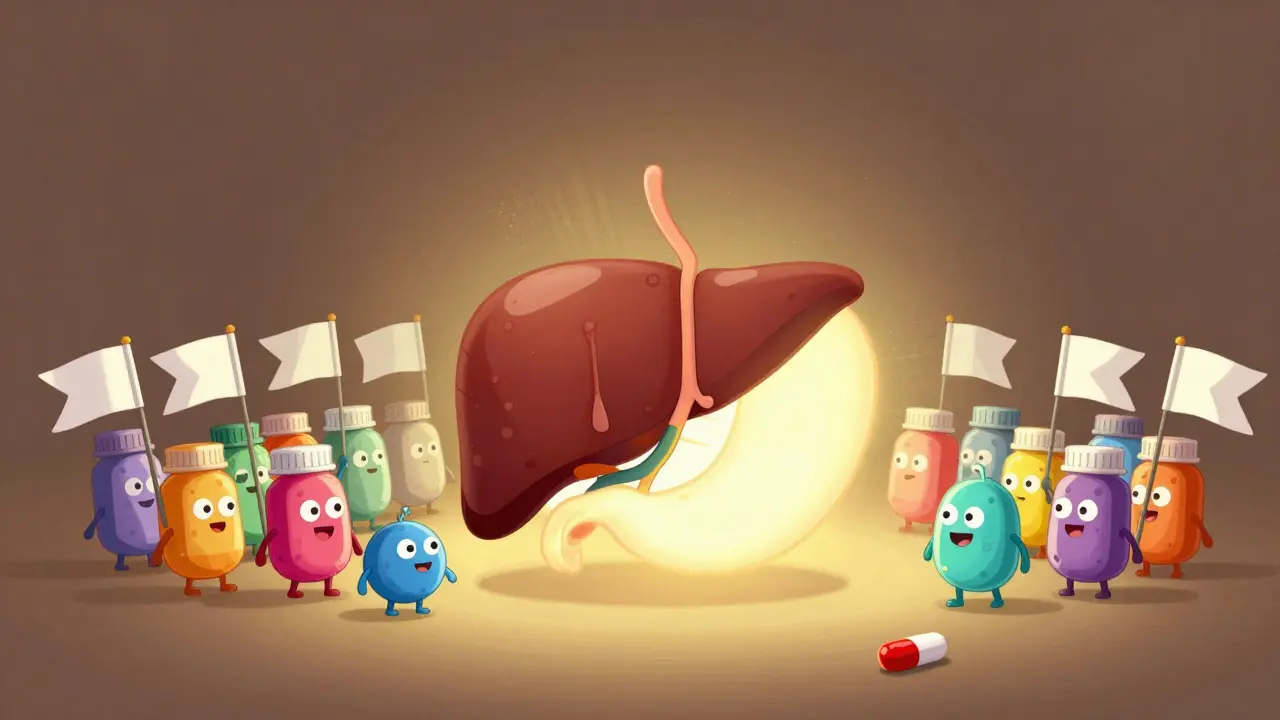
After a liver transplant, the biggest threat isn’t surgery complications or infection-it’s rejection. Your body doesn’t know the new organ belongs to you. It sees it as an invader. And if you don’t take your meds exactly right, your immune system will start attacking it. This isn’t theoretical. It’s daily reality for thousands of people who’ve had transplants. The difference between keeping your new liver for 20 years or losing it in 2 years often comes down to one thing: whether you took your pills today.
What Rejection Really Feels Like
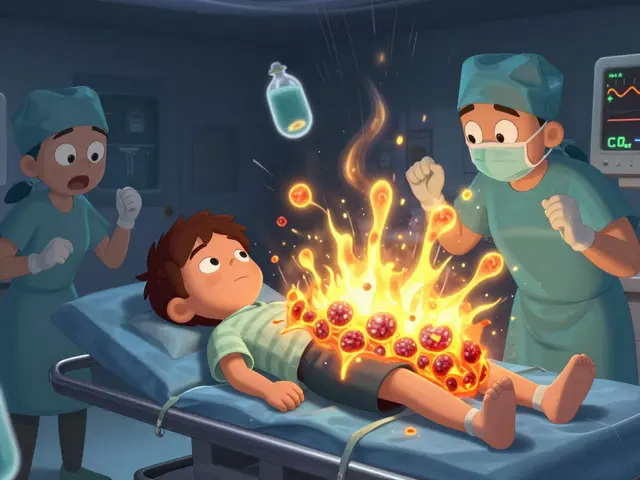
Acute rejection is the most common. It usually shows up between 1 and 3 months after surgery, but it can happen anytime-even years later. And here’s the scary part: you might not feel anything at first. That’s why blood tests matter more than symptoms.But when symptoms do appear, they’re not subtle. Think fever over 100°F that doesn’t go away. Not just a cold, not just the flu. This is your body screaming. You’ll feel achy, dizzy, maybe even nauseous. Your transplant site-your right upper abdomen-might feel tender, swollen, or heavy. It’s not just soreness from healing. It’s inflammation. You might notice you’re peeing less, or your socks are tighter than usual. Gaining 10 pounds in a few days? That’s fluid buildup because your liver isn’t filtering right.
The clearest signal? Your creatinine levels. This is a blood test that measures how well your liver is working. A rise of 0.3 mg/dL or more in a week is a red flag. Your care team watches this like a hawk. If it jumps, they don’t wait. They act.
Chronic rejection is quieter. No fever. No sudden weight gain. Just slow decline. You get tired easier. Your blood pressure creeps up-140/90 or higher. You feel fine, but your liver is quietly failing. By the time you notice, it’s harder to fix. That’s why monthly blood work isn’t optional. It’s your early warning system.
Why Medication Isn’t Optional
You’re not just taking pills to feel better. You’re taking them to keep your liver alive. These drugs-tacrolimus, mycophenolate, steroids-are not vitamins. They’re weapons. They silence your immune system so it doesn’t destroy the transplant. Miss one dose? Your body gets a chance to wake up and attack. Miss two? The risk of rejection spikes.
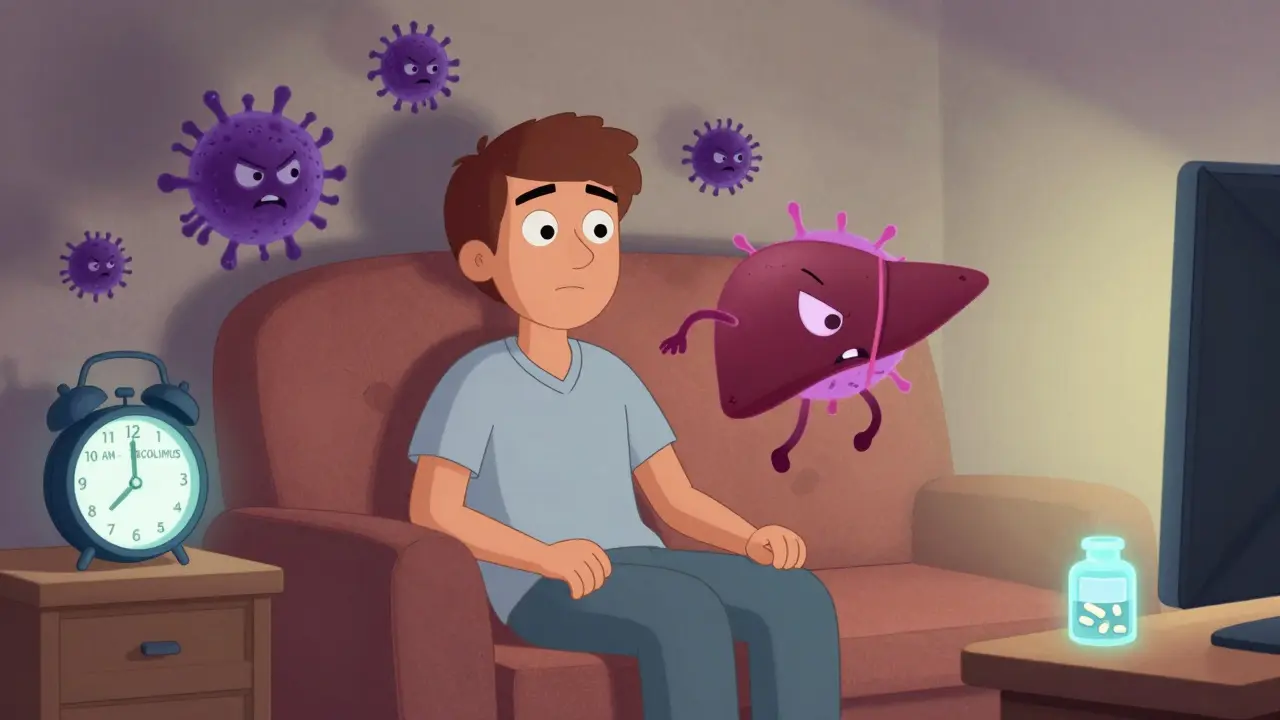
Studies show that missing just 20% of your doses triples your chance of rejection. That’s not a guess. That’s from the American Journal of Transplantation. And here’s what’s worse: many people think if they feel fine, they can skip a pill. That’s a deadly myth. Rejection can be silent. Your liver might be under attack while you’re watching TV.
The average person on immunosuppressants takes 12 pills a day. That’s a lot. Different times. Different rules. Some with food. Some on an empty stomach. Some you can’t crush. Some you can’t skip. It’s exhausting. And side effects? Tremors. High blood pressure. Weight gain. Mood swings. It’s a lot to manage. But here’s the truth: the side effects are manageable. The loss of your liver? Not reversible.
The Numbers Don’t Lie
If you take your meds 95% of the time, your chances of keeping your liver for 10 years? 85%. That’s from tracking 15,000 transplant patients over two decades. Now flip that. If you miss more than 20% of your doses? Your 10-year survival drops to 42%. That’s not a small difference. That’s life or death.
And it’s not just about you. Every rejection episode costs the system tens of thousands of dollars. It means more hospital stays. More biopsies. More drugs. More risk of infection. More chance of needing another transplant-which is harder, riskier, and less likely to work.
Transplant centers now track adherence like a scoreboard. Electronic pill bottles record every time they’re opened. In the first year after transplant, nearly half of patients miss at least one dose a week. That’s not laziness. That’s forgetfulness. Stress. Cost. Side effects. All of it. And it’s why your care team doesn’t just hand you a script and say, “Good luck.”
How to Actually Stick to Your Regimen
There’s no magic trick. But there are proven strategies.
- Use a pill organizer-the kind with compartments for morning, afternoon, evening, night. 63% of long-term survivors use one.
- Set phone alarms-multiple ones. Label them: “Tacrolimus-10 AM,” “Mycophenolate-8 PM.” A 2022 study in JAMA Internal Medicine found reminders boost adherence by 37%.
- Link pills to habits. Take your meds right after brushing your teeth or before your morning coffee. Routine beats willpower.
- Involve someone. A spouse, child, friend. Ask them to check in. A 2023 Cleveland Clinic study found family support cuts rejection rates by 28%.
- Know your costs. Medications can run $28,000 a year without insurance. Talk to your transplant social worker. There are patient assistance programs. Don’t skip doses because you can’t afford them. There are options.
Some centers now use smart pill bottles that text you when you miss a dose. Others use apps that sync with your pharmacy. The Mayo Clinic found patients using these tools had 22% fewer rejection episodes. It’s not sci-fi. It’s here.
What Your Care Team Is Doing to Help
Your transplant team doesn’t expect you to figure this out alone. Most centers now have pharmacists who meet with you every month. They check your levels. They adjust doses. They answer your questions. Johns Hopkins reports 92% adherence among patients who get this level of support. The national average? 76%. That gap? That’s what makes the difference.
They also use tools like the Basel Assessment of Adherence to Immunosuppressive Medications Scale (BAASIS). It’s not a quiz. It’s a conversation. They ask: “Have you ever skipped a dose because you felt fine?” “Did you run out of pills?” “Did side effects make you stop?”
And new science is changing the game. In January 2023, the FDA approved the first genetic test for tacrolimus dosing. It tells your doctors: “This person metabolizes this drug faster.” Or “This person needs half the usual dose.” That means fewer side effects. Fewer mistakes. Better outcomes.
What Happens If You Don’t
Rejection doesn’t always mean you lose the liver right away. Sometimes, it’s caught early. You get a short course of high-dose steroids. You’re admitted. You’re monitored. You recover. But each episode scars your liver. Each rejection makes the next one more likely. Each rejection makes your next transplant harder to get.
And if rejection goes unchecked? Your liver fails. You go back on dialysis. You wait again. But your chances of getting another liver? Lower. Your body remembers rejection. Your immune system is already primed to fight. And your odds? They drop.
Dr. Joseph Murray, who did the first successful transplant in 1954, said later in life: “The success of transplantation is not measured by the operation, but by the patient’s lifelong commitment to their medication regimen.” He knew. It’s not the surgery that saves you. It’s the pills. The alarms. The check-ins. The discipline.
Final Thought: You’re Not Just Surviving. You’re Thriving.
Transplant isn’t a cure. It’s a second chance. And that chance? It’s yours to keep. Every pill you take is a vote for your future. Every blood test you show up for is a step toward a longer, fuller life. You can still travel. Work. Play with your kids. Eat what you love. But you have to show up-for yourself.
You’re not alone. Your team is with you. Your family is with you. The science is with you. Now it’s up to you.





15 Comments
William Minks
I can't believe how many people think they can skip meds because they 'feel fine.' I'm 8 years post-transplant and still set 4 alarms a day. One for each pill. I even have a little sticker on my mirror: 'Pills before coffee.' 🙌
Jeff Mirisola
This post is exactly what we need more of. No sugarcoating. Just facts. I lost my brother to rejection because he thought 'one missed dose won't hurt.' It did. It killed him. Don't be that guy.
Susan Purney Mark
I work as a transplant nurse and I see this every single day. People skip doses because they're tired, scared, or broke. We're not judging. We're here to help. Talk to your social worker. There are programs. You're not alone. 💛
Roland Silber
The 95% adherence stat is everything. 85% 10-year survival vs 42%? That's not a gray area. That's a cliff. And yet so many still treat it like a suggestion. It's not. It's your lifeline.
Patrick Jackson
I used to think my meds were just a burden. Then I started writing little notes on each pill bottle: 'For my daughter's graduation.' 'For next year's fishing trip.' 'For seeing my grandkids.' Now I don't skip. Not even once. ❤️
Adebayo Muhammad
...And yet, the system still fails. You're told to take 12 pills daily, but insurance won't cover the pill organizer? The pharmacy won't refill without a 3-day wait? The cost? $28k/year? This isn't healthcare. It's a performance art. And you're the unpaid actor. 🤡
Pranay Roy
You know what's really happening? Big Pharma is milking this. They know you'll take the pills because you're scared. They raise prices. They control the data. They push the '95% adherence' narrative because it keeps you dependent. Wake up. This isn't science. It's a business model.
Joe Prism
Pills before coffee. Always.
Bridget Verwey
I love how we treat transplant patients like they're just supposed to magically become perfect little pill-taking robots. Meanwhile, we don't fix the system that makes it impossible. But hey, at least we're not judging you... while judging you. 😌
Andrew Poulin
Use alarms. Use organizers. Get help. Stop making excuses. Your liver doesn't care why you missed a dose. It just knows you didn't take it. Do the work.
Weston Potgieter
They say 'stick to your meds' like it's easy. What about the tremors? The weight gain? The depression? The anxiety? The fact that your body feels like it's betraying you? No one talks about that. They just want you to be grateful. And now you're guilty for not being perfect. Thanks.
Vikas Verma
Adherence is non-negotiable. The pharmacokinetic profile of tacrolimus demands consistent bioavailability. Deviations in Cmax and AUC directly correlate with rejection risk. Utilize adherence protocols. Engage with clinical support structures. Your outcomes are directly proportional to compliance.
Sean Callahan
i just... i dont know anymore. i took my pills yesterday. i think. i was so tired. i just want to sleep. but then i think about my mom and i get scared. i dont know what to do. i dont want to lose it again. i just... i dont know. 😭
phyllis bourassa
I know someone who missed a dose and got rejection. They said they 'felt fine.' Then they died. I'm not saying it's your fault. I'm just saying... you knew the risks. You chose this.
Ferdinand Aton
Wait, so if I take 95% of my meds, I have an 85% chance of survival? That means 15% of people still die even if they're perfect? So the whole 'take your pills' thing is just a nice story? What's the real number?